

 English
 中文简体
 русский
 Français
 Español
 Deutsch

FD Stitch Bonding Machine: High-Speed Yarnless Technology for Advanced Automotive Textile Production
2026-09-29
Content
- 1 1. Understanding the FD Stitch Bonding Process
- 2 2. Main Technical Characteristics
- 3 3. Advantages over Conventional Stitch-Bonding Equipment
- 4 4. Suitability for Automotive Interior Materials
- 5 5. Manufacturing Strengths of the Equipment Supplier
- 6 6. Advanced Production and Assembly Considerations
- 7 7. Production Workflow with the FD Machine
- 8 8. Operating and Maintenance Advantages
- 9 9. Comparison with Alternative Textile Bonding Methods
- 10 10. Economic and Operational Value
- 11 11. Customization and Project Evaluation
- 12 12. Company Service and Long-Term Cooperation
- 13 13. Frequently Asked Questions
- 13.1 Q1: What is the main purpose of the FD Stitch Bonding Machine?
- 13.2 Q2: Does the machine require stitching yarn?
- 13.3 Q3: What fibers can be processed?
- 13.4 Q4: What is the machine speed?
- 13.5 Q5: What is the working width?
- 13.6 Q6: How much can the machine produce per day?
- 13.7 Q7: Why is the yarnless process advantageous?
- 13.8 Q8: Is the machine suitable for automotive interior materials?
- 13.9 Q9: Can the machine produce different fabric constructions?
- 13.10 Q10: What should a customer prepare before requesting a quotation?
- 13.11 Q11: Does the supplier provide customized equipment?
- 13.12 Q12: What other equipment does the company manufacture?
- 14 14. Conclusion
- 15 References
- 16 Product: FD Stitch Bonding Machine
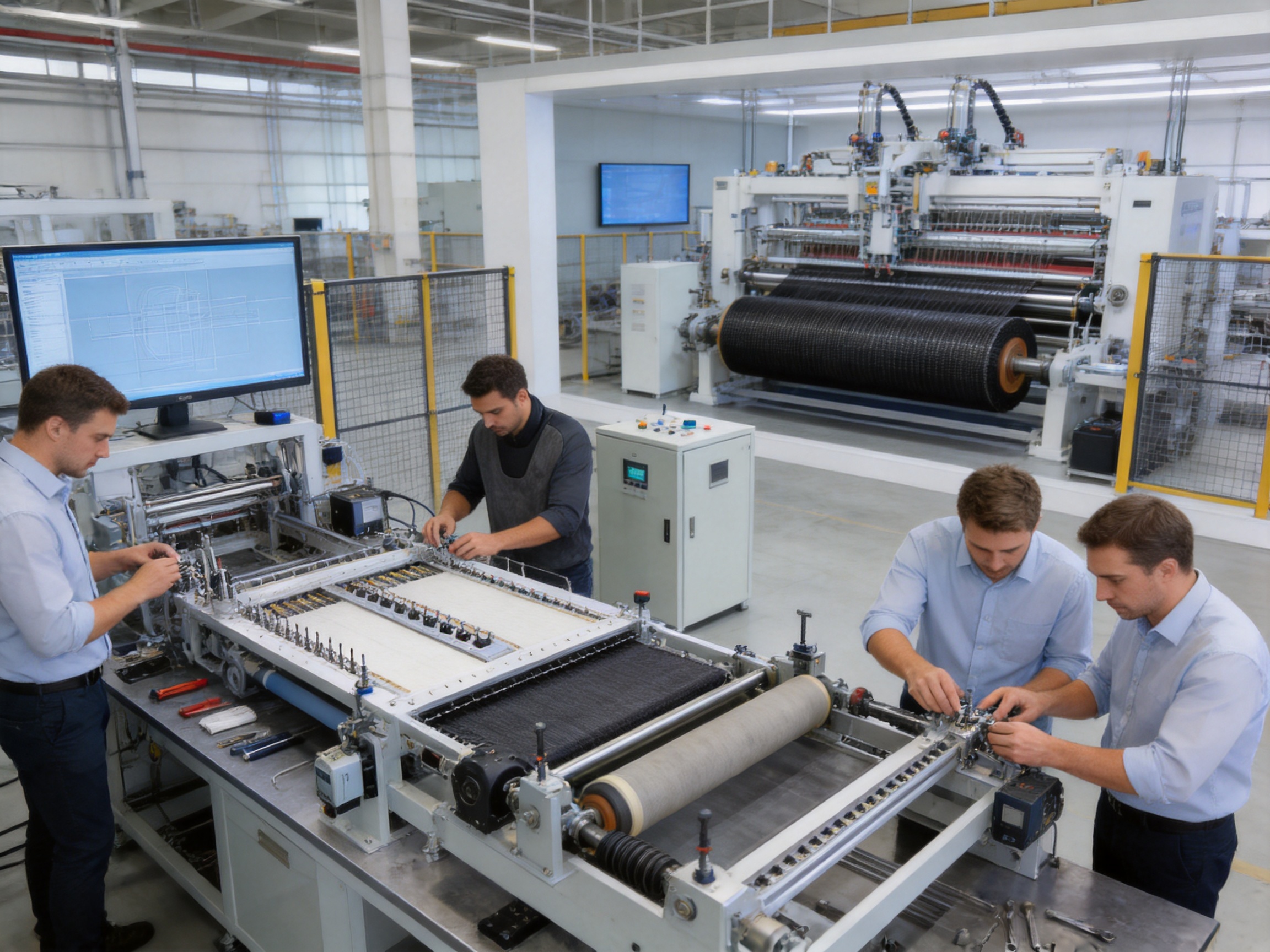
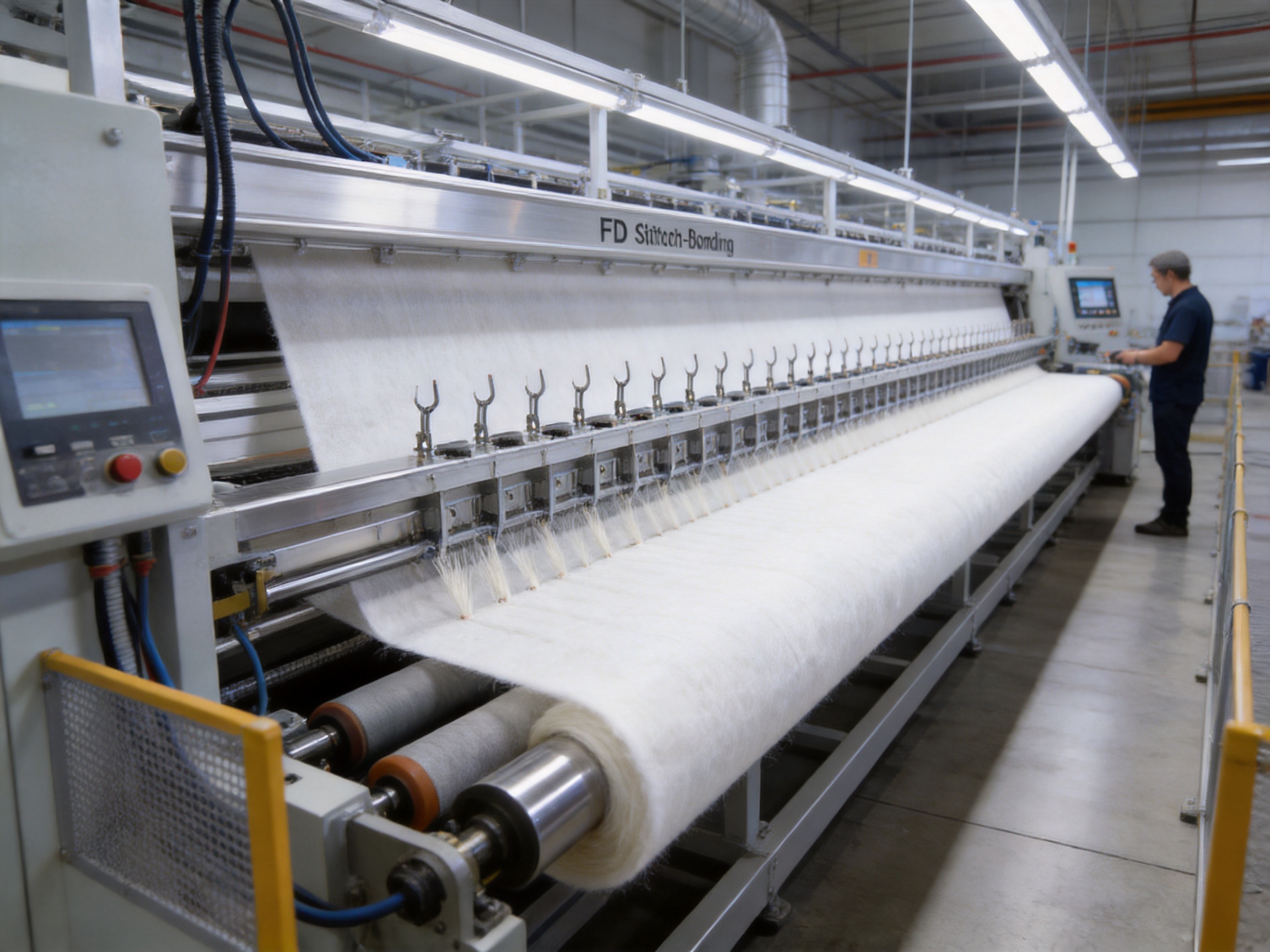
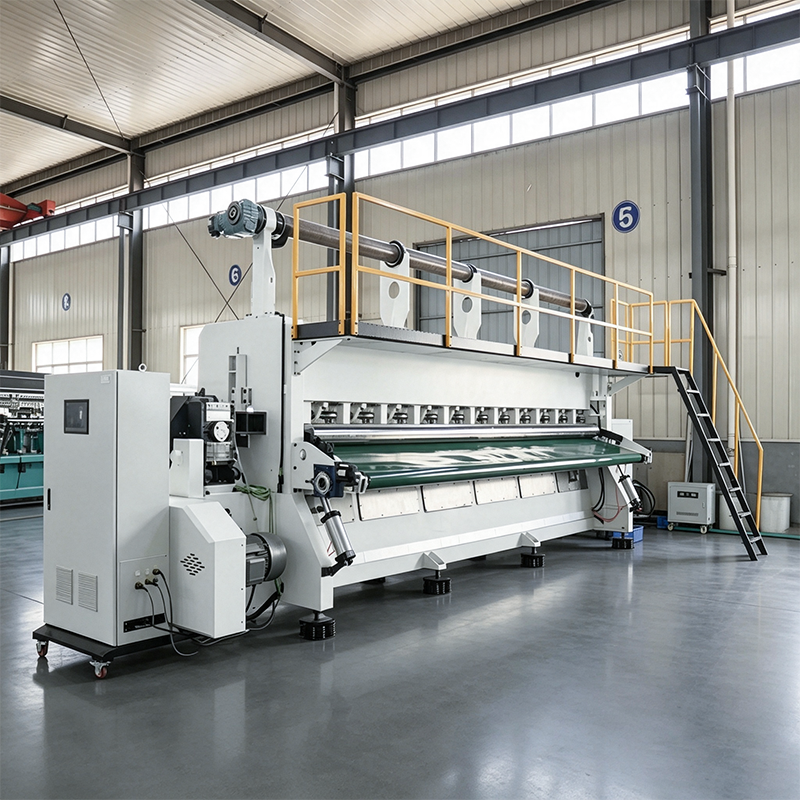
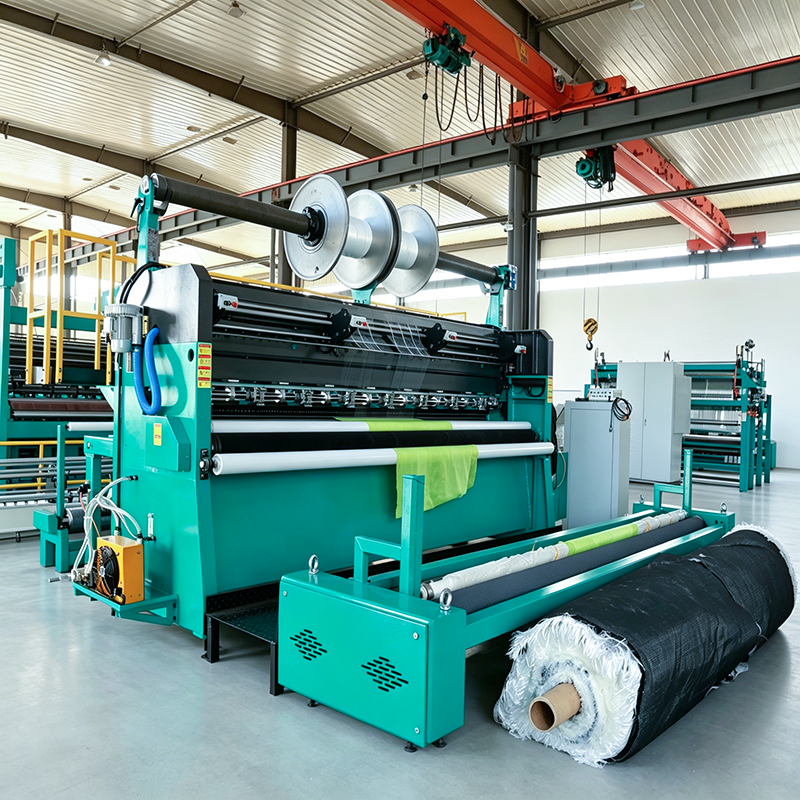
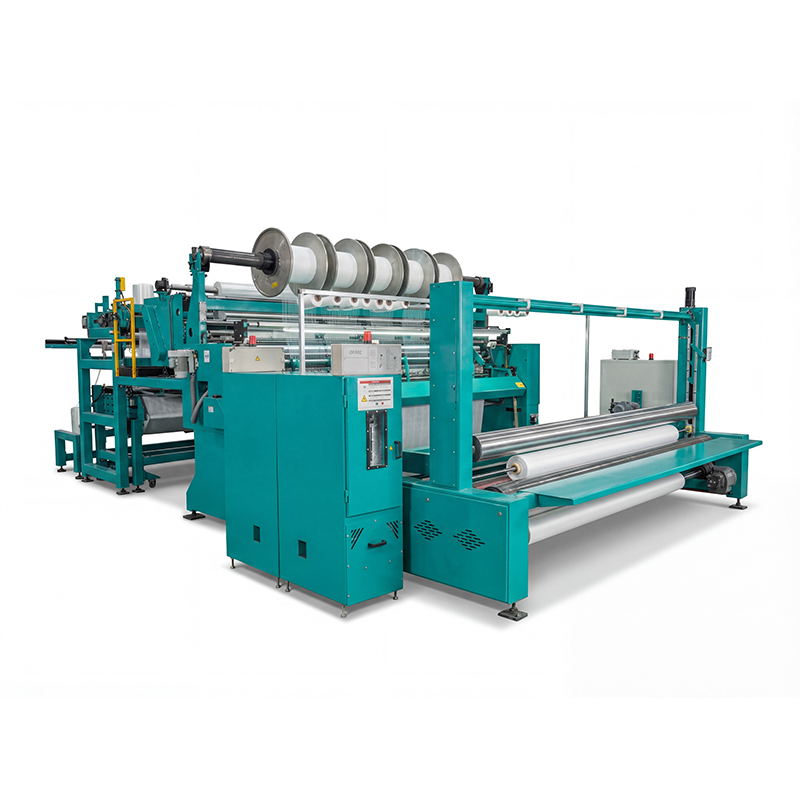
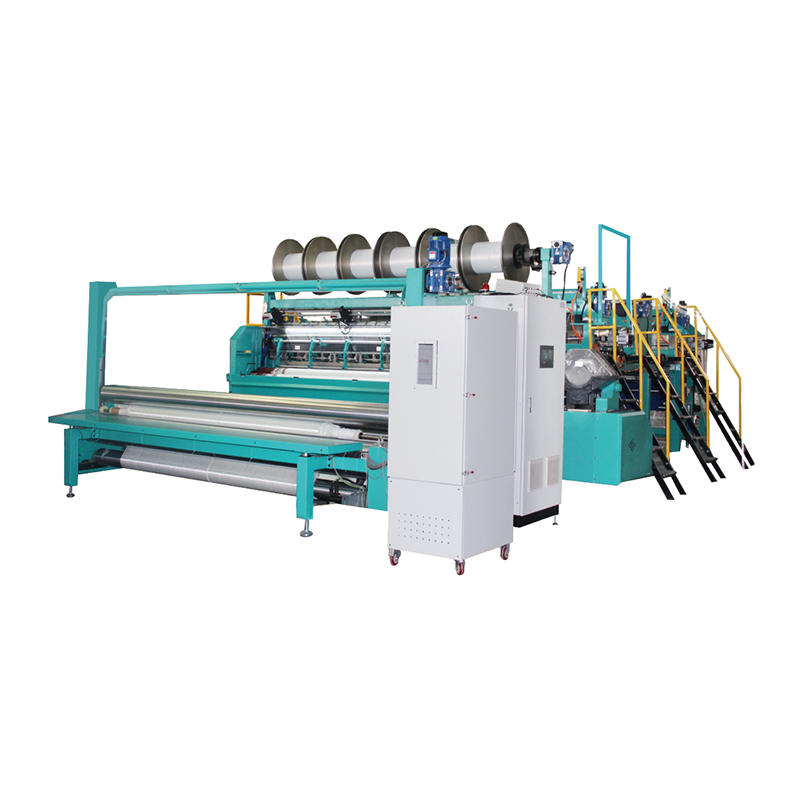
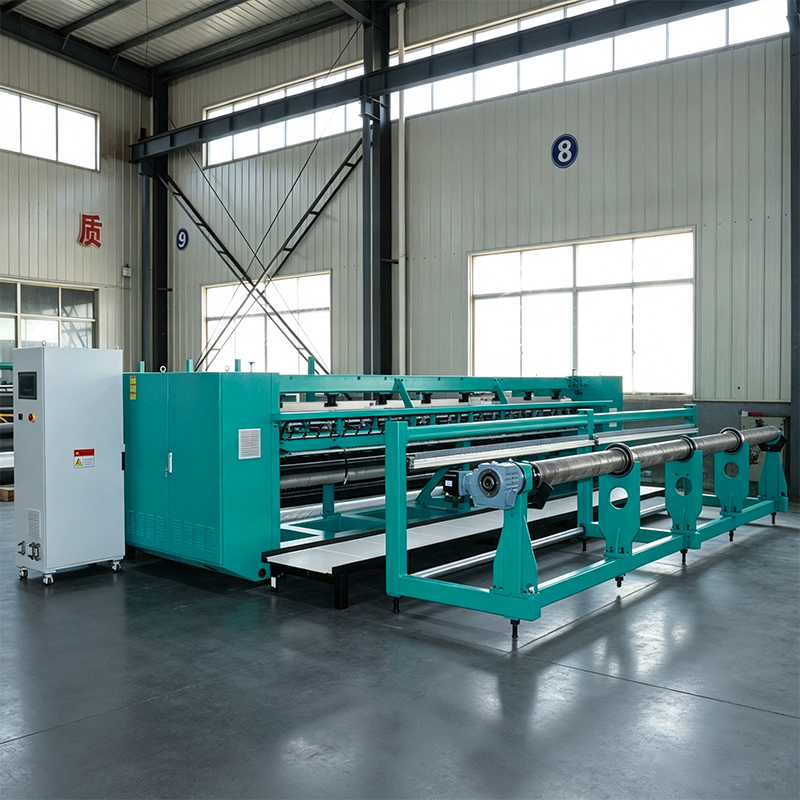
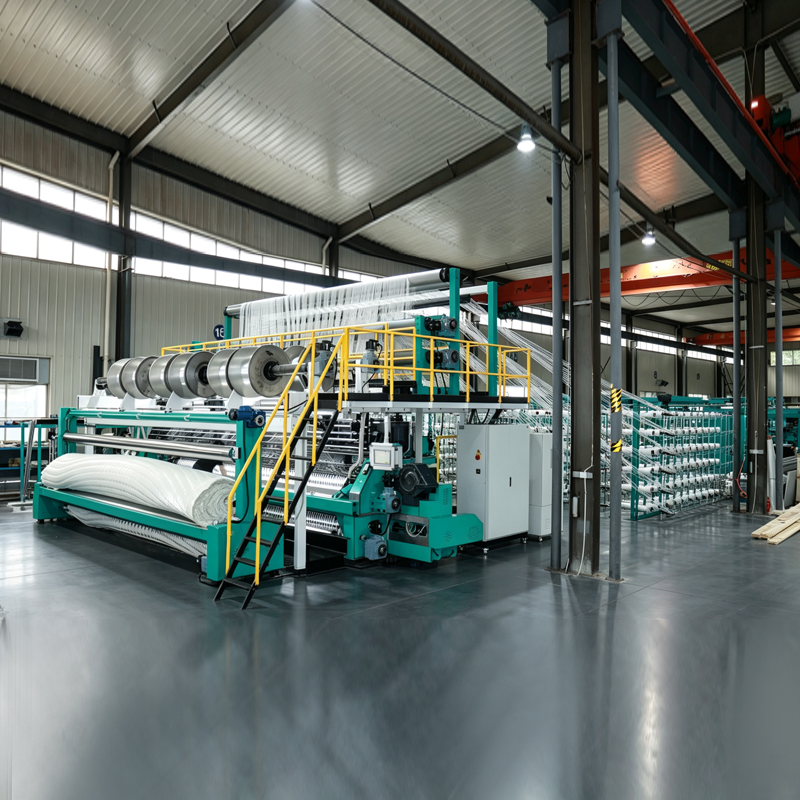
The FD Stitch Bonding Machine is a high-performance textile machine designed to produce stitch-bonded fiber webs for demanding industrial applications. Developed for chemical fiber textiles, the machine uses hooked slot needles to draw fiber bundles directly from a prepared web and form loops through the material. Unlike conventional stitch-bonding systems that require separate stitching yarns, guide needles, warp beams, and yarn-feeding arrangements, this technology creates the bonding structure from the fiber web itself.
This operating principle gives the machine a distinctive position within the nonwoven and warp knitting machinery sectors. It reduces the number of auxiliary systems required for production, simplifies machine operation, and supports high-speed manufacturing over a wide range of process settings. Its core application is automotive interior material, where manufacturers require consistent web bonding, stable fabric dimensions, efficient production, and the ability to adapt material structures to changing design requirements.
With a working width of up to 3,600 millimeters and a machine speed range of approximately 50 to 1,500 revolutions per minute, the FD Stitch Bonding Machine is configured for industrial-scale production. Its reference daily output can reach approximately 6,000 square meters, although actual output depends on fiber type, web weight, fabric construction, machine settings, and the production process selected by the user.
The machine is manufactured and supplied by Changzhou Yuanyang Electromechanical Technology Co., Ltd., a textile machinery enterprise based in Jiangsu Province, China. The company combines research and development, precision manufacturing, sales, technical service, and customized equipment engineering. Its broader product portfolio includes stitch-bonding machines, biaxial and multiaxial warp knitting machines, carbon fiber textile machinery, powder scattering machines, web-laying machines, and specialized warp knitting accessories.
This article examines the structure, working principle, production advantages, application value, manufacturing capabilities, and selection considerations associated with the FD Stitch Bonding Machine.
FD Stitch Bonding Machine
1. Understanding the FD Stitch Bonding Process
Stitch bonding is a method of consolidating a fiber web by forming knitted or looped elements through the web structure. The resulting material can combine the lightweight characteristics of a web with the dimensional stability and mechanical integrity provided by loop formation. Depending on the fiber type, web preparation, bonding pattern, and finishing process, stitch-bonded materials can be developed for insulation, reinforcement, interior trim, acoustic components, filtration-related structures, and other technical textile applications.
The FD Stitch Bonding Machine follows a yarnless bonding concept. In a conventional stitch-bonding machine, stitching yarn is delivered to the needle elements through a yarn-feeding system. Guide needles, warp beams, tension devices, and associated yarn-control components are needed to ensure that the yarn reaches the correct position at the correct time. The yarn then forms stitches that hold the web together.
The FD system replaces this separate stitching-yarn arrangement with hooked slot needles. These needles directly pick up fiber bundles from the fiber web. As the needles move through the working zone, selected fibers are drawn into loop formations. The repeated needle action creates an integrated bonding structure within the web rather than attaching a separate yarn network to it.
This difference is important from both a mechanical and production perspective. The machine does not depend on a continuous supply of stitching yarn for the basic bonding operation. The manufacturer therefore does not need to design production around yarn count, yarn breakage, beam preparation, yarn package changes, or the compatibility of stitching yarn with the web material. Instead, the process is organized around the quality and distribution of the web, the needle configuration, the machine speed, and the selected structural parameters.
For producers of chemical fiber textiles, this can provide greater flexibility. Polyester, polypropylene, polyamide, and other suitable synthetic fiber webs may be considered according to the required application and process conditions. The final result depends on fiber length, crimp, fineness, web orientation, web density, needle penetration, stitch geometry, and downstream finishing. The machine is therefore best understood as part of a complete material-production system rather than as an isolated piece of equipment.
1.1 Direct fiber engagement
The direct engagement of fiber bundles is the defining feature of the FD Stitch Bonding Machine. Hooked slot needles enter the web and capture fibers without relying on a separate stitching thread. Their movement creates localized loop structures that connect different regions of the web. When repeated over the machine width and throughout the production length, these structures form a stable bonded textile.
Direct fiber engagement can be particularly valuable where the producer wants the final material to remain dominated by the properties of the base fiber web. A separate stitch yarn may add a contrasting component, alter surface appearance, or influence weight and flexibility. A yarnless approach can help maintain a more integrated material structure and may simplify the development of products in which the base fiber is expected to provide the principal functional characteristics.
1.2 Relationship between web preparation and final quality
Although the machine reduces the need for additional yarn preparation, it does not eliminate the importance of upstream web formation. The web must be sufficiently uniform in mass distribution, width, thickness, and fiber orientation for the needles to engage it consistently. Irregular web feeding may result in variations in stitch formation, local density, fabric weight, or surface appearance.
For this reason, the FD machine is commonly used with carefully controlled opening, blending, carding, cross-lapping, or web-laying operations, depending on the selected fiber and product design. The company’s experience with web-laying equipment and related textile machinery supports the development of complete or partially integrated production solutions.
2. Main Technical Characteristics
The FD Stitch Bonding Machine is designed for high-output production while retaining a broad adjustment range. Its published operating data provides a useful starting point for equipment evaluation.
| Technical Item | Reference Specification | Production Significance |
|---|---|---|
| Machine type | FD Stitch Bonding Machine | Designed for yarnless bonding of prepared fiber webs |
| Applicable fibers | Chemical fibers | Suitable for synthetic fiber web development and industrial textile production |
| Needle principle | Hooked slot needles | Needles directly pick up fiber bundles and form loops |
| Machine speed | Approximately 50–1,500 r/min | Allows adjustment for different web structures and process requirements |
| Working width | Up to 3,600 mm | Supports wide-format industrial textile production |
| Reference daily production | Approximately 6,000 m² | Actual output varies according to construction, speed, fiber, and process conditions |
| Core product field | Automotive interior materials | Supports interior components requiring lightweight and stable textile structures |
The speed range is especially important because different materials require different levels of mechanical action. A light, uniform web may be processed at a higher speed, while a denser or more complex structure may require slower operation to maintain stable needle penetration and loop formation. The ability to adjust speed across a wide range allows the user to balance output, quality, material behavior, and equipment load.
The 3,600-millimeter working width is suitable for wide industrial textile applications. Wide working widths can reduce the number of longitudinal seams or narrow strips required when producing large components. They can also improve production efficiency by allowing more material to be manufactured in a single pass. However, the practical benefit depends on the customer’s downstream cutting, laminating, molding, and assembly operations.
The reference production figure of approximately 6,000 square meters per day should be treated as an indicative value rather than a guaranteed result for every product. Production output is affected by machine speed, working width utilization, web weight, stitch density, needle configuration, startup and shutdown time, inspection requirements, material changes, and maintenance intervals. A proper technical assessment should therefore include representative raw material trials and a defined product specification.
3. Advantages over Conventional Stitch-Bonding Equipment
The FD Stitch Bonding Machine is differentiated by its yarnless operating principle and simplified production architecture. Its advantages over conventional equipment can be evaluated in terms of auxiliary systems, process flexibility, production efficiency, operating complexity, and material development.
3.1 No additional stitching yarn
The most direct advantage is the elimination of additional stitching yarn for the bonding action. Conventional stitch-bonding equipment may require continuous yarn delivery to multiple needle bars or guide systems. This creates a separate raw-material cost and introduces additional variables into production. Yarn quality, yarn tension, package condition, yarn breakage, and yarn availability can all influence machine performance.
By using fiber bundles from the web, the FD system reduces dependence on a separate stitching-yarn supply. This can simplify raw-material planning and reduce the number of consumable materials that must be managed on the production floor. It may also make it easier to develop products where the fiber web itself should dominate the appearance, composition, or performance of the finished textile.
3.2 Elimination of guide needles and warp beams
The yarnless process eliminates the need for yarn-feeding systems such as guide needles and warp beams used for conventional stitching-yarn delivery. This does not merely remove individual components; it changes the preparation and maintenance requirements of the line.
Warp beams require winding, storage, handling, installation, and tension control. Guide needles and yarn paths require correct threading, alignment, cleaning, inspection, and adjustment. Removing these elements can reduce setup operations and shorten the preparation process when changing between product types. It can also reduce the number of locations where yarn can become entangled, damaged, or incorrectly threaded.
A simpler production path is particularly useful for manufacturers that produce multiple textile specifications in relatively short runs. The less time required for beam preparation and yarn threading, the more easily the production schedule can respond to customer orders, trial development, and market changes.
3.3 High machine speed and production potential
The machine is designed for speeds from approximately 50 to 1,500 revolutions per minute. High-speed operation can support substantial production output when the web quality and product design are compatible with the selected settings. The ability to combine wide working width with high operating speed creates a strong productivity profile for industrial manufacturers.
High speed alone does not determine economic performance. The useful measure is stable output that meets quality requirements. A machine that operates quickly but produces excessive defects, requires frequent stops, or causes high maintenance costs may not be efficient in practice. The FD machine’s value lies in the combination of speed, a wide adjustment range, and a direct fiber-bonding process that can reduce the complexity of the production line.
3.4 Flexible adjustment range
Textile manufacturers often need to produce materials with different weights, thicknesses, densities, strengths, and surface characteristics. A narrow operating window can limit the range of products that a machine can manufacture. The FD Stitch Bonding Machine is designed with a broad parameter adjustment range to accommodate changing production requirements.
Adjustable parameters may include operating speed, needle action, stitch-related settings, web feed conditions, and other process variables depending on the final machine configuration. The exact adjustment range should be confirmed during technical discussions and product trials. The general advantage is that the equipment can be adapted to different construction targets rather than being dedicated to one narrow product specification.
3.5 Simplified operation
Because the machine does not require a conventional stitching-yarn feeding system, the operator can focus on web loading, process settings, machine monitoring, and quality control. Simplification does not mean that operator training is unnecessary. Correct setup remains essential, particularly when working with different fibers and web constructions.
However, removing several yarn-management steps can reduce the number of operations that operators must perform before production begins. Clear operating procedures can help improve repeatability across shifts and reduce the risk of errors related to incorrect yarn threading, beam installation, or yarn tension adjustment.
3.6 Adaptation to market demand
Automotive textile suppliers increasingly need to respond to changing interior designs, weight-reduction programs, sustainability targets, acoustic requirements, and localized production needs. A machine with flexible operating conditions can support faster product development and smaller-scale trial production alongside routine manufacturing.
The FD technology can be used as a platform for developing different chemical fiber web products. Manufacturers may adjust fiber selection, web weight, orientation, and bonding conditions to pursue different combinations of softness, rigidity, resilience, drape, acoustic behavior, and dimensional stability. The machine’s flexible configuration can therefore support both established products and new material concepts.
4. Suitability for Automotive Interior Materials
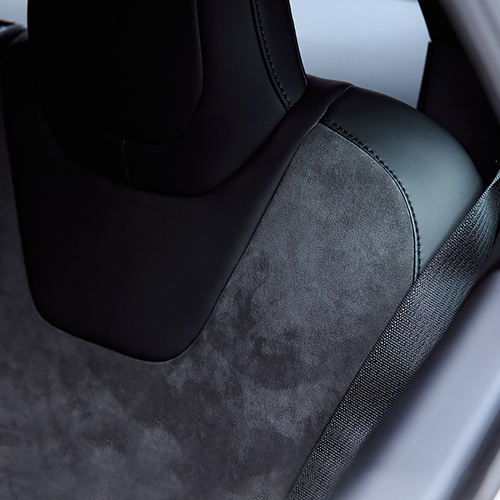
Automotive interiors contain numerous textile and fiber-based components. These may include trim substrates, headliner-related materials, door-panel components, trunk and luggage-compartment materials, floor-related structures, acoustic layers, seat-adjacent materials, and decorative or functional backing fabrics. Each application has its own requirements for appearance, weight, thickness, stiffness, noise absorption, temperature resistance, process compatibility, and long-term stability.
The FD Stitch Bonding Machine is focused on automotive interior materials because its process can produce wide, lightweight, and structurally integrated fiber textiles. A stitch-bonded web may be engineered to provide support for later lamination, molding, coating, needling, or composite construction. The final performance is determined by the complete material design, but the bonding stage provides an important foundation.
4.1 Lightweight construction
Vehicle manufacturers and component suppliers continuously investigate ways to reduce vehicle weight without compromising comfort or safety-related performance. Fiber webs can offer low-density construction, and stitch bonding can improve handling and dimensional integrity without requiring a heavy woven substrate.
A yarnless bonding process may allow the manufacturer to maintain a high proportion of selected chemical fibers in the material. Depending on the product design, this can support the development of lightweight interior substrates that are easy to process and suitable for integration with films, foams, decorative skins, or molded components.
4.2 Dimensional stability and handling
Loose fiber webs are difficult to transport, cut, laminate, and assemble because they can shift, stretch, or lose their shape. Stitch bonding creates a network of looped fiber connections that helps stabilize the web. This improved integrity can make the material easier to handle during downstream operations.
For automotive suppliers, handling stability is important because materials may need to pass through several operations before installation. These operations can include slitting, cutting, laminating, thermoforming, molding, adhesive application, compression, and automated assembly. A stable textile substrate can contribute to better process consistency and reduced material damage.
Automotive interiors increasingly incorporate materials that help manage airborne and structure-borne noise. Fiber-based materials can be designed to interact with sound through their porosity, thickness, density, and layered construction. Stitch bonding can help create or maintain a controlled fiber structure suitable for further acoustic development.
The FD machine does not by itself determine the acoustic performance of the finished product. Testing must be conducted on the complete material or component under appropriate conditions. Nevertheless, the machine offers a production method for developing fiber structures that may be combined with other layers to achieve specific acoustic and comfort objectives.
4.4 Compatibility with composite and multilayer structures
Many automotive interior products are multilayer materials. A fiber web may be laminated to a film, foam, decorative textile, nonwoven, or molded polymer layer. The stitch-bonded base can provide a stable support structure for such combinations.
Manufacturers can evaluate fiber type, web orientation, stitch density, and thickness in relation to the selected bonding or molding process. The aim may be to achieve reliable adhesion, controlled compression, improved tear resistance, or stable shaping behavior. The broad adjustment range of the FD machine can support this type of material engineering.
5. Manufacturing Strengths of the Equipment Supplier
The performance of a textile machine depends not only on its published specifications but also on the engineering capability of its manufacturer. Changzhou Yuanyang Electromechanical Technology Co., Ltd. operates as a high-tech enterprise integrating research and development, manufacturing, sales, and service. This integrated structure is important for specialized machinery because customers often require more than a standard catalog product.
5.1 Industry location and technical environment
The company is located in Jiangsu Province, a major center of China’s textile equipment industry. The region has an established industrial base covering textile machinery design, machining, electrical control, component manufacturing, textile production, and equipment support services. Operating within this environment provides access to technical resources and manufacturing experience relevant to warp knitting and specialty textile machinery.
A strong industrial ecosystem can also support cooperation among equipment engineers, textile producers, component suppliers, and process specialists. Such cooperation is valuable when a machine must be adapted to unusual fiber types, special width requirements, complex fabric designs, or demanding production conditions.
5.2 Research and development capabilities
The company maintains a professional research and development team composed of experienced industry engineers. Its stated focus includes improving product performance, structural design, stability, and alignment with advanced industry standards. For the FD Stitch Bonding Machine, research and development work is relevant to needle movement, web handling, machine rigidity, speed control, adjustment systems, and long-term operating reliability.
Textile machinery development requires an understanding of both mechanical engineering and textile process behavior. A machine may be mechanically sound but unsuitable for a particular web if the needle action, feed stability, or adjustment system does not correspond to the material. Engineers with textile equipment experience can evaluate the relationship between machine construction and fabric formation more effectively.
5.3 Experience with non-standard equipment
Many textile manufacturers cannot use a completely standard machine because their products involve unusual widths, special fiber combinations, nontraditional structures, or unique downstream processes. Yuanyang focuses on non-standard equipment configurations, complex fabric designs, difficult-to-process materials, and production lines requiring long-term stability.
This capability is relevant to automotive textile suppliers, which may have to meet customer-specific requirements regarding width, basis weight, thickness, material composition, roll dimensions, production speed, or integration with other machinery. A supplier able to evaluate and modify equipment according to an application can provide more practical support than a manufacturer offering only fixed specifications.
5.4 Broader equipment portfolio
The company’s product range includes stitch-bonding machines, biaxial warp knitting machines, multiaxial warp knitting machines, carbon fiber multiaxial warp knitting machines, powder scattering machines, web-laying machines, and precision warp knitting accessories. This portfolio demonstrates experience across several related textile technologies.
For customers planning a complete line, a broad product range can simplify technical coordination. Web preparation, powder application, reinforcement placement, stitching, and fabric formation often influence one another. A supplier familiar with multiple stages of the process may be better positioned to identify compatibility requirements and coordinate equipment interfaces.
5.5 Quality control and manufacturing discipline
Reliable textile machinery requires controlled manufacturing processes. Machine frames must maintain alignment under operating loads. Needle beds and guide structures must be manufactured and assembled with appropriate precision. Drive systems, bearings, electrical controls, sensors, and safety devices must be integrated correctly. Every component contributes to the machine’s ability to operate consistently over long production periods.
The company emphasizes rigorous manufacturing processes and quality control. In practical terms, customers should expect technical discussions to cover component selection, assembly tolerances, factory testing, trial operation, documentation, spare parts, and service procedures. These elements help transform a machine design into a dependable production asset.
6. Advanced Production and Assembly Considerations
The FD Stitch Bonding Machine is a complex electromechanical system. Its manufacturing quality depends on the coordination of structural engineering, machining, assembly, electrical control, and process testing. Several areas are particularly important.
6.1 Machine frame and structural rigidity
At high operating speeds, the machine frame must resist vibration and maintain stable alignment across the full working width. A wide machine is exposed to greater structural demands than a narrow machine because the distance between support points and the total moving mass may be higher. Stable frame construction supports consistent needle penetration and helps reduce unwanted variation across the web width.
Structural design must also consider installation conditions. The foundation, leveling, environmental temperature, and floor vibration can affect machine performance. A professional installation procedure should verify that the machine is correctly positioned, leveled, connected, and protected from external vibration sources.
6.2 Needle system precision
The hooked slot needles are central to the FD process. Their geometry determines how fiber bundles are captured and formed into loops. Needle quality, installation accuracy, spacing, and replacement procedures all influence fabric formation.
Needle systems must be manufactured and assembled so that the working elements move through the web in a controlled relationship. Small deviations can affect loop formation, surface appearance, bonding density, and material damage. Routine inspection and timely replacement of worn needles are therefore essential parts of production management.
6.3 Drive and speed control
The stated speed range of approximately 50 to 1,500 revolutions per minute requires a drive system capable of controlled acceleration, stable operation, and safe stopping. Speed control should allow operators to select an appropriate setting for the web construction rather than simply maximizing revolutions.
Controlled speed changes are also useful during startup, shutdown, product transitions, and maintenance. A gradual acceleration sequence can reduce mechanical shock and help operators confirm that the web is feeding correctly before full-speed production begins.
6.4 Web transport and alignment
Uniform web transport is essential for a consistent stitch-bonded structure. The web should enter the bonding zone at the desired tension and alignment. Excessive tension can stretch or narrow the web, while insufficient control may cause wrinkles, lateral movement, or uneven feeding.
Because the FD machine obtains bonding fibers directly from the web, the relationship between web position and needle action is particularly important. Properly designed transport systems, edge control, guide arrangements, and adjustment procedures help maintain stable production across the 3,600-millimeter working width.
6.5 Electrical control and operator interface
Modern textile equipment requires coordinated control of drive systems, monitoring functions, safety circuits, and operating parameters. An effective control system helps operators observe machine status, set process conditions, respond to abnormal conditions, and record production information.
The control system should be supported by clear documentation and practical training. Operators need to understand startup sequences, emergency stops, speed adjustment, needle inspection, web alignment, alarm responses, and basic maintenance requirements. Good human-machine interaction contributes to both safety and production repeatability.
7. Production Workflow with the FD Machine
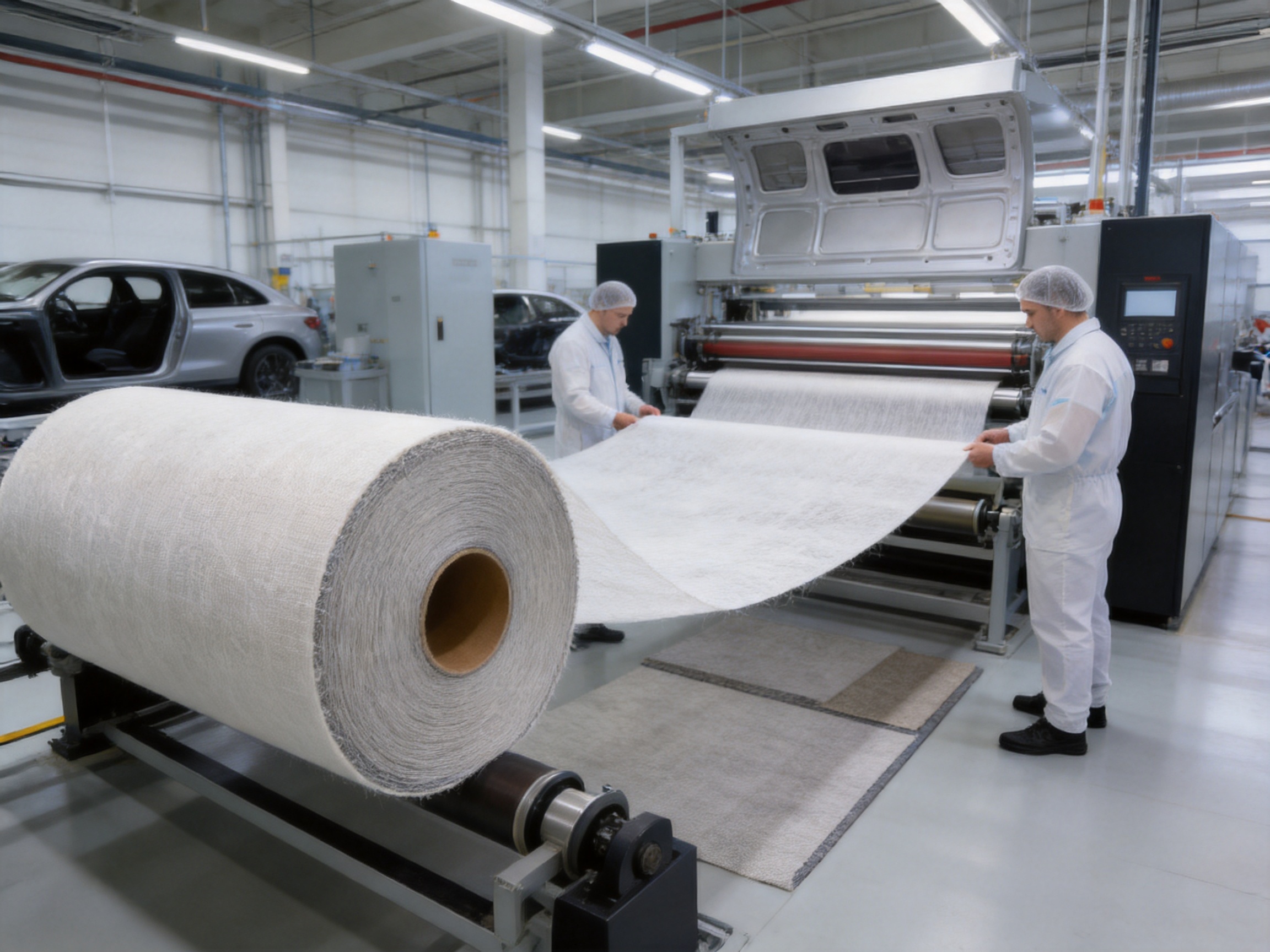
A typical production workflow begins with the selection and preparation of chemical fibers. The fiber may be opened, blended, carded, layered, cross-lapped, or otherwise formed into a web according to the target product. The web is then introduced into the FD Stitch Bonding Machine, where hooked slot needles capture fiber bundles and create the bonding loops.
After bonding, the material may be inspected, wound, slit, laminated, coated, thermally treated, molded, or combined with other layers. The precise sequence depends on the application. Automotive interior products may require additional operations to achieve the desired surface, shape, stiffness, flame behavior, acoustic properties, or attachment characteristics.
7.1 Fiber selection
Chemical fibers are selected according to the final product’s mechanical and environmental requirements. Polyester may be considered for dimensional stability, process versatility, and broad industrial use. Polypropylene may be selected where low density and chemical resistance are important. Polyamide and other synthetic fibers may be evaluated when higher strength or specialized performance is required.
The appropriate selection depends on the customer’s specification. Fiber fineness, length, crimp, cross-sectional shape, melting behavior, color, and finish can all influence web formation and stitch bonding. Trial production is recommended before confirming a commercial configuration.
7.2 Web formation
The web must be designed to provide the required basis weight, thickness, orientation, and uniformity. A cross-lapped web may offer a different strength balance from a predominantly machine-direction web. The bonding pattern may then be selected to complement the intended orientation and end use.
For wide automotive materials, edge quality is important. The web should maintain consistent width and avoid excessive thinning near the edges. Correct preparation can improve utilization of the full working width and reduce trimming losses.
7.3 Machine setup
Before production, operators should verify needle condition, web path, machine alignment, speed settings, safety devices, and downstream winding or take-up arrangements. Initial operation is typically performed at a lower speed so that the web and bonding behavior can be inspected.
Once the process is stable, the speed can be increased toward the intended production setting. The optimum speed is not necessarily the maximum available speed. It is the speed at which the machine provides the best balance of output, quality, energy use, wear, and process stability.
7.4 Quality inspection
Inspection may include visual examination, width measurement, basis-weight testing, thickness measurement, tensile testing, tear testing, peel or bonding assessment, dimensional stability evaluation, and application-specific performance testing. Automotive customers may also require tests related to odor, emissions, flammability, acoustic behavior, aging, and compatibility with adhesives or molding processes.
Quality records should connect test results with fiber type, web construction, machine speed, bonding settings, production date, and operator information. This traceability helps manufacturers identify causes of variation and reproduce approved material specifications.
8. Operating and Maintenance Advantages
A machine’s total value includes its operation and maintenance profile, not only its purchase price. The yarnless structure of the FD machine can simplify some maintenance tasks by reducing the number of yarn-feeding components. Fewer guide needles, beams, and yarn paths can mean fewer items requiring threading, cleaning, alignment, and replacement.
Nevertheless, the machine remains a precision production system that requires disciplined maintenance. Needle elements, moving parts, bearings, drive components, web guides, electrical systems, and safety devices should be inspected according to a planned schedule.
8.1 Preventive maintenance
Preventive maintenance should include cleaning accumulated fiber, checking lubrication points, inspecting needle condition, verifying fasteners, examining drive components, checking sensors, and confirming the operation of emergency-stop circuits. The maintenance interval should be adjusted according to running hours, fiber shedding, operating speed, and environmental conditions.
Fiber dust can accumulate around moving parts and electrical components. Regular cleaning helps maintain cooling, visibility, and reliable sensor operation. Maintenance personnel should use methods that do not damage precision components or force contamination into bearings and control systems.
8.2 Spare parts planning
Needles and other wear parts should be maintained in sufficient quantity to avoid extended downtime. A spare-parts plan can also include belts, bearings, sensors, electrical components, fasteners, and other items identified by the equipment supplier. The exact list depends on the final machine configuration and customer operating conditions.
Using appropriate replacement parts helps preserve machine geometry and process stability. When a component is changed, alignment and operating performance should be checked before the equipment returns to full production.
8.3 Operator training
Training should cover the machine’s operating principle, safe startup and shutdown, speed selection, web loading, needle inspection, quality monitoring, alarm response, emergency procedures, and basic troubleshooting. Operators should understand the relationship between machine settings and material behavior.
Training is especially important during product changes. A web with a different fiber composition or basis weight may require a different speed or setup. Operators who understand the process can identify problems earlier and avoid unnecessary mechanical adjustments.
9. Comparison with Alternative Textile Bonding Methods
The FD Stitch Bonding Machine should be compared with alternative bonding methods according to the product objective rather than by machine category alone. Thermally bonded nonwovens, chemically bonded materials, needle-punched products, conventional stitch-bonded fabrics, and mechanically reinforced structures each have their own advantages.
9.1 Compared with conventional yarn-based stitch bonding
The clearest distinction is the absence of additional stitching yarn. Conventional yarn-based systems may provide precise stitch designs and can be suitable where a separate yarn contributes to strength, appearance, or structure. However, they require more yarn-management equipment and involve additional material preparation.
The FD system is advantageous when the manufacturer wants a simpler line, reduced dependence on stitching yarn, and a bonding structure generated from the base web. The best choice depends on whether the final product requires a separate yarn component or benefits from direct fiber integration.
9.2 Compared with needle punching
Needle-punched materials are consolidated by repeatedly penetrating the web with barbed needles. This method is widely used and can produce strong, bulky, and flexible nonwovens. The FD process uses hooked slot needles to form loop structures, creating a different material architecture.
Stitch bonding may be preferred when the manufacturer wants a looped bonding pattern, broad process adjustment, or a specific balance between web integrity and open structure. Needle punching may be more suitable for other thicknesses, densities, or surface requirements. Product trials are necessary because the two processes produce different mechanical and visual characteristics.
9.3 Compared with thermal bonding
Thermal bonding uses heat to soften or melt selected fibers, binders, films, or powder components. It can be efficient for suitable fiber blends but requires thermal compatibility and precise control of temperature and pressure. The FD process is primarily mechanical and does not depend on melting a bonding component during the basic loop-formation step.
This may provide greater freedom in selecting the fiber web when thermal bonding would alter fiber properties or require a special binder. At the same time, thermal bonding may be preferred where a fused surface or high-temperature consolidation is required. The application determines which method is appropriate.
9.4 Compared with adhesive bonding
Adhesive bonding can join layers and provide strong localized or continuous adhesion. It may introduce concerns regarding adhesive distribution, curing, emissions, storage, and compatibility. The FD process creates mechanical integration within the web and may reduce the need for adhesive in the basic consolidation stage.
Adhesives can still be used downstream when the final automotive component requires multilayer lamination. The FD material may serve as a stable substrate before adhesive application, depending on the product design.
10. Economic and Operational Value
Equipment investment should be assessed through total operating value. The FD Stitch Bonding Machine may contribute to economic efficiency through reduced auxiliary equipment, lower dependence on stitching yarn, high production potential, wide working width, and flexible product development.
Eliminating a separate stitching-yarn system can reduce the number of consumable inputs and simplify inventory management. The actual cost benefit depends on the price of the stitching yarn, production volume, material yield, energy consumption, maintenance requirements, and the customer’s existing equipment.
High production speed and a wide working width may improve output per machine hour. Greater output can reduce the equipment cost allocated to each square meter, provided that quality remains stable and the machine is utilized effectively. A production schedule should account for setup time, cleaning, inspection, roll changes, maintenance, and product transitions.
Flexible parameters can also create economic value by allowing one machine to produce several product families. Instead of purchasing separate equipment for every structure, a manufacturer may use a configurable platform for a broader range of chemical fiber textiles. This advantage is strongest when the product range shares compatible web widths and process principles.
11. Customization and Project Evaluation
A textile machinery project should begin with a clear description of the intended product. Important information includes fiber composition, fiber length and fineness, web type, basis weight, thickness, width, bonding density, roll diameter, production speed, downstream process, and required testing.
The customer should also define the operating environment, available floor space, power supply, compressed air or other utilities, material-handling requirements, and local safety standards. These details help the equipment manufacturer develop a practical configuration rather than relying only on general specifications.
11.1 Recommended trial information
For a meaningful machine trial, the customer should provide representative fibers and web samples whenever possible. A sample that accurately reflects commercial production is more useful than a laboratory web with significantly different uniformity or density.
Trial objectives may include achieving a target basis weight, assessing loop formation, measuring width uniformity, evaluating surface appearance, checking tensile behavior, and confirming compatibility with lamination or molding. The trial should document machine speed, web feed, needle configuration, and other relevant parameters.
11.2 Line integration
The FD machine may be integrated with upstream web-forming equipment and downstream winding, slitting, laminating, or finishing equipment. Interface planning should cover web height, width, speed synchronization, roll handling, control signals, operator access, and emergency-stop coordination.
Integration is particularly important for wide machines. Material movement, edge control, and roll handling must be planned to prevent bottlenecks. The equipment supplier’s experience with web-laying machines and related textile equipment can support this type of project evaluation.
12. Company Service and Long-Term Cooperation
Specialty textile machinery requires ongoing technical cooperation. Customers may need assistance with installation, commissioning, operator training, process optimization, spare parts, maintenance, and future modifications. A supplier with an integrated service system can help reduce the risk associated with introducing new equipment.
Yuanyang positions itself as a provider of reliable warp knitting and specialty textile equipment solutions for textile enterprises worldwide. Its service approach is connected to its manufacturing and engineering capabilities, allowing technical feedback from installed equipment to inform future improvements.
Long-term cooperation is especially valuable when the customer develops new materials. A machine initially purchased for one automotive interior product may later be required to process another fiber blend or web construction. The supplier’s ability to review new requirements and propose adjustments can extend the useful life of the equipment.
Technical documentation should include operation manuals, maintenance recommendations, component information, electrical diagrams, safety instructions, and troubleshooting guidance. Clear documentation supports local maintenance teams and helps preserve the machine’s performance over time.
13. Frequently Asked Questions
Q1: What is the main purpose of the FD Stitch Bonding Machine?
The machine is designed to consolidate chemical fiber webs by using hooked slot needles to pick up fiber bundles and form loops. Its core application is the production of stitch-bonded materials for automotive interiors and related technical textile uses.
Q2: Does the machine require stitching yarn?
No additional stitching yarn is required for the basic bonding process. The hooked slot needles directly engage fiber bundles from the prepared web. This removes the need for a conventional stitching-yarn feeding system involving components such as guide needles and warp beams.
Q3: What fibers can be processed?
The machine is intended for chemical fibers. Suitable fiber types and constructions should be confirmed through technical evaluation because fiber length, fineness, crimp, web density, and other characteristics influence needle engagement and final fabric quality.
Q4: What is the machine speed?
The reference machine speed range is approximately 50 to 1,500 revolutions per minute. The appropriate operating speed depends on the fiber web, bonding structure, quality requirements, and production objectives.
Q5: What is the working width?
The reference working width is up to 3,600 millimeters, or approximately 142 inches. The effective production width may depend on the final machine configuration, edge conditions, trimming requirements, and customer process.
Q6: How much can the machine produce per day?
The reference daily production is approximately 6,000 square meters. This figure is provided for reference only. Actual output varies according to machine speed, fabric construction, web weight, process stability, product changes, inspection time, and maintenance requirements.
Q7: Why is the yarnless process advantageous?
The yarnless process can reduce raw-material complexity, eliminate stitching-yarn preparation, simplify operation, and reduce the number of yarn-management components. It may also help manufacturers develop materials in which the base chemical fiber web provides the primary structure.
Q8: Is the machine suitable for automotive interior materials?
Yes. Automotive interior materials are identified as the core product field. The machine can produce wide, bonded fiber structures that may be used as substrates or functional layers in interior applications, subject to the required material testing and downstream processing.
Q9: Can the machine produce different fabric constructions?
The machine is designed with a broad parameter adjustment range and can be adapted to different product requirements. The achievable constructions depend on fiber properties, web formation, needle configuration, speed, and other technical conditions. Product trials are recommended before final selection.
Q10: What should a customer prepare before requesting a quotation?
The customer should prepare information about fiber composition, web type, target width, basis weight, thickness, bonding requirements, production volume, downstream processes, site utilities, and expected automation level. Representative fiber or web samples are also useful for technical evaluation.
Q11: Does the supplier provide customized equipment?
The company specializes in non-standard equipment configurations and customized solutions for special textile applications. The scope of customization should be discussed according to the required working width, process parameters, line integration, material characteristics, and production targets.
Q12: What other equipment does the company manufacture?
The company’s product range includes stitch-bonding machines, biaxial warp knitting machines, multiaxial warp knitting machines, carbon fiber multiaxial warp knitting machines, powder scattering machines, web-laying machines, and specialized warp knitting accessories.
14. Conclusion
The FD Stitch Bonding Machine provides a specialized approach to chemical fiber web consolidation. Its hooked slot needles directly pick up fiber bundles from the web and form loops without requiring additional stitching yarn, guide needles, or warp beams for conventional yarn feeding. This design can simplify the production line, reduce preparation requirements, and provide flexibility for manufacturers developing different technical textile structures.
Its main performance advantages include a high machine speed range, a wide working width of up to 3,600 millimeters, reference daily production of approximately 6,000 square meters, and a broad adjustment range for adapting to different product requirements. These characteristics make the machine particularly relevant to automotive interior material production, where lightweight construction, dimensional stability, processing efficiency, and reliable quality are important.
The value of the equipment is strengthened by the manufacturer’s experience in warp knitting machinery, stitch bonding, web laying, carbon fiber textile machinery, multiaxial structures, and customized equipment. Its integrated research, manufacturing, sales, and service capabilities support projects involving non-standard configurations, complex material designs, difficult fibers, and long-term production stability.
For manufacturers evaluating the machine, the most important next step is a technical trial based on representative fibers and web constructions. By examining needle engagement, bonding quality, speed stability, output, downstream compatibility, and maintenance requirements, the customer can determine the most suitable configuration for the intended product. When correctly matched with web preparation and finishing processes, the FD Stitch Bonding Machine can become an efficient platform for producing advanced chemical fiber textiles for automotive and other industrial markets.
References
1. Changzhou Yuanyang Electromechanical Technology Co., Ltd. Product information for the FD Stitch Bonding Machine.
2. Changzhou Yuanyang Electromechanical Technology Co., Ltd. Corporate information on warp knitting machinery, specialty textile equipment, research and development, and manufacturing capabilities.
3. International Organization for Standardization. General principles for textile testing, dimensional measurement, and textile quality evaluation.
4. Textile Institute. Technical references on nonwoven fabrics, fiber web formation, mechanical bonding, and industrial textile production.
5. Automotive textile industry guidance on interior materials, lightweight structures, acoustic materials, and multilayer component manufacturing.
6. General engineering principles for textile machinery design, needle systems, machine-frame stability, drive control, preventive maintenance, and production-line integration.
Product: FD Stitch Bonding Machine

News
-
Three quotations land on the same desk for the same polyester nonwoven line, and on paper they look interchangeable. Each is priced per metre of working width. Each quotes a similar top speed. Each c...
READ MORE -
What a Stitch Bonding Machine Does A stitch bonding machine is a warp knitting type machine that uses knitting needles and a stitching yarn to hold a web of fibers, a layer of chopped strands, or a la...
READ MORE -
Which Machine Category Matches Each Technical Fiber and Fabric Goal A warp knitting machine is the primary production platform for technical fiber textiles across fiberglass, chemical fiber, and carbo...
READ MORE -
Two quotations land on the same desk. Both offer a multiaxial warp knitting line, both list the same working width, both promise high output. One buyer signs and discovers six months later that the f...
READ MORE
-
Contact Info.
+86-198 5534 1617
+86-134 0158 3002yuanyang@yywarpknitting.com 699#, Shengzhi West Rd, Lvcheng Town, Danyang City, Zhenjiang City, Jiangsu Province, China

-
QR Code
-
Quick Links
Home About Products Manufacturing Customization News Contact -
Product List
Machine for Chemical Fiber Textile Machine for Fiberglass Textile Machine for Carbon Fiber Textile -
About Us
Company Profile Factory Gallery Value-added Service
Copyright © 2026 Changzhou Yuanyang Electromechanical Technology Co., Ltd. All Rights Reserved.
Custom Warp Knitting Machine Manufacturers
