

 English
 中文简体
 русский
 Français
 Español
 Deutsch

High-Strength Biaxial Warp Knitting Machine for Geogrid and Mine Protection Fabrics
2026-11-20
Content
- 1 Purpose of the YRS3-M-H Machine
- 2 Core Product Applications
- 3 How the Biaxial Reinforcement Process Works
- 4 Technical Specifications
- 5 Advantages in High-Strength Reinforcement Production
- 6 Comparison with Less Specialized Equipment
- 7 Configuration and Custom Engineering
- 8 Manufacturing Strengths and Quality Approach
- 9 Installation, Utilities, and Commissioning
- 10 Maintenance for Glass Fiber Production
- 11 Quality Control in Finished Fabric Production
- 12 Production Economics and Efficiency
- 13 Product Selection Within a Reinforcement Textile Line
- 14 Information Required for a Technical Proposal
- 15 Service, Training, and Long-Term Support
- 16 Frequently Asked Questions
- 16.1 What fibers can the YRS3-M-H process?
- 16.2 What is the working width?
- 16.3 What is the machine speed range?
- 16.4 What output can be expected per day?
- 16.5 Can the machine produce different geogrid designs?
- 16.6 Is the machine suitable for heavy glass fiber yarn?
- 16.7 How does the machine preserve yarn strength?
- 16.8 Can the machine be integrated with coating or laminating equipment?
- 16.9 What quality checks are performed before delivery?
- 16.10 What maintenance is most important?
- 16.11 Does the company provide operator training?
- 16.12 How should a customer begin a project?
- 17 Conclusion
- 18 References
- 19 Product: YRS3-M-H High Strength Biaxial Warp Knitting Machine
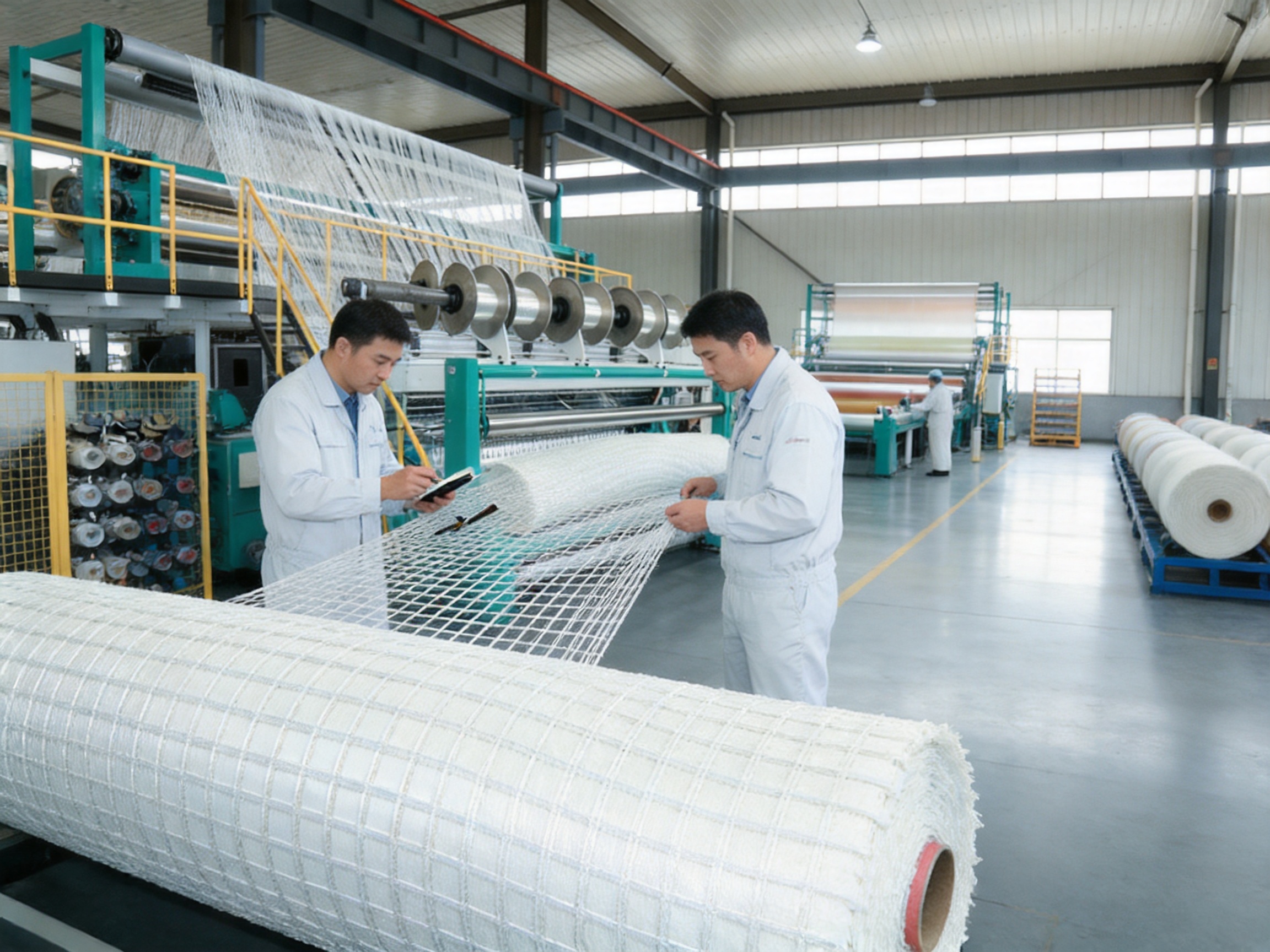
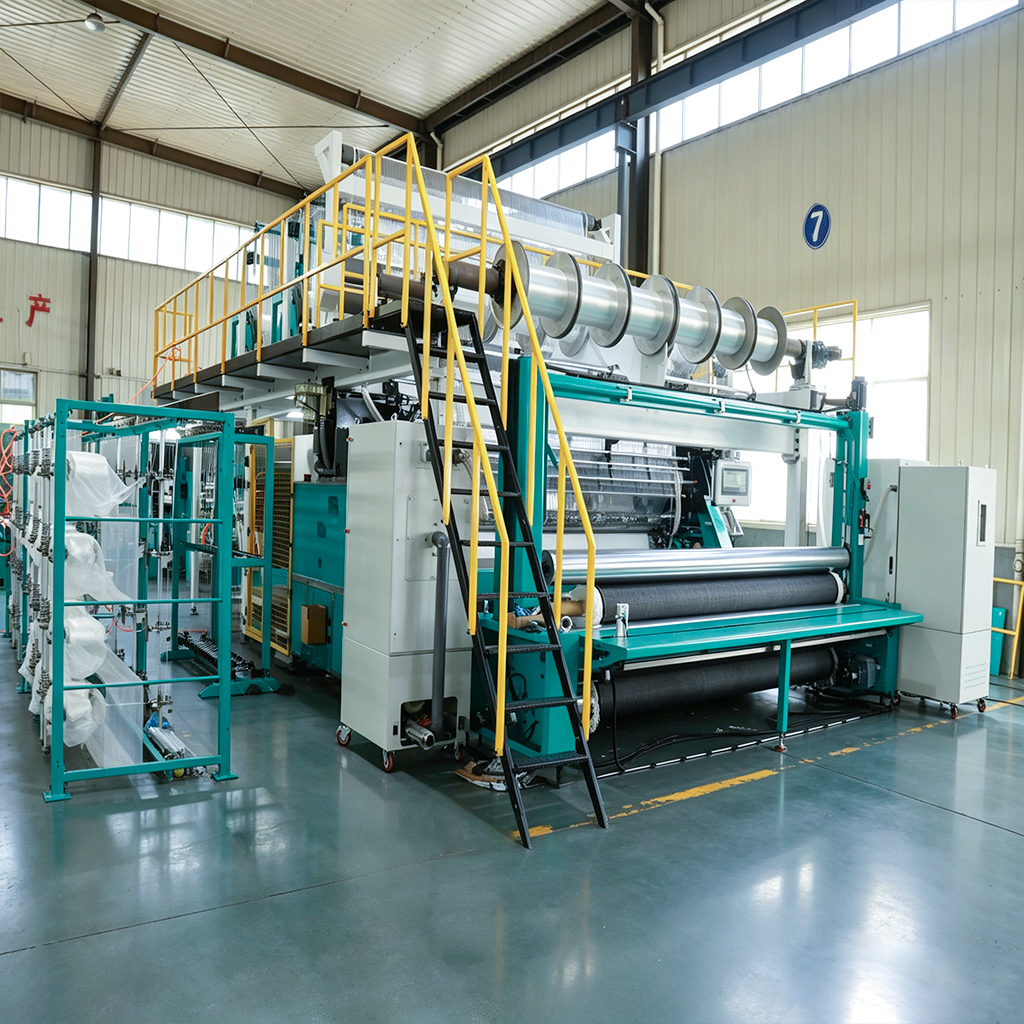
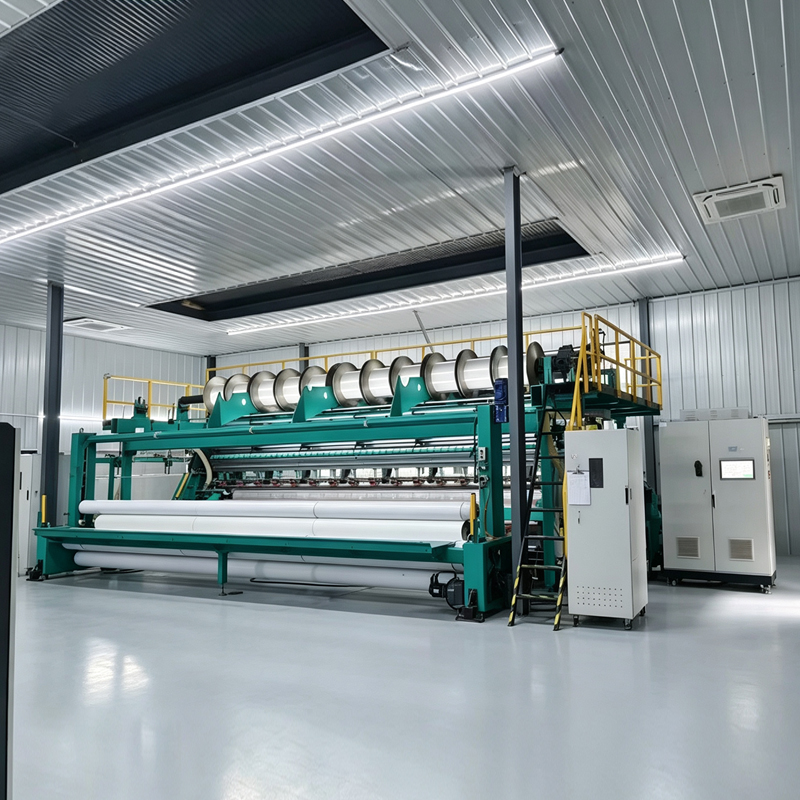
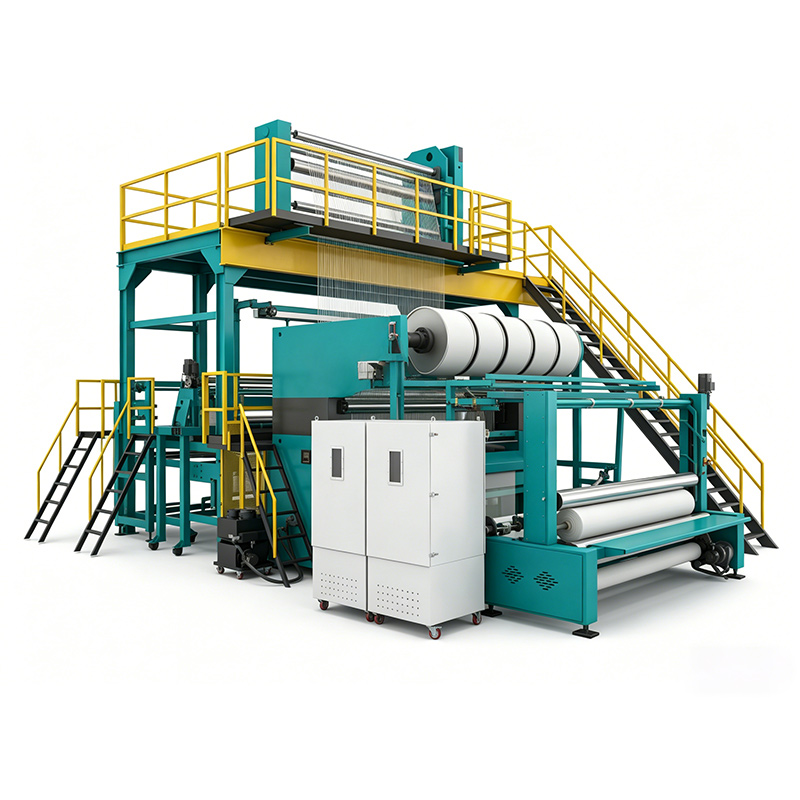
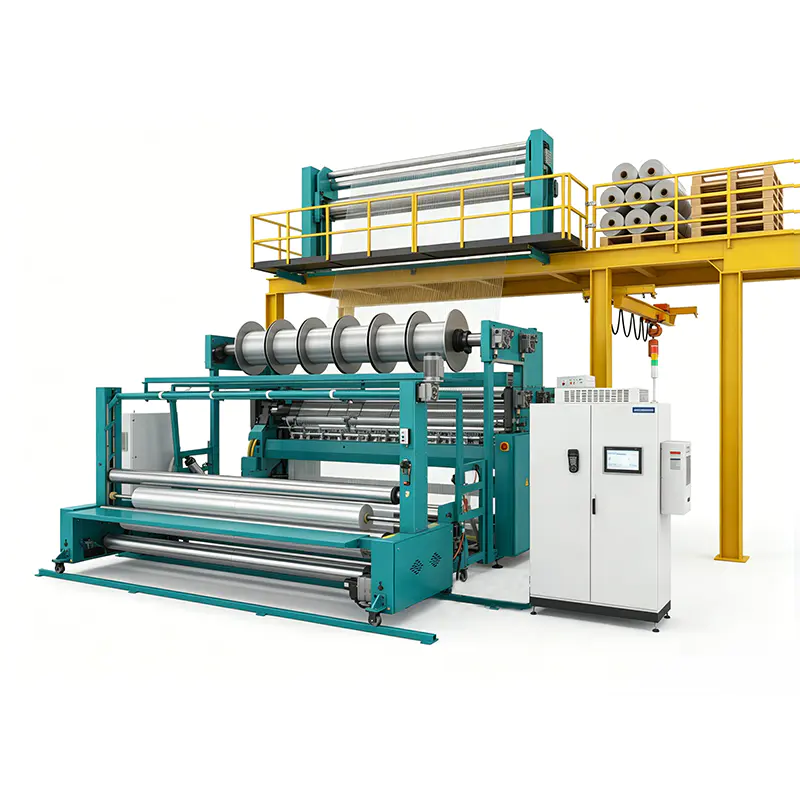
High-strength reinforcement fabrics require a production system that combines accurate yarn placement, stable stitch formation, controlled tension, dependable machine operation, and practical support throughout the equipment life cycle. The YRS3-M-H high-strength biaxial warp knitting machine is designed for this demanding class of textile production. It organizes high-strength, low-elongation yarns into a stable biaxial mesh while preserving as much of the original yarn strength as possible.
The machine is intended primarily for glass fiber and polyester yarns used in high-strength geogrids, mine protection fabrics, ground reinforcement materials, and other structural textile products. Its Raschel-type construction provides a coordinated process for warp yarns, inserted weft yarns, and stitch yarns. Instead of relying on a loosely defined combination of separate operations, the system integrates yarn feeding, crosswise insertion, stitch binding, and fabric take-off into one controlled production platform.
With a working width of 5400 mm, a machine speed range of 50 to 1000 r/min, and a reference output of approximately 4500 square meters per day, the YRS3-M-H is suitable for industrial plants that need reliable reinforcement fabric production at substantial width. Actual output depends on the fabric design, yarn linear density, grid pitch, stitch pattern, machine speed, and process conditions.
Purpose of the YRS3-M-H Machine
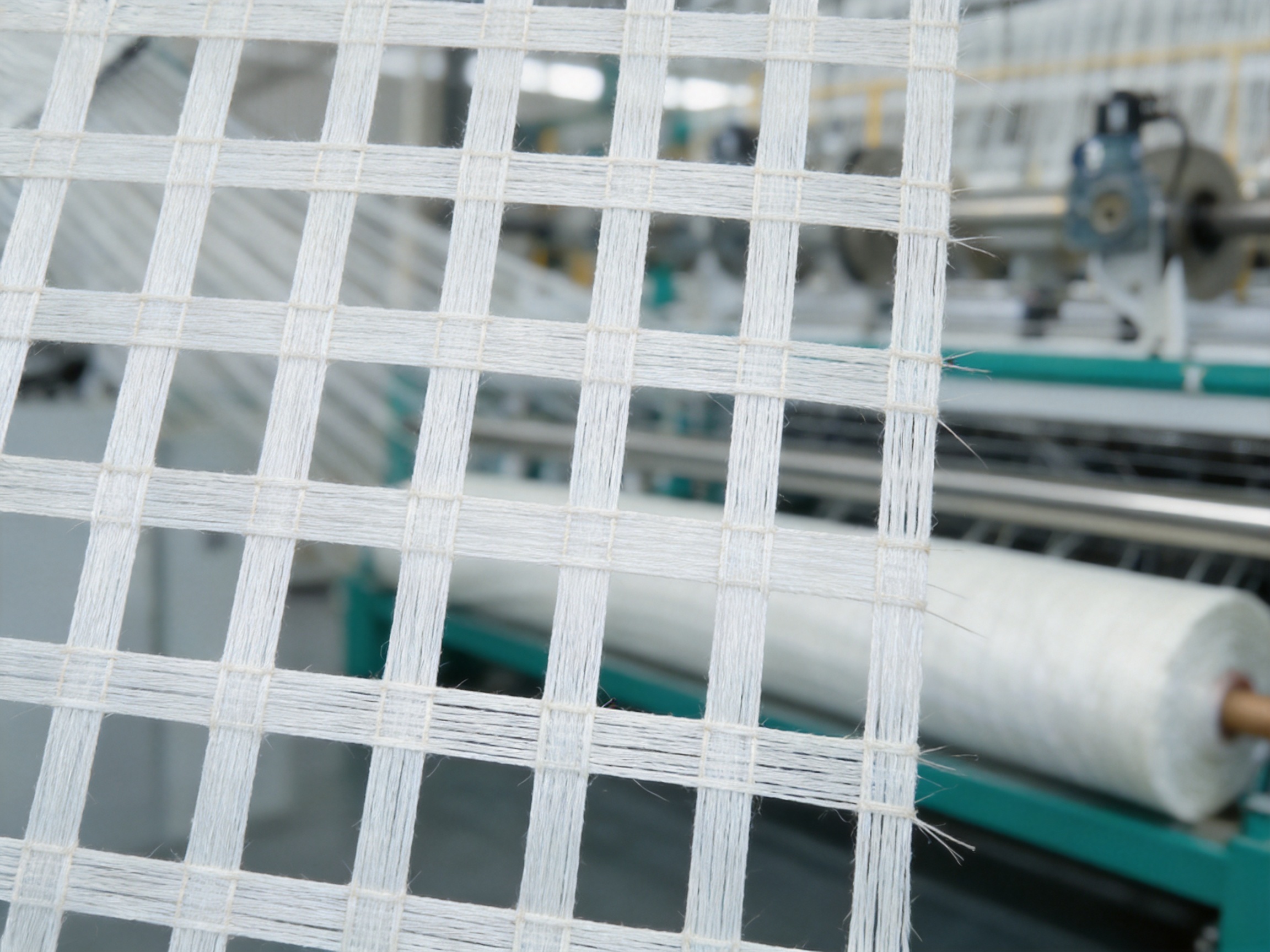
The purpose of a high-strength biaxial warp knitting machine is not simply to create a knitted surface. Its primary role is to position reinforcement yarns in two principal directions and bind them into a stable, dimensionally consistent structure. The warp yarns run in the machine direction, while the weft yarns are inserted across the working width. A stitch system binds these yarns together so that the finished fabric can be handled, rolled, coated, laminated, or installed in a reinforcement application.
In conventional textile structures, yarns may be bent or crimped significantly during interlacing. Excessive crimp can reduce the effective tensile performance of a reinforcement fabric because part of the yarn movement is consumed in straightening the yarn before it carries the applied load. The YRS3-M-H is developed to minimize this problem. The load-bearing warp and weft yarns remain comparatively straight, allowing the finished mesh to retain a high proportion of the yarn’s original strength.
This characteristic is particularly important in geogrids and mine protection fabrics. These materials are selected for their ability to distribute loads, stabilize soil or rock structures, support protective layers, and resist deformation. Their performance depends on consistent yarn alignment and reliable binding, not only on the nominal strength of the raw yarn.
The machine can be configured according to the requested fabric construction. Important variables include the number and arrangement of warp ends, the weft insertion density, grid opening, stitch yarn, binding pattern, fabric weight, finished roll width, and downstream processing requirements. For this reason, the machine should be understood as a configurable production solution rather than a single fixed catalogue arrangement.
Core Product Applications
The primary product made on the YRS3-M-H is high-strength biaxial geogrid. A geogrid consists of a regular grid of reinforcement elements that can distribute tensile forces in the machine and cross-machine directions. Depending on the yarn type, grid design, and coating process, the material may be used in soil reinforcement, roadway construction, slope stabilization, retaining structures, mining protection, and other civil engineering applications.
Another important application is mine protection fabric. Mining environments may require reinforcement textiles that are strong, dimensionally stable, and capable of supporting or protecting surrounding structures. A biaxial fabric made with glass fiber or polyester reinforcement yarns can provide directional strength while remaining comparatively lightweight and adaptable to coating or composite processes.
The machine may also be used for structural reinforcement layers in composite products. These layers can be combined with polymer coatings, nonwoven materials, membranes, resin systems, or other substrates. The exact suitability depends on the required mechanical properties, chemical environment, installation method, and final product standards.
Because the YRS3-M-H works with low-elongation reinforcement fibers, it is different from a standard warp knitting machine designed mainly for apparel, decorative fabrics, or conventional synthetic yarns. Brittle glass yarns and high-strength technical yarns place greater demands on yarn guidance, tension management, contact surfaces, stitch formation, and machine stability.
How the Biaxial Reinforcement Process Works
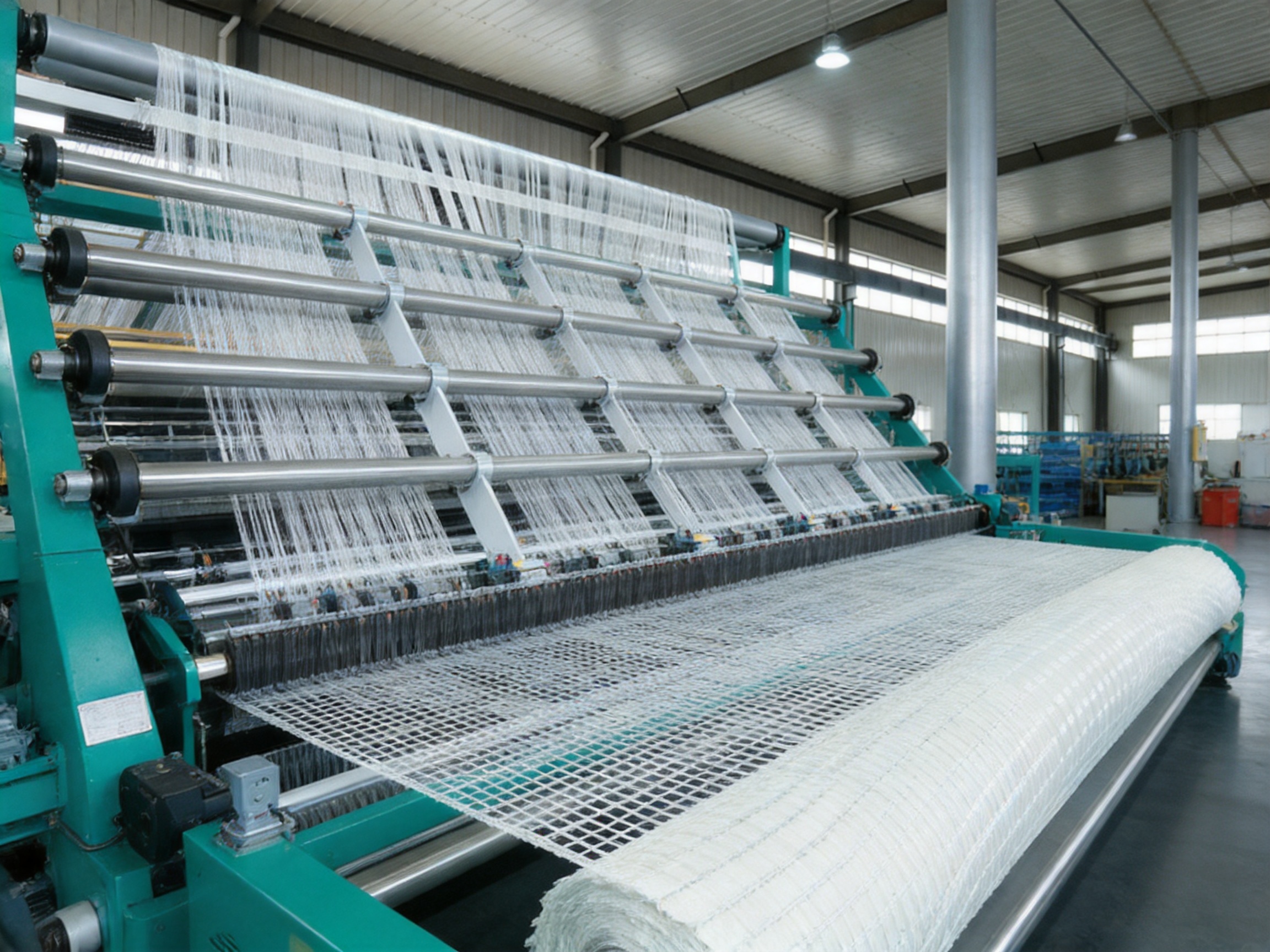
Production begins with the preparation of the warp yarn supply. Warp beams or creel arrangements provide the longitudinal yarns required by the fabric design. These yarns pass through the machine along a controlled path. The path is designed to maintain the required tension while limiting unnecessary abrasion, sharp changes in direction, and uncontrolled yarn movement.
Weft yarns are inserted across the working width according to the selected grid pitch and fabric construction. The insertion system must place each crosswise yarn accurately and repeatably. If the weft position changes from one cycle to another, the grid openings may become irregular and the fabric may show variations in tensile performance, appearance, or coating behavior.
The stitch system then binds the warp and weft yarns. The stitch yarn is not normally the primary load-bearing element of the geogrid. Its function is to hold the directional reinforcement yarns in their designed relationship and provide sufficient structural integrity for take-off, batching, handling, coating, and use. The binding pattern and stitch density influence the stability, flexibility, peel behavior, and appearance of the finished fabric.
These three process functions cannot be adjusted independently without affecting the final product. Warp tension, weft insertion timing, stitch density, and fabric take-off must be considered together. A change in grid pitch may require a corresponding change in insertion control and stitch formation. A heavier yarn may require a lower operating speed and modified tension settings. A different roll format may require changes in take-off and batching.
The production objective is a fabric with consistent width, stable grid geometry, accurate yarn placement, secure binding, and acceptable tensile performance in both principal directions. The machine configuration and process recipe are therefore developed around the customer’s fabric specification rather than around machine speed alone.
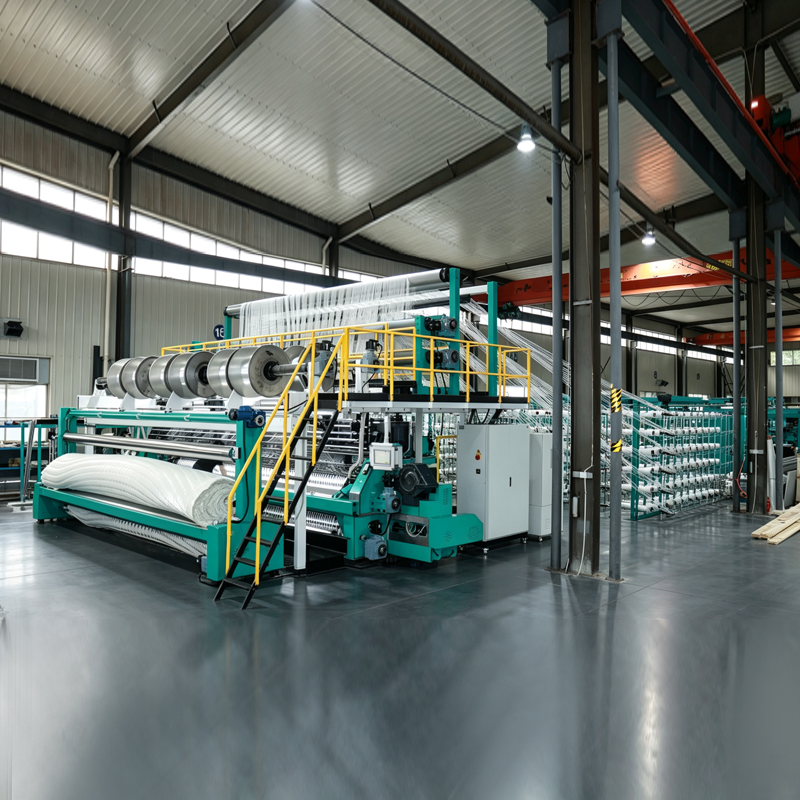
YRS3-M-H High Strength Biaxial Warp Knitting Machine
Technical Specifications
The YRS3-M-H combines a broad operating range with a wide working bed. The principal reference specifications are shown below. These figures describe the standard product information, while the practical production point must be confirmed for the specific yarn and fabric design.
| Parameter | Reference Value | Production Significance |
|---|---|---|
| Machine type | Raschel-type biaxial warp knitting machine | Provides directional yarn placement with stitch binding |
| Applicable fibers | Glass fiber and polyester | Supports high-strength, low-elongation reinforcement yarn systems |
| Machine speed | 50–1000 r/min | Allows adjustment for yarn type, fabric weight, stitch pattern, and stability |
| Working width | 5400 mm, approximately 213 in | Provides a wide production format for industrial reinforcement fabrics |
| Reference daily output | Approximately 4500 m² | Planning figure subject to construction, speed, yarn, and process conditions |
| Typical product | High-strength biaxial geogrid | Suitable for mine protection and other reinforcement applications |
| Binding method | Stitch-bound biaxial mesh | Stabilizes warp and weft yarns while retaining directional strength |
The speed range is deliberately broad because technical yarns cannot all be processed at the same rate. Heavy glass fiber constructions generally require conservative settings to reduce filament damage and maintain stable yarn tension. Lighter polyester designs may operate at a higher speed when the fabric construction and machine recipe allow it.
The 5400 mm working width is advantageous for producers serving industrial markets because it supports wide fabric production and can reduce the number of parallel processing lanes required for a particular output target. A wide machine must maintain uniformity across the entire bed, however. The quality of the guide elements, alignment, tension distribution, insertion system, and take-off arrangement is therefore essential.
The reference output of approximately 4500 square meters per day should not be treated as a guaranteed output for every fabric. It is a planning reference. Actual production is influenced by machine speed, fabric design, yarn count, grid pitch, stitch density, start-up time, roll changes, maintenance, material preparation, and quality-control requirements.
Advantages in High-Strength Reinforcement Production
Preservation of Original Yarn Strength
One of the principal advantages of the YRS3-M-H is its focus on retaining the original strength of high-performance yarns. Glass fiber and high-strength polyester yarns are selected because they can provide significant tensile performance at relatively low elongation. The machine organizes these yarns into a stable mesh without introducing unnecessary bending or distortion.
For geogrid producers, this is a major consideration. The finished fabric must transfer loads through the reinforcement yarns. If the yarn path creates excessive crimp, slippage, or uncontrolled displacement, the apparent performance of the fabric may be lower than expected from the raw material. A controlled biaxial layout helps the fabric use the properties of the yarn more effectively.
Stable Biaxial Geometry
The integrated warp, weft, and stitch systems help maintain the geometry of the grid. Regular openings are important for fabric appearance, coating uniformity, installation behavior, and mechanical consistency. A stable grid also simplifies downstream processes such as coating, laminating, cutting, folding, and roll handling.
Grid geometry is adjusted through the coordinated control of insertion density, yarn feeding, and stitch formation. The equipment is therefore suitable for projects requiring more than one standard mesh design. Producers can develop fabric specifications for different tensile grades, grid pitches, weights, and application conditions.
Wide Industrial Working Width
A 5400 mm working width gives the machine a strong position in industrial reinforcement fabric production. Wide-format manufacturing can improve production efficiency when the downstream customer requires broad rolls or when multiple narrower products can be produced from a wide web through slitting or converting.
The advantage of width is not limited to nominal productivity. A wide machine can also support better material flow through a plant when the preceding and following equipment are designed around the same format. Yuanyang engineers can review the relationship between the machine, creel, batching system, coating line, slitting equipment, and finished-roll handling area.
Adaptability to Different Fabric Constructions
Reinforcement textiles vary substantially from one customer to another. One project may require a light polyester mesh, while another may call for a heavy glass fiber geogrid with a different stitch structure and much higher tensile requirements. The YRS3-M-H is configured according to these differences.
Configuration may include beam and creel arrangement, guide elements, yarn path geometry, weft insertion density, stitch yarn system, binding pattern, take-off method, batching arrangement, and interface dimensions. This approach gives the producer more practical flexibility than a machine designed around one narrow construction.
Suitability for Brittle and Low-Elongation Fibers
Glass fiber requires careful handling because abrasion, sharp contact points, excessive tension, and poor alignment can damage filaments. The YRS3-M-H is developed for this type of material environment. Yarn contact components, guide selection, tension range, machine alignment, and operating procedures are considered during configuration.
The machine does not eliminate the need for proper process management. Operators must still follow suitable threading, cleaning, inspection, and maintenance procedures. However, designing the machine around reinforcement fibers from the beginning provides a stronger foundation than adapting general textile equipment after installation.
Integrated Process Control
The drive and control system manages the main machine speed, yarn let-off, and fabric take-off as coordinated functions. This is important because speed changes affect yarn feeding, insertion timing, stitch formation, and fabric tension. A coordinated control approach makes it easier to establish repeatable production recipes.
During commissioning, the working parameters for the customer’s fabric can be recorded and adjusted. This supports repeatability after product changes or operator shifts. A documented recipe can include speed, tension, insertion, stitch, take-off, and inspection settings appropriate to a particular fabric construction.
Comparison with Less Specialized Equipment
Not every biaxial warp knitting machine is equally suitable for high-strength glass fiber reinforcement. General-purpose equipment may be capable of producing a mesh, but high-strength technical fabrics place additional demands on the yarn path, structural rigidity, control accuracy, and wear management.
A machine designed primarily for conventional synthetic yarns may not provide the same level of attention to brittle fiber handling. Glass fibers can be sensitive to abrasion and tension fluctuation. If the equipment is not correctly configured, filament breakage, fuzz formation, uneven grid geometry, and unstable production may occur.
The YRS3-M-H is differentiated by its application focus. Its design is centered on technical reinforcement fabrics, not only on the creation of knitted loops. The machine is configured around the customer’s yarn, fabric construction, tensile target, and roll format. This application-specific approach can reduce the risk associated with purchasing a nominally similar machine that has not been engineered for the actual production conditions.
Compared with a production line that uses multiple disconnected steps, an integrated biaxial warp knitting process can simplify material flow. Warp and weft reinforcement yarns are organized and bound in one principal operation. This can reduce intermediate handling and make it easier to control the relationship between the two yarn directions.
Compared with a narrow machine, the 5400 mm working width can provide greater flexibility for wide rolls and industrial applications. Compared with a fixed machine design, the configurable architecture allows the producer to select process elements according to the fabric rather than accepting one predetermined grid structure.
These advantages should be evaluated through samples, technical drawings, machine trials, and production calculations. The right comparison is not simply a comparison of maximum speed. It should include effective output, fabric quality, yarn waste, maintenance demand, operator workload, process stability, service response, and the ability to produce the required product consistently.
Configuration and Custom Engineering
Yuanyang treats special configurations as engineering projects. This is important for reinforcement textile producers because the market often requires non-standard fabrics. A customer may need an unusual grid pitch, a particular tensile ratio between the machine and cross-machine directions, a special coating interface, a unique roll width, or a fabric construction outside the standard machine arrangement.
The first step is to understand the product. Engineers review the fabric drawing or sample, yarn types, linear densities, target tensile properties, grid dimensions, areal weight, stitch pattern, finished width, roll diameter, and downstream process. These details determine the mechanical and control requirements of the machine.
The beam and creel arrangement is selected according to the required warp positions, yarn package format, and available material-handling space. The yarn path is then considered in relation to tension control and the physical characteristics of glass fiber or polyester yarn.
Weft insertion is configured for the desired grid pitch and crosswise yarn density. A coarse grid and a fine grid do not necessarily use the same settings or component arrangement. The stitch yarn system is selected to stabilize the fabric without producing unnecessary distortion or interfering with the required flexibility.
Fabric take-off and batching are also part of the configuration. A technically successful knitting process can still create problems if the finished material is not collected at a suitable tension or if the roll format is incompatible with coating, slitting, storage, or installation. For this reason, the downstream process is considered before finalizing the machine layout.
Where required, the company can develop structural changes, functional modules, or adaptations for special materials. Drawings and technical discussions are used to confirm the design before manufacturing. This reduces misunderstanding and gives the customer an opportunity to review interfaces, dimensions, utilities, safety provisions, and production objectives.
Manufacturing Strengths and Quality Approach
Changzhou Yuanyang Electromechanical Technology Co., Ltd. integrates research and development, manufacturing, sales, installation, commissioning, and service. This combination allows the company to maintain responsibility for the machine through multiple stages rather than treating the equipment as a simple trading product.
The company is located in Jiangsu Province, an important center for China’s textile machinery industry. Its manufacturing activities include warp knitting equipment, stitch-bonding machines, biaxial warp knitting machines, multiaxial warp knitting machines, carbon fiber multiaxial machines, powder scattering machines, web laying machines, and special textile equipment.
The company’s engineering capability is particularly relevant to non-standard reinforcement applications. Its professional research and development team includes experienced industry engineers who work on machine performance, structural design, material handling, and application-specific solutions. This supports projects involving complex fabrics, difficult-to-process materials, unusual line layouts, and production requirements that cannot be addressed by a standard machine alone.
Research and Development
Research and development work for a technical textile machine must address more than mechanical movement. Engineers need to understand yarn behavior, contact wear, tension fluctuation, insertion accuracy, stitch formation, fabric stability, control response, and operator access. The YRS3-M-H benefits from an engineering approach that considers these factors as parts of one system.
R&D activities may include structural improvement, module development, guide optimization, control adjustment, special-material adaptation, and testing of new fabric designs. The objective is to improve stable production rather than merely increase the maximum theoretical speed.
Component Procurement and Machining
Component quality affects the long-term behavior of a wide technical textile machine. Alignment, rigidity, surface finish, wear resistance, and dimensional accuracy are important in yarn-contact and motion-related components. Yuanyang controls the process from component procurement through machining, assembly, testing, and debugging.
For glass fiber processing, wear should be treated as a production factor. Yarn guides, needles, contact surfaces, and related parts may experience abrasive action over time. Suitable component selection and documented inspection points help the customer plan maintenance before wear causes serious quality problems.
Assembly and Alignment
Wide machines require careful assembly and alignment. The working width magnifies small errors in leveling, component position, yarn path, or tension distribution. During installation, the machine is leveled, aligned, connected to the relevant utilities, and checked through the yarn path before production begins.
Beam loading, guide positioning, take-off alignment, guarding, emergency stop functions, and upstream and downstream interfaces are reviewed during commissioning. This practical installation stage is important because a machine’s performance depends on the relationship between the equipment and the plant environment.
Testing Before Delivery
Every machine is tested before leaving the factory. For a YRS3-M-H project, testing may focus on yarn tension consistency across the full working width, weft insertion accuracy, grid pitch repeatability, stitch formation, drive response, control functions, take-off tension, and roll formation.
When the customer provides yarn or a defined fabric specification, pre-delivery testing can be arranged around those materials. A trial sample provides useful evidence of the proposed process and gives both parties an opportunity to identify adjustments before shipment and installation.
Installation, Utilities, and Commissioning
Installation begins with site preparation. Electrical supply, compressed air, foundation conditions, available floor space, access routes, and material flow should be confirmed against the site drawing before shipment. The machine must be positioned so that operators can safely perform threading, cleaning, inspection, roll changes, and maintenance.
The upstream creel or beam area should provide sufficient room for package handling and yarn preparation. The downstream area should allow safe movement of fabric rolls and provide the correct interface for batching, coating, laminating, slitting, or other processes.
During commissioning, engineers check machine leveling, alignment, beam loading, yarn threading, control parameters, safety systems, and fabric take-off. Initial production normally begins at a conservative speed. The operating point can then be adjusted after observing yarn behavior, stitch formation, grid geometry, fabric tension, and roll quality.
Utilities must be stable and appropriate for the final configuration. Electrical requirements vary according to the selected drive and auxiliary equipment. Compressed air requirements depend on the machine arrangement and pneumatic functions. These details should be confirmed during technical specification rather than assumed from a general product description.
Operator training covers safe threading, startup and shutdown, speed adjustment, yarn tension, fabric inspection, cleaning, emergency procedures, roll handling, and basic troubleshooting. Maintenance personnel receive additional information about lubrication, wear inspection, replacement of contact parts, alignment checks, and documentation.
Maintenance for Glass Fiber Production
Glass fiber is abrasive, so maintenance planning is essential. Yarn contact components should be inspected regularly for grooves, roughness, cracks, deposits, or other signs of wear. A damaged guide can increase filament breakage and create quality variation across the fabric.
Needles and stitch-related components should be checked according to operating hours, yarn type, machine speed, fabric construction, and observed production behavior. The actual maintenance interval depends on the material and process conditions. A heavy glass fiber fabric running continuously at a demanding setting will not have the same wear pattern as a lighter polyester fabric.
Cleaning is also important. Fiber fragments, dust, and accumulated material can interfere with moving parts, sensors, yarn paths, and stitch formation. Cleaning procedures should be performed according to the machine manual and should avoid introducing additional damage to delicate components.
Lubrication schedules, inspection points, wear limits, and recommended spare parts are documented for the delivered configuration. Maintaining a suitable stock of critical contact parts can reduce downtime, especially when the machine operates continuously or when replacement components have a long procurement lead time.
Preventive maintenance is more effective when combined with production records. Operators can record yarn breaks, abnormal sounds, tension changes, fabric defects, machine stoppages, and replaced parts. These records help maintenance personnel identify trends and determine whether a problem is related to yarn quality, process settings, component wear, or alignment.
Quality Control in Finished Fabric Production
Quality control begins with the incoming yarn. Yarn linear density, package condition, moisture, surface quality, and tensile properties can influence machine behavior. Glass yarn packages should be protected from contamination and mechanical damage before they are loaded onto the machine.
During production, operators should monitor yarn breakage, tension consistency, grid pitch, fabric width, stitch appearance, edge condition, and roll formation. A visual inspection may reveal broken filaments, missing weft insertions, uneven stitch formation, distorted openings, or areas of excessive tension.
Mechanical testing should be established according to the finished product specification. Typical evaluations may include tensile strength in the machine and cross-machine directions, elongation, dimensional stability, stitch integrity, coating adhesion when applicable, and resistance to handling or installation conditions.
The machine supports quality by providing repeatable process control, but quality also depends on yarn preparation, operator practice, maintenance, and downstream handling. A complete quality system therefore combines equipment records, process recipes, inspection standards, test results, and corrective-action procedures.
For customers developing a new geogrid or mine protection fabric, pre-delivery samples can help establish realistic expectations. Sample testing should consider both the fabric’s immediate appearance and its actual mechanical performance. The selected process must be suitable for the final application, not simply capable of producing a visually acceptable mesh.
Production Economics and Efficiency
Production efficiency should be evaluated through effective output rather than maximum machine speed alone. A high speed that causes frequent yarn breaks, unstable fabric geometry, excessive waste, or frequent stoppages may produce less saleable fabric than a lower, stable speed.
The YRS3-M-H allows the operating point to be selected according to the construction. Heavy glass fiber fabrics may run at the lower end of the 50–1000 r/min range, while lighter or less demanding polyester constructions may use a higher setting. This ability to match speed to material helps the producer balance productivity and fabric quality.
The wide working width can support efficient material use when the plant is designed correctly. It may allow one wide roll to replace several narrower production lanes or enable multiple finished products to be slit from a single web. The best arrangement depends on customer demand, finished-roll specifications, coating equipment, and logistics.
Reduced intermediate handling can also support efficiency. Since warp and weft reinforcement yarns are organized and stitch-bound in one integrated process, the producer may avoid some of the transfers associated with separate reinforcement operations. This can reduce handling damage and simplify traceability.
Efficiency also includes serviceability. Accessible machine areas, documented spare parts, clear maintenance procedures, and responsive technical support can reduce the duration of planned and unplanned downtime. Over the life of the equipment, these factors may have as much importance as the original purchase price.
Product Selection Within a Reinforcement Textile Line
The YRS3-M-H is part of a broader range of reinforcement textile machinery. Selecting the correct machine depends on the intended fabric structure. A biaxial geogrid requires a different process from a multiaxial composite reinforcement, a nonwoven-backed mesh, or a chopped-fiber fabric.
| Machine Type | Typical Product | Primary Process Role |
|---|---|---|
| YRS3-M-H high-strength biaxial warp knitting machine | High-strength geogrid and mine protection fabric | Organizes straight warp and weft reinforcement yarns with stitch binding |
| YRS3-M-V biaxial warp knitting machine with nonwoven fabric | Reinforced nonwoven composites | Combines a nonwoven layer with biaxial reinforcement |
| YRS3-M-F-I Raschel chopped-fiber biaxial machine | Chopped-fiber mats with directional reinforcement | Combines chopped fiber and biaxial yarn systems |
| YRS3-3M multiaxial warp knitting machine | Multiaxial reinforcement fabrics | Adds diagonal yarn layers to the principal directions |
This product comparison helps a customer begin with the fabric rather than the machine name. If the required product is a straight biaxial geogrid with high tensile strength in two directions, the YRS3-M-H is the appropriate starting point. If the product requires diagonal reinforcement layers, a multiaxial machine may be more suitable.
For integrated production projects, the company can coordinate equipment across the reinforcement textile line. Width, tension, roll format, and material flow can be considered from one process to the next. This is useful for customers planning not only the knitting machine but also coating, laminating, slitting, batching, and finished-roll handling.
Information Required for a Technical Proposal
A useful proposal must be based on the fabric and production target. A model number by itself does not define the complete machine configuration. Customers should provide as much of the following information as possible.
The fabric drawing or sample should show grid pitch, areal weight, fabric width, edge construction, binding pattern, and any special features. If the product is still under development, a target range can be provided instead.
Yarn information should include fiber type, linear density, package format, tensile properties, elongation, twist, coating or sizing condition, and the planned quantity of warp, weft, and stitch yarns. Glass fiber and polyester can behave differently even when their nominal linear densities are similar.
Mechanical requirements should identify tensile strength and elongation in both principal directions, dimensional stability, peel or stitch integrity, coating adhesion, and any application-specific performance criteria. These targets help determine the process settings and the required sample testing.
Production information should include daily or monthly output, number of shifts, working days, expected product changes, finished roll width, roll diameter, roll weight, packaging, and downstream processing. These details influence take-off, batching, layout, and spare-parts planning.
Site information should cover workshop dimensions, floor loading, available lifting equipment, electrical supply, compressed air, temperature and humidity conditions, access routes, local safety requirements, and the location of upstream and downstream equipment.
The more complete the initial information, the more accurately the company can define the machine configuration, calculate realistic output, prepare drawings, and plan installation. This also helps avoid the common mistake of selecting equipment on the basis of a maximum speed that does not match the intended fabric.
Service, Training, and Long-Term Support
Technical textile equipment is a long-term production asset. The value of the machine depends not only on its initial mechanical design but also on the support available during installation, commissioning, training, maintenance, and future product development.
Yuanyang provides installation and commissioning support so that the machine can be aligned, threaded, tested, and adjusted at the customer’s site. Engineers can train operators and maintenance personnel on safe operation, process parameters, quality checks, and routine care.
Factory-based training is also available in the company’s own fabrication workshop. Typical sessions may last from one to two months, depending on the customer’s objectives and the complexity of the production line. Training can cover machine operation, fabric construction, process adjustment, maintenance, troubleshooting, and quality management.
Spare parts are supplied according to the delivered configuration. This is important because a customized machine may use a specific guide, stitch component, insertion part, control element, or take-off component that should be identified in the machine documentation.
System documentation can support customers who are building formal quality records. Machine manuals, inspection schedules, process recipes, maintenance records, and sample information help establish a repeatable production system and make it easier to train new personnel.
Frequently Asked Questions
What fibers can the YRS3-M-H process?
The machine is designed mainly for glass fiber and polyester reinforcement yarns. The precise yarn path, guide elements, tension range, stitch components, and operating speed are selected according to the yarn characteristics and fabric construction.
What is the working width?
The reference working width is 5400 mm, equivalent to approximately 213 inches. The usable finished width may depend on the selected fabric construction, edge arrangement, take-off system, and downstream converting requirements.
What is the machine speed range?
The reference machine speed range is 50 to 1000 r/min. The correct operating speed depends on yarn type, yarn count, grid pitch, stitch density, fabric weight, and the level of production stability required.
What output can be expected per day?
The reference daily output is approximately 4500 square meters. This is a planning figure, not a universal guarantee. Actual output changes with fabric construction, machine speed, yarn preparation, roll changes, maintenance, process stability, and quality requirements.
Can the machine produce different geogrid designs?
Yes. The machine can be configured for different grid pitches, weft densities, stitch patterns, yarn arrangements, and fabric weights. The specific production range must be confirmed through technical review and, where necessary, sample testing.
Is the machine suitable for heavy glass fiber yarn?
The machine is developed for high-strength reinforcement yarns, including glass fiber. Heavy constructions generally require appropriate guide components, careful tension control, conservative speed settings, and a maintenance plan that accounts for the abrasive nature of glass fiber.
How does the machine preserve yarn strength?
The biaxial process places warp and weft yarns in relatively straight directional paths and binds them with a stitch system. By limiting unnecessary crimp and controlling yarn placement, the fabric can retain a high proportion of the original strength of the reinforcement yarns.
Can the machine be integrated with coating or laminating equipment?
Yes. Interface points for upstream creels and downstream batching, coating, laminating, slitting, or other equipment can be considered during line design. Finished-roll width, roll diameter, tension, and material flow should be confirmed before the complete line is finalized.
What quality checks are performed before delivery?
Testing may include yarn tension consistency across the working width, weft insertion accuracy, grid pitch repeatability, stitch formation, drive and control response, fabric take-off tension, and roll formation. Customer yarns and fabric specifications can be used for pre-delivery trials when available.
What maintenance is most important?
Glass fiber production requires regular inspection of guides, needles, yarn contact parts, stitch components, lubrication points, and alignment. Cleaning, wear monitoring, and timely replacement of abrasive-contact components are important for stable fabric quality.
Does the company provide operator training?
Yes. Installation and commissioning support includes operator and maintenance training. Factory-based training is also available for knitters, maintainers, and workshop management, covering operation, process settings, quality control, troubleshooting, and routine maintenance.
How should a customer begin a project?
The customer should provide the fabric drawing or sample, yarn information, tensile targets, grid dimensions, daily output, finished-roll requirements, workshop layout, electrical supply, compressed air information, and downstream process details. These inputs allow the machine and process package to be configured accurately.
Conclusion
The YRS3-M-H high-strength biaxial warp knitting machine is designed for producers that need a dependable process for glass fiber and polyester reinforcement fabrics. Its Raschel-type structure places warp and weft yarns into a stable mesh and uses stitch binding to preserve the relationship between the two load-bearing directions.
Its principal advantages include high-strength yarn retention, a 5400 mm working width, a flexible 50–1000 r/min speed range, reference output of approximately 4500 square meters per day, compatibility with reinforcement fibers, coordinated process control, and configuration for different geogrid and mine protection designs.
The machine’s value also comes from the manufacturing and engineering system behind it. Research and development, component procurement, machining, assembly, pre-delivery testing, installation, training, spare parts, and technical service are connected within one company structure. This is especially important for customers processing abrasive glass fiber or developing non-standard technical fabrics.
For the best result, equipment selection should be based on the finished fabric rather than on a headline speed. Grid pitch, yarn type, tensile performance, fabric weight, stitch pattern, production target, roll format, and downstream interfaces must all be considered. With this information, the YRS3-M-H can be configured as a practical production solution for high-strength geogrid, mine protection fabric, and related reinforcement textile applications.
References
1. Changzhou Yuanyang Electromechanical Technology Co., Ltd. Product information for the YRS3-M-H High Strength Biaxial Warp Knitting Machine.
2. Changzhou Yuanyang Electromechanical Technology Co., Ltd. Technical information on biaxial warp knitting machinery, multiaxial warp knitting equipment, and reinforcement textile production systems.
3. General technical principles of warp knitting, Raschel structures, stitch bonding, and directional reinforcement textile manufacturing.
4. General engineering practices for glass fiber yarn handling, tension control, textile machine maintenance, and technical fabric quality control.
5. General application principles for geogrids, mine protection fabrics, ground reinforcement materials, and structural textile composites.
Product: YRS3-M-H High Strength Biaxial Warp Knitting Machine

News
-
Two quotations land on the same desk. Both offer a multiaxial warp knitting line, both list the same working width, both promise high output. One buyer signs and discovers six months later that the f...
READ MORE -
Match the machine type to the fabric: choose a tricot Warp Knitting Machine for fine, smooth fabrics such as lining and sportswear, a raschel machine for open, patterned, and technical fabrics, a doub...
READ MORE -
A fabric engineer compares two swatches on a cutting table. One is a lightweight mesh that holds its shape, resists runs, and stretches very little. The other is a soft jersey that curls at the edges...
READ MORE -
Two buyers open the same catalogue and both ask for a warp knitting machine. One needs a 4.5 m wide glass-fibre geogrid with 0° and 90° yarns stitched together for a soil-reinforcement contract; the ...
READ MORE
-
Contact Info.
+86-198 5534 1617
+86-134 0158 3002yuanyang@yywarpknitting.com 699#, Shengzhi West Rd, Lvcheng Town, Danyang City, Zhenjiang City, Jiangsu Province, China

-
QR Code
-
Quick Links
Home About Products Manufacturing Customization News Contact -
Product List
Machine for Chemical Fiber Textile Machine for Fiberglass Textile Machine for Carbon Fiber Textile -
About Us
Company Profile Factory Gallery Value-added Service
Copyright © 2026 Changzhou Yuanyang Electromechanical Technology Co., Ltd. All Rights Reserved.
Custom Warp Knitting Machine Manufacturers
