

 English
 中文简体
 русский
 Français
 Español
 Deutsch

YRS3-M-F-II Raschel Chopped Fiber Biaxial Warp Knitting Machine (HS) for Advanced Fiberglass Textile Production
2026-10-01
Content
- 1 1. The Role of Biaxial Warp Knitting in Composite Textile Production
- 2 2. Product Overview
- 3 3. How the Machine Produces Directionally Controlled Chopped Fiber Fabrics
- 4 4. Key Advantages Over Conventional or Less Flexible Equipment
- 5 5. Technical Specification Table
- 6 6. Application Areas
- 7 7. Configuration Options for Different Production Requirements
- 8 8. Manufacturing Strengths of Changzhou Yuanyang Electromechanical Technology Co., Ltd.
- 9 9. Installation, Commissioning and Operator Training
- 10 10. Maintenance and Serviceability
- 11 11. Quality Assurance from Material to Finished Fabric
- 12 12. Comparison with Related Machine Configurations
- 13 13. Information Required for a Firm Configuration and Quotation
- 14 14. Why the YRS3-M-F-II Is a Strategic Equipment Choice
- 15 15. Frequently Asked Questions
- 15.1 What type of machine is the YRS3-M-F-II?
- 15.2 What fibers can be processed?
- 15.3 Can the 0°/90° ratio be customized?
- 15.4 What is the available chopped layer weight?
- 15.5 Can a nonwoven layer be used instead of chopped fibers?
- 15.6 What is the typical greige fabric weight?
- 15.7 What is the machine speed?
- 15.8 What is the working width?
- 15.9 What daily output can the machine achieve?
- 15.10 Which industries use this machine?
- 15.11 How does the HS configuration differ from the HX configuration?
- 15.12 Does the supplier provide installation and training?
- 15.13 Can the machine be customized for a special workshop layout?
- 15.14 What are the main maintenance points?
- 16 16. Conclusion
- 17 References
- 18 Product: YRS3-M-F-II Raschel Chopped Fiber Biaxial Warp Knitting Machine(HS)
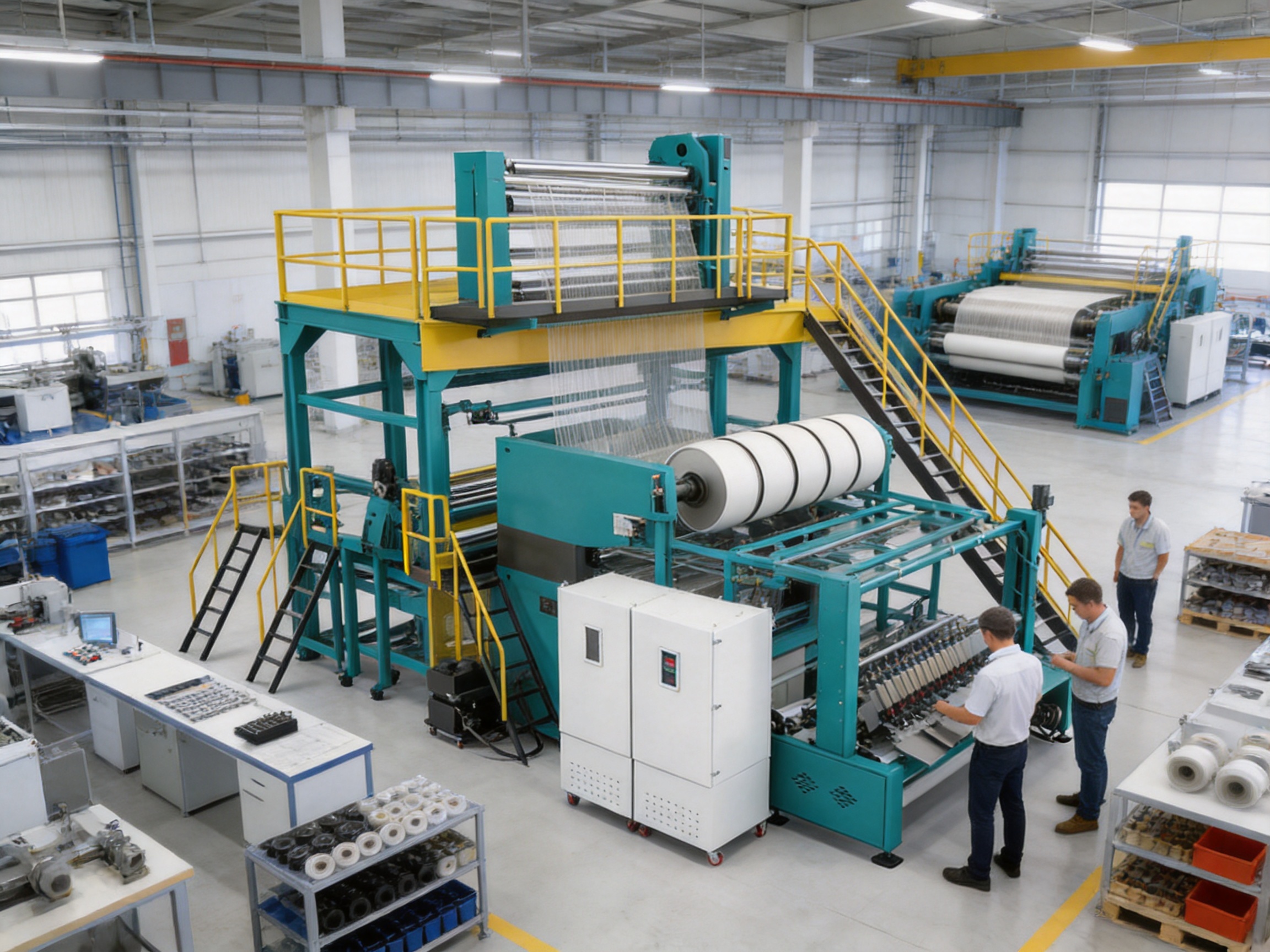
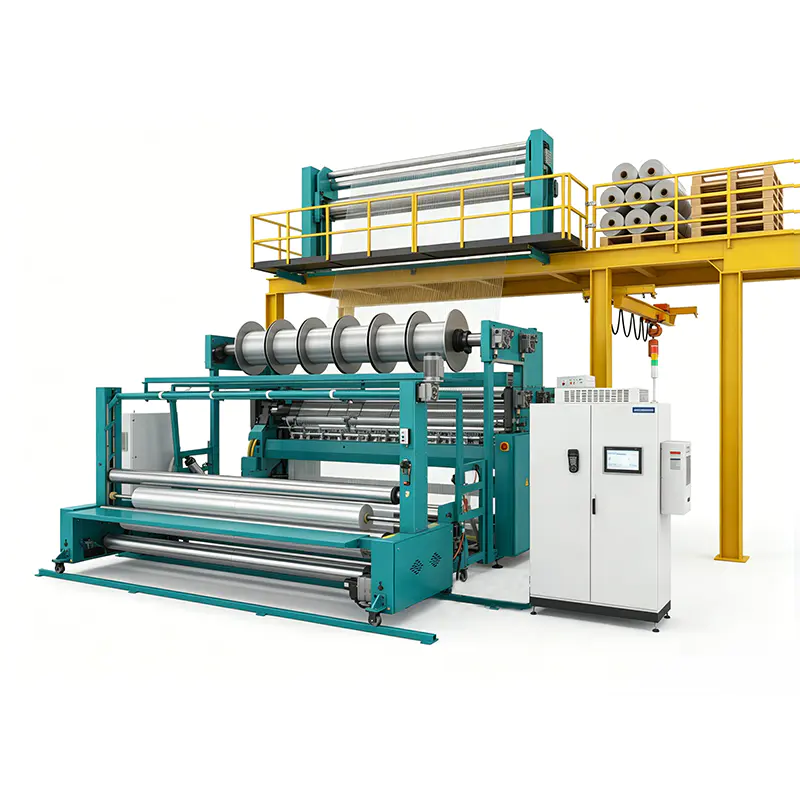
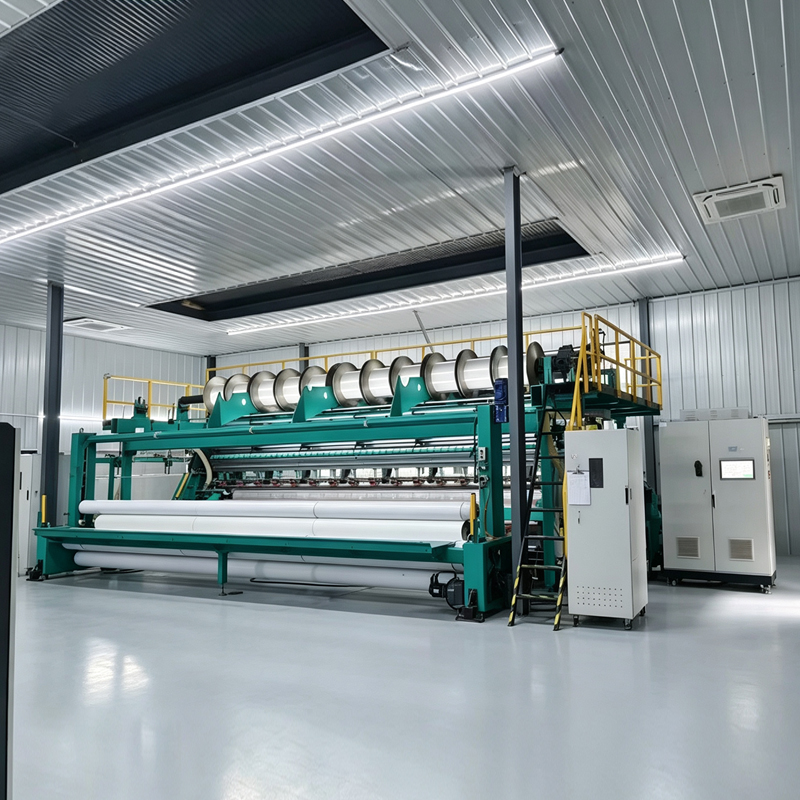
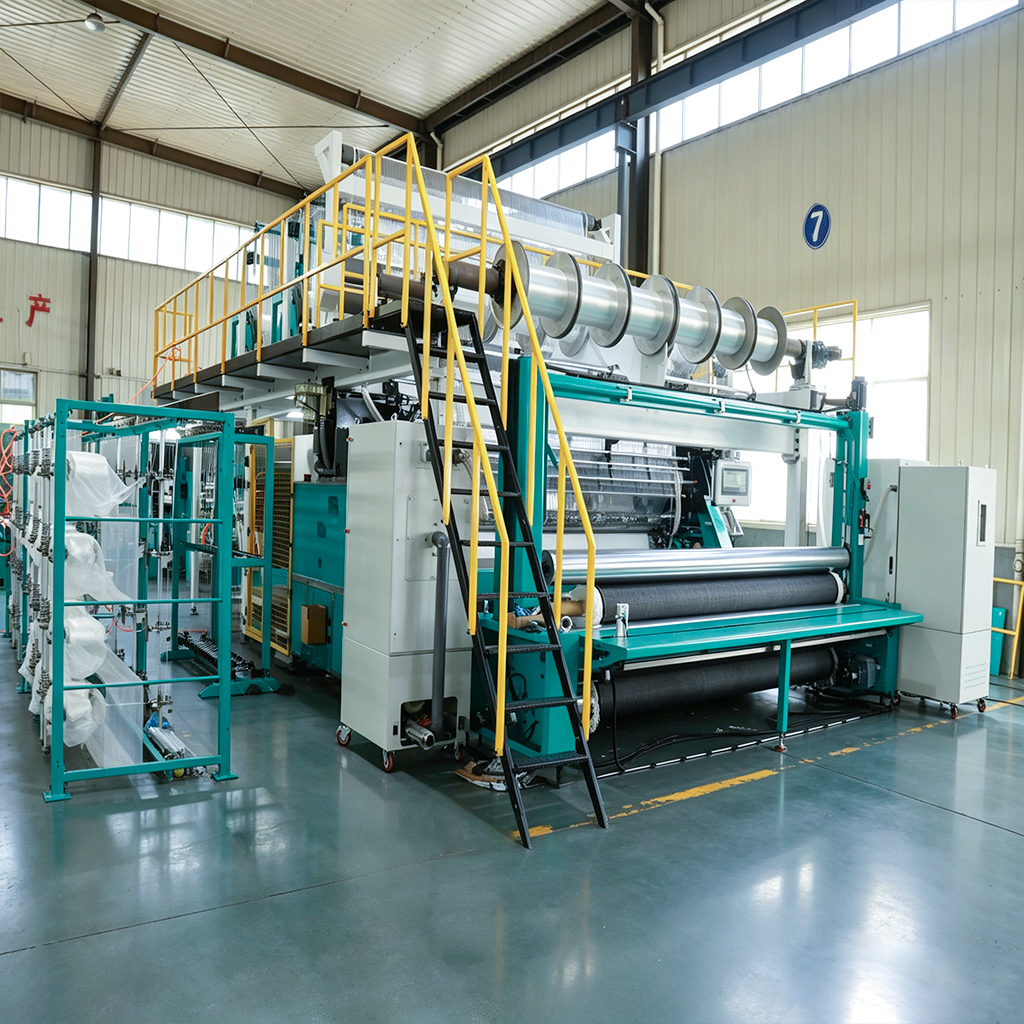
The YRS3-M-F-II Raschel Chopped Fiber Biaxial Warp Knitting Machine (HS) is designed for manufacturers producing high-performance fiberglass reinforcement fabrics, chopped fiber mats and composite textile structures. It combines biaxial warp knitting, full-width 0°/90° weft insertion and an integrated chopping unit on one production platform.
This configuration allows manufacturers to produce orderly, directionally parallel reinforcement fabrics with a controlled distribution of fibers in the machine and cross-machine directions. Compared with randomly oriented chopped strand mats, the resulting structure offers a more defined reinforcement architecture and improved control over fabric construction. The machine is especially suitable for wind power components, nacelle covers, composite structures and other applications that require consistent reinforcement, controlled areal weight and efficient resin flow guidance.
Manufactured by Changzhou Yuanyang Electromechanical Technology Co., Ltd., the YRS3-M-F-II is part of a broader range of specialized warp knitting and composite textile equipment. The company combines product development, mechanical manufacturing, assembly, testing, installation and after-sales support to provide complete machinery solutions for customers working with glass fiber, polyester and other technically demanding textile materials.
1. The Role of Biaxial Warp Knitting in Composite Textile Production
Composite manufacturers increasingly require reinforcement fabrics that offer predictable fiber orientation, stable handling and efficient compatibility with resin infusion or other molding processes. The textile structure must support the intended load paths while also maintaining uniformity throughout the roll. For this reason, biaxial fabrics are widely used where reinforcement is required in two principal directions.
In a biaxial warp-knitted fabric, yarns are arranged along the 0° and 90° directions. The warp direction generally follows the machine direction, while the weft system is inserted across the working width. A knitting structure binds the inserted yarns together, creating a stable textile that can be wound, transported, cut and processed into composite parts.
The YRS3-M-F-II extends this principle by integrating a chopping unit. The machine can produce a full-width chopped fiber layer or incorporate a chopped layer beneath the main yarn system. The result is not simply a conventional unidirectional or biaxial fabric. It is a combined reinforcement structure in which directional yarns and chopped fibers can work together to support laminate performance, forming behavior and resin movement.
This arrangement is valuable for applications that require both organized reinforcement and supplementary fiber coverage. The directional yarns provide a defined load-bearing framework, while the chopped layer can help fill the structure, improve surface coverage and contribute to the characteristics required by the downstream composite process.
2. Product Overview
The YRS3-M-F-II is a Raschel-type chopped fiber biaxial warp knitting machine configured for industrial fiberglass textile production. Its primary functions include yarn feeding, 0°/90° weft insertion, knitting or stitching of the textile structure, controlled chopping and optional integration of a chopped or nonwoven layer beneath the yarns.
The machine is intended for manufacturers that need more than a standard biaxial fabric line. Its configuration supports a broader range of reinforcement constructions, including full-width weft-inserted chopped mats and composite fabrics. The construction can be adjusted according to the required areal weight, directional ratio, fiber type and downstream molding process.
Applicable fibers include glass fiber and polyester. The machine can be configured according to yarn count, tex, package format, tension requirements and production targets. For projects involving alternative materials or unusual fabric structures, the machine configuration can be reviewed during the engineering and quotation stage.
The standard reference working width is 103 inches in the 0°/90° configuration. The machine speed range is 50–1000 revolutions per minute, although the suitable operating speed depends on yarn characteristics, fabric construction, chopped layer requirements, stitch formation and the stability required by the customer’s production process.
The reference daily output is approximately 3000 kilograms. This figure is provided for planning purposes only. Actual output depends on fabric weight, directional ratio, production speed, material properties, operating efficiency, changeover frequency and the final construction of the composite textile.
Principal Product Characteristics
- Raschel chopped fiber biaxial warp knitting configuration.
- Integrated chopping unit for controlled chopped fiber deposition.
- Full-width 0°/90° weft insertion.
- Customizable weight ratio between the 0° and 90° directions.
- Optional chopped layer from 50 to 500 g/m².
- Optional suitable nonwoven fabric beneath the yarns.
- Typical greige fabric weight from 300 to 2000 g/m².
- Applicable fibers including glass fiber and polyester.
- Reference working width of 103 inches.
- Reference speed range of 50–1000 revolutions per minute.
- Reference daily output of 3000 kilograms, subject to construction and process conditions.
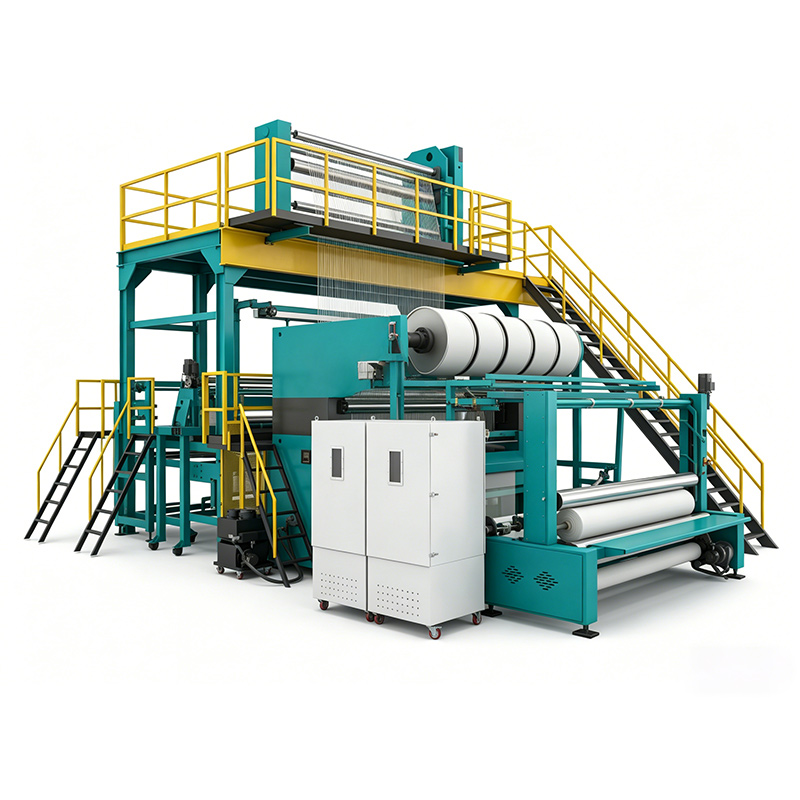
YRS3-M-F-II Raschel Chopped Fiber Biaxial Warp Knitting Machine(HS)
3. How the Machine Produces Directionally Controlled Chopped Fiber Fabrics
The production process begins with the preparation of yarn packages and the arrangement of the creel and feeding system. Yarn packages are selected according to the desired fabric weight, fiber type, tex, package format and directional ratio. Proper package preparation is essential because glass fiber and other technical yarns can be sensitive to tension variation, abrasion and inconsistent feeding.
Warp yarns are guided through the yarn path toward the knitting area. At the same time, weft yarns are inserted across the working width in the specified direction. The machine forms a 0°/90° reinforcement structure by coordinating the yarn delivery, insertion sequence and stitching action. The ratio between the two principal directions can be adjusted to meet the mechanical requirements of the finished composite fabric.
The chopping unit provides an additional processing function. Depending on the selected construction, chopped fibers may be introduced beneath the primary yarn system. The target chopped layer can range from 50 to 500 g/m². The chopping and deposition process must remain synchronized with the fabric-forming system to ensure that the layer is distributed consistently across the width.
Where a nonwoven component is specified, a suitable nonwoven fabric can be fed beneath the yarns instead of, or in combination with, a chopped layer. This gives the customer greater flexibility when designing a reinforcement stack. The correct choice depends on the required surface behavior, resin flow characteristics, handling properties and final composite construction.
After the layers are assembled, the knitting or stitching structure stabilizes the fabric. The finished greige fabric can then be inspected, wound and prepared for downstream processes. These may include cutting, laminating, resin infusion, compression molding, pultrusion-related preparation or other composite manufacturing operations.
4. Key Advantages Over Conventional or Less Flexible Equipment
4.1 Combined Chopping and Biaxial Reinforcement
One of the principal advantages of the YRS3-M-F-II is the combination of an integrated chopping unit and a biaxial warp knitting platform. In a production environment using separate machines for directional reinforcement and chopped fiber addition, the manufacturer may need additional handling, alignment, intermediate winding or secondary lamination steps. These additional operations can increase material movement, labor requirements and opportunities for variation.
By integrating the functions into one line, the YRS3-M-F-II can reduce the number of separate production stages required to create a combined structure. It allows the manufacturer to coordinate the directional yarns and chopped layer during fabric formation, helping to improve process continuity and construction consistency.
4.2 Defined 0°/90° Fiber Orientation
Random chopped strand mats distribute fibers in multiple orientations, but they do not provide the same degree of directional control as a biaxial fabric. The YRS3-M-F-II is designed for orderly, directionally parallel weft laying. This makes it possible to create a more deliberate reinforcement architecture for applications where the 0° and 90° load paths must be managed separately.
The ratio between the 0° and 90° directions can be customized. This is an important advantage for composite manufacturers because different components may require different balances of longitudinal and transverse reinforcement. Instead of being limited to a fixed ratio, the customer can define a target construction based on the intended laminate properties and processing requirements.
4.3 Wider Range of Fabric Weights
The machine supports typical greige fabric weights from 300 to 2000 g/m². This broad range enables the same equipment platform to serve different product families, from medium-weight reinforcement fabrics to heavier composite structures.
The optional chopped layer of 50–500 g/m² further expands the range of constructions available to the producer. A manufacturer can adjust the main yarn density and supplementary chopped layer according to the target product. This flexibility can improve equipment utilization by allowing one machine to produce multiple grades rather than being dedicated to a single fixed construction.
4.4 Improved Forming Processability
The product description emphasizes excellent forming processability. In practical terms, the fabric can be engineered to provide a suitable balance between stability and conformability. This is important when reinforcement must follow curved surfaces, complex contours or large molded components.
A well-controlled directional structure can assist the operator during placement and lay-up. The optional chopped or nonwoven layer can also support coverage and handling in certain constructions. The final performance depends on the selected fiber, yarn density, stitch structure, areal weight and composite process, so configuration must be matched to the customer’s application.
4.5 Efficient Flow Guidance
The machine produces reinforcement fabrics characterized by orderly parallel weft laying. This structure can support efficient flow guidance during resin processing. Resin behavior depends on many factors, including resin viscosity, temperature, pressure, mold design, fabric compaction and the presence of flow media. However, the textile architecture remains an important part of the overall process design.
For wind power components and nacelle covers, where large areas must be reinforced efficiently, a carefully configured biaxial textile can help the manufacturer develop a repeatable laminate process. The YRS3-M-F-II provides a platform for adjusting the textile construction rather than forcing every component to use the same fixed fabric pattern.
4.6 Process Integration and Reduced Intermediate Handling
When chopped fibers, nonwoven layers and directional yarns are handled in separate stages, the production process may require additional alignment and inspection. Integrated production can simplify the movement from yarn preparation to finished greige fabric. It can also make it easier to establish a single production standard for the combined fabric.
This does not eliminate the need for quality control. Instead, it allows quality control to be applied directly to the integrated process. Fabric weight, directional ratio, chopped layer uniformity, edge quality and running stability can be monitored against one agreed specification.
5. Technical Specification Table
| Specification | Reference Value | Application or Configuration Note |
|---|---|---|
| Machine type | Raschel chopped fiber biaxial warp knitting machine | Designed for integrated chopping and 0°/90° reinforcement fabric production |
| Applicable fibers | Glass fiber and polyester | Alternative fibers may be reviewed for project-specific configurations |
| Machine speed | 50–1000 r/min | Actual operating speed depends on fabric construction and material stability |
| Working width | 103 inches | Final trim and usable width should be confirmed during engineering review |
| Lay direction | 0°/90° | Weight ratio between the two directions can be customized |
| Optional chopped layer | 50–500 g/m² | Specified according to the required composite textile construction |
| Optional lower layer | Suitable nonwoven fabric | Can be used beneath the directional yarn system where required |
| Typical greige fabric weight | 300–2000 g/m² | Actual range depends on yarn density, layer design and process settings |
| Reference daily output | 3000 kg | For reference only; output varies with construction and production conditions |
| Primary applications | Wind power, nacelle covers and composite structures | Suitable construction should be selected according to the final component |
6. Application Areas
6.1 Wind Power Reinforcement Fabrics
Wind power components require large, stable and highly engineered reinforcement fabrics. Blade-related structures, nacelle covers and associated composite components may require different combinations of directional reinforcement, chopped fiber coverage and fabric weight.
The YRS3-M-F-II is positioned for wind power and nacelle cover applications because it can produce broad-width fabrics with a defined 0°/90° architecture. The ability to customize the directional ratio gives manufacturers greater control when developing fabrics for different component zones or laminate schedules.
Wind power production also places strong demands on consistency. Large components require fabric rolls with uniform weight and stable handling over substantial areas. The integrated production approach of the YRS3-M-F-II can help manufacturers establish repeatable settings for a defined fabric specification.
6.2 Nacelle Covers
Nacelle covers and related enclosures can require composite panels that balance weight, stiffness, impact resistance, dimensional stability and manufacturability. A biaxial chopped fiber fabric can be selected when both directional reinforcement and supplementary fiber coverage are required.
The machine’s working width and fabric weight range make it suitable for producing broad textile formats. The final design should be evaluated against the geometry, molding method and performance requirements of the cover. The machine is a production platform; the correct fabric recipe must be established through product development and process trials.
6.3 Composite Panels and Structural Components
Composite panel manufacturers can use the machine to produce fabrics with different directional ratios and supplementary layers. Depending on the resin system and forming method, the fabric may be used in panels, covers, reinforcement shells or other molded structures.
The integrated chopped layer can provide additional material in areas where a more filled structure is desirable. A nonwoven layer may be selected when the product design calls for a different surface or processing behavior. These choices allow the textile manufacturer to supply more application-specific reinforcement products rather than only standard biaxial rolls.
6.4 Flow-Guiding Composite Fabrics
Efficient flow guidance is an important consideration in resin infusion and related composite processes. The directional yarn arrangement, stitch structure and optional layers all influence the movement and distribution of resin through the reinforcement.
The YRS3-M-F-II can be configured for fabric constructions intended to support the customer’s flow strategy. The actual resin flow performance must be verified using the selected resin, mold, pressure, temperature and laminate design. Nevertheless, the ability to control the textile architecture provides an important starting point for process optimization.
7. Configuration Options for Different Production Requirements
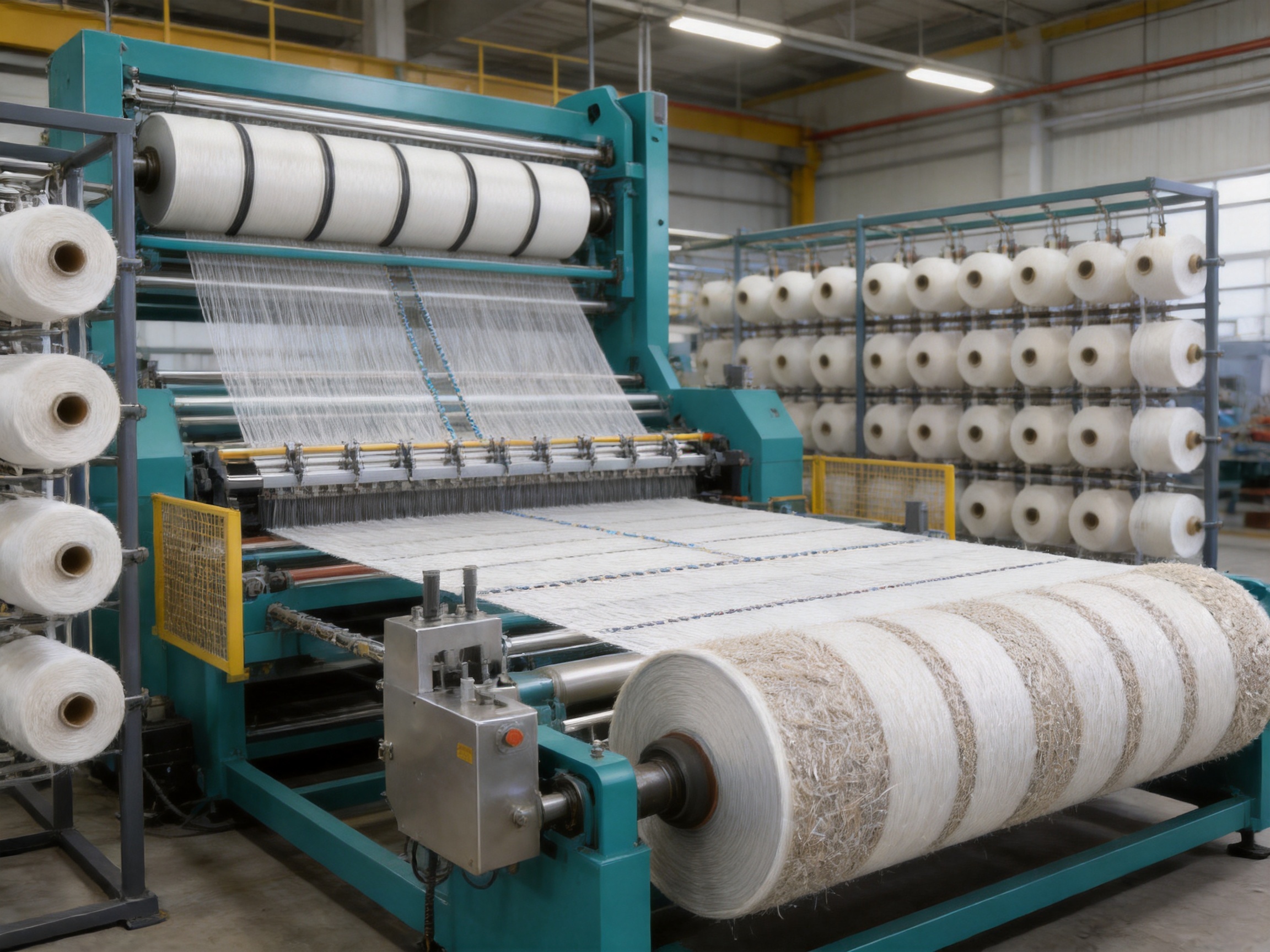
The YRS3-M-F-II should be treated as a configured industrial machine rather than a completely fixed catalogue product. The main mechanical platform remains consistent, but the yarn path, chopping arrangement, feeding system, control settings and auxiliary modules may be selected according to the intended fabric.
7.1 Fiber Type and Yarn Count
Glass fiber and polyester have different handling characteristics. Glass fiber may require careful attention to abrasion, tension, guide surfaces and package stability. Polyester can have different elongation and feeding behavior. Yarn tex, package format and supplier characteristics also influence the required settings.
Before production, the customer should provide the intended fiber type, yarn count, package dimensions and any available material data. This information helps the engineering team assess creel arrangement, tension control, yarn guides, chopping conditions and expected speed.
7.2 Directional Weight Ratio
The 0°/90° ratio is one of the most important configuration variables. A balanced fabric may be suitable for applications requiring similar reinforcement in both directions, while an unbalanced fabric may be preferred when the component carries greater loads along one principal axis.
The ratio is not selected in isolation. It must be considered together with fabric weight, yarn linear density, stitch structure, chopped layer weight and downstream laminate design. A defined ratio should be agreed before machine release so that the equipment and process settings correspond to the intended product.
7.3 Chopped Layer Selection
The optional chopped layer can be set between 50 and 500 g/m². The correct value depends on the desired total areal weight, coverage, thickness, forming behavior and resin interaction.
A lower chopped layer weight may be selected when the main directional yarns provide most of the reinforcement and only additional coverage is needed. A higher chopped layer weight may be considered when a fuller structure or increased supplementary fiber content is required. Trial production is recommended before finalizing a new fabric grade.
7.4 Nonwoven Fabric Integration
A suitable nonwoven fabric can be added beneath the yarns. This option can be useful when the customer requires a specific surface, handling characteristic or processing function that is not best achieved with chopped fibers alone.
The nonwoven material must be compatible with the fabric process and the final composite system. Its width, basis weight, roll format, thickness and feeding behavior should be confirmed during the engineering review.
7.5 Working Width and Trim
The reference working width is 103 inches. The final usable width depends on edge formation, trim requirements and downstream cutting equipment. Customers should provide the required finished width and any limitations imposed by their existing line.
Width confirmation is especially important for wind power and large composite applications, where the textile may be designed around broad panels or large mold surfaces. Early review of the workshop layout and roll handling path can reduce later modifications.
8. Manufacturing Strengths of Changzhou Yuanyang Electromechanical Technology Co., Ltd.
Changzhou Yuanyang Electromechanical Technology Co., Ltd. is located in Jiangsu Province, an important center of China’s textile machinery industry. The company integrates research and development, manufacturing, sales and service, with a focus on warp knitting machinery and specialty textile equipment.
Its product scope includes stitch-bonding machines, biaxial warp knitting machines, multiaxial warp knitting machines, carbon fiber multiaxial warp knitting machines, powder scattering machines and web laying machines. This range gives the company experience across multiple textile forming technologies and composite reinforcement processes.
8.1 Experience with Specialized Textile Machinery
Technical textile machinery requires a different engineering approach from conventional apparel knitting equipment. The machine must handle higher-performance fibers, broader widths, heavier structures and demanding stability requirements. Chopping, weft insertion, yarn tension, stitching and roll handling must work together as one production system.
Yuanyang focuses on warp knitting equipment and related special machinery, including non-standard configurations. This background supports the development of equipment for difficult materials, complex fabric designs and production lines that require long-term operating stability.
8.2 Research and Development Capability
The company maintains a professional research and development team composed of experienced industry engineers. Its stated R&D focus includes structural redesign, functional module integration, process-oriented optimization and adaptation for difficult-to-process materials.
For the YRS3-M-F-II, this capability is relevant because the machine combines several functions in a single platform. The chopping unit, weft insertion system, yarn feeding arrangement and knitting structure must be coordinated rather than developed as isolated components.
8.3 Manufacturing Facility and Production Organization
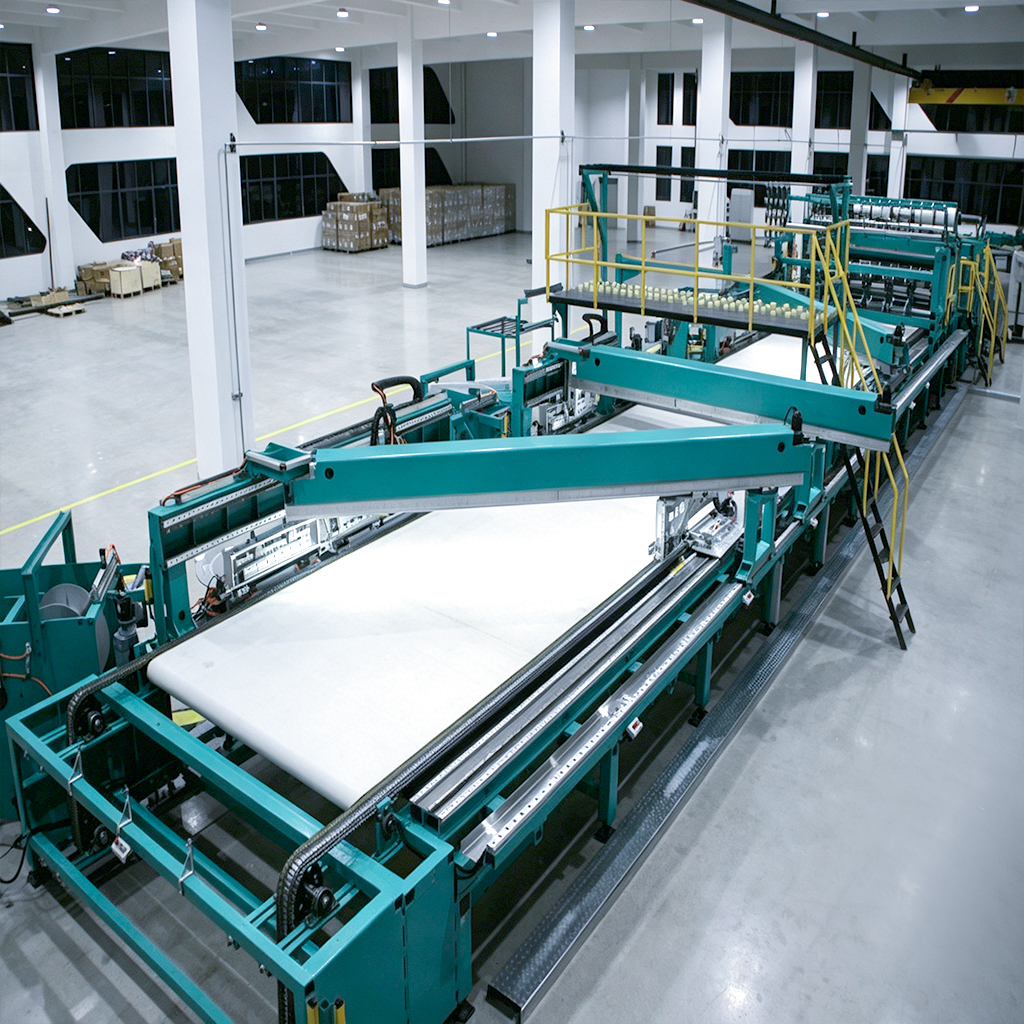
Yuanyang operates a production base of more than 12,000 square meters, including standardized workshops, an intelligent warehouse and dedicated inspection rooms. These facilities support the movement from component procurement through machining, assembly, testing and final debugging.
A controlled manufacturing environment is important for large technical machines. Machine frames, guide systems, feeding components, drive elements and functional modules must be assembled with appropriate dimensional accuracy. Organized warehousing also helps manage purchased components, spare parts and production materials throughout the assembly cycle.
8.4 Stage-by-Stage Quality Control
The company describes a quality control system that covers component procurement, machining, assembly, testing and debugging. Each stage provides an opportunity to identify problems before the equipment reaches the customer site.
For a chopped fiber biaxial machine, quality control should cover the alignment of the machine frame, yarn path accuracy, weft insertion behavior, chopping performance, layer deposition, drive synchronization, control functions and safety-related systems. Final testing before dispatch provides an additional check that the machine operates as intended.
8.5 Customized Equipment Development
Many composite textile producers do not use identical fabric specifications. They may require a special width, directional ratio, chopped layer, nonwoven feed, roll format, control interface or workshop arrangement. Yuanyang’s focus on non-standard configurations allows the project to be reviewed around the actual production requirement.
Customization can involve machine structure and layout redesign, functional module integration, process optimization or changes to line interfaces. The objective is not customization for its own sake, but the development of a stable production system that corresponds to the customer’s material and fabric target.
9. Installation, Commissioning and Operator Training
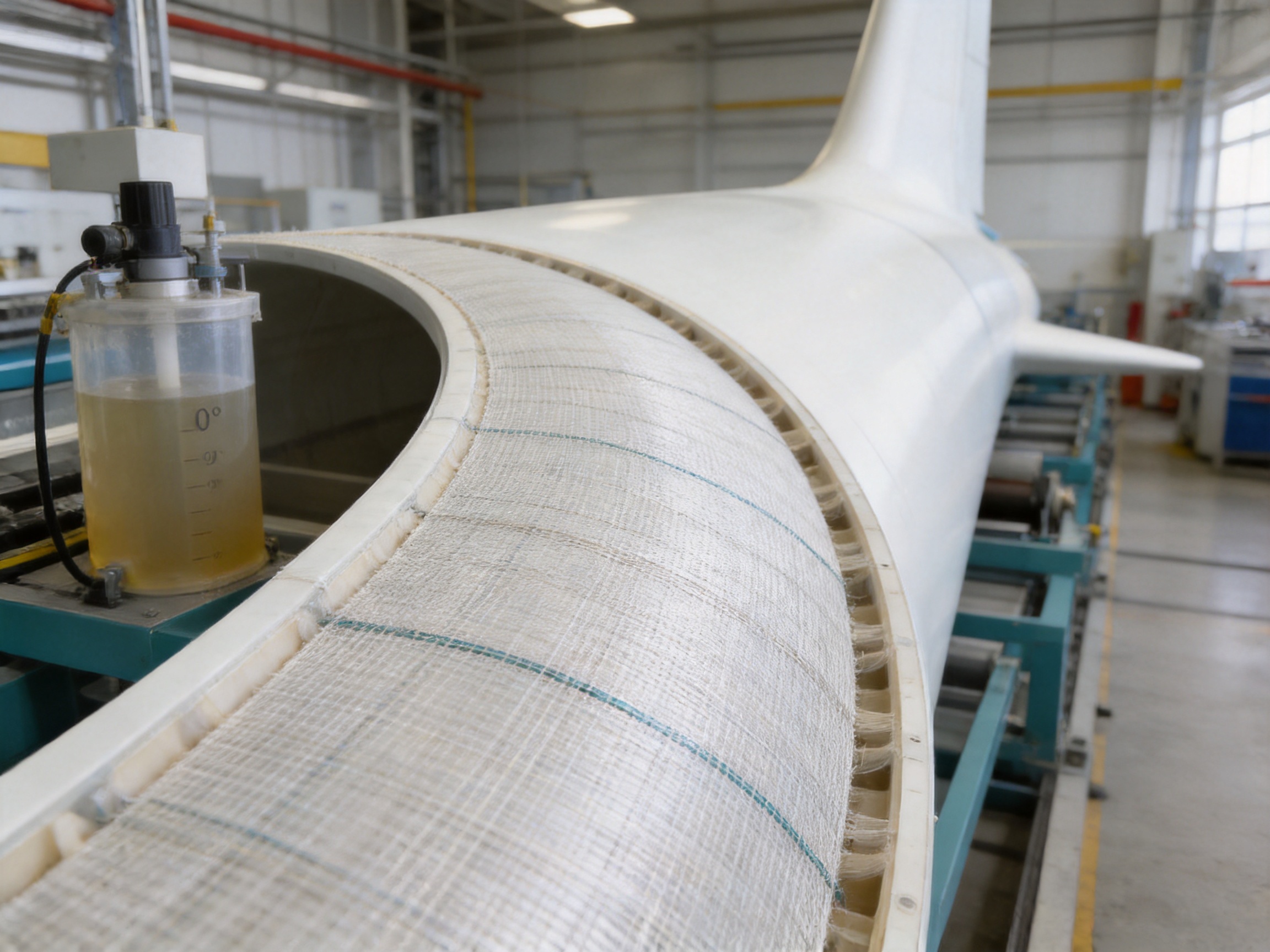
Successful installation is an important part of the total machine solution. A large textile machine must be positioned correctly, connected to the required utilities, aligned with upstream and downstream equipment and prepared for the intended yarn and fabric construction.
Yuanyang’s engineers can attend the customer’s plant for installation, commissioning and training. The commissioning process is based on actual fabric production rather than only no-load machine operation. Yarn feeding, directional ratio, chopped layer uniformity, fabric weight and running stability are reviewed against the agreed production specification.
9.1 Installation Preparation
Before delivery, the customer should provide workshop drawings, access information, power requirements, floor conditions, material storage plans and the intended location of auxiliary equipment. These details help the engineering team prepare a practical layout and identify potential installation constraints.
The workshop should also have an appropriate route for bringing the machine into the building. Large textile equipment may require coordinated lifting, positioning and assembly. Early planning reduces installation delays and helps protect sensitive components during handling.
9.2 Commissioning Procedure
Commissioning generally begins with mechanical inspection, electrical connection checks and control-system verification. The machine is then prepared with the customer’s yarns and other materials. Initial operation is performed at a controlled speed while engineers observe yarn tension, insertion, stitching, chopping and fabric take-up.
As the process becomes stable, the operating speed and fabric construction can be adjusted toward the target specification. The actual acceptance criteria may include fabric areal weight, 0°/90° ratio, chopped layer uniformity, edge quality, surface condition and continuous running stability.
9.3 Training Program
Operator training can cover yarn preparation, machine startup, speed adjustment, tension control, routine inspection, material changes, troubleshooting and shutdown procedures. Maintenance personnel should receive additional instruction on wear points, lubrication, alignment checks, drive systems, chopping equipment and replacement procedures.
Yuanyang can also provide training for workshop management staff and assist with quality system documentation. Training may be conducted at the customer’s plant or at the company’s fabrication workshop over a one- to two-month program, depending on the project scope.
10. Maintenance and Serviceability
Regular maintenance is essential for stable production of fiberglass textile. Glass fiber can create demanding operating conditions for yarn guides, tension components, insertion elements and cutting or chopping parts. Preventive inspection helps identify wear before it affects fabric quality.
10.1 Primary Wear Areas
The chopping unit and weft insertion elements are among the primary wear points. These components should be checked according to operating hours, material type and production conditions. Excessive wear may influence chopped fiber length, layer distribution, yarn placement or fabric uniformity.
The yarn path should also be inspected regularly. Guides, eyelets, tension devices and contact surfaces must be clean, correctly positioned and free from damage that could increase abrasion or disturb yarn delivery.
10.2 Shift Handover Checks
At each shift handover, operators should review yarn tension, stitch formation, fabric width, edge condition and the appearance of the chopped layer. Any unusual noise, vibration, fiber accumulation or change in fabric weight should be recorded and investigated.
Clear handover records can help maintenance teams identify gradual changes in machine behavior. They also make it easier to compare fabric defects with changes in material batches, speed settings or component condition.
10.3 Spare Parts and After-Sales Support
Long-term production depends on the availability of suitable spare parts and consumables. Yuanyang supports customers through its after-sales network and provides assistance with production problems after handover.
Customers should establish a recommended spare parts list during the machine purchase process. Parts with regular wear, especially those associated with chopping, yarn guidance, insertion and stitching, should be planned according to expected production volume and material type.
11. Quality Assurance from Material to Finished Fabric
Quality assurance begins before the machine starts. The customer’s yarn and nonwoven materials should be checked for consistency, package condition, moisture, contamination and compatibility with the selected process settings.
During production, the most important control points include yarn tension, insertion accuracy, directional weight ratio, chopped layer distribution, greige fabric weight, fabric width, stitch stability and winding quality. These characteristics should be measured using procedures agreed between the equipment supplier and the textile producer.
For a new fabric construction, initial trial rolls should be evaluated carefully. The customer may need to test the fabric in the intended resin system and molding process before approving the construction for regular production. Machine acceptance and product approval are related but distinct steps: the machine must operate correctly, while the fabric must meet the performance requirements of the final composite application.
Recommended Production Checks
- Confirm yarn identity, tex and package condition before loading.
- Check the creel arrangement and yarn path before startup.
- Verify the selected 0°/90° ratio against the production order.
- Measure fabric weight at defined intervals across the width and along the roll.
- Inspect chopped layer distribution and identify any gaps or accumulations.
- Check fabric width, edge quality and winding tension.
- Record machine speed, material batch, operator and production date.
- Review fabric samples through the customer’s composite processing method.
12. Comparison with Related Machine Configurations
The YRS3-M-F-II belongs to a family of specialized fiberglass textile machines. The correct model depends on whether the customer needs chopping, nonwoven integration, high-strength biaxial reinforcement or another combination of functions.
| Machine Configuration | Main Function | Typical Positioning |
|---|---|---|
| YRS3-M-F-I Raschel Chopped Fiber Biaxial Warp Knitting Machine (HX) | Chopped fiber biaxial fabric production | Chopped mats and composite fabrics |
| YRS3-M-F-II Raschel Chopped Fiber Biaxial Warp Knitting Machine (HS) | Chopped fiber biaxial production with integrated chopping | Wind power, nacelle covers and composite structures |
| YRS3-M-H High Strength Biaxial Warp Knitting Machine | High-strength biaxial fabric production without chopping | Structural reinforcement fabrics |
| YRS3-M-V Biaxial Warp Knitting Machine with Nonwoven Fabric | Biaxial fabric production with nonwoven feed | Nonwoven-reinforced composite fabrics |
The HS configuration is appropriate when a customer needs chopped fiber integration as part of the biaxial fabric structure and is targeting applications such as wind power or nacelle covers. A high-strength biaxial model without chopping may be more suitable when the reinforcement design depends only on directional yarns. A nonwoven-feed model may be preferred when the lower layer is the main functional requirement.
The final selection should be based on the required fabric construction, material type, working width, output target, downstream process and future product plans. Yuanyang can review these factors before confirming the machine configuration.
13. Information Required for a Firm Configuration and Quotation
To prepare a suitable technical proposal, the equipment manufacturer needs clear information about the customer’s product and production environment. This information reduces uncertainty and allows the machine to be configured around actual requirements.
| Project Information | Why It Is Required |
|---|---|
| Target fabric construction | Determines the required yarn systems, layer arrangement and knitting structure |
| Target areal weight | Helps establish yarn density, chopped layer weight and speed range |
| Fiber type and tex | Influences the creel, tension system, guides and chopping arrangement |
| Package format | Determines material handling and feeding requirements |
| 0°/90° directional ratio | Defines the balance between the two reinforcement directions |
| Chopped layer requirement | Determines whether the chopping unit is used and the target weight from 50–500 g/m² |
| Nonwoven requirement | Confirms whether a nonwoven feed module is needed |
| Required working width | Confirms the 103-inch reference build and the required trim |
| Daily output target | Helps evaluate machine sizing, operating speed and line balance |
| Workshop layout and utilities | Supports installation planning and service access |
| Downstream process | Helps match fabric handling and roll output to the customer’s line |
14. Why the YRS3-M-F-II Is a Strategic Equipment Choice
For manufacturers expanding into composite textiles, the machine offers more than a single fabric construction. Its adjustable directional ratio, optional chopped layer, optional nonwoven feed and broad greige fabric weight range provide a platform for product development.
These capabilities can help a manufacturer respond to multiple customer requirements without installing entirely separate equipment for every product family. The machine can be configured for different combinations of yarn density, layer weight and directional balance, subject to the material and process limitations established during trials.
The integrated chopping function is particularly valuable for customers that want to produce engineered chopped fiber biaxial fabrics rather than conventional random mats. It provides a way to combine organized reinforcement with supplementary fiber coverage while maintaining control over the production process.
The equipment is also supported by a company with experience in warp knitting, multiaxial textile machinery, carbon fiber processing equipment and specialty textile systems. This broader technical background is useful when a project involves multiple machines, a customized line layout or future expansion into related reinforcement products.
15. Frequently Asked Questions
What type of machine is the YRS3-M-F-II?
It is a Raschel chopped fiber biaxial warp knitting machine with an integrated chopping unit. It produces 0°/90° weft-inserted reinforcement fabrics and can incorporate an optional chopped fiber or suitable nonwoven layer beneath the yarns.
What fibers can be processed?
The standard applicable fibers are glass fiber and polyester. Other materials may be reviewed for a project-specific configuration after the customer provides information about fiber properties, yarn count, package format and fabric requirements.
Can the 0°/90° ratio be customized?
Yes. The weight ratio between the 0° and 90° directions can be customized. The appropriate ratio should be determined from the intended laminate properties, load directions, fabric weight and downstream composite process.
What is the available chopped layer weight?
The optional chopped layer is specified from 50 to 500 g/m². The suitable value depends on the target greige fabric weight, coverage, forming behavior and composite processing requirements.
Can a nonwoven layer be used instead of chopped fibers?
Yes. A suitable nonwoven fabric can be fed beneath the yarns. The final selection between a chopped layer, a nonwoven layer or a combined arrangement depends on the required textile and composite performance.
What is the typical greige fabric weight?
The typical greige fabric weight ranges from 300 to 2000 g/m². The achievable construction depends on yarn type, yarn density, directional ratio, chopped layer, nonwoven material and operating conditions.
What is the machine speed?
The reference machine speed range is 50–1000 revolutions per minute. The practical speed for a particular fabric should be established according to yarn behavior, fabric construction, chopping requirements and running stability.
What is the working width?
The reference working width is 103 inches in the 0°/90° configuration. The final usable width and trim should be confirmed according to the customer’s fabric specification and downstream cutting requirements.
What daily output can the machine achieve?
The reference daily output is 3000 kilograms. Actual output varies according to the fabric construction, areal weight, operating speed, material characteristics, production efficiency and process stability. A realistic output figure should be confirmed during configuration and trial production.
Which industries use this machine?
The machine is intended primarily for fiberglass textile and composite reinforcement production. Typical application fields include wind power, nacelle covers, composite structures, reinforcement panels and flow-guiding textile constructions.
How does the HS configuration differ from the HX configuration?
Both configurations belong to the chopped fiber biaxial warp knitting machine family and can serve chopped mat and composite fabric production. The HS configuration is positioned for applications such as wind power and nacelle covers, while the HX configuration serves the same general product family in an HX arrangement. The final choice should be based on the fabric specification and required machine configuration.
Does the supplier provide installation and training?
Yes. Engineers can attend the customer’s plant for installation, commissioning and operator training. Training can cover machine operation, maintenance, quality checks and workshop procedures. Quality documentation support and longer training programs can also be arranged according to the project.
Can the machine be customized for a special workshop layout?
Yes. Customization may include layout redesign, functional module integration, process optimization and control interface adjustments. The customer should provide workshop drawings, utility information, material flow requirements and downstream equipment details for review.
What are the main maintenance points?
The chopping unit and weft insertion elements are important wear areas. Operators should also inspect the yarn path, tension devices, stitch formation, guide surfaces, drive elements and fabric take-up system. Regular shift handover checks help identify changes before they affect product quality.
16. Conclusion
The YRS3-M-F-II Raschel Chopped Fiber Biaxial Warp Knitting Machine (HS) is designed for manufacturers that need controlled, high-volume production of chopped fiber biaxial reinforcement fabrics. Its combination of integrated chopping, 0°/90° weft insertion, customizable directional ratio and optional lower-layer integration distinguishes it from simpler equipment dedicated to only one fabric construction.
The machine supports glass fiber and polyester, a reference 103-inch working width, greige fabric weights from 300 to 2000 g/m² and an optional chopped layer from 50 to 500 g/m². Its reference speed range and daily output provide a basis for production planning, while the final performance must be confirmed according to the selected fabric and process.
For customers in wind power, nacelle cover and composite textile production, the main value lies in process integration and construction flexibility. Directionally parallel reinforcement yarns can be combined with chopped or nonwoven layers on one warp knitting platform. This can support better product differentiation, more efficient manufacturing and closer control of the finished textile structure.
Changzhou Yuanyang Electromechanical Technology Co., Ltd. strengthens the equipment offering through specialized R&D, a production base exceeding 12,000 square meters, stage-by-stage quality control, customized engineering and on-site installation and training. These capabilities are important when the project involves difficult fibers, non-standard fabric designs, integrated production modules or long-term stability requirements.
Before ordering, each customer should confirm the fiber type, yarn count, package format, fabric weight, 0°/90° ratio, chopped layer, nonwoven requirement, width, output target and workshop layout. With these inputs, the machine can be configured as a practical production solution rather than a generic catalogue item.
References
1. Changzhou Yuanyang Electromechanical Technology Co., Ltd. Product information for the YRS3-M-F-II Raschel Chopped Fiber Biaxial Warp Knitting Machine (HS).
2. Changzhou Yuanyang Electromechanical Technology Co., Ltd. Technical information on biaxial warp knitting machines, multiaxial warp knitting machines and composite textile equipment.
3. Technical product data covering glass fiber, polyester, chopped fiber layers, nonwoven feeds and 0°/90° reinforcement fabric construction.
4. Manufacturer-provided information on installation, commissioning, operator training, quality control and after-sales service.
5. Manufacturer-provided reference specifications for machine speed, working width, fabric weight and daily output.
6. General engineering principles for fiberglass reinforcement fabrics and composite textile processing.
Product: YRS3-M-F-II Raschel Chopped Fiber Biaxial Warp Knitting Machine(HS)

News
-
Three quotations land on the same desk for the same polyester nonwoven line, and on paper they look interchangeable. Each is priced per metre of working width. Each quotes a similar top speed. Each c...
READ MORE -
Two quotations land on the same desk. Both offer a multiaxial warp knitting line, both list the same working width, both promise high output. One buyer signs and discovers six months later that the f...
READ MORE -
Which Machine Category Matches Each Technical Fiber and Fabric Goal A warp knitting machine is the primary production platform for technical fiber textiles across fiberglass, chemical fiber, and carbo...
READ MORE -
Match the machine type to the fabric: choose a tricot Warp Knitting Machine for fine, smooth fabrics such as lining and sportswear, a raschel machine for open, patterned, and technical fabrics, a doub...
READ MORE
-
Contact Info.
+86-198 5534 1617
+86-134 0158 3002yuanyang@yywarpknitting.com 699#, Shengzhi West Rd, Lvcheng Town, Danyang City, Zhenjiang City, Jiangsu Province, China

-
QR Code
-
Quick Links
Home About Products Manufacturing Customization News Contact -
Product List
Machine for Chemical Fiber Textile Machine for Fiberglass Textile Machine for Carbon Fiber Textile -
About Us
Company Profile Factory Gallery Value-added Service
Copyright © 2026 Changzhou Yuanyang Electromechanical Technology Co., Ltd. All Rights Reserved.
Custom Warp Knitting Machine Manufacturers
