

 English
 中文简体
 русский
 Français
 Español
 Deutsch

YRS3-M-B Raschel Banner Biaxial Warp Knitting Machine for High-Performance Advertising Fabric
2026-11-18
Content
- 1 1. The Role of Biaxial Warp Knitting in Banner Production
- 2 2. Main Product Specifications
- 3 3. Product Advantages Compared with Conventional Scrim Equipment
- 4 4. Applications of the YRS3-M-B
- 5 5. Engineering Configuration for Different Production Requirements
- 6 6. Advanced Manufacturing and Quality-Control Strengths
- 7 7. Installation, Commissioning and Training
- 8 8. Maintenance and Long-Term Serviceability
- 9 9. Customization and Special Engineering Capability
- 10 10. Comparison with Alternative Production Approaches
- 11 11. Information Required for a Technical Proposal
- 12 12. Why Manufacturer Capability Matters
- 13 13. Frequently Asked Questions
- 13.1 What type of fabric does the YRS3-M-B produce?
- 13.2 What is the confirmed working width?
- 13.3 What is the machine speed range?
- 13.4 What daily output can the machine achieve?
- 13.5 Can the machine produce different mesh designs?
- 13.6 Is the machine suitable for PVC coating lines?
- 13.7 How does biaxial knitting differ from simple laid scrim?
- 13.8 Can high-tenacity coarse polyester yarn be used?
- 13.9 What installation support is available?
- 13.10 Is training available outside the customer’s factory?
- 13.11 What quality checks are completed before shipment?
- 13.12 Can the equipment be customized?
- 13.13 What information should be included in an enquiry?
- 14 14. Conclusion
- 15 References
- 16 Product: YRS3-M-B Raschel Banner Biaxial Warp Knitting Machine
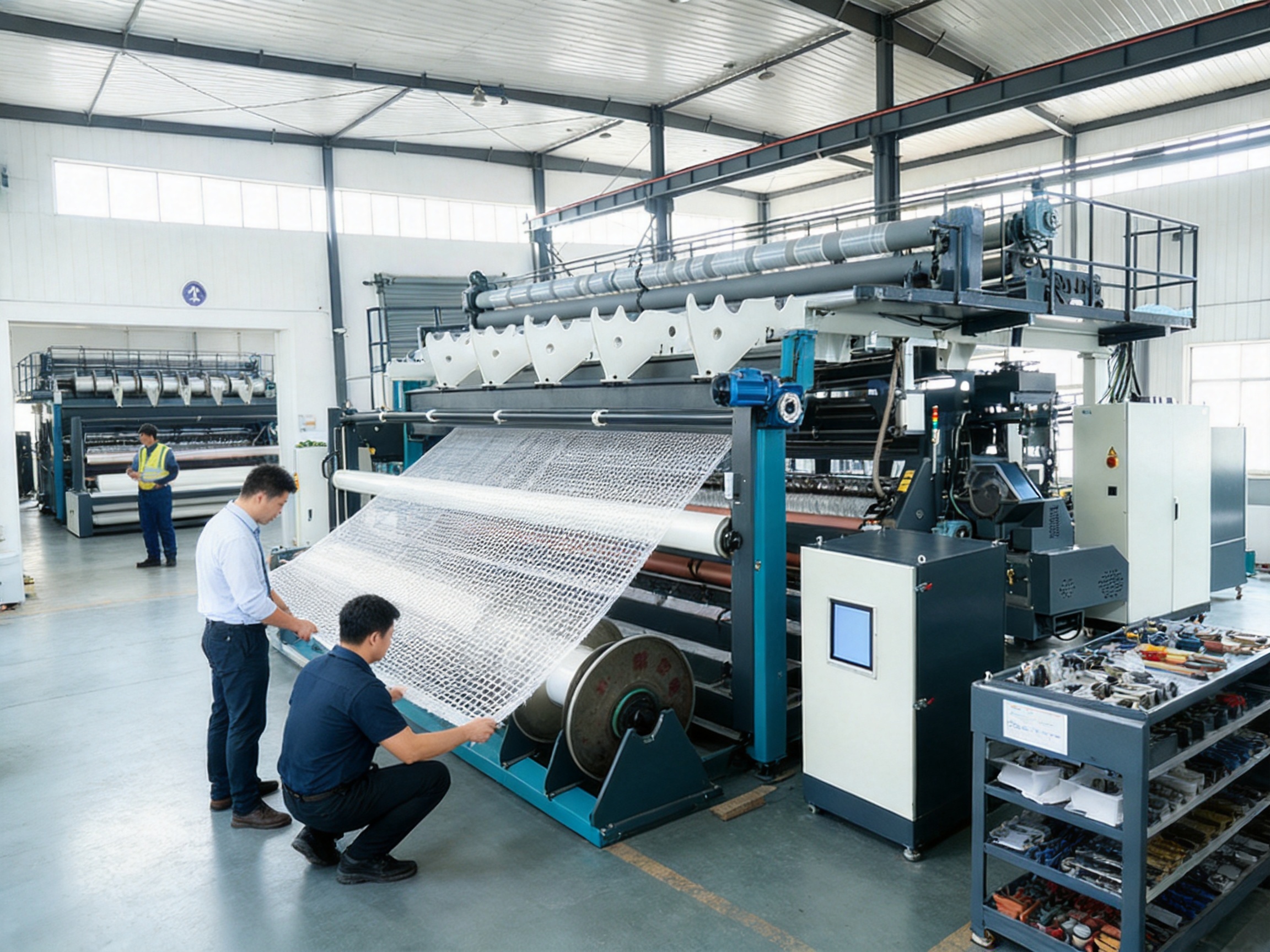
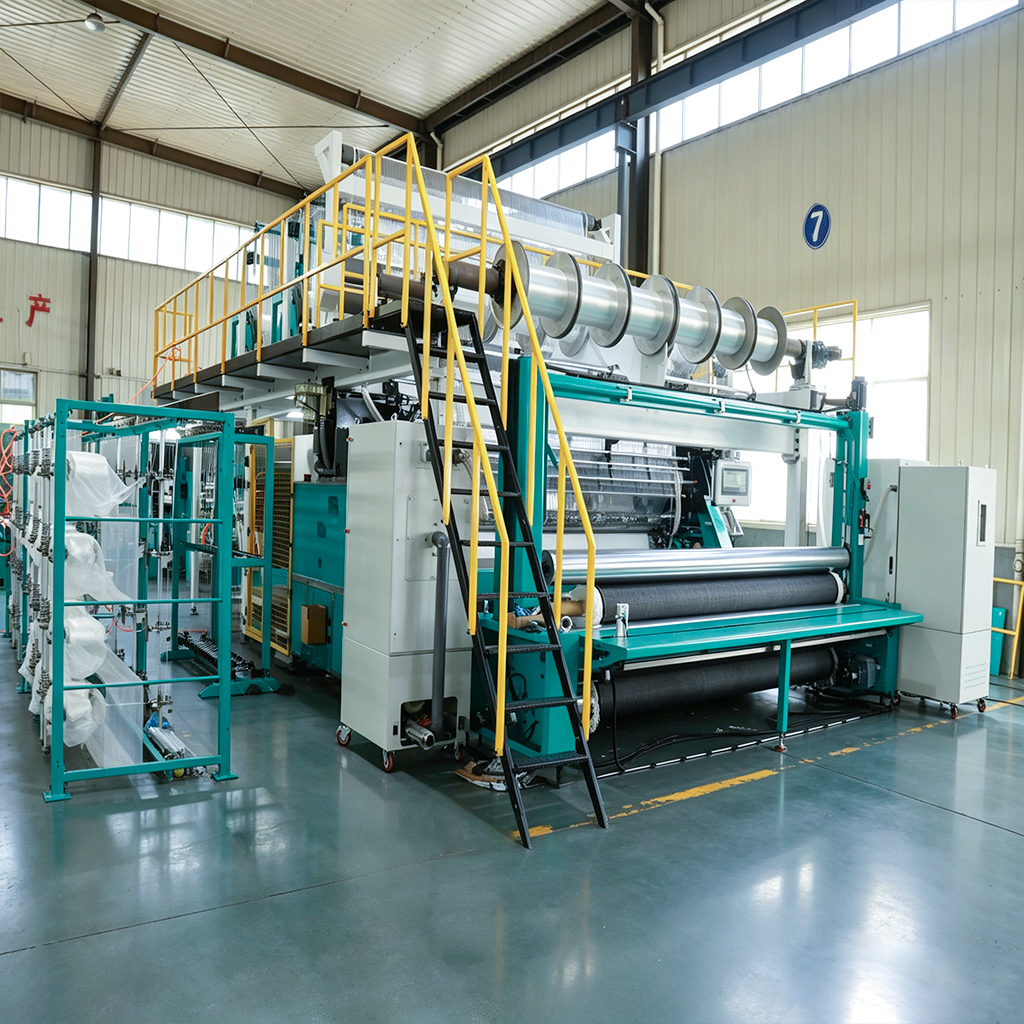
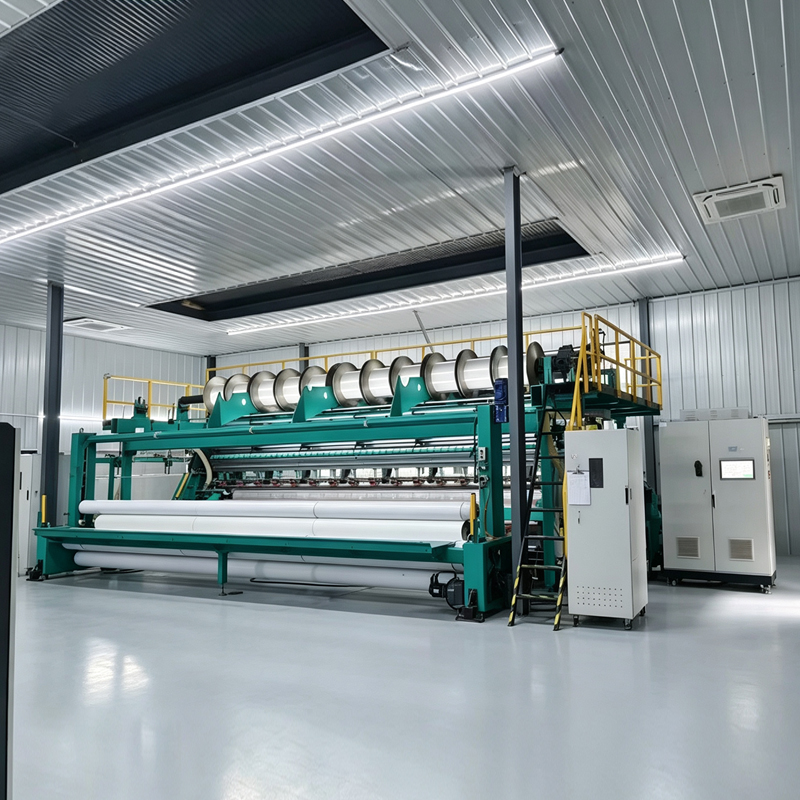
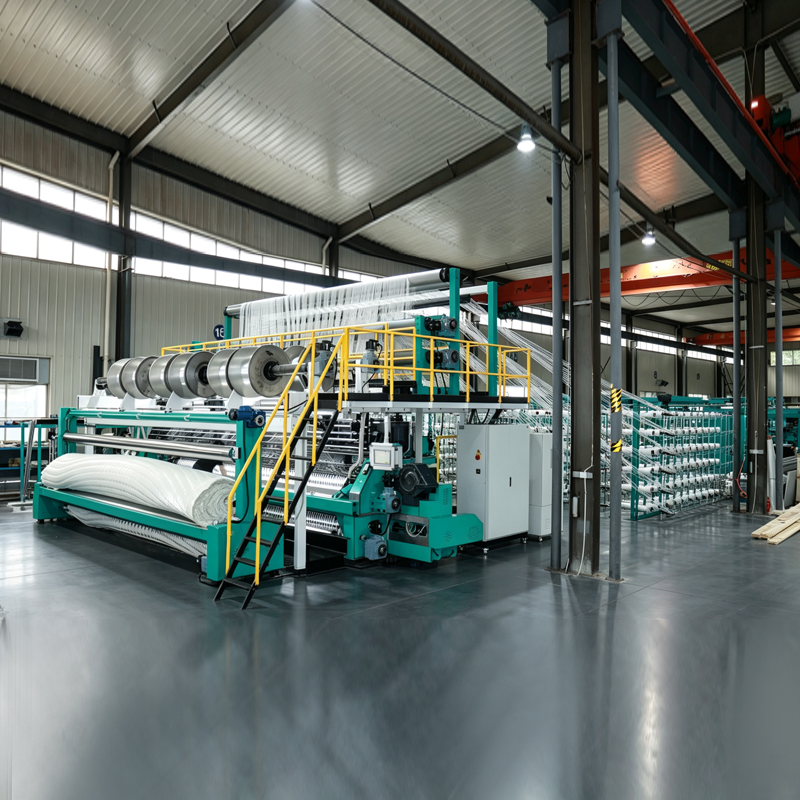
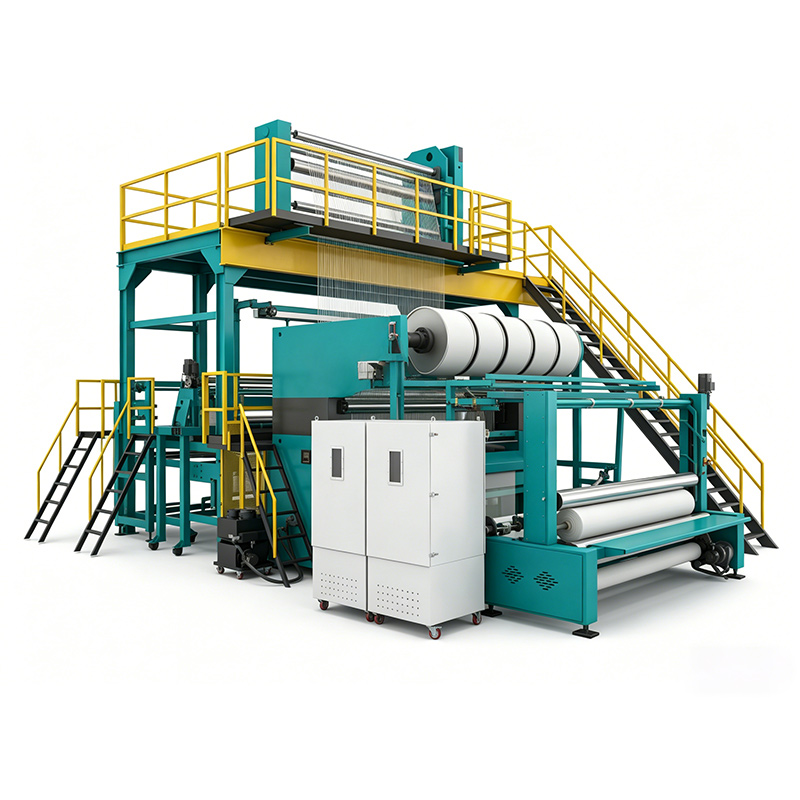
The YRS3-M-B Raschel Banner Biaxial Warp Knitting Machine is designed for manufacturers producing PVC-coated flex banner, lightbox advertising fabric, truck tarpaulin, side-curtain material and other wide-format industrial textiles. It combines high-tenacity polyester warp and weft yarns with a biaxial Raschel knitting process to create a stable square-mesh scrim suitable for downstream coating, printing and finishing.
Unlike a simple laid-scrim system, the YRS3-M-B knits the reinforcing yarn systems together. The warp and weft are positioned at right angles and secured within the knitted structure, reducing the risk of yarn displacement during coating, drying, tentering, winding and repeated use. This construction gives the finished fabric a balanced reinforcement pattern and helps maintain dimensional stability across a wide production width.
The machine is engineered for high productivity while maintaining a controlled motion sequence at high operating speeds. Its confirmed speed range is 20–1300 r/min, with a working width of 268 inches and a reference daily output of up to 20,000 square meters for advertising cloth. Actual performance depends on yarn specification, mesh construction, process conditions, machine settings and production organization.
Manufactured by Changzhou Yuanyang Electromechanical Technology Co., Ltd., the YRS3-M-B forms part of a broader range of warp knitting, stitch-bonding, multiaxial and specialty textile machinery. The manufacturer combines equipment design, fabrication, assembly, testing, commissioning and after-sales service, allowing the machine configuration to be developed around the customer’s fabric construction and coating line rather than supplied as an inflexible catalogue product.
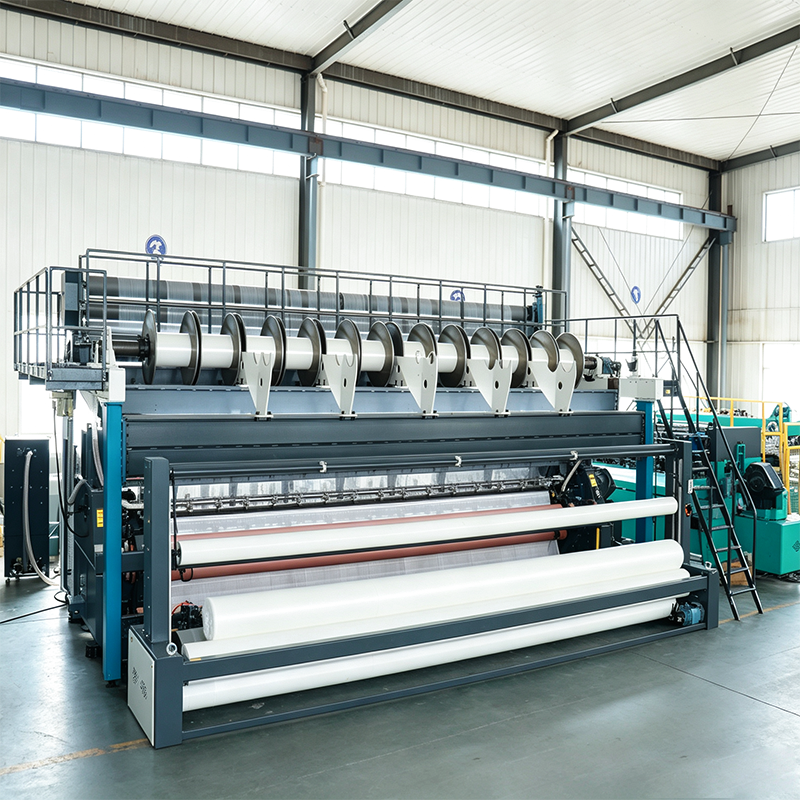
YRS3-M-B Raschel Banner Biaxial Warp Knitting Machine
1. The Role of Biaxial Warp Knitting in Banner Production
Flex banner and truck tarpaulin fabrics must meet several performance requirements at the same time. They need to be lightweight enough for economical handling, strong enough to resist tearing, stable enough to remain flat during printing, and sufficiently flexible to be rolled, transported and installed. The base scrim also needs to accept PVC or another coating evenly, without excessive distortion or local variations in opacity.
The reinforcing scrim is the structural skeleton of the final coated fabric. If the scrim stretches excessively, the finished banner may wrinkle or become difficult to print. If the yarns move during coating, the mesh may become irregular. If the warp and weft are not balanced, the fabric can show different elongation characteristics in the machine and cross-machine directions. These problems can reduce print quality, service life and customer acceptance.
A biaxial Raschel machine addresses these challenges by combining two principal yarn systems in one controlled knitting process. Warp yarns run in the machine direction, while weft yarns are inserted across the width. The knitting structure holds the systems together and produces a regular square or near-square mesh. The geometry can then be selected according to the required coating weight, tensile performance, tear resistance and finished appearance.
For advertising fabric, the mesh must be open enough to receive the coating while still providing adequate reinforcement. For truck tarpaulin applications, the construction may require higher strength, improved resistance to repeated folding and greater stability under wind and handling loads. The YRS3-M-B can be configured according to the intended article, yarn count, fabric weight and downstream process.
2. Main Product Specifications
| Parameter | Specification | Production Consideration |
|---|---|---|
| Machine type | Raschel banner biaxial warp knitting machine | Designed for reinforcing scrim and wide industrial textile production |
| Applicable fibers | High-tenacity polyester coarse yarn and polyester | Yarn count, tension and guide settings must be matched to the article |
| Machine speed | 20–1300 r/min | Practical speed depends on yarn, mesh design and process stability |
| Working width | 268 inches | Suitable for wide advertising cloth and coating-line integration |
| Fabric structure | Square mesh biaxial scrim | Supports balanced reinforcement and uniform coating penetration |
| Downstream finish | PVC coating | Used for flex banner, lightbox fabric and tarpaulin products |
| Reference daily output | 20,000 square meters | Reference only; actual output varies according to construction and process |
The specifications provide a starting point for engineering discussion. A machine speed figure alone does not define production performance. A stable production line must coordinate yarn preparation, beam quality, guide settings, knitting tension, take-off, batching and the coating process. For this reason, the proposed configuration should be confirmed against the customer’s fabric sample or construction drawing.
3. Product Advantages Compared with Conventional Scrim Equipment
3.1 Integrated Warp and Weft Reinforcement
One of the main advantages of biaxial warp knitting is that the warp and weft systems are integrated into a knitted structure. In a conventional laid-scrim arrangement, yarns may rely more heavily on adhesive or coating material to hold their positions before final finishing. A knitted biaxial structure provides mechanical interconnection during fabric formation.
This interconnection helps reduce the possibility of yarn shifting during subsequent processing. It is particularly valuable when the scrim passes through coating, drying, tentering or high-speed winding equipment. A more stable reinforcement pattern can support consistent fabric dimensions and reduce local variations in mesh geometry.
3.2 Consistent Square Mesh
Advertising and tarpaulin products often require a regular mesh because the scrim influences coating distribution, opacity, print appearance and finished tensile behavior. Irregular openings may create visible variations after coating or printing, especially in large-area graphics and illuminated lightbox applications.
The YRS3-M-B is designed to maintain a controlled square-mesh structure across its working width. The exact aperture and fabric weight depend on the selected yarn and construction, but the machine platform is intended to provide repeatable positioning of the two reinforcing directions.
3.3 High Productivity at Wide Working Width
A 268-inch working width allows producers to manufacture wide rolls for advertising and industrial applications while reducing the need for multiple narrow webs or additional joining operations. Wide production can improve material utilization and help coordinate the scrim with wide PVC coating, drying and finishing lines.
The machine is designed to preserve its operating sequence at high speed. This means that the drive system, knitting movement and yarn delivery must remain synchronized as production speed increases. High productivity is therefore treated as a combination of rotational speed, motion accuracy, fabric consistency and usable operating time rather than as a single maximum-speed figure.
3.4 Compatibility with High-Tenacity Polyester
High-tenacity polyester is widely used for reinforcing outdoor advertising fabric and truck tarpaulin because it combines strength, moderate weight, chemical resistance and suitability for coating. The YRS3-M-B is designed around high-tenacity polyester coarse yarn and polyester yarns, with configuration decisions made according to the linear density and behavior of the selected materials.
Coarse reinforcing yarns require suitable guide paths, tension settings and beam preparation. Incorrect tension can cause broken yarns, uneven mesh, edge instability or excessive variation in fabric weight. The machine configuration and commissioning process therefore include attention to yarn path, guide position, tension balance and production parameters.
3.5 Better Support for Coating Uniformity
PVC coating is applied to the knitted scrim to create the finished banner or tarpaulin product. A consistent mesh allows the coating compound to penetrate and anchor around the reinforcing yarns in a more predictable way. This can contribute to uniform surface appearance, stable opacity and improved adhesion.
Coating performance is not controlled by the knitting machine alone. Paste formulation, coating gap, line speed, drying temperature, tentering conditions and finishing pressure also influence the final result. However, a stable biaxial scrim gives the coating line a more consistent base to process.
3.6 Production Flexibility
The YRS3-M-B is not restricted to one finished banner specification. Depending on the selected yarns, stitch arrangement, mesh density and process settings, producers may develop different reinforcing fabrics for lightbox advertising, truck covers, side curtains and related PVC-coated products.
This flexibility is important for manufacturers that serve several markets. Instead of purchasing separate basic machines for every fabric article, a configurable biaxial platform can support a broader product portfolio, provided that the required yarn and construction ranges are confirmed during technical planning.
4. Applications of the YRS3-M-B
4.1 Lightbox Advertising Fabric
Lightbox advertising fabric is used where printed graphics are displayed with internal illumination. The base fabric must support a smooth coated surface and stable dimensions so that printed images remain uniform across the panel. A regular scrim structure is useful because it reduces visible variation in the coated surface.
The correct design depends on the intended transparency, opacity, coating formulation, printing method and finished weight. A producer may select the machine configuration and mesh construction to balance tensile strength with the optical and surface requirements of the advertising material.
4.2 Flex Banner
Flex banner is commonly used for outdoor signs, building graphics, retail displays and promotional panels. It must tolerate handling, rolling, installation and exposure to changing weather conditions. The polyester scrim provides reinforcement while the PVC coating creates the printable and protective outer layers.
The biaxial construction helps balance strength in the machine and cross-machine directions. This is useful when banners are tensioned from different edges or subjected to wind loads that do not follow a single direction.
4.3 Truck Tarpaulin and Side-Curtain Fabric
Truck tarpaulin fabrics experience repeated folding, pulling, fastening and exposure to outdoor conditions. Side curtains may also be subjected to vibration, wind pressure and contact with handling equipment. The base scrim therefore needs adequate tensile and tear performance while remaining flexible enough for practical use.
High-tenacity polyester reinforcement combined with PVC coating is a common solution. The YRS3-M-B provides a wide-width production platform for manufacturers supplying this type of coated industrial textile.
4.4 Related Industrial Coated Fabrics
Depending on the selected construction and coating system, the machine may also be considered for other wide coated fabrics requiring a balanced reinforcing mesh. Each new application should be evaluated through sample development and process trials, especially where the finished product has unusually high strength, special elongation requirements or demanding environmental exposure.
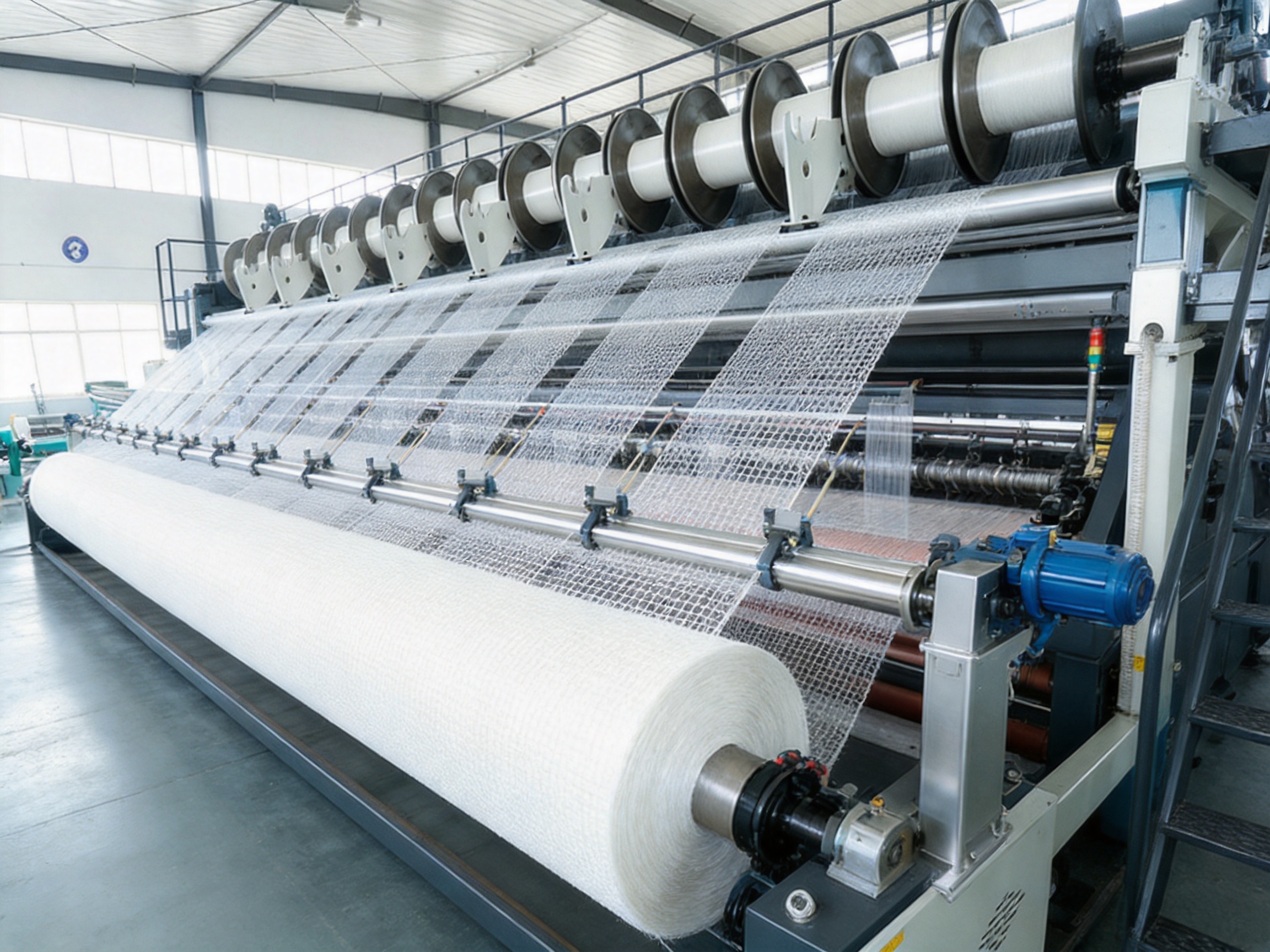
5. Engineering Configuration for Different Production Requirements
The final machine proposal should be based on the intended production point rather than only on a general machine name. The customer’s yarn data, fabric design, coating line and factory conditions all influence the appropriate configuration.
5.1 Yarn Selection and Preparation
The first engineering input is the yarn. Important information includes fiber type, linear density, tenacity, filament construction, twist, supplier and package format. High-tenacity polyester grades can behave differently during feeding and knitting, even when their nominal linear density is similar.
Warp and weft yarns may not have identical requirements. Warp yarns must pass through the guide system with stable tension over long production runs, while weft insertion must remain accurate across the width. The configuration should therefore consider the yarn behavior in each direction rather than assuming that one setting is suitable for both.
5.2 Mesh Density and Aperture
Mesh density influences fabric weight, reinforcement, coating penetration and finished appearance. A more open mesh may reduce material consumption and allow greater coating penetration, while a denser mesh may provide additional support and improved tear resistance.
The required aperture should be defined using a fabric sample, drawing or technical specification. It is also useful to identify the acceptable tolerance for mesh opening, fabric width, weight and tensile performance. These targets give the engineering and commissioning teams clear criteria for trial evaluation.
5.3 Working Width and Roll Format
The confirmed working width is 268 inches. The usable finished width may be influenced by edge construction, trimming allowance, coating shrinkage and the requirements of the downstream line. The location of the warp beam creel, take-up system and material-handling equipment should be planned alongside the coating line.
Wide machines require suitable access for installation, beam replacement, maintenance and roll removal. Building height, door dimensions, floor loading and crane or beam-trolley access should be checked before shipment.
5.4 Drive and Motion Sequence
High-speed knitting depends on coordination between drive movement, yarn delivery, guide motion and fabric take-off. The control system must allow operators to set and maintain parameters for different articles while providing appropriate safety interlocks and operating information.
Article-specific settings can help reduce setup time when a producer changes from one mesh construction to another. Parameter management should be combined with documented operating procedures so that production staff can reproduce approved settings consistently.
5.5 Integration with Coating and Finishing
The knitted scrim is normally only one part of the complete production line. After knitting, the fabric may pass through coating, drying, tentering, laminating, embossing, printing or winding processes. The take-off tension and roll format must be compatible with the next stage.
During project planning, the customer should provide information about coating method, paste formulation, line width, operating speed, drying arrangement and expected finished roll dimensions. This allows the machine layout and material flow to be considered as part of a complete production system.
6. Advanced Manufacturing and Quality-Control Strengths
Machine reliability is influenced by more than the design drawing. It also depends on component quality, machining accuracy, assembly discipline, electrical integration, testing and service documentation. Changzhou Yuanyang Electromechanical Technology Co., Ltd. applies a structured manufacturing process covering procurement, fabrication, assembly, debugging and pre-delivery inspection.
6.1 Controlled Component Procurement
Incoming components and materials are checked before they enter the assembly process. This control helps ensure that purchased parts meet the required specifications and reduces the risk of unsuitable components affecting the completed machine.
For a high-speed textile machine, the quality of drive components, bearings, guides, electrical parts and structural materials directly affects operating stability. Consistent procurement and inspection create a more reliable foundation for later assembly and testing.
6.2 Standardized Workshop Production
The company’s production base covers more than 12,000 square meters and includes standardized workshops, customization areas and design trial workstations. This provides space for equipment fabrication, assembly, testing and project-specific engineering work.
Dedicated areas for customization are useful when a customer requires a modified layout, special material handling arrangement or integration with an existing coating line. Separating design trial work from routine assembly also supports better evaluation before final production release.
6.3 Intelligent Warehouse Management
An intelligent warehouse system manages receiving, storage, picking and dispatch. Organized material control can improve component traceability and reduce delays caused by misplaced or incorrectly issued parts.
Warehouse discipline becomes increasingly important for customized equipment because each project may contain a different combination of structural, electrical and functional components. Proper identification and handling help maintain the connection between the approved design and the machine being assembled.
6.4 Assembly and Alignment
Mechanical assembly includes frame construction, drive installation, beam positioning, guide arrangement and yarn-path preparation. Alignment is particularly important for a wide machine because small deviations may become more significant across the full working width.
Leveling, component positioning and movement checks are completed before loaded running tests. The objective is to ensure that the machine can operate smoothly and that the yarn path supports the intended fabric construction.
6.5 Electrical and Control Integration
The control system is installed and checked as part of the machine assembly. Drive parameters, operator interface functions and safety interlocks are verified before shipment. A properly integrated control system allows operators to manage speed and motion sequence while maintaining safe access to the equipment.
Control parameters may be developed for individual fabric articles. This supports repeatability when the customer changes production from one mesh construction to another and provides a foundation for operator training and maintenance documentation.
6.6 Factory Testing Before Shipment
Every machine is tested before leaving the factory. Testing may include no-load operation, loaded running, speed-range checks, motion-sequence verification and fabric trials against the agreed construction.
Pre-shipment inspection records support the acceptance process at the customer’s site. Where required, the customer can participate in inspection and review the operating condition before shipment. This approach helps identify and resolve issues before the equipment reaches the installation location.
7. Installation, Commissioning and Training
A wide biaxial warp knitting machine must be installed according to the building, material flow and downstream production arrangement. Installation planning therefore begins with a review of the factory environment.
7.1 Site Preparation
Before delivery, the customer should confirm foundation and floor conditions, leveling requirements, available clearances, electrical supply, ventilation and access for large components. The machine orientation should be considered in relation to the warp beam creel, yarn preparation area, take-up zone and coating line.
Service access is also important. Operators and maintenance personnel need sufficient space to inspect guides, replace wear parts, clean the machine, lubricate components and remove production rolls safely.
7.2 Mechanical Installation
Mechanical installation includes frame placement, leveling, beam positioning, component alignment and yarn-path preparation. The machine must be installed on a stable foundation so that vibration and movement are minimized during high-speed operation.
After the principal components are installed, the engineering team checks movement, clearances and the relationship between the knitting area and fabric take-off. Yarn threading is completed according to the approved production construction.
7.3 Commissioning and Fabric Trials
Electrical commissioning includes drive setup, parameter entry, control-panel checks and safety-interlock verification. The machine is then run progressively, beginning with controlled operation before moving toward the target production condition.
Fabric trials are used to check mesh geometry, width, running stability, yarn behavior and the suitability of the selected parameters. If necessary, the settings are adjusted before the machine is accepted for routine production.
7.4 Operator and Maintenance Training
Training covers normal operation, article changeover, yarn threading, parameter management, safety procedures, cleaning, lubrication, troubleshooting and basic wear-part replacement. Training should include both operators and maintenance personnel because many production problems can be prevented through correct daily inspection.
Engineers can provide on-site installation, commissioning and training until the machine reaches the agreed operating condition. Additional training is available at the manufacturer’s fabrication workshop, where operators, maintainers and workshop managers can work with the production team for an extended period of one to two months.
8. Maintenance and Long-Term Serviceability
Banner and tarpaulin machines often operate for long shifts, so maintenance accessibility is an important part of overall equipment value. A machine that is difficult to inspect or clean can experience longer stoppages and more inconsistent production.
8.1 Daily Operating Checks
Operators should inspect yarn supply, guide condition, visible fasteners, lubrication points, fabric edges, mesh regularity and abnormal noise or vibration. Early identification of a damaged guide or unstable yarn path can prevent larger fabric defects and unscheduled downtime.
The production team should also record operating speed, article number, yarn batch, fabric observations and any parameter changes. These records support traceability and help maintenance staff identify recurring problems.
8.2 Lubrication and Cleaning
Lubrication should follow a schedule connected to running hours and the recommendations supplied with the machine. Excessive or insufficient lubrication can both create problems, so maintenance personnel should use the specified lubricant and application method.
Lint, dust and yarn residues should be removed from suitable areas during routine cleaning. Cleaning procedures must be performed safely, with the machine stopped and isolated where necessary.
8.3 Wear Parts and Spare Parts
Guides, needles, tension-related components and other wear parts may require replacement according to production hours and material conditions. Keeping critical spares available can shorten recovery time when a component reaches the end of its service life.
The manufacturer provides spare-parts support and replacement guidance. Customers can also receive assistance with troubleshooting, process adjustment and the development of parameters for new fabric articles.
8.4 Technical Support After Handover
Long-term service includes rapid-response assistance, system documentation, production troubleshooting and support for quality-control records. When a customer expands its product range, engineering support can be used to evaluate new mesh designs instead of treating the original machine settings as permanent.
This continuing relationship is particularly valuable for producers entering new coated-fabric markets. Technical issues may involve yarn, knitting, coating or finishing, and a coordinated equipment supplier can help separate the possible causes.
9. Customization and Special Engineering Capability
Not every customer operates the same building, uses the same yarn or supplies the same finished product. A standard machine platform must therefore allow practical customization without compromising the basic operating principle.
9.1 Structure and Layout Redesign
Where space restrictions, material-flow requirements or existing equipment create special conditions, the machine structure and layout may be redesigned. The objective is to fit the equipment into the customer’s production environment while preserving access, safety and maintainability.
9.2 Functional Module Development
Special functional modules can be developed or integrated when a project requires additional control, handling or process capability. These modules are evaluated according to the customer’s fabric, speed, roll format and connection with the surrounding line.
9.3 Adaptation for Special Materials
The primary application uses high-tenacity polyester and polyester yarns. Other material proposals should be assessed through technical discussion and trial production because differences in friction, stiffness, elongation and surface condition can influence feeding and knitting behavior.
9.4 Design Confirmation and Trial Production
The customization process may include requirement collection, construction review, three-dimensional design confirmation, quotation, sample trial and production. A fabric sample or technical drawing helps reduce uncertainty and makes it easier to define the required machine configuration.
10. Comparison with Alternative Production Approaches
When selecting equipment, producers may compare the YRS3-M-B with conventional laid-scrim machines, narrower biaxial machines or general-purpose warp knitting equipment. The correct choice depends on the required fabric, but several distinctions are important.
Compared with a basic laid-scrim process, biaxial warp knitting provides a more integrated relationship between the warp and weft yarns. This can improve resistance to yarn displacement during downstream processing and support more consistent mesh geometry.
Compared with narrow-width equipment, the 268-inch working width is better suited to wide advertising cloth and large coating lines. Wide production can reduce the need for joining narrow webs and may improve production efficiency for large-format products.
Compared with a machine selected only for maximum rotational speed, the YRS3-M-B emphasizes the relationship between high-speed operation, motion-sequence control and fabric stability. A useful production speed is the speed at which the machine can produce acceptable fabric consistently, not merely the highest number shown on a specification sheet.
Compared with an inflexible standard machine, the YRS3-M-B can be configured around yarn type, mesh density, coating line, roll format and site conditions. This is valuable for producers with several fabric articles or specialized installation requirements.
11. Information Required for a Technical Proposal
Customers can accelerate the quotation and engineering process by providing complete production information. The following data is especially useful:
- Target mesh count and aperture size.
- Fabric weight and acceptable weight tolerance.
- Finished roll width and required edge condition.
- Warp and weft yarn type, linear density, tenacity and supplier.
- Required daily, monthly or annual production volume.
- Number of operating shifts and expected running hours.
- PVC coating method, coating width and line speed.
- Drying, tentering, laminating and finishing conditions.
- Available factory area, floor loading and building height.
- Power supply and material-handling equipment.
- Fabric sample, construction drawing or target product specification.
This information allows the manufacturer to assess the machine configuration, estimated output, installation requirements, scope of supply and commissioning plan. It also helps identify potential production limitations before equipment construction begins.
12. Why Manufacturer Capability Matters
Purchasing a wide industrial textile machine is a long-term production decision. The equipment must not only produce the first approved sample; it must continue operating through many years of production, maintenance and product development.
A manufacturer with research and development, fabrication, sales and service capability can coordinate more parts of this lifecycle. Design engineers can work with production personnel, while service engineers can use factory experience when diagnosing field problems. This shortens the distance between product development and after-sales support.
Changzhou Yuanyang Electromechanical Technology Co., Ltd. focuses on warp knitting equipment and related textile machinery, including stitch-bonding machines, biaxial warp knitting machines, multiaxial warp knitting machines, carbon fiber multiaxial equipment, powder scattering machines and web-laying machines. This product range gives the company experience across several industrial textile structures and reinforcement applications.
The company also undertakes non-standard equipment configurations, complex fabric designs, difficult-to-process materials and production lines requiring long-term stability. Such experience is relevant when a banner producer needs more than a standard machine or plans to expand from one product category into several technical textile markets.
The combination of design capability, standardized workshops, inspection procedures, factory testing, installation support and spare-parts service provides a more complete basis for equipment investment. It also enables the supplier to take responsibility for the machine beyond the point of shipment.
13. Frequently Asked Questions
What type of fabric does the YRS3-M-B produce?
The machine produces biaxial square-mesh scrim from high-tenacity polyester and polyester yarns. The knitted scrim is commonly used as the reinforcement layer for PVC-coated flex banner, lightbox advertising fabric, truck tarpaulin and related industrial textiles.
What is the confirmed working width?
The confirmed working width is 268 inches. The final usable fabric width may depend on edge construction, trimming, coating shrinkage and the requirements of the downstream line.
What is the machine speed range?
The stated machine speed range is 20–1300 r/min. The practical production speed must be established according to yarn count, mesh density, fabric construction, machine condition and the required quality level.
What daily output can the machine achieve?
The reference output for advertising cloth is 20,000 square meters per day. This figure is provided for reference only. Actual output varies with fabric construction, yarn preparation, operating hours, speed, process conditions, changeover time and downstream production capacity.
Can the machine produce different mesh designs?
Yes. The machine can be configured and adjusted for different yarn specifications, mesh densities and fabric constructions. A sample or technical drawing should be provided so that the appropriate configuration and trial plan can be confirmed.
Is the machine suitable for PVC coating lines?
Yes. The YRS3-M-B is designed to produce an open square-mesh scrim that can be coated with PVC. The coating line should be evaluated together with the machine because paste formulation, line width, drying, tentering and finishing conditions influence the final product.
How does biaxial knitting differ from simple laid scrim?
Biaxial knitting mechanically integrates the warp and weft systems into a knitted structure. This helps reduce independent yarn movement and supports stable mesh geometry during coating and finishing. A laid-scrim process may depend more heavily on subsequent bonding or coating to hold the yarns in position.
Can high-tenacity coarse polyester yarn be used?
Yes. High-tenacity polyester coarse yarn is one of the principal applicable materials. The yarn count, package, tension behavior and supplier should be confirmed during engineering so that the guide system and machine parameters are correctly selected.
What installation support is available?
Engineers can attend the customer’s factory for mechanical installation, alignment, electrical commissioning, fabric trials and training. Site preparation, floor conditions, power supply, machine orientation and access for beam handling should be confirmed before delivery.
Is training available outside the customer’s factory?
Yes. Training can also be provided at the manufacturer’s fabrication workshop. Operators, maintenance personnel and workshop managers may receive practical instruction over an extended period of one to two months.
What quality checks are completed before shipment?
Quality control includes incoming component checks, in-process assembly inspection, mechanical and electrical testing, no-load and loaded running, speed and motion-sequence checks, fabric trials and pre-shipment inspection. Customer participation can be arranged when required.
Can the equipment be customized?
Customization may include structure and layout redesign, functional module development, integration with existing equipment and adaptation for special materials. The exact scope is determined from the customer’s fabric, production target and factory conditions.
What information should be included in an enquiry?
The most useful information includes fabric construction, mesh opening, fabric weight, finished width, warp and weft yarn data, output target, coating-line conditions, factory space, power supply and a fabric sample or drawing.
14. Conclusion
The YRS3-M-B Raschel Banner Biaxial Warp Knitting Machine provides a specialized production solution for wide square-mesh reinforcement fabrics used in PVC-coated advertising and industrial textiles. Its principal strengths are biaxial yarn integration, high-tenacity polyester capability, wide 268-inch working width, high-speed motion control and compatibility with downstream coating operations.
Its value is not limited to a machine-speed figure. The equipment is intended to produce stable scrim with consistent mesh geometry, support efficient wide-width manufacturing and provide a flexible platform for different fabric constructions. The manufacturer’s configuration, testing, installation and service capabilities further support reliable adoption at the customer’s production site.
For producers comparing alternative equipment, the most important evaluation should include fabric stability, usable production speed, coating compatibility, maintenance access, customization capability, commissioning support and long-term spare-parts service. When these factors are assessed together, the YRS3-M-B can provide a strong foundation for flex banner, lightbox advertising, truck tarpaulin and related coated-fabric production.
References
1. Changzhou Yuanyang Electromechanical Technology Co., Ltd. Product information for the YRS3-M-B Raschel Banner Biaxial Warp Knitting Machine.
2. Changzhou Yuanyang Electromechanical Technology Co., Ltd. Technical information on biaxial warp knitting machinery and specialty textile equipment.
3. International Organization for Standardization. Textile machinery and textile product testing principles relevant to fabric construction, dimensional stability and performance evaluation.
4. Textile Institute. Technical references on warp knitting structures, industrial textile reinforcement and coated-fabric production.
5. General industrial textile engineering practice for polyester scrim manufacture, PVC coating, tentering, drying and finished-fabric quality control.
Product: YRS3-M-B Raschel Banner Biaxial Warp Knitting Machine

News
-
Three quotations land on the same desk for the same polyester nonwoven line, and on paper they look interchangeable. Each is priced per metre of working width. Each quotes a similar top speed. Each c...
READ MORE -
Two buyers open the same catalogue and both ask for a warp knitting machine. One needs a 4.5 m wide glass-fibre geogrid with 0° and 90° yarns stitched together for a soil-reinforcement contract; the ...
READ MORE -
Two quotations land on the same desk. Both offer a multiaxial warp knitting line, both list the same working width, both promise high output. One buyer signs and discovers six months later that the f...
READ MORE -
Match the machine type to the fabric: choose a tricot Warp Knitting Machine for fine, smooth fabrics such as lining and sportswear, a raschel machine for open, patterned, and technical fabrics, a doub...
READ MORE
-
Contact Info.
+86-198 5534 1617
+86-134 0158 3002yuanyang@yywarpknitting.com 699#, Shengzhi West Rd, Lvcheng Town, Danyang City, Zhenjiang City, Jiangsu Province, China

-
QR Code
-
Quick Links
Home About Products Manufacturing Customization News Contact -
Product List
Machine for Chemical Fiber Textile Machine for Fiberglass Textile Machine for Carbon Fiber Textile -
About Us
Company Profile Factory Gallery Value-added Service
Copyright © 2026 Changzhou Yuanyang Electromechanical Technology Co., Ltd. All Rights Reserved.
Custom Warp Knitting Machine Manufacturers
