

 English
 中文简体
 русский
 Français
 Español
 Deutsch

High-Speed Biaxial Warp Knitting Machine for PVC-Coated Banner Fabric
2026-11-10
Content
- 1 1. The Role of Reinforcement Fabric in Banner Production
- 2 2. What Is a Biaxial Raschel Warp Knitting Machine?
- 3 3. Main Product Specifications
- 4 4. High-Tenacity Polyester Yarn Capability
- 5 5. Square-Mesh Formation and Coating Performance
- 6 6. Advantages Over Basic or Less Specialized Systems
- 7 7. Production Stability at High Speed
- 8 8. Manufacturing Strengths and Engineering Capability
- 9 9. Advanced Manufacturing Process
- 10 10. Installation and Commissioning at the Customer’s Factory
- 11 11. Factory Utilities and Layout Considerations
- 12 12. Operating the Machine for Consistent Quality
- 13 13. Maintenance and Serviceability
- 14 14. Quality Control from Design to Delivery
- 15 15. Customization for Different Banner Articles
- 16 16. Applications of the Finished Fabric
- 17 17. Economic Benefits for Producers
- 18 18. Recommended Customer Information for Quotation
- 19 19. Frequently Asked Questions
- 19.1 What type of fabric does this machine produce?
- 19.2 What is the confirmed working width?
- 19.3 What is the machine speed range?
- 19.4 What daily output can be expected?
- 19.5 Why is biaxial knitting suitable for PVC-coated banner fabric?
- 19.6 Can the machine use coarse high-tenacity polyester yarn?
- 19.7 Can the machine be customized for another mesh design?
- 19.8 Does the manufacturer provide installation?
- 19.9 Is training available outside the customer’s factory?
- 19.10 What maintenance support is available after installation?
- 19.11 How should the machine be compared with a basic scrim or yarn-laying system?
- 19.12 What information is needed before a final quotation?
- 20 20. Conclusion
- 21 References
- 22 Product: YRS3-M-B Raschel Banner Biaxial Warp Knitting Machine
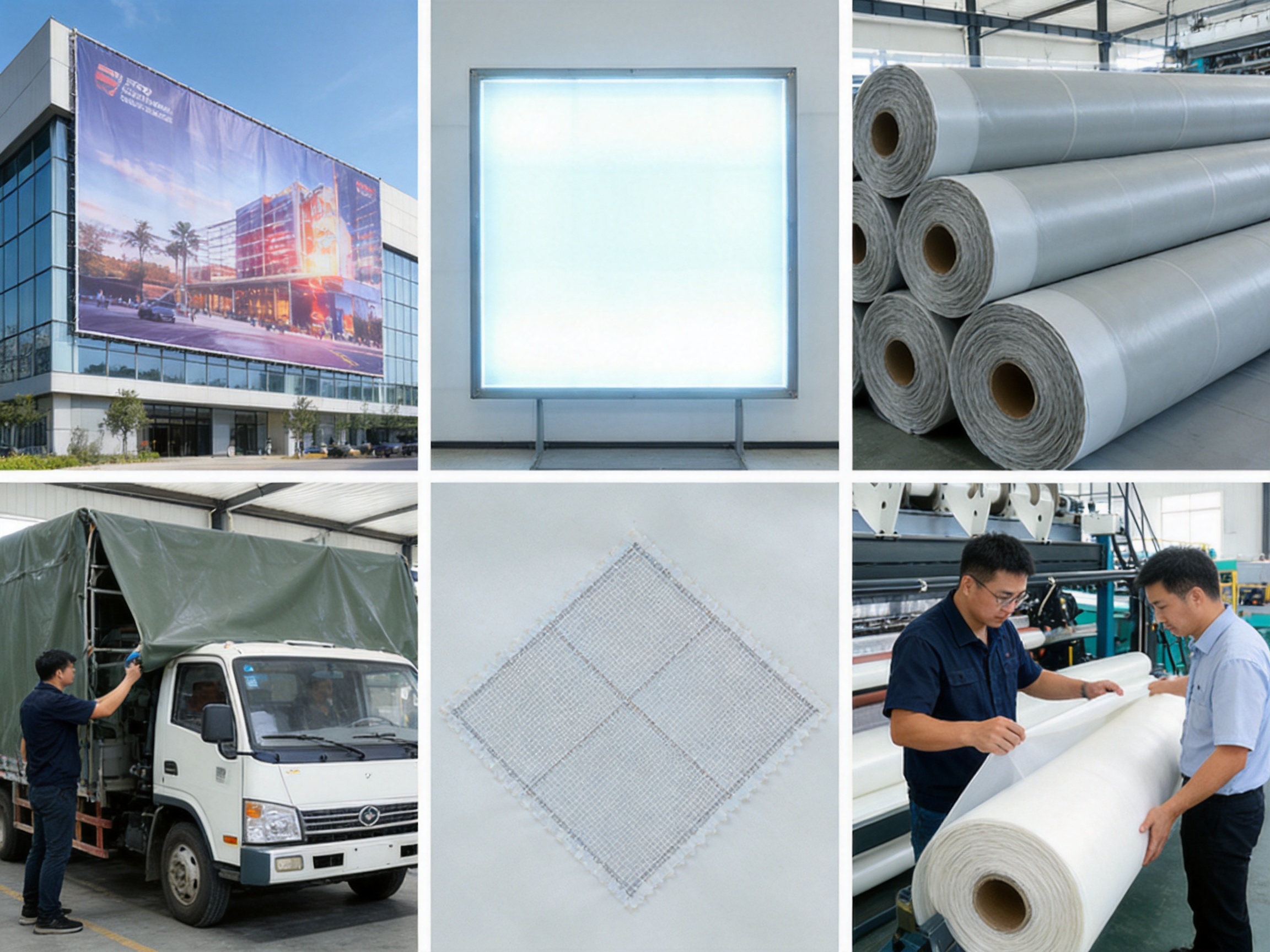
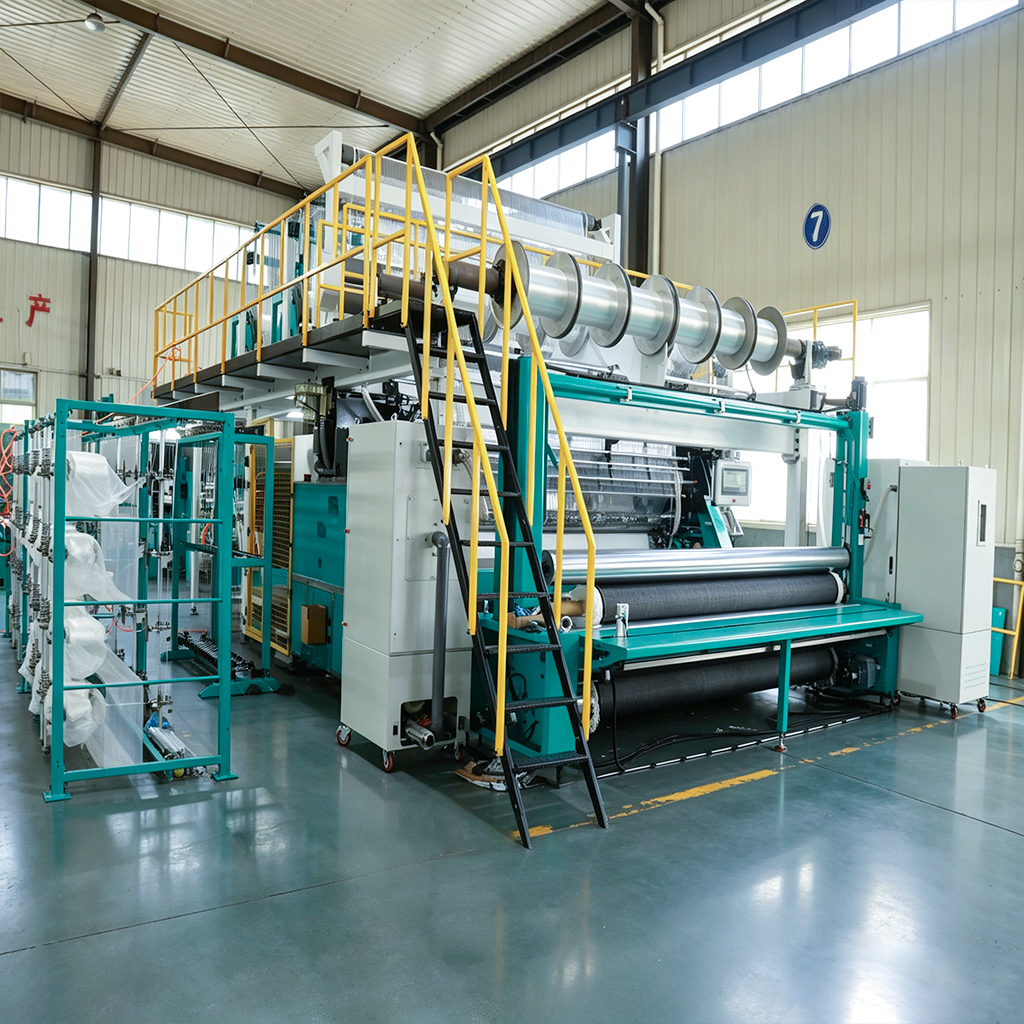
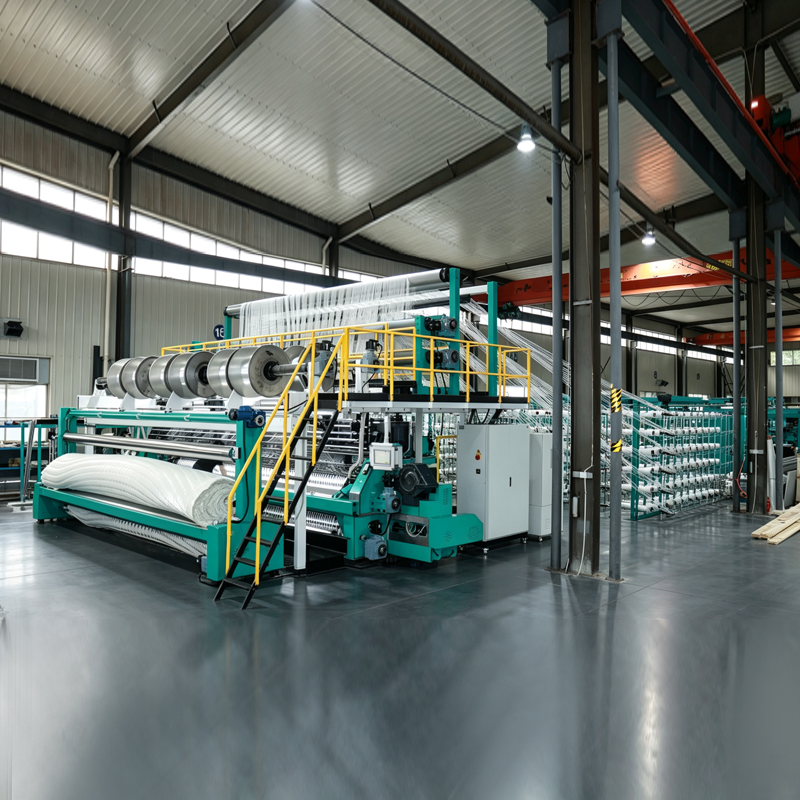
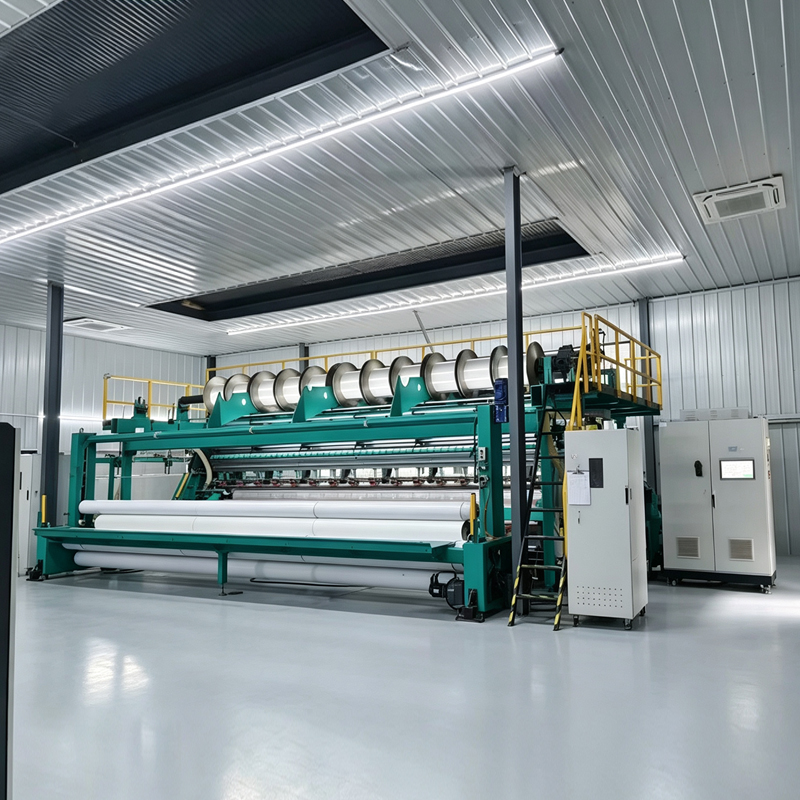
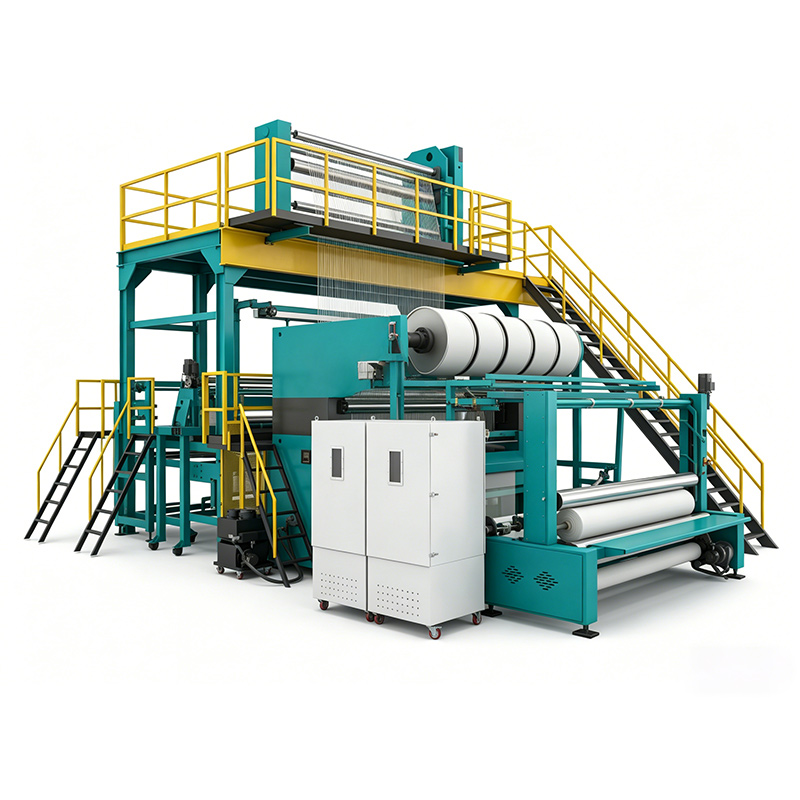
The YRS3-M-B Raschel banner biaxial warp knitting machine is designed for manufacturers producing reinforcement fabrics for flex banners, lightbox advertising materials, truck tarpaulins, side curtains, and other PVC-coated industrial textiles. It combines high-tenacity polyester yarn capability, wide-format production, stable high-speed operation, and square-mesh fabric formation in one integrated machine platform.
Unlike a basic laid-scrim system, this biaxial warp knitting machine locks warp and weft yarns together through a controlled knitting structure. The resulting reinforcement fabric offers more stable mesh geometry, improved resistance to skewing, and dependable dimensional behavior during coating, drying, tentering, printing, rolling, transportation, and outdoor use.
The machine is manufactured by Changzhou Yuanyang Electromechanical Technology Co., Ltd., a specialist textile machinery producer focused on warp knitting equipment, stitch-bonding machines, multiaxial systems, carbon fiber textile machinery, web-laying equipment, powder scattering machines, and customized industrial textile solutions. Its manufacturing and engineering capabilities allow the YRS3-M-B to be configured around yarn specifications, fabric construction, coating-line requirements, production targets, and factory conditions.
With a confirmed working width of 268 inches, a machine speed range of 20–1300 r/min, and a reference advertising-cloth output of up to 20,000 square meters per day, the YRS3-M-B is suitable for large-scale production. Actual output depends on yarn count, mesh density, fabric weight, machine settings, coating conditions, and the required quality standard.
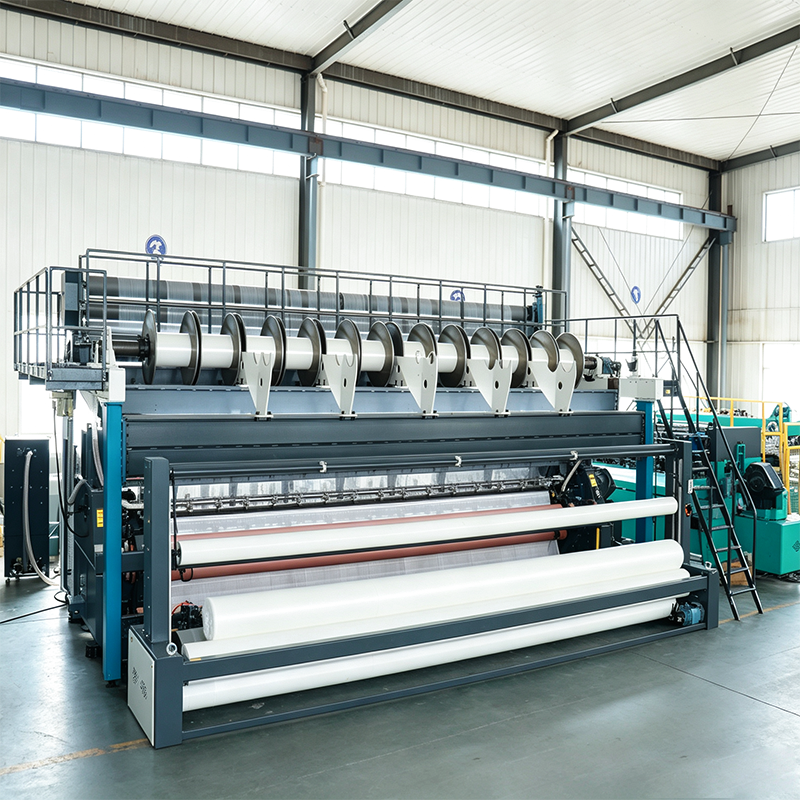
YRS3-M-B Raschel Banner Biaxial Warp Knitting Machine
1. The Role of Reinforcement Fabric in Banner Production
Modern flex banners and coated tarpaulins are composite products. Their performance depends not only on the PVC coating, printing ink, surface finish, or welding process, but also on the internal textile reinforcement. The base fabric must provide tensile strength, dimensional stability, tear resistance, handling durability, and a reliable surface for coating adhesion.
The reinforcement layer is commonly produced from high-tenacity polyester filaments. These filaments are selected because they combine useful tensile performance with relatively low weight, good flexibility, chemical resistance, and compatibility with PVC coating systems. However, the yarn itself is only one part of the final result. The way the yarns are positioned and joined determines how effectively the reinforcement performs.
If warp and weft yarns shift excessively during processing, the mesh can become distorted. If the apertures vary across the width, coating penetration may be inconsistent. If the fabric loses alignment during tentering or drying, the finished banner may show irregular stretch, printing defects, poor roll formation, or unstable dimensions. A suitable knitting structure is therefore essential for consistent downstream processing.
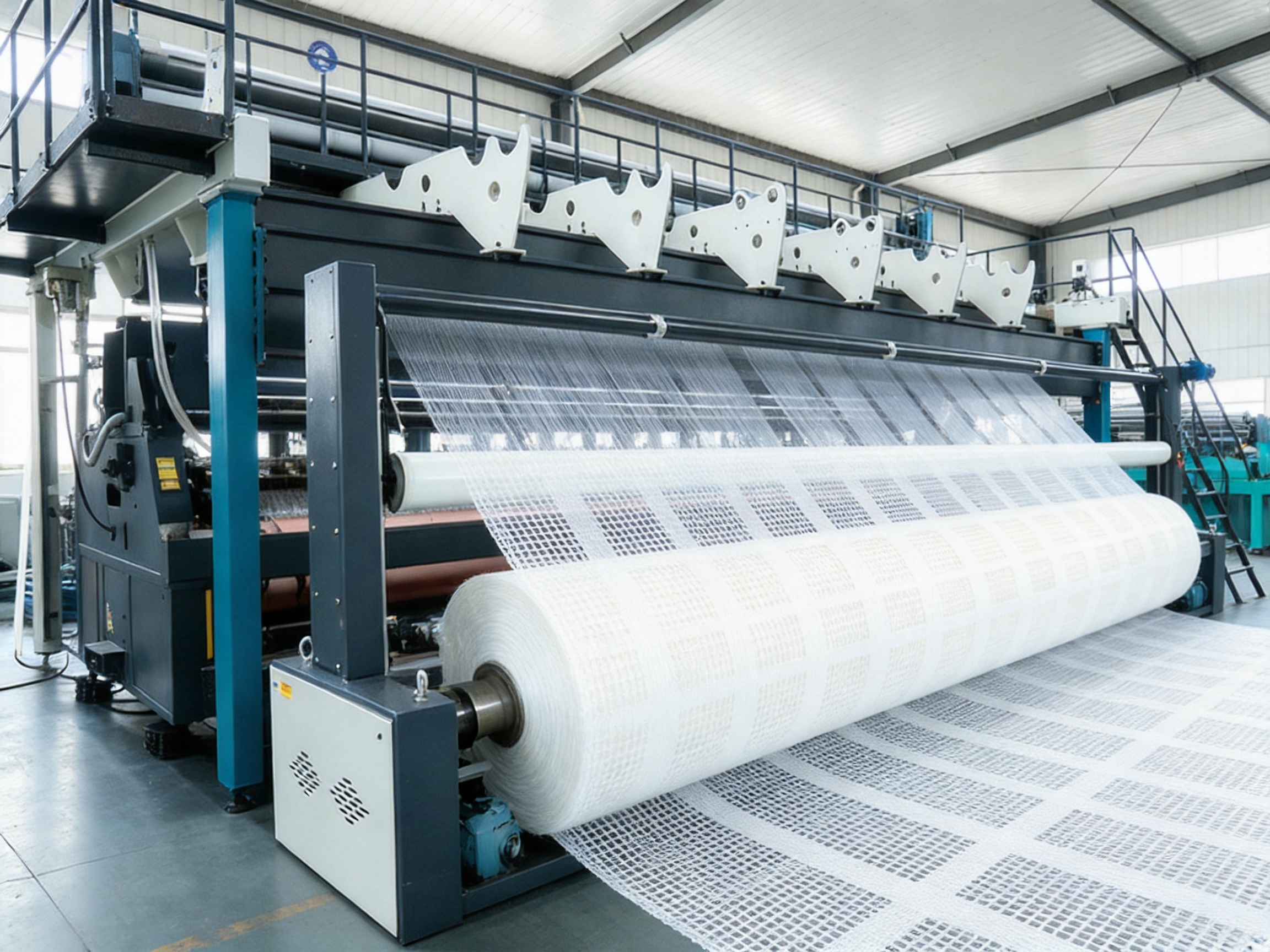
The YRS3-M-B forms a square-mesh biaxial structure in which the warp and weft reinforcement directions are integrated into the knitted fabric. The machine is designed to maintain yarn placement and motion sequence at production speed, helping manufacturers produce a more uniform substrate for subsequent PVC coating.
2. What Is a Biaxial Raschel Warp Knitting Machine?
A biaxial warp knitting machine creates a fabric containing two principal reinforcement directions: the longitudinal warp direction and the transverse weft direction. These yarn systems are arranged at right angles and joined by knitted connections. The result is a textile grid that combines open mesh geometry with mechanical stability.
In a conventional woven fabric, warp and weft yarns cross over and under one another according to a weaving pattern. In a laid-scrim process, yarns may be positioned in two directions and held together by adhesive, coating, or another bonding method. A biaxial warp knitting machine uses a knitting mechanism to secure the yarn systems into an integrated structure.
This construction offers several practical benefits for coated industrial fabrics. The yarns remain more effectively aligned during handling, the square apertures can be controlled through machine settings, and the knitted connections help reduce relative movement between the reinforcement directions. These characteristics are especially valuable when the fabric is exposed to tension, heat, coating pressure, drying, and winding.
The Raschel system is well suited to open structures and technical textiles. It allows manufacturers to produce a stable mesh rather than a dense apparel fabric. The open construction provides space for PVC paste or other coating compounds to penetrate and anchor around the reinforcement yarns.
For banner fabric, the objective is not simply to produce the highest possible machine speed. The production system must balance speed with mesh regularity, yarn tension, stitch formation, fabric width, edge stability, take-up control, and downstream coating compatibility. The YRS3-M-B is engineered around this balance.
3. Main Product Specifications
| Parameter | Specification | Production Significance |
|---|---|---|
| Machine model | YRS3-M-B | Raschel banner biaxial warp knitting machine |
| Applicable fibers | High-tenacity polyester coarse yarn and polyester | Suitable for reinforcing warp and weft systems |
| Machine speed | 20–1300 r/min | Operating speed is selected according to construction and yarn conditions |
| Working width | 268 inches | Suitable for wide-format banner and coating lines |
| Reference daily output | 20,000 square meters | Actual output varies according to fabric construction and process |
| Fabric structure | Square mesh | Provides a regular reinforcement pattern for coating |
| Typical finish | PVC coating after knitting | Used for advertising and industrial coated fabrics |
| Typical applications | Lightbox advertising fabric and truck tarpaulin | Suitable for commercial and industrial textile production |
The specifications provide a starting point for engineering discussions rather than a substitute for fabric trials. A producer targeting a particular mesh opening, weight, yarn count, or coating formulation should confirm the final configuration through sample development and production testing.
4. High-Tenacity Polyester Yarn Capability
The YRS3-M-B is intended for high-tenacity polyester filaments, including coarse yarns used as reinforcing elements. High-tenacity polyester offers a useful combination of tensile strength, processability, abrasion resistance, and cost efficiency for outdoor advertising and protective textile applications.
Coarse reinforcing yarns can create additional demands on the machine. They may require suitable guide arrangements, carefully controlled tension, appropriate beam preparation, and stable yarn paths. A machine that is satisfactory for fine yarns is not automatically optimized for heavy reinforcement yarns. The guide components, knitting elements, drive system, and take-up arrangement must work together to avoid excessive yarn stress and irregular loop formation.
The manufacturer configures the yarn path around the selected yarn linear density, supplier characteristics, beam arrangement, required fabric construction, and target speed. This approach is more practical than applying one fixed configuration to every customer. Polyester grades can differ in surface finish, friction behavior, elongation, twist, package density, and tension response, so production settings must be established for the actual material.
Stable yarn tension is particularly important in a square-mesh structure. Excessive tension variation can cause uneven apertures, diagonal distortion, broken filaments, edge instability, or visible streaks after coating. The machine’s motion sequence and control parameters are therefore set to support consistent yarn delivery throughout the production shift.
5. Square-Mesh Formation and Coating Performance
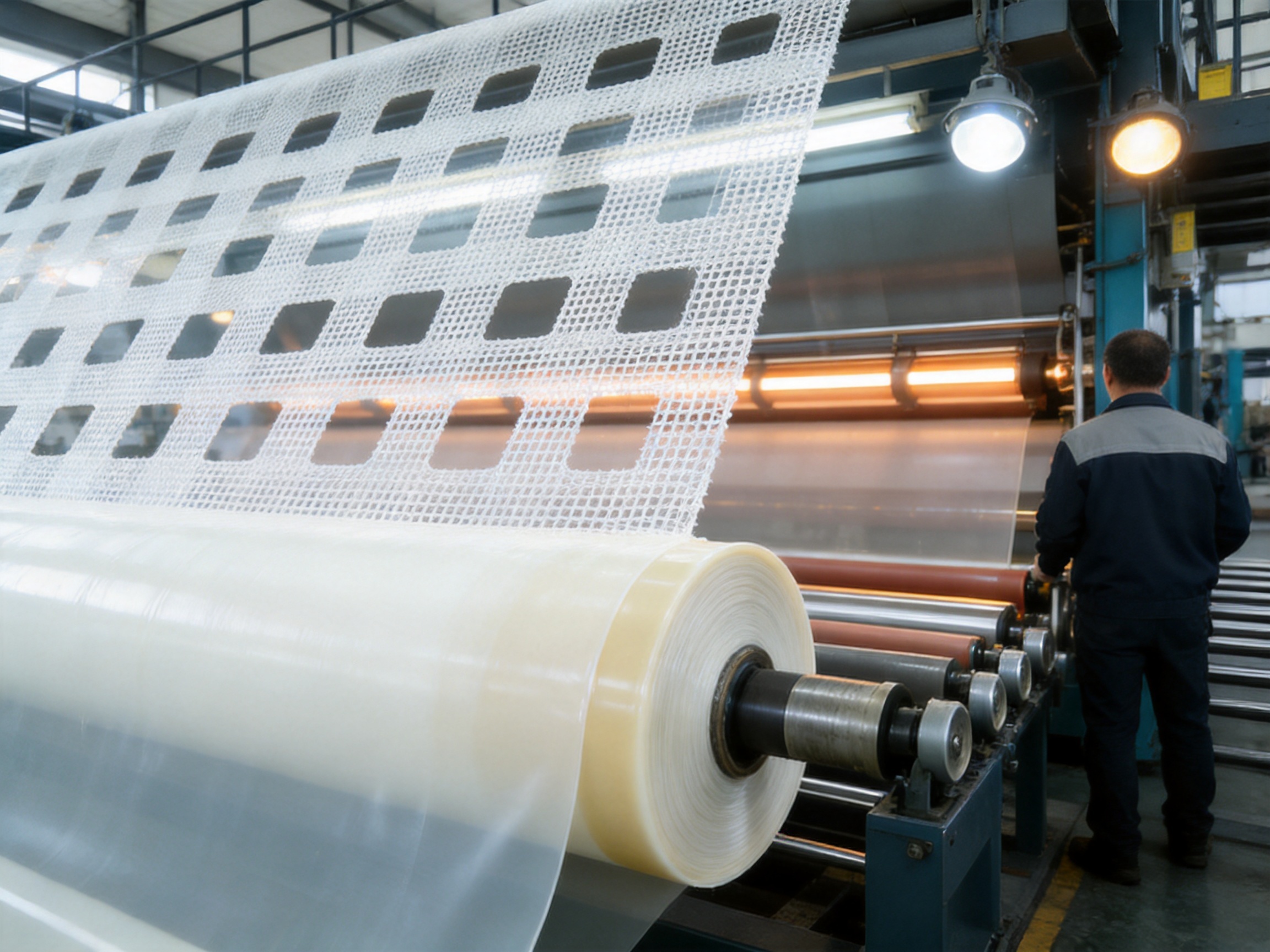
A regular square mesh provides a predictable anchor pattern for PVC coating. When apertures are consistent, the coating compound can spread more evenly across the fabric surface and penetrate around the yarn intersections in a controlled manner. This supports improved surface uniformity, print appearance, opacity, and dimensional behavior.
Mesh regularity also affects the visual quality of the finished banner. Advertising fabrics are often printed with large areas of solid color, detailed graphics, text, gradients, and photographic images. Irregular reinforcement can contribute to surface variation, coating marks, local thickness differences, or print defects. A stable base fabric helps the coating and printing processes operate within a narrower process window.
The open construction of the biaxial fabric allows the PVC compound to form a continuous coated layer while using the yarn grid as internal reinforcement. The final product can therefore remain flexible enough for winding and installation while maintaining the strength needed for outdoor use.
For truck tarpaulins and side curtains, the square-mesh reinforcement supports resistance to repeated handling, tension from fastening systems, wind movement, folding, and rolling. The exact performance depends on the finished coating formulation, fabric weight, welding method, edge construction, and environmental exposure, but the knitted base fabric provides a stable foundation for these additional processes.
6. Advantages Over Basic or Less Specialized Systems
Manufacturers comparing equipment should evaluate more than nominal speed. A low-cost machine may appear attractive when judged only by purchase price or maximum rotation rate, but the total production result depends on fabric quality, downtime, yarn waste, adjustment requirements, operator workload, energy use, and compatibility with the coating line.
The YRS3-M-B offers several advantages when compared with less specialized equipment for banner reinforcement production.
6.1 Integrated Biaxial Reinforcement
The machine knits the warp and weft reinforcement directions into one fabric structure. This reduces the risk of independent yarn movement during handling and coating. In contrast, a simple yarn-laying process may require additional bonding or stabilization steps before the fabric can be safely processed.
6.2 More Consistent Square Apertures
The Raschel knitting structure supports controlled mesh geometry across the working width. Consistent apertures help the coating line maintain an even application pattern. This can reduce visible variation in the coated surface and improve the reliability of printed banner products.
6.3 Wide-Format Production
The 268-inch working width allows the machine to supply wide-format production lines and reduce the need for unnecessary longitudinal joining or multiple narrow webs. Wide fabric can improve productivity for large advertising displays, truck curtains, tarpaulin panels, and other applications requiring broad finished rolls.
6.4 High-Speed Motion Control
The machine is designed to maintain an appropriate rotational speed and motion sequence at high operating speed. This is important because speed alone is not productive if it creates frequent stops, fabric defects, or unstable stitch formation. A controlled motion sequence helps the machine maintain repeatable production conditions.
6.5 Coarse Yarn Adaptability
The ability to process high-tenacity polyester coarse yarn provides a stronger reinforcement platform for demanding outdoor and industrial products. The machine can be configured around the required yarn count and fabric construction instead of being limited to a narrow range of fine yarn articles.
6.6 Better Integration with Downstream Lines
The machine can be planned in relation to the coating, drying, tentering, batching, and roll-handling equipment that follows. This reduces the risk of producing a fabric that is technically acceptable on the knitting machine but unsuitable for the customer’s actual finishing line.
6.7 Configurable Engineering
Different producers may need different mesh densities, yarn weights, roll widths, beam arrangements, or factory layouts. The manufacturer supports configuration and customization work covering machine structure, layout, functional modules, special materials, and production-line integration.
7. Production Stability at High Speed
High-speed textile machinery must control multiple moving elements at the same time. In a biaxial Raschel machine, the knitting elements, guide bars, yarn delivery system, weft insertion components, drive system, take-up unit, and control system must remain synchronized. A small deviation in timing or tension can become a repeated fabric defect across a long production roll.
The YRS3-M-B is designed to preserve an optimal relationship between rotational speed and motion sequence. This means the machine does not simply accelerate individual components; it coordinates the movements required to form the fabric correctly. The result is a more stable production process when operating within the selected construction and yarn parameters.
Production speed should always be determined by the fabric article. A heavy coarse-yarn construction, a tight mesh, or a demanding coating specification may require a lower practical speed than a lighter construction. The stated range of 20–1300 r/min provides operating flexibility, but the best speed is the one that delivers the required fabric quality with acceptable waste and stable machine behavior.
Operators can use production trials to establish the appropriate working point. Important observations include yarn tension, mesh opening, fabric width, edge quality, fabric weight, roll hardness, machine vibration, yarn break frequency, and the condition of the fabric after coating.
8. Manufacturing Strengths and Engineering Capability
The machine is produced by a company specializing in industrial textile equipment rather than general-purpose machinery. This specialization supports a deeper understanding of warp knitting structures, yarn behavior, fabric construction, and the practical requirements of textile production lines.
The company’s product range includes stitch-bonding machines, biaxial warp knitting machines, multiaxial warp knitting machines, carbon fiber multiaxial warp knitting machines, powder scattering machines, web-laying machines, warp knitting accessories, and special equipment. This broad product portfolio gives the engineering team experience across many technical textile applications.
Its production base covers more than 12,000 square meters and includes standardized manufacturing workshops, customization zones, design trial workstations, and an intelligent warehouse. These facilities support a workflow that extends from component receiving and machining to assembly, testing, debugging, packaging, and dispatch.
The company also maintains a professional research and development team composed of experienced industry engineers. This team works on structural design, machine performance, control systems, special configurations, and production stability. The objective is not merely to copy a standard machine, but to adapt equipment to complex fabric designs, difficult materials, non-standard layouts, and long-term industrial operation.
For customers, this engineering depth is valuable because the machine is part of a larger manufacturing system. The best result requires coordination among the yarn preparation department, warp beam area, knitting machine, inspection process, coating line, finishing department, and final packaging operation.
9. Advanced Manufacturing Process
9.1 Engineering Review and Requirement Definition
Before production begins, the customer’s requirements are reviewed. The engineering team considers the target fabric construction, yarn type, linear density, mesh count, aperture size, finished width, coating method, expected output, plant layout, available utilities, and operator requirements.
This review helps identify whether the customer requires a standard configuration or a modified machine. It also allows the installation plan to be developed before the equipment reaches the factory. Early planning reduces the likelihood of costly changes during commissioning.
9.2 Structural and Layout Design
Machine structure and layout are designed around operating stability, accessibility, material flow, and maintenance. The frame must provide adequate rigidity for a wide working width and high-speed movement. Components must be positioned so that operators can inspect yarn paths, make adjustments, replace wear parts, and perform routine lubrication.
Layout planning also considers beam handling, creel access, take-up direction, fabric inspection, roll removal, and connection to downstream equipment. A technically capable machine can still create production difficulties if it is placed poorly within the workshop, so the layout is treated as an engineering issue rather than an afterthought.
9.3 Component Procurement and Incoming Inspection
Quality control begins before assembly. Incoming components and materials are checked against technical and production requirements. Inspection may include dimensional verification, appearance checks, material confirmation, electrical component review, and evaluation of parts that affect machine precision or durability.
Controlling incoming components helps prevent quality problems from moving into later production stages. It also creates traceability for important parts and supports more efficient troubleshooting if a problem is identified during assembly or testing.
9.4 Precision Assembly
The frame, drive system, guide elements, yarn delivery components, knitting mechanisms, take-up unit, control cabinet, and safety devices are assembled according to engineering drawings and production procedures. Alignment is carefully managed because small errors can affect fabric width, yarn tension, machine vibration, or the timing relationship among moving parts.
Assembly technicians work through defined inspection points rather than waiting until the final test to discover all problems. This approach makes it easier to identify the source of a deviation and correct it before the complete machine is enclosed or shipped.
9.5 Electrical and Control Integration
The control system coordinates machine speed, motion sequence, safety interlocks, operator settings, and production parameters. Electrical integration includes control cabinet assembly, wiring, drive installation, sensor connection, interface setup, and functional checks.
Control parameters can be established for different fabric articles. This supports repeatability when the customer changes from one mesh construction to another. Proper control integration also helps operators identify abnormal conditions and stop the machine safely when required.
9.6 No-Load and Loaded Testing
Before shipment, the completed machine undergoes testing. No-load running checks help verify mechanical movement, drive response, vibration, lubrication, noise, safety functions, and the relationship between machine speed and motion sequence.
Loaded testing introduces yarn and production conditions. The team checks fabric formation, mesh geometry, yarn delivery, take-up behavior, fabric width, edge performance, and running stability. When possible, testing is carried out using the customer’s target yarn or a material with closely matched characteristics.
9.7 Pre-Delivery Inspection
Final inspection covers the machine structure, electrical system, control functions, accessories, documentation, spare parts, packaging, and agreed scope of supply. Customers may participate in pre-shipment inspection where required. This provides an opportunity to confirm the machine condition and clarify operating procedures before transportation.
10. Installation and Commissioning at the Customer’s Factory
Installation is planned around the customer’s building and production system. Important factors include floor loading, foundation condition, leveling, machine orientation, access routes, beam trolley movement, electrical supply, ventilation, lighting, operator access, and the position of the downstream coating line.
The installation process generally includes several stages.
- Site preparation review, including foundation, floor condition, clearances, service access, and material-handling routes.
- Mechanical installation, frame leveling, beam positioning, component alignment, and yarn-path preparation.
- Electrical connection, control-system setup, drive-parameter configuration, and safety-interlock verification.
- Yarn threading and initial fabric trials using the agreed yarn and construction.
- Adjustment of speed, tension, motion sequence, take-up, and fabric-handling parameters.
- Production verification against the required mesh structure, width, quality, and operating stability.
- Operator, maintenance, and workshop-management training before final handover.
Engineers can attend the customer’s factory for installation, commissioning, and training until the machine reaches the agreed operating condition. On-site commissioning is particularly useful for wide machines because the actual building environment, yarn-storage arrangement, beam preparation, and downstream line may influence the final operating settings.
Training is also available at the manufacturer’s fabrication workshop. Customers may arrange for knitters, maintenance personnel, production supervisors, and workshop managers to work alongside the manufacturing team for one to two months. This extended training option allows staff to understand not only machine operation but also adjustment principles, preventive maintenance, troubleshooting, and production discipline.
11. Factory Utilities and Layout Considerations
A wide-format biaxial warp knitting machine requires a properly prepared production area. The factory should provide sufficient floor space for the machine, warp beam preparation, operator movement, maintenance access, finished-roll handling, and safe transportation of components.
The floor must be capable of supporting the equipment and maintaining alignment over time. Uneven settlement or insufficient foundation preparation can affect machine leveling and create vibration or fabric-quality problems. The installation team can review foundation and leveling requirements before shipment.
Electrical supply should be confirmed according to the machine configuration and local standards. The customer should provide stable power, suitable protection, grounding, and sufficient capacity for the machine and related equipment. Control cabinets require clear access and a suitable environment free from excessive dust, moisture, and heat.
Material handling is another important consideration. High-tenacity yarn beams and finished fabric rolls can be heavy and difficult to move manually. The plant should provide suitable beam trolleys, lifting equipment, aisles, turning space, and storage positions. Efficient handling reduces the risk of yarn damage, roll deformation, and workplace accidents.
12. Operating the Machine for Consistent Quality
Consistent production begins with consistent preparation. Yarn packages should be checked for damage, contamination, package density, labeling, and compatibility with the planned article. Warp beams should be prepared with suitable tension and uniformity. Operators should verify the yarn path, guide condition, and machine settings before starting a long production run.
During operation, the main control points include yarn tension, machine speed, mesh opening, fabric width, edge alignment, take-up tension, roll hardness, fabric weight, and visible defects. A production record should connect these values with the yarn batch, machine article, operator, shift, and downstream coating result.
Changing speed without checking fabric quality can create avoidable problems. When speed is increased, the operator should observe whether yarn tension remains stable, whether the mesh remains square, whether the fabric width changes, and whether the take-up system maintains the desired roll structure.
Inspection should take place both on the uncoated knitted fabric and after PVC coating. A mesh may appear acceptable before coating but show problems when exposed to heat, pressure, tension, or drying. Comparing the base fabric with the final product helps identify whether a defect originated in knitting, coating, tentering, printing, or finishing.
13. Maintenance and Serviceability
Industrial textile machinery must operate for long shifts, often under continuous production schedules. Maintenance should therefore be planned into the operating routine rather than performed only after a failure occurs.
Daily checks can include cleaning lint and dust, inspecting yarn paths, checking unusual noise or vibration, observing oil or lubricant condition, verifying safety devices, and looking for loose fasteners or damaged guides. Operators should report small changes before they develop into major failures.
Periodic maintenance should follow running hours and the manufacturer’s instructions. It may include lubrication, inspection of knitting elements, checking guide components, examining drive belts or couplings, verifying electrical connections, and confirming the condition of sensors and safety interlocks.
Wear components should be identified clearly and replaced before they create repeated fabric defects. A damaged guide, worn knitting element, or misaligned take-up component can affect an entire production roll. Keeping suitable spare parts on site reduces downtime and allows maintenance staff to respond quickly.
The manufacturer provides spare-parts support, replacement guidance, process troubleshooting, and technical assistance after handover. A rapid-response service mechanism and engineers located in textile-producing regions help shorten the time required to diagnose and resolve operating problems.
14. Quality Control from Design to Delivery
Quality control is applied across the machine’s life cycle. During design, engineers review the intended fabric and production conditions. During procurement, components are checked. During manufacturing, assembly and alignment are inspected. During testing, machine movement and fabric formation are evaluated. Before shipment, the completed equipment is reviewed against the agreed requirements.
This process-based approach is stronger than relying on a single final inspection. If the frame, drive, yarn path, control system, and take-up unit are each checked at the appropriate stage, the likelihood of hidden problems reaching the customer is reduced.
Fabric trials are particularly important for a machine designed around technical textiles. The trial confirms that the machine can produce the required square mesh, width, yarn arrangement, and running stability. It also creates a practical reference for installation and future operator training.
Inspection records support the acceptance process at the customer’s site. They can also help establish the customer’s own quality-management documentation, including machine parameters, fabric inspection results, maintenance schedules, and production records.
15. Customization for Different Banner Articles
Banner manufacturers may produce several fabric constructions on the same machine platform. One article may require a light, open mesh for indoor advertising, while another may require heavier reinforcement for truck tarpaulins or outdoor displays. The configuration must reflect these differences.
15.1 Yarn and Mesh Configuration
Warp and weft yarn counts, mesh density, stitch arrangement, and fabric weight can be coordinated with the final application. The required aperture size should be considered together with coating penetration, print quality, tensile performance, and finished appearance.
15.2 Width and Beam Arrangement
The 268-inch working width is suitable for wide-format manufacturing, but the beam arrangement and factory layout must also match the actual production line. Beam positions, creel access, operator clearance, and roll-handling routes are reviewed during project planning.
15.3 Drive and Control Parameters
Different articles may require different speed and motion settings. Parameters can be established for each fabric construction so that operators can change articles more efficiently while maintaining repeatable production conditions.
15.4 Downstream Coating Integration
The base fabric should be developed with the coating line in mind. Coating speed, paste formulation, drying temperature, tentering tension, line width, and roll-handling conditions can all influence the desired knitted structure.
15.5 Special Material Adaptation
The manufacturer also undertakes structure and layout redesign, functional module development, and adaptation for special materials. This capability is useful when a standard frame or standard yarn path does not meet the customer’s technical requirements.
16. Applications of the Finished Fabric
16.1 Lightbox Advertising Fabric
Lightbox advertising fabrics require a visually uniform surface and stable dimensions. The knitted square mesh provides reinforcement while allowing the PVC coating to form a suitable surface for printing, illumination, cutting, welding, and installation.
16.2 Flex Banner
Flex banner fabric is used for outdoor signs, building wraps, display panels, event graphics, and commercial advertising. The reinforcement must tolerate repeated winding, transportation, installation tension, wind movement, and exposure to changing weather.
16.3 Truck Tarpaulin
Truck tarpaulin and side-curtain fabrics require resistance to tension, abrasion, folding, fastening, and repeated handling. The biaxial reinforcement structure helps distribute loads in both primary directions, while the PVC coating protects the textile and provides a printable or weldable surface.
16.4 Industrial Cover and Protective Fabric
Depending on the final coating and fabric construction, similar reinforcement principles may be applied to protective covers, temporary enclosures, partition materials, and other coated technical textiles. The suitability of each article should be confirmed through application-specific testing.
17. Economic Benefits for Producers
Investment value should be evaluated across the complete production cycle. A machine that produces stable fabric at a suitable speed can reduce material waste, rework, coating interruptions, customer complaints, and unnecessary operator adjustments.
Wide-format production can improve material utilization for large finished products. It may reduce the need for joining narrower webs and simplify the production of broad banner rolls. Higher productivity can also help manufacturers meet seasonal advertising demand or large industrial contracts without adding multiple small machines.
Stable running reduces the hidden cost of downtime. Frequent stops consume labor, waste yarn, interrupt coating-line scheduling, and create non-conforming rolls. Maintaining the correct motion sequence at high speed helps the machine deliver useful output rather than simply a high theoretical rotation rate.
Configuration flexibility provides another economic advantage. A manufacturer that can develop several fabric constructions on one platform may respond to more market segments. The machine can support product development instead of being restricted to one fixed article.
18. Recommended Customer Information for Quotation
Accurate configuration depends on accurate production information. Customers should provide as much of the following data as possible when requesting a proposal.
- Target mesh count and aperture size.
- Warp and weft yarn type, linear density, and supplier information.
- Required fabric weight and finished roll width.
- Daily, monthly, or annual production target.
- Number of operating shifts and expected production schedule.
- PVC coating method, coating-line width, drying conditions, and tentering requirements.
- Available factory floor area, building height, power supply, and lifting equipment.
- Required roll diameter, roll weight, and material-handling method.
- Fabric sample, technical drawing, or construction specification.
- Required delivery schedule, installation scope, and training plan.
A fabric sample or drawing can significantly shorten the configuration process. It allows the engineering team to evaluate the required yarn arrangement, mesh geometry, production speed, and compatibility with the customer’s coating process.
19. Frequently Asked Questions
What type of fabric does this machine produce?
The machine produces biaxial square-mesh fabric from high-tenacity polyester warp and weft yarns. The knitted reinforcement is typically coated with PVC after production to make flex banner, lightbox advertising fabric, truck tarpaulin, or related industrial textiles.
What is the confirmed working width?
The confirmed working width is 268 inches. The actual usable fabric width can depend on the selected configuration, edge treatment, fabric construction, and downstream coating requirements.
What is the machine speed range?
The stated machine speed range is 20–1300 r/min. The practical operating speed should be selected according to yarn count, mesh density, fabric weight, quality requirements, and the stability of the complete production process.
What daily output can be expected?
The reference output for advertising cloth is 20,000 square meters per day. This figure is provided for reference only. Actual output varies according to fabric construction, yarn preparation, machine settings, operating hours, coating process, downtime, and quality standards.
Biaxial knitting joins warp and weft reinforcement directions into an integrated structure. This helps maintain square-mesh geometry, reduces independent yarn movement, supports coating uniformity, and improves dimensional stability during handling and finishing.
Can the machine use coarse high-tenacity polyester yarn?
Yes. The machine is designed for high-tenacity polyester, including coarse reinforcing yarns. The yarn path, guide arrangement, tension settings, and production parameters should be configured according to the exact yarn specification.
Can the machine be customized for another mesh design?
Yes. Customization may include structural and layout redesign, functional module development, special-material adaptation, yarn-path adjustments, and integration with a particular coating line. A sample or drawing is recommended for technical evaluation.
Does the manufacturer provide installation?
Engineers can attend the customer’s factory for mechanical installation, electrical commissioning, fabric trials, operator training, and handover. Site preparation requirements should be confirmed before shipment.
Is training available outside the customer’s factory?
Yes. Training can also be arranged at the manufacturer’s fabrication workshop. Operators, maintenance staff, and workshop management personnel may receive practical training for one to two months, depending on the project requirements.
What maintenance support is available after installation?
Support includes spare-parts supply, wear-part replacement guidance, process troubleshooting, technical documentation, and assistance with production problems. The service system is intended to support long-term operation rather than only the initial installation.
How should the machine be compared with a basic scrim or yarn-laying system?
The comparison should include fabric stability, mesh regularity, coating compatibility, required bonding steps, production speed, waste, maintenance, downstream integration, and total operating cost. A biaxial Raschel structure may provide a more integrated reinforcement base for applications that demand consistent geometry and dimensional stability.
What information is needed before a final quotation?
The manufacturer normally needs the target fabric construction, yarn data, width, output requirement, downstream coating conditions, factory information, and sample or drawing. These details allow the machine scope, customization, installation plan, and commissioning requirements to be defined accurately.
20. Conclusion
The YRS3-M-B Raschel banner biaxial warp knitting machine is developed for manufacturers that require stable, wide-format reinforcement fabric for PVC-coated advertising and industrial textiles. Its combination of high-tenacity polyester capability, square-mesh formation, 268-inch working width, 20–1300 r/min speed range, and reference output of 20,000 square meters per day makes it suitable for demanding production environments.
Its main advantage is the integration of yarn capability, biaxial knitting technology, high-speed motion control, and downstream process awareness. The machine is not designed only to produce fabric quickly; it is designed to produce a reliable reinforcement structure that can move efficiently into coating, drying, printing, welding, rolling, and final use.
The manufacturer strengthens this product through specialized textile machinery experience, a production base exceeding 12,000 square meters, structured quality control, research and development resources, customization capability, pre-delivery testing, on-site commissioning, operator training, spare-parts support, and long-term technical service.
For a final configuration, customers should provide their yarn specifications, mesh requirements, finished width, output target, coating-line data, site conditions, and sample or drawing. These inputs allow the equipment to be engineered around the actual production objective and provide a sound basis for reliable long-term operation.
References
1. Changzhou Yuanyang Electromechanical Technology Co., Ltd. Product specification materials for the YRS3-M-B Raschel Banner Biaxial Warp Knitting Machine.
2. Changzhou Yuanyang Electromechanical Technology Co., Ltd. Technical information on biaxial warp knitting machinery and industrial textile equipment.
3. Textile Institute. Technical principles of warp knitting, Raschel structures, and industrial textile production.
4. International Organization for Standardization. General principles for textile testing, fabric construction evaluation, and dimensional stability assessment.
5. Technical literature on high-tenacity polyester fibers for coated fabrics and industrial reinforcement applications.
6. Technical literature on PVC-coated textiles, flex banner materials, truck tarpaulins, and textile-reinforced polymer products.
Product: YRS3-M-B Raschel Banner Biaxial Warp Knitting Machine

News
-
Match the machine type to the fabric: choose a tricot Warp Knitting Machine for fine, smooth fabrics such as lining and sportswear, a raschel machine for open, patterned, and technical fabrics, a doub...
READ MORE -
Two quotations land on the same desk. Both offer a multiaxial warp knitting line, both list the same working width, both promise high output. One buyer signs and discovers six months later that the f...
READ MORE -
Three quotations land on the same desk for the same polyester nonwoven line, and on paper they look interchangeable. Each is priced per metre of working width. Each quotes a similar top speed. Each c...
READ MORE -
A fabric engineer compares two swatches on a cutting table. One is a lightweight mesh that holds its shape, resists runs, and stretches very little. The other is a soft jersey that curls at the edges...
READ MORE
-
Contact Info.
+86-198 5534 1617
+86-134 0158 3002yuanyang@yywarpknitting.com 699#, Shengzhi West Rd, Lvcheng Town, Danyang City, Zhenjiang City, Jiangsu Province, China

-
QR Code
-
Quick Links
Home About Products Manufacturing Customization News Contact -
Product List
Machine for Chemical Fiber Textile Machine for Fiberglass Textile Machine for Carbon Fiber Textile -
About Us
Company Profile Factory Gallery Value-added Service
Copyright © 2026 Changzhou Yuanyang Electromechanical Technology Co., Ltd. All Rights Reserved.
Custom Warp Knitting Machine Manufacturers
