

 English
 中文简体
 русский
 Français
 Español
 Deutsch

FC Chopped Stitch Bonding Machine for High-Uniformity Fiberglass Mat Production
2026-10-23
Content
- 1 Overview of the FC Chopped Stitch Bonding Machine
- 2 Three-in-One Production Process
- 3 Main Technical Characteristics
- 4 Products Manufactured by the Machine
- 5 Working Width, Speed, and Reference Output
- 6 Uniformity Control and Product Consistency
- 7 Advantages Compared with Conventional Production Arrangements
- 8 Manufacturing Strengths of the Equipment Supplier
- 9 Configuration and Line Integration
- 10 Installation, Commissioning, and Acceptance
- 11 Maintenance and Wear-Part Management
- 12 Training and Technical Support
- 13 Information Required for an Accurate Proposal
- 14 Comparison with Other Reinforcement Machine Types
- 15 Applications in Pipeline Rehabilitation
- 16 Environmental and Operational Considerations
- 17 Why Choose the FC Machine for Fiberglass Textile Production?
- 18 Frequently Asked Questions
- 18.1 What is the FC Chopped Stitch Bonding Machine used for?
- 18.2 What fiber can be processed?
- 18.3 What is the standard chopped fiber length?
- 18.4 What fabric weight can the machine produce?
- 18.5 What working widths are available?
- 18.6 What is the machine speed?
- 18.7 What does the ±5% uniformity tolerance mean?
- 18.8 Is the machine suitable for pipe rehabilitation fabric?
- 18.9 Can the machine produce more than one type of fabric?
- 18.10 How is the machine different from a biaxial warp knitting machine?
- 18.11 Can the machine be customized for a specific workshop?
- 18.12 What information is needed for a quotation?
- 18.13 What installation service is provided?
- 18.14 What training is available?
- 18.15 Which components require the most maintenance?
- 18.16 Are spare parts available after delivery?
- 18.17 Can the machine be integrated with a larger production line?
- 18.18 What is the expected daily output?
- 18.19 How should a customer select between the 3300 mm and 3800 mm models?
- 19 Conclusion
- 20 References
- 21 Product: FC Chopped Stitch Bonding Machine
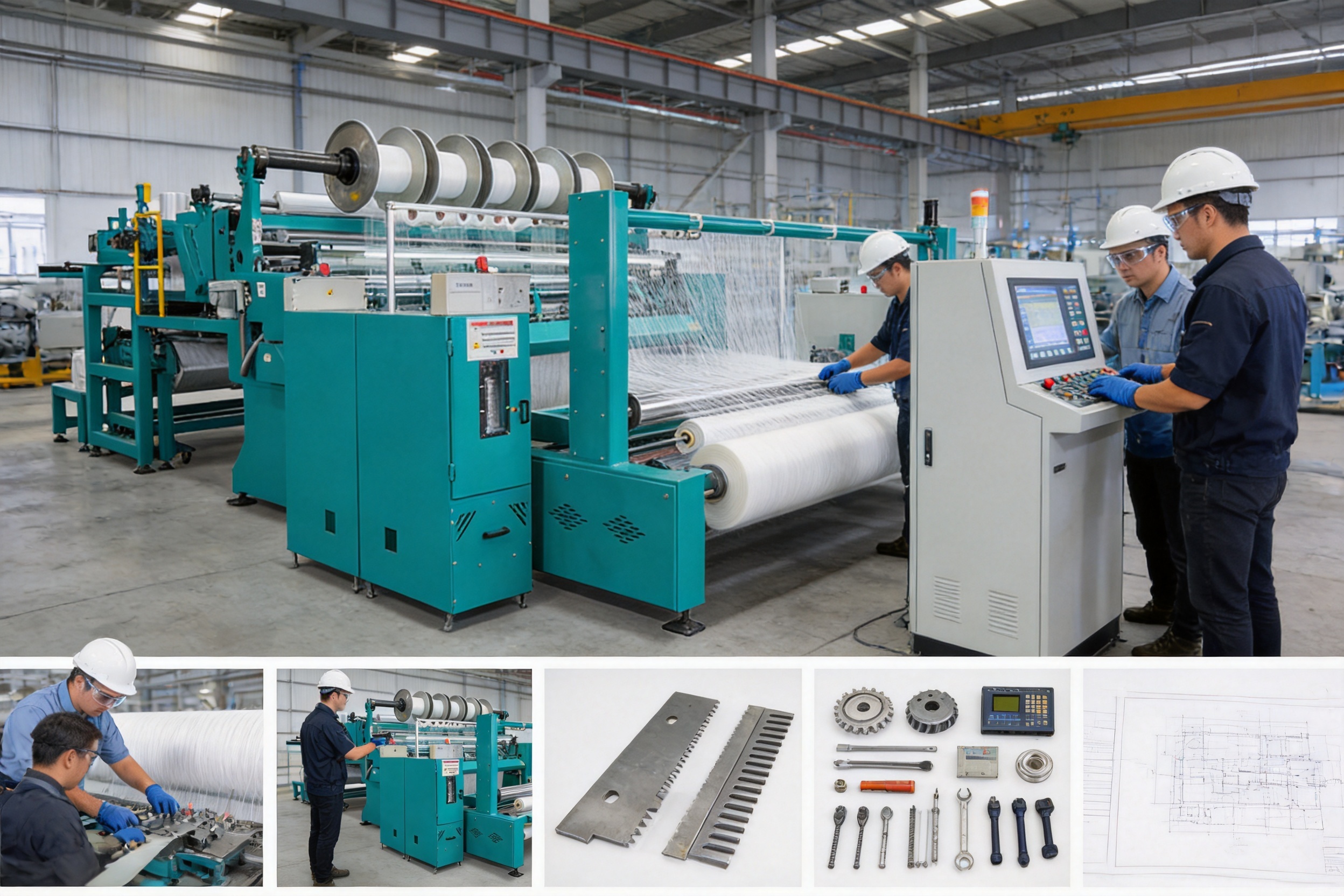
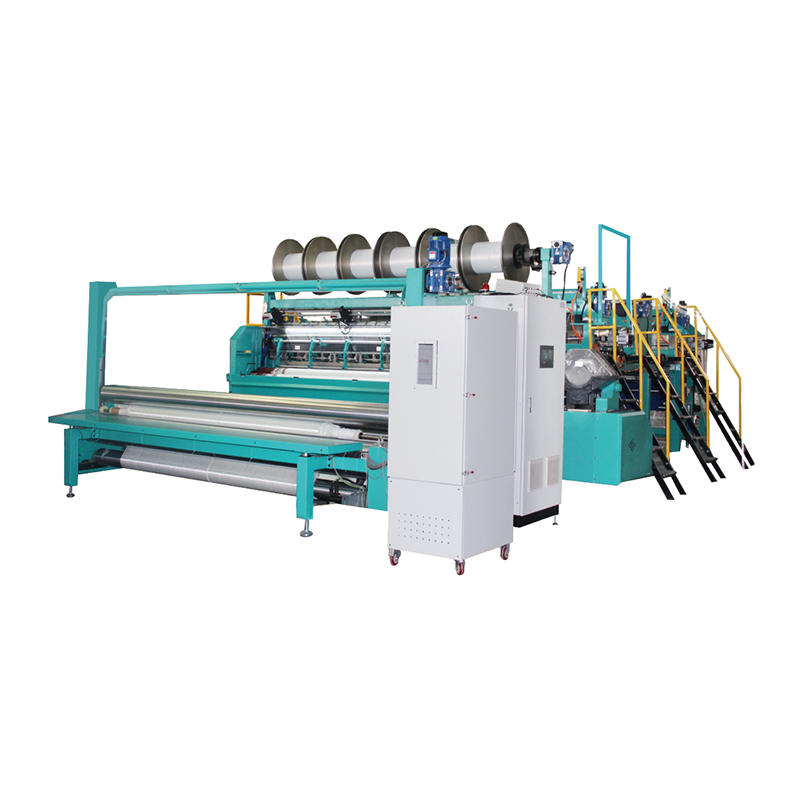
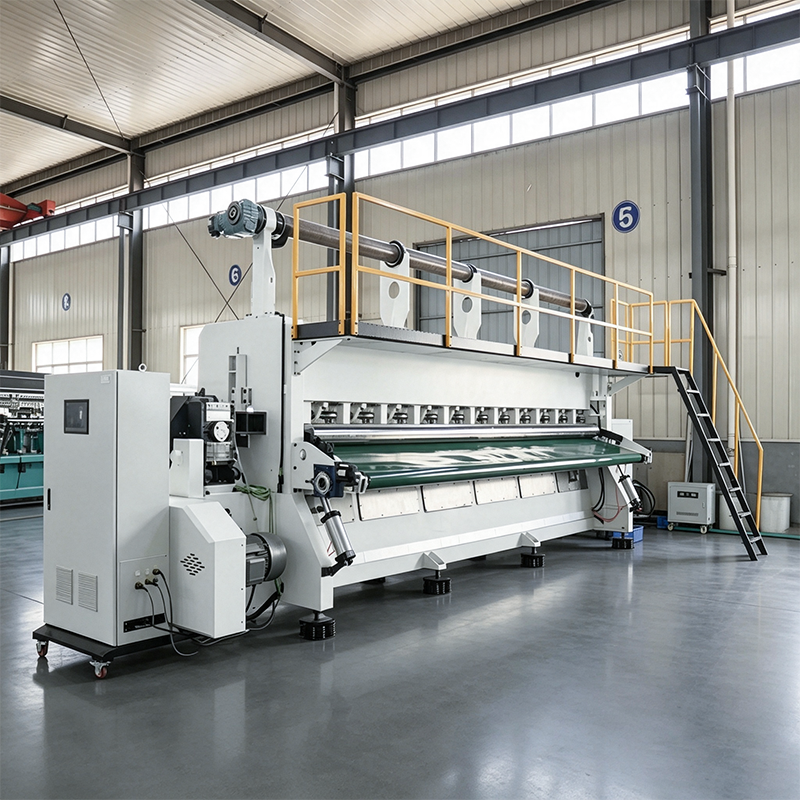
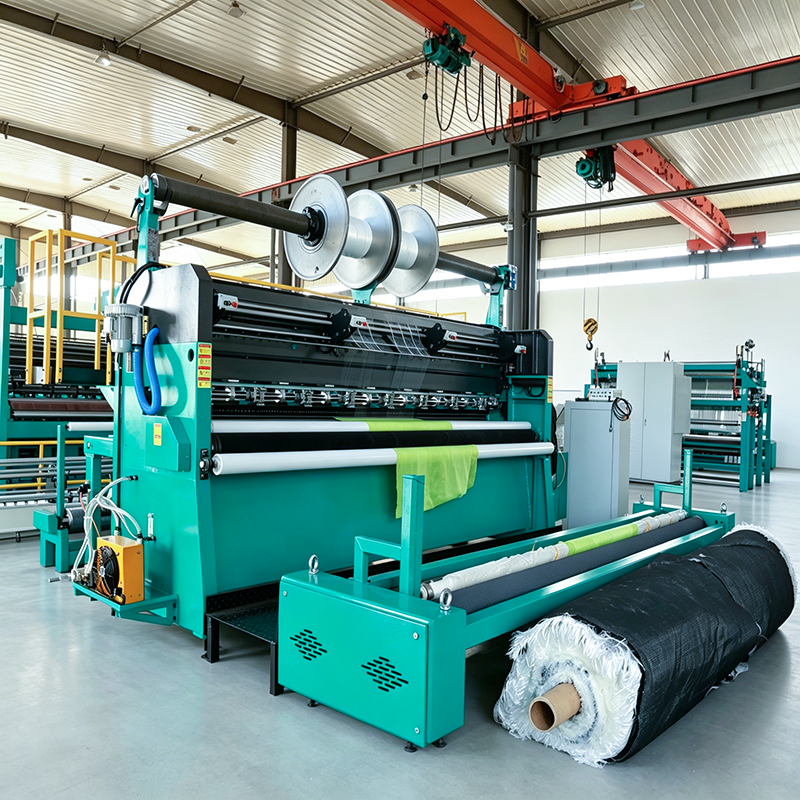
The FC Chopped Stitch Bonding Machine is an integrated production solution for manufacturing chopped strand mats, grid composite mats, and pipe rehabilitation fabrics from glass fiber roving. It combines three essential processes—fiber chopping, web conveying, and stitch bonding—within one continuous machine system. By integrating these operations, the machine reduces intermediate handling, improves production consistency, and provides a practical route to manufacturing non-oriented fiberglass reinforcement fabrics in a wide range of weights.
Designed for fiberglass textile production, the FC machine is suitable for manufacturers serving pipeline rehabilitation, composite reinforcement, construction materials, infrastructure repair, and related industrial applications. It is engineered around the actual production requirements of the customer, including fiber type, roving tex, finished fabric weight, required working width, target output, workshop layout, and downstream processing equipment.
The machine is manufactured by Changzhou Yuanyang Electromechanical Technology Co., Ltd., a specialized textile machinery enterprise based in Jiangsu, China. The company develops and manufactures stitch-bonding machines, biaxial and multiaxial warp knitting machines, carbon fiber textile equipment, web laying machines, powder scattering machines, and customized textile production systems. Its experience in special textile machinery supports the development of equipment for difficult materials, complex reinforcement structures, and long-term industrial operation.
Overview of the FC Chopped Stitch Bonding Machine
The FC Chopped Stitch Bonding Machine converts continuous glass fiber roving into a stable, non-oriented textile mat. The roving is cut into controlled lengths, normally 50 mm, and distributed across the working width. The resulting fiber web is then reinforced by knitting yarn through stitch-bonding technology. A single guide bar forms the loops that hold the chopped fibers together and give the finished fabric sufficient handling strength for winding, storage, transportation, and use in downstream composite or rehabilitation processes.
Unlike a conventional system that requires separate chopping, web formation, transfer, and reinforcement stages, the FC machine integrates these operations into one production line. This three-in-one structure makes the machine easier to coordinate and allows the main process parameters to be managed as a connected system.
The machine is intended for manufacturers that require more than a loose fiber mat. Chopped fibers alone can be difficult to handle because the web may shift, tear, or lose its shape during movement. Stitch bonding adds a knitted structure that stabilizes the web while preserving the non-oriented character of the chopped fiber layer. The finished material can therefore be processed more reliably in applications where uniform coverage, controlled basis weight, and consistent handling are important.
The available fabric weight range is approximately 50–900 g/m². The exact operating range depends on the roving specification, chopped fiber feed rate, knitting yarn, stitch density, line speed, and required product construction. This broad range allows one machine platform to support lightweight reinforcement fabrics as well as heavier industrial mats.
Three-in-One Production Process
The FC machine is organized around three primary process functions: chopping, conveying, and stitch bonding. Each function has a defined role, but the three work together as a continuous system.
Independent Fiber Chopping
The independent chopping unit cuts glass fiber roving into controlled lengths. The standard chopped length is 50 mm, which is suitable for the production of many chopped strand mat and pipe rehabilitation fabric constructions. The chopping system is designed to provide a stable feed and consistent cutting action so that the fiber web contains strands with a controlled length distribution.
Consistent chopping is important because fiber length affects web formation, coverage, handling behavior, and resin interaction. Excessively long or irregular strands can lead to uneven distribution or local accumulation. Poor cutting quality may also create fiber bundles that reduce the uniformity of the finished mat. The FC machine separates the chopping function from the stitch-bonding section, allowing the cutting operation to be adjusted and maintained independently.
Servo-Controlled Web Conveying
After chopping, the fibers are transferred to the web-forming and conveying section. A servo-controlled conveying system regulates the movement of the fiber web and supports even distribution across the working width. Servo control allows the conveying speed to be coordinated with the fiber feed and stitch-bonding process.
The conveying system is one of the main factors influencing product uniformity. If the web moves too quickly in relation to the fiber feed, the finished fabric may be lighter than the target weight. If the conveying speed is too low, fiber accumulation can occur. The FC system is designed to maintain a balanced relationship between fiber input, web movement, and stitch-bonding speed.
Single Guide Bar Stitch Bonding
Once the chopped fibers have been laid into a web, a single guide bar forms knitted loops through the material. The knitting yarn reinforces the web and helps maintain the integrity of the mat. The stitch-bonded structure makes the fabric easier to wind, transfer, cut, and install than an unsupported loose fiber layer.
The guide bar configuration is also practical for manufacturers that need a reliable and relatively straightforward reinforcement structure. Instead of producing a woven or biaxial fabric, the machine creates a non-oriented chopped fiber mat stabilized by knitted loops. This is advantageous when the end application requires broad, evenly distributed reinforcement rather than a defined 0-degree or 90-degree directional arrangement.
Main Technical Characteristics
The FC Chopped Stitch Bonding Machine combines several technical characteristics that support stable production and flexible product development.
- Integrated chopping, web conveying, and stitch bonding in one continuous process.
- Independent chopping unit for controlled glass fiber cutting.
- Standard chopped fiber length of 50 mm.
- Servo-controlled conveying for improved web distribution.
- Single guide bar loop formation for mat reinforcement.
- Fabric weight range of approximately 50–900 g/m².
- Uniformity tolerance within ±5% under appropriate operating conditions.
- Working widths of 3300 mm and 3800 mm.
- Machine speed range of approximately 50–1300 r/min.
- Adaptation to customer-specific fiber, product, layout, and output requirements.
The machine is not limited to one finished fabric specification. The construction can be adjusted according to the intended product weight, knitting yarn, stitch parameters, roving tex, and downstream requirements. This flexibility is especially useful for producers that supply several customers or operate in different application markets.
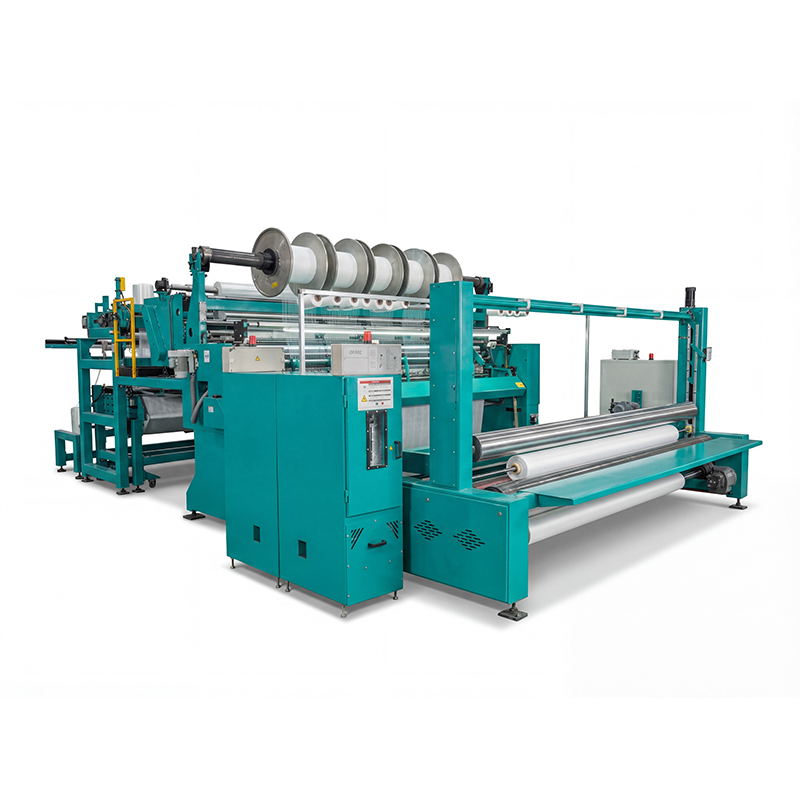
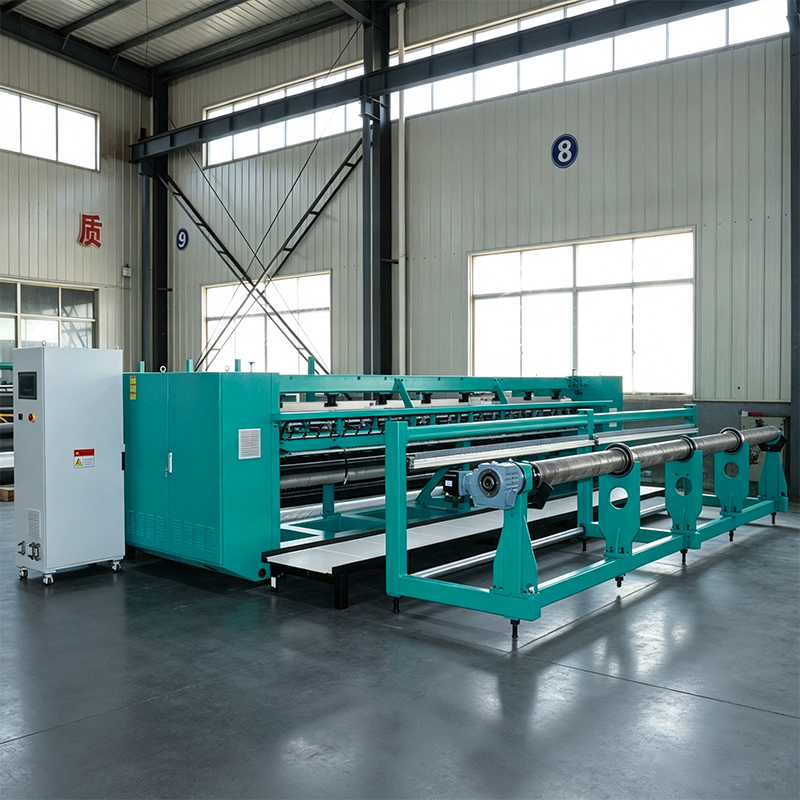
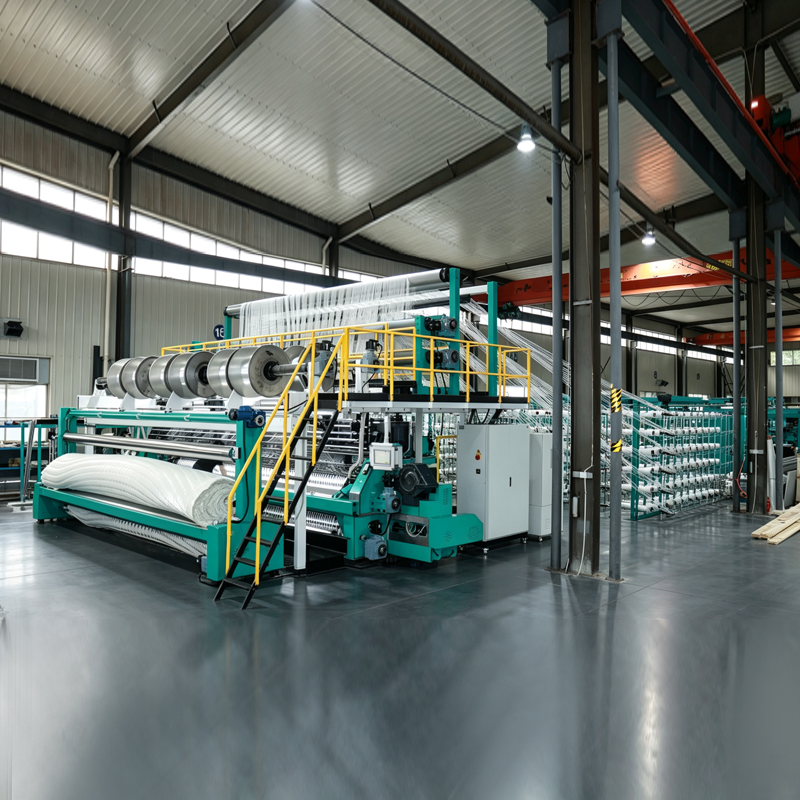
FC Chopped Stitch Bonding Machine
Products Manufactured by the Machine
Chopped Strand Mat
Chopped strand mat is a non-oriented reinforcement material composed of randomly distributed chopped glass fibers held together by a binder or mechanical reinforcement structure. The FC machine produces a stitch-bonded version in which knitting yarn provides structural stability. This construction can offer better handling properties than an unsupported fiber web while maintaining a broad and relatively even reinforcement layer.
Chopped strand mat is commonly used as a reinforcement component in composite manufacturing. Its non-oriented fiber arrangement allows it to cover a wide area and contribute to general reinforcement, resin distribution, and laminate thickness. Depending on the finished weight and process design, the mat may be combined with other fabrics, films, grids, or directional reinforcement layers.
Grid Composite Mat
The FC machine can also be used as part of a production system for grid composite mats. In this type of product, the chopped fiber layer may be combined with a grid, yarn arrangement, or other reinforcing component. The chopped layer supplies broad-area coverage while the grid or additional reinforcement provides structural support or dimensional stability.
The exact product construction depends on the required performance and the configuration of the complete production line. The FC machine can be integrated with other equipment when the final product requires multiple layers or an additional grid-forming stage.
Pipe Rehabilitation Fabric
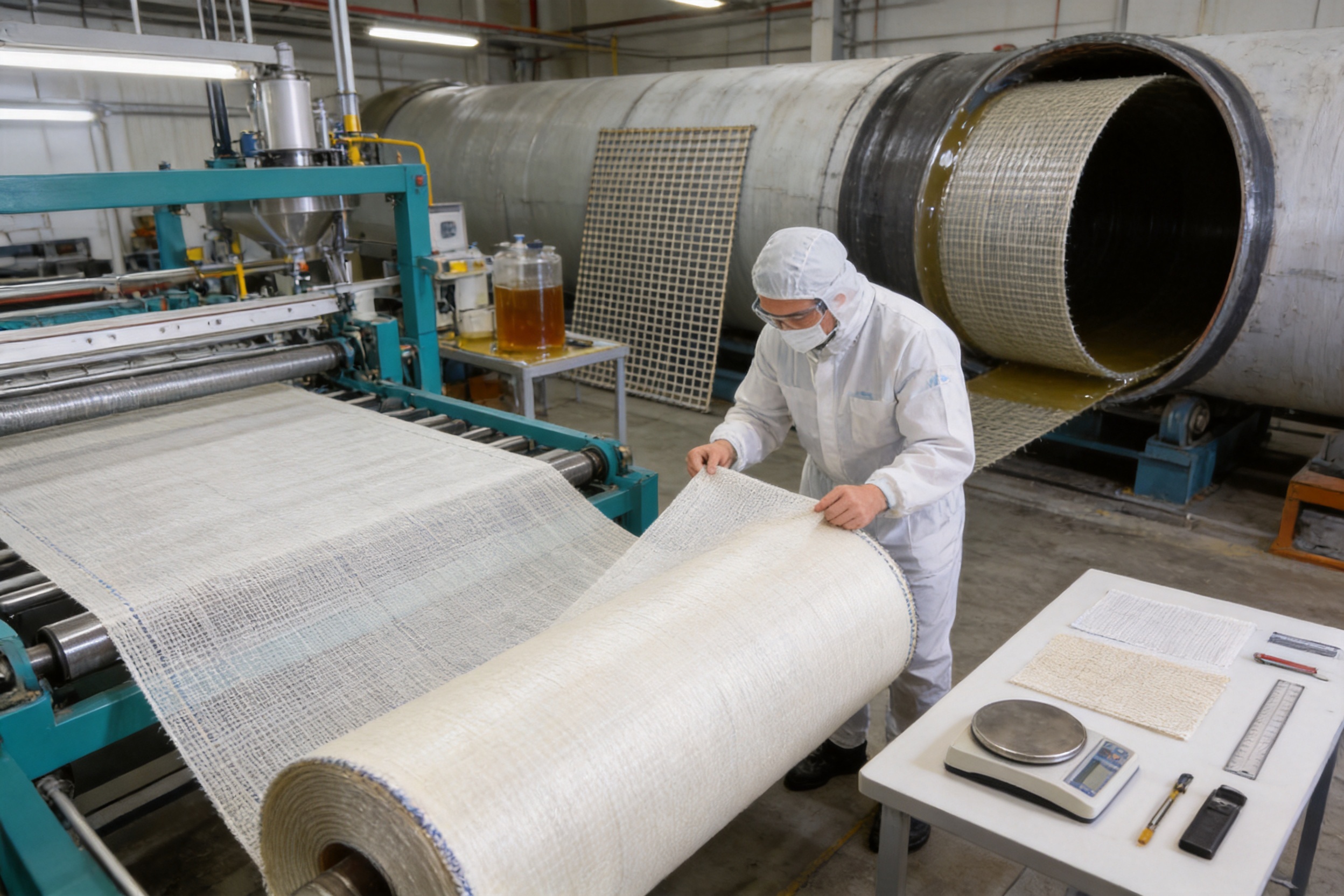
Pipe rehabilitation fabric is one of the main application fields of the FC machine. In pipeline repair, a reinforcement fabric may be impregnated with resin and formed into a liner or structural rehabilitation layer. Consistent fabric weight and even fiber distribution are important because irregularities can affect resin consumption, curing behavior, flexibility, and final reinforcement performance.
The non-oriented chopped structure is suitable for applications that require broad reinforcement and consistent coverage rather than a single primary load direction. The stitch-bonded construction also helps the material maintain its form while it is impregnated, positioned, shaped, or installed.
Industrial Composite Reinforcement
Beyond pipeline rehabilitation, stitch-bonded chopped fiberglass fabrics can be used in a variety of industrial composite processes. Potential applications include reinforcement layers for molded products, repair materials, construction components, protective structures, and composite panels. The final suitability depends on the resin system, product design, curing conditions, and required mechanical performance.
Manufacturers can use the machine to develop different fabric weights and combinations. Lightweight fabrics may be selected for surface coverage or secondary reinforcement, while heavier fabrics can be used where greater fiber content and thickness are required.
Working Width, Speed, and Reference Output
The FC Chopped Stitch Bonding Machine is available with working widths of 3300 mm, equivalent to approximately 130 inches, and 3800 mm, equivalent to approximately 150 inches. The correct width depends on the finished fabric width, edge-trim requirements, production target, available floor space, and downstream winding or cutting equipment.
| Working Width | Machine Speed | Reference Product | Reference Daily Output |
|---|---|---|---|
| 3300 mm (130 inches) | 50–1300 r/min | 300 g felt | Approximately 2000 kg |
| 3300 mm (130 inches) | 50–1300 r/min | 300 g mat plus 400 g fabric | Approximately 4000 kg |
| 3800 mm (150 inches) | 50–1300 r/min | 300 g felt | Approximately 2250 kg |
| 3800 mm (150 inches) | 50–1300 r/min | 300 g mat plus 400 g fabric | Approximately 4600 kg |
These figures are planning references rather than guaranteed production values. Actual output depends on the fabric construction, product weight, fiber tex, knitting yarn, stitch density, cutting quality, operator settings, machine uptime, winding arrangement, and quality-control requirements. A production line operating at a lower speed may achieve a better balance between output and uniformity for a demanding product.
The 3800 mm model can provide higher reference output at the same nominal speed because it uses a wider production area. However, a wider machine is not automatically the best choice for every factory. The finished product width, workshop dimensions, handling equipment, and customer orders should be considered together. A narrower line may be more suitable when production is focused on standard-width rehabilitation materials or when floor space is limited.
Uniformity Control and Product Consistency
The FC machine is designed to achieve a uniformity tolerance within ±5% when operated with appropriate process parameters and properly prepared materials. Uniformity is a critical performance characteristic for chopped fiberglass mat because variations in basis weight can influence resin absorption, mechanical reinforcement, thickness, and downstream processing stability.
The main factors that influence uniformity include the condition of the glass fiber roving, roving tex, chopping blade condition, fiber feed stability, conveying speed, guide bar settings, knitting yarn tension, stitch density, machine speed, and winding tension. These parameters must be managed as a complete process rather than adjusted independently.
The independent chopping unit helps operators focus on cutting quality and fiber feed. The servo-controlled conveying system supports accurate movement of the web. The stitch-bonding section then provides mechanical stabilization without requiring directional alignment of the chopped fibers. During commissioning, fabric samples can be produced at the target weight and checked for basis weight, appearance, fiber distribution, and handling strength.
Uniformity control is particularly valuable in pipe rehabilitation. A heavy area may absorb more resin, while a light area may produce insufficient reinforcement. Both conditions can lead to inconsistent liner behavior. A controlled fabric structure helps manufacturers reduce process variation and improve confidence in the finished rehabilitation system.
Advantages Compared with Conventional Production Arrangements
Integrated Process Instead of Multiple Independent Stages
A conventional production arrangement may require separate equipment for chopping, web formation, transfer, bonding, and winding. Each transfer stage creates an opportunity for fiber movement, contamination, loss of material, and production delay. The FC machine combines the key operations into one line, reducing the need for repeated intermediate handling.
The integrated structure also makes it easier to coordinate the fiber feed with web movement and stitch bonding. This can support more stable operation and simplify the adjustment of production parameters.
Improved Handling of the Finished Mat
A loose chopped fiber web can be difficult to move and wind because the fibers are not mechanically locked together. The stitch-bonding process creates a reinforced textile structure that is easier to handle. This is beneficial during roll formation, storage, transportation, slitting, impregnation, and installation.
The fabric remains a non-oriented chopped fiber material, but the knitting yarn gives it enough stability to function as an industrial textile rather than only as a temporary loose web.
Flexible Product Weight Range
The ability to produce fabrics from approximately 50 to 900 g/m² gives manufacturers room to serve multiple product segments. Instead of installing separate machines for every weight class, a properly configured FC line can support different constructions by changing process settings and material combinations.
Product flexibility also helps manufacturers test new markets. A factory may begin with pipe rehabilitation fabric and later develop lighter composite mats or heavier industrial reinforcement products using the same basic machine platform.
Servo-Controlled Conveying
Servo-controlled conveying provides a more precise method of regulating web movement than a system based only on fixed mechanical transmission. It allows the conveying process to be coordinated with the fiber feed and fabric construction. This is especially important when changing between fabric weights or working with different roving specifications.
Practical Industrial Customization
The FC machine is configured according to the customer’s working point rather than being treated as a completely fixed catalog product. Customization may include working width, machine layout, creel position, take-up direction, fiber path, control arrangement, and integration with upstream or downstream equipment.
This approach provides an advantage over systems that require the customer to redesign the workshop around a standardized line. The machine can be planned around the available floor space and the actual material flow of the factory.
Support for Difficult Materials and Special Structures
Yuanyang’s broader experience includes fiberglass, synthetic fiber, carbon fiber, multiaxial reinforcement, and special textile equipment. This background is useful when a project involves unusual fiber behavior, high-strength materials, non-standard fabric construction, or a combination of several reinforcement layers.
Where the requested product cannot be selected from a standard configuration, the company can treat the work as an engineering project. The process may include sample review, technical drawings, three-dimensional layout confirmation, quotation, trial production, inspection, and delivery.
Manufacturing Strengths of the Equipment Supplier
Changzhou Yuanyang Electromechanical Technology Co., Ltd. is located in Jiangsu, one of China’s important textile machinery manufacturing regions. The company operates a production base covering more than 12,000 square meters and has an annual production capacity of more than 200 equipment sets. Its activities cover research and development, mechanical manufacturing, assembly, testing, sales, installation, training, and after-sales service.
The company’s product range extends beyond one type of stitch-bonding machine. It includes biaxial warp knitting machines, multiaxial warp knitting machines, carbon fiber multiaxial machines, web laying machines, powder scattering machines, and specialized textile equipment. This broader product portfolio helps the engineering team understand how different machines interact within a complete reinforcement textile line.
Research and Development Capability
The company maintains a professional research and development team consisting of engineers with experience in textile machinery, mechanical design, process development, and equipment integration. This expertise supports continuous improvement in machine structure, drive systems, control functions, product adaptability, and operating stability.
Research and development work is especially important for non-standard textile machinery. Customers may request a particular fabric weight, width, fiber combination, output level, or connection to existing equipment. These requirements often cannot be solved by changing one parameter alone. They may require changes to the material path, frame arrangement, drive synchronization, control logic, or winding system.
Manufacturing and Assembly Control
Equipment quality is influenced by every stage of manufacturing. Component selection, machining accuracy, frame alignment, assembly quality, electrical wiring, software configuration, and final testing all affect the performance of the finished machine.
Yuanyang applies control procedures covering component procurement, machining, assembly, testing, and debugging. Incoming components and materials are inspected before use. Mechanical parts are checked during processing and assembly. The completed machine undergoes no-load and load testing before shipment. Fabric trials are used to verify whether the machine can produce the required material under the agreed process conditions.
This process-oriented approach is important for machines that operate at high speed and handle delicate fiber webs. Small alignment errors or unstable tension can become visible as fabric defects. Testing before delivery allows potential problems to be identified and corrected before the machine reaches the customer’s factory.
Quality Management and Traceability
The company works according to quality management system principles and uses structured controls during production. Warehouse management supports the identification, storage, and dispatch of components and spare parts. Process records and inspection activities help maintain consistency from procurement to final delivery.
Quality management is not limited to the finished machine. It also includes the production environment, engineering documentation, assembly practices, test procedures, and customer acceptance requirements. This provides a stronger foundation for long-term equipment support.
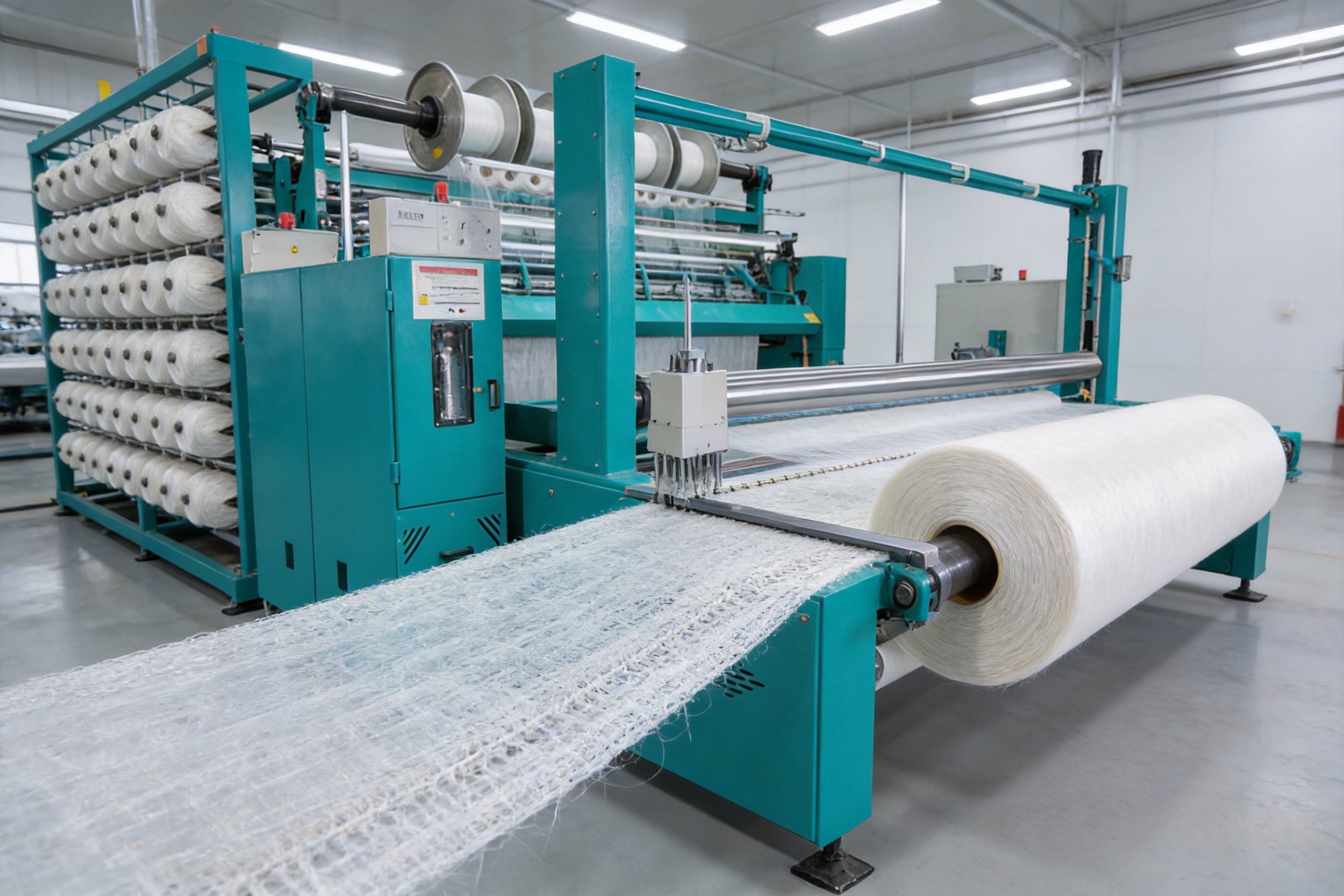
Configuration and Line Integration
The FC Chopped Stitch Bonding Machine is installed as part of a complete production line. For this reason, the machine configuration must be evaluated together with the upstream fiber supply and downstream fabric handling equipment.
Roving Creel and Fiber Input
The roving creel must provide a stable supply of glass fiber to the chopping unit. The number of positions, roving tex, package arrangement, tension control, and available access space should be considered during design. A suitable fiber path reduces unnecessary tension changes and helps maintain stable feeding.
Chopping and Web-Forming Interface
The relationship between the chopping unit and the web-forming area determines how evenly the chopped strands are distributed. The layout should allow access for blade replacement, cleaning, inspection, and adjustment. It should also provide safe working space for operators and maintenance personnel.
Stitch-Bonding Section
The stitch-bonding section must be configured for the selected knitting yarn and fabric construction. Yarn tension, guide bar movement, stitch density, and operating speed all influence the handling strength and appearance of the finished mat. The correct combination depends on the product specification and the required balance between reinforcement, flexibility, and production speed.
Take-Up and Winding
The take-up arrangement should match the finished fabric width, roll diameter, product weight, and customer packaging requirements. Winding tension must be controlled so that the roll remains stable without compressing or distorting the mat. The transfer arrangement may also be adapted if the finished material is sent directly to coating, resin impregnation, cutting, or inspection equipment.
Workshop Layout
The available floor space affects the machine frame, creel position, operator access, material flow, maintenance routes, and product storage. Before manufacturing, the customer’s workshop drawings should be reviewed. The machine supplier can adapt the layout and confirm the installation dimensions before production begins.
Installation, Commissioning, and Acceptance
Before delivery, the machine is assembled, inspected, tested, and verified at the manufacturing facility. This preparation reduces installation time and allows the engineering team to identify problems under controlled conditions.
After the equipment arrives at the customer’s factory, an engineer can attend the site for installation, commissioning, and operator training. The commissioning procedure generally includes the following stages:
- Reviewing the foundation, floor level, access routes, and installation area.
- Checking the layout against the approved machine drawings.
- Completing mechanical assembly, alignment, and drive connections.
- Connecting electrical systems, control panels, sensors, and safety components.
- Running the equipment without material to verify movement and control functions.
- Threading the glass fiber roving and knitting yarn through the production line.
- Calibrating the chopping system and checking fiber distribution.
- Producing trial fabric at the specified target weight.
- Checking fabric weight, appearance, uniformity, and handling characteristics.
- Training operators and maintenance personnel.
- Handing over parameter records, operating instructions, and maintenance guidance.
Acceptance should be connected to the customer’s actual product rather than only to an unloaded machine speed. Important acceptance points may include the target fabric weight, uniformity tolerance, stable operation, correct working width, satisfactory winding, and the production speed required for the customer’s planned process.
Maintenance and Wear-Part Management
Regular maintenance is necessary to preserve cutting quality, fabric uniformity, and machine reliability. The main wear areas include chopping blades, knitting elements, yarn guides, web transport components, bearings, drive components, and material-contact surfaces.
Chopping blades should be inspected and replaced or sharpened according to the material condition and production schedule. A worn blade can create irregular fiber lengths, broken roving, excessive fiber dust, or inconsistent web distribution. Knitting elements should be checked for damage, wear, contamination, and correct positioning. Web transport components must remain clean and properly aligned so that the fiber layer moves smoothly.
Preventive maintenance is generally more effective than waiting for a serious production failure. Operators should record machine speed, product weight, blade condition, yarn consumption, unusual vibration, fabric defects, and maintenance actions. These records help identify gradual changes before they affect large quantities of fabric.
The supplier provides spare parts and long-term production support. The parts most likely to require planned replacement should be identified during commissioning so that the customer can maintain an appropriate inventory.
Training and Technical Support
Training is an important part of the equipment delivery process. The supplier provides support for operators, maintenance personnel, and workshop managers. Training can be arranged at the manufacturer’s facility and supplemented by on-site instruction after installation.
Maintainer Training
Maintenance training covers mechanical inspection, lubrication, alignment, drive systems, chopping components, knitting elements, electrical controls, troubleshooting, and safe intervention procedures. Practical training may last one to two months depending on the customer’s requirements and the machine configuration.
Knitter and Operator Training
Operator training focuses on fiber threading, yarn preparation, machine startup, speed adjustment, product weight control, fabric inspection, roll changing, shutdown procedures, and basic troubleshooting. Operators learn how changes in feed rate, conveying speed, stitch settings, and yarn tension affect the finished product.
Workshop Management Training
Workshop management training addresses production planning, quality control, process records, material management, maintenance scheduling, and operator coordination. This is useful for customers that are establishing a new fiberglass textile production department or introducing a new product range.
The company can also assist with quality system documentation and production process records. After installation, after-sales engineers remain available to help customers address production problems and improve operating conditions throughout the working life of the equipment.
Information Required for an Accurate Proposal
A technically accurate quotation requires more information than the desired machine name. The production target and material behavior determine the correct configuration.
| Customer Information | Why It Matters |
|---|---|
| Target fabric and weight range | Determines chopping rate, web density, stitch parameters, and line balance. |
| Fiber type and roving tex | Influences the chopping head, fiber path, tension, and feed design. |
| Required working width | Helps select the 3300 mm or 3800 mm configuration. |
| Daily or annual output target | Supports speed selection, line balancing, and capacity planning. |
| Knitting yarn specification | Influences guide bar operation, loop formation, and fabric handling strength. |
| Workshop dimensions and layout | Determines machine arrangement, creel position, access, and take-up direction. |
| Downstream process | Determines winding, transfer, slitting, coating, or impregnation requirements. |
| Utilities and site conditions | Confirms electrical power, compressed air, foundation, ventilation, and safety needs. |
Samples, drawings, target specifications, and information about the downstream resin or lining process can further improve the design. When the requested product is complex, sample trials may be arranged before final machine production.
Comparison with Other Reinforcement Machine Types
The FC machine is optimized for non-oriented chopped fiber mats. It should therefore be selected according to the required reinforcement architecture.
| Machine Type | Primary Reinforcement Structure | Typical Application |
|---|---|---|
| FC Chopped Stitch Bonding Machine | Non-oriented chopped strand mat reinforced by stitch bonding | Pipeline rehabilitation, chopped strand mat, grid composite mat |
| FCD Double Chopped Stitch Bonding Machine | Dual chopped fiber layer construction | Higher areal weight and multilayer mat structures |
| Raschel Chopped Fiber Biaxial Warp Knitting Machine | Chopped fiber combined with biaxial yarn reinforcement | Composite products requiring directional strength and chopped fill |
| High-Strength Biaxial Warp Knitting Machine | Primarily 0-degree and 90-degree reinforcement | Structural composite laminates and directional reinforcement |
Choosing the correct machine depends on the role of the fabric in the final product. If the customer needs non-oriented coverage and a broad reinforcement layer, the FC machine is an appropriate solution. If the product requires high directional strength, a biaxial or multiaxial machine may be more suitable. If the product requires multiple chopped layers, a double chopped stitch-bonding configuration may provide a better match.
This product selection approach prevents a common mistake in textile equipment purchasing: choosing a machine based only on nominal speed or width without considering the structure of the finished reinforcement.
Applications in Pipeline Rehabilitation
Pipeline rehabilitation requires materials that can be manufactured consistently, impregnated effectively, positioned accurately, and cured into a stable reinforcement structure. The FC machine supports this application by producing a stitch-bonded fiberglass mat with controlled fiber distribution and a practical handling form.
The fabric may be used in systems where a resin-saturated textile is inserted into or applied to a damaged pipeline. The specific installation method depends on the rehabilitation technology, resin system, pipe diameter, curing conditions, and engineering requirements. In each case, fabric uniformity affects the amount of resin absorbed and the consistency of the final liner or reinforcement layer.
The machine’s broad working widths are suitable for industrial-scale production, while the flexible weight range allows manufacturers to develop materials for different pipe sizes and performance requirements. The non-oriented structure can provide even coverage around a curved or tubular surface, although the final design must always be validated by the rehabilitation system supplier and relevant engineering standards.
Environmental and Operational Considerations
Glass fiber processing requires attention to dust control, operator protection, cleaning, waste management, and safe handling. The factory layout should provide adequate ventilation and access for maintenance. Operators should use appropriate personal protective equipment and follow the customer’s workplace safety procedures.
Stable cutting and conveying can help reduce unnecessary fiber waste caused by irregular chopping or web defects. Accurate process control also reduces the need to reject fabric because of basis-weight variation. Efficient production depends on the relationship between raw material quality, machine condition, operator training, and quality inspection.
The customer should establish procedures for collecting fiber waste, disposing of damaged knitting yarn, cleaning production areas, and maintaining machine components. A clean production environment supports better machine reliability and helps prevent contamination of the fabric.
Why Choose the FC Machine for Fiberglass Textile Production?
The FC Chopped Stitch Bonding Machine provides a focused solution for manufacturers that need stable, non-oriented fiberglass reinforcement. Its main value is not only the combination of three process stages, but also the way those stages are engineered to work as one production system.
- It combines chopping, conveying, and stitch bonding in a continuous line.
- It uses an independent chopping unit for controlled fiber preparation.
- It uses servo-controlled conveying to support even web distribution.
- It produces a mechanically stable mat through single guide bar loop formation.
- It supports a broad fabric weight range from approximately 50–900 g/m².
- It is available in two practical industrial working widths.
- It can achieve uniformity within ±5% under suitable process conditions.
- It is adaptable to pipeline rehabilitation, composite mats, and other fiberglass products.
- It can be designed around the customer’s workshop, material, output, and downstream process.
- It is supported by engineering, installation, commissioning, training, spare parts, and after-sales service.
For manufacturers comparing equipment suppliers, these advantages should be evaluated together with the supplier’s manufacturing capability. A machine with suitable nominal specifications is only useful when it can be assembled accurately, tested with the customer’s material, installed correctly, and supported during production. Yuanyang’s experience in special warp knitting and reinforcement textile equipment provides a foundation for this complete service approach.
Frequently Asked Questions
What is the FC Chopped Stitch Bonding Machine used for?
The machine is used to produce stitch-bonded chopped fiberglass fabrics, including chopped strand mats, grid composite mats, and pipe rehabilitation fabrics. It cuts glass fiber roving, distributes the chopped fibers into a web, and reinforces the web with knitting yarn.
What fiber can be processed?
The standard application is glass fiber roving. The machine can be engineered for other fiber types, including selected synthetic or carbon fiber applications, when the material characteristics, fiber path, chopping requirements, and stitch-bonding conditions are reviewed in advance.
What is the standard chopped fiber length?
The standard chopped length is 50 mm. Other requirements should be discussed during technical configuration because fiber length affects web formation, distribution, handling, and final fabric performance.
What fabric weight can the machine produce?
The approximate fabric weight range is 50–900 g/m². The actual achievable range depends on roving tex, chopping rate, fiber feed, knitting yarn, stitch density, machine speed, and the required product construction.
What working widths are available?
The main working widths are 3300 mm and 3800 mm. The correct choice depends on the finished product width, edge trimming, output target, workshop space, and downstream winding or processing requirements.
What is the machine speed?
The stated speed range is approximately 50–1300 r/min. Actual production speed should be selected according to the fabric weight, construction, required uniformity, fiber behavior, yarn specification, and production quality target.
What does the ±5% uniformity tolerance mean?
It means that, under suitable operating conditions and with correctly prepared materials, the fabric can be controlled within a uniformity tolerance of approximately ±5%. The result must be verified through fabric sampling and testing because raw material quality, settings, machine condition, and operator practice all influence uniformity.
Is the machine suitable for pipe rehabilitation fabric?
Yes. Pipe rehabilitation fabric is one of its primary application fields. The machine produces a non-oriented chopped fiberglass mat with stitch-bonded reinforcement, suitable for further resin impregnation and rehabilitation processes when the fabric is designed and validated for the intended system.
Can the machine produce more than one type of fabric?
Yes. The machine can support different fabric weights and constructions by adjusting process parameters and using suitable roving and knitting yarn specifications. The achievable products should be confirmed through technical review and sample trials.
How is the machine different from a biaxial warp knitting machine?
The FC machine produces a non-oriented chopped fiber mat stabilized by stitch bonding. A biaxial warp knitting machine produces reinforcement with defined directional yarns, generally along 0-degree and 90-degree orientations. The appropriate machine depends on whether the finished product requires broad non-directional coverage or directional structural reinforcement.
Can the machine be customized for a specific workshop?
Yes. Customization may include the machine layout, frame arrangement, creel position, fiber path, take-up direction, working width, control configuration, and interfaces with upstream or downstream equipment. Workshop drawings and floor-space information should be provided before final design confirmation.
What information is needed for a quotation?
The main information includes the target product, fabric weight, fiber type, roving tex, required working width, production capacity, knitting yarn, workshop dimensions, downstream equipment, utilities, and installation conditions. Product samples or technical drawings are also helpful for non-standard projects.
What installation service is provided?
The supplier can provide on-site installation, alignment, electrical connection support, commissioning, fiber threading, trial production, operator training, and process verification. Acceptance is normally based on the agreed product specifications and operating conditions.
What training is available?
Training can cover machine operation, fabric weight adjustment, maintenance, troubleshooting, quality inspection, production planning, and workshop management. Maintainer, knitter, and management training may be provided at the manufacturer’s factory, with additional instruction at the customer’s site.
Which components require the most maintenance?
Chopping blades, knitting elements, yarn guides, web transport components, bearings, and drive-related parts require regular inspection. Blade condition is particularly important because worn cutting elements can affect chopped length, fiber distribution, and fabric uniformity.
Are spare parts available after delivery?
Yes. Spare parts and long-term production support are available. Recommended spare parts should be identified during commissioning so that the customer can plan preventive maintenance and reduce downtime.
Can the machine be integrated with a larger production line?
Yes. The FC machine can be configured around a roving creel, web-forming system, take-up unit, winding equipment, coating or impregnation process, cutting system, or other downstream equipment. Interface points should be reviewed during the design stage.
What is the expected daily output?
Reference output is approximately 2000 kg per day for a 3300 mm machine producing 300 g felt and approximately 2250 kg per day for a 3800 mm machine under the same reference product. For a 300 g mat plus 400 g fabric construction, the reference figures are approximately 4000 kg and 4600 kg respectively. Actual production varies according to material, construction, process settings, uptime, and quality requirements.
How should a customer select between the 3300 mm and 3800 mm models?
The decision should be based on finished fabric width, output requirements, available workshop space, roll dimensions, customer orders, and downstream equipment. The wider model offers higher reference capacity, but the narrower model may be more efficient for standard-width products or facilities with limited space.
Conclusion
The FC Chopped Stitch Bonding Machine is a specialized solution for continuous production of stitch-bonded chopped fiberglass mats. Its integrated chopping, servo-controlled conveying, and single guide bar stitch-bonding process supports stable production, practical fabric handling, and uniform reinforcement distribution.
With fabric weights from approximately 50–900 g/m², working widths of 3300 mm and 3800 mm, and a reference speed range of 50–1300 r/min, the machine can be adapted to several industrial product requirements. Its main application areas include chopped strand mat, grid composite mat, pipeline rehabilitation fabric, and other fiberglass reinforcement materials.
The equipment’s advantages are strengthened by the supplier’s broader capabilities in research and development, customized textile machinery, mechanical manufacturing, quality control, installation, training, spare parts, and after-sales support. Rather than supplying only a standard machine frame, the company evaluates the complete production requirement, including fiber input, target fabric, workshop layout, output, winding, and downstream processing.
For producers seeking a reliable route to high-uniformity fiberglass textile manufacturing, the FC machine provides a balanced combination of process integration, product flexibility, engineering customization, and lifecycle support.
References
1. Internal technical product information for the FC Chopped Stitch Bonding Machine.
2. Internal equipment data covering machine speed, working width, product weight, and reference daily output.
3. Internal manufacturing and service information from Changzhou Yuanyang Electromechanical Technology Co., Ltd.
4. General principles of glass fiber textile processing, chopped strand mat production, and stitch-bonded reinforcement manufacturing.
5. General industrial practices for warp knitting machinery installation, commissioning, maintenance, and operator training.
6. General engineering considerations for fiberglass reinforcement fabrics used in composite and pipeline rehabilitation applications.
Product: FC Chopped Stitch Bonding Machine
News
-
Which Machine Category Matches Each Technical Fiber and Fabric Goal A warp knitting machine is the primary production platform for technical fiber textiles across fiberglass, chemical fiber, and carbo...
READ MORE -
What a Stitch Bonding Machine Does A stitch bonding machine is a warp knitting type machine that uses knitting needles and a stitching yarn to hold a web of fibers, a layer of chopped strands, or a la...
READ MORE -
Three quotations land on the same desk for the same polyester nonwoven line, and on paper they look interchangeable. Each is priced per metre of working width. Each quotes a similar top speed. Each c...
READ MORE -
Two quotations land on the same desk. Both offer a multiaxial warp knitting line, both list the same working width, both promise high output. One buyer signs and discovers six months later that the f...
READ MORE
-
Contact Info.
+86-198 5534 1617
+86-134 0158 3002yuanyang@yywarpknitting.com 699#, Shengzhi West Rd, Lvcheng Town, Danyang City, Zhenjiang City, Jiangsu Province, China

-
QR Code
-
Quick Links
Home About Products Manufacturing Customization News Contact -
Product List
Machine for Chemical Fiber Textile Machine for Fiberglass Textile Machine for Carbon Fiber Textile -
About Us
Company Profile Factory Gallery Value-added Service
Copyright © 2026 Changzhou Yuanyang Electromechanical Technology Co., Ltd. All Rights Reserved.
Custom Warp Knitting Machine Manufacturers
