

 English
 中文简体
 русский
 Français
 Español
 Deutsch

YRS3-M-M Raschel Mesh Geo Textile Biaxial Warp Knitting Machine
2026-10-27
Content
- 1 1. Product Overview
- 2 2. Main Product Advantages
- 3 3. How the Machine Produces Fiberglass Wall Mesh
- 4 4. Core Technical Specifications
- 5 5. Performance Benefits in Wall Reinforcement
- 6 6. Advantages Over Less Specialized Equipment
- 7 7. Configuration Options
- 8 8. Manufacturing Process and Quality Control
- 9 9. Installation and Commissioning
- 10 10. Maintenance and Spare Parts
- 11 11. Production Efficiency and Cost Considerations
- 12 12. Applications
- 13 13. Recommended Quality-Control Program
- 14 14. Why Manufacturer Capability Matters
- 15 15. Technical Information Required for Quotation
- 16 16. Frequently Asked Questions
- 16.1 What products can the YRS3-M-M produce?
- 16.2 What is the standard mesh size?
- 16.3 What is the machine’s working width?
- 16.4 What is the machine speed?
- 16.5 What daily output can be expected?
- 16.6 Can the machine process polyester?
- 16.7 Why is biaxial construction useful for wall mesh?
- 16.8 Does the machine include the coating line?
- 16.9 How is the machine tested before shipment?
- 16.10 What kind of maintenance is required?
- 16.11 Is operator training available?
- 16.12 Can the machine be adapted to an existing factory?
- 17 17. Conclusion
- 18 References
- 19 Product: YRS3-M-M Raschel mesh - Geo Textile Biaxial Warp Knitting Machine
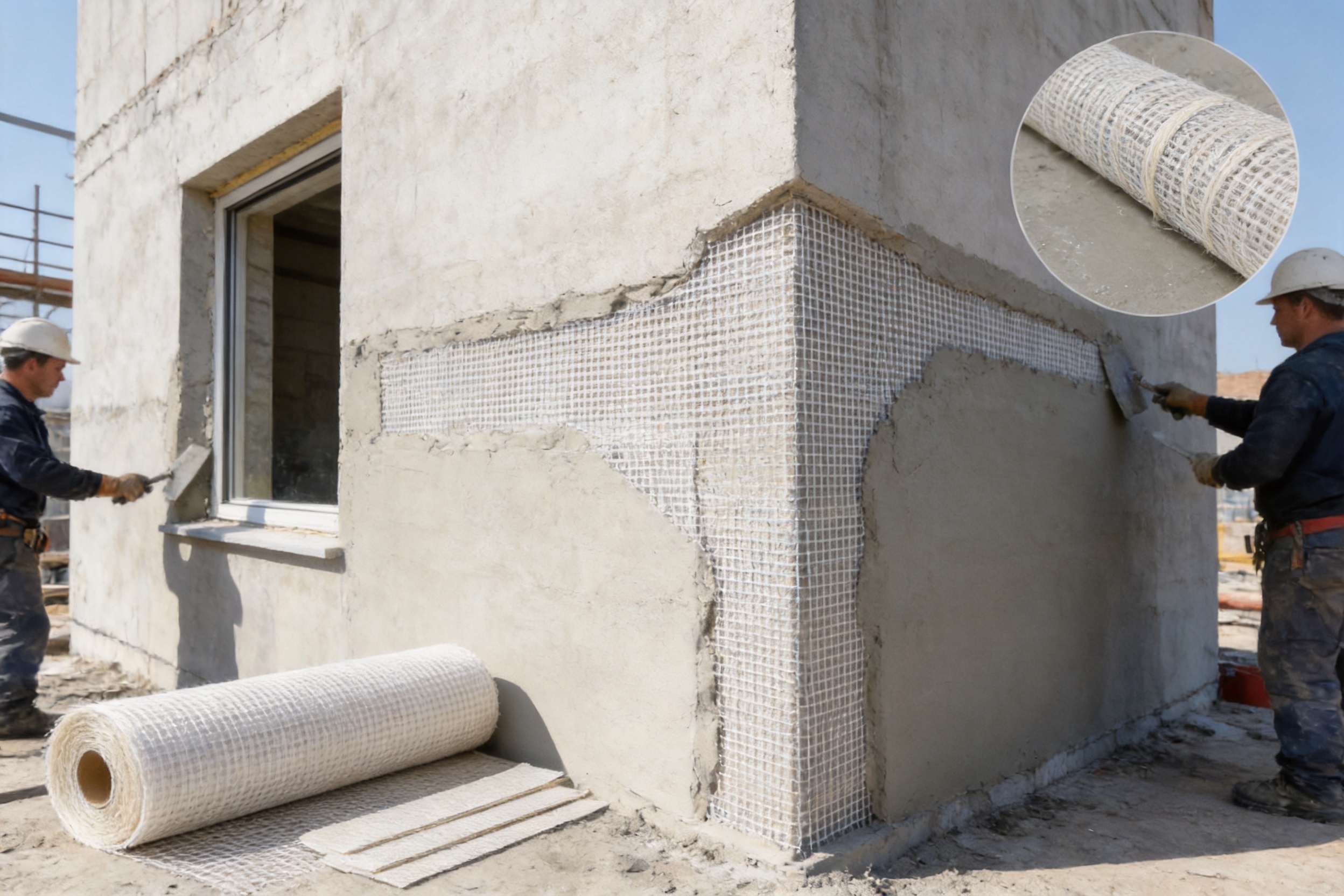
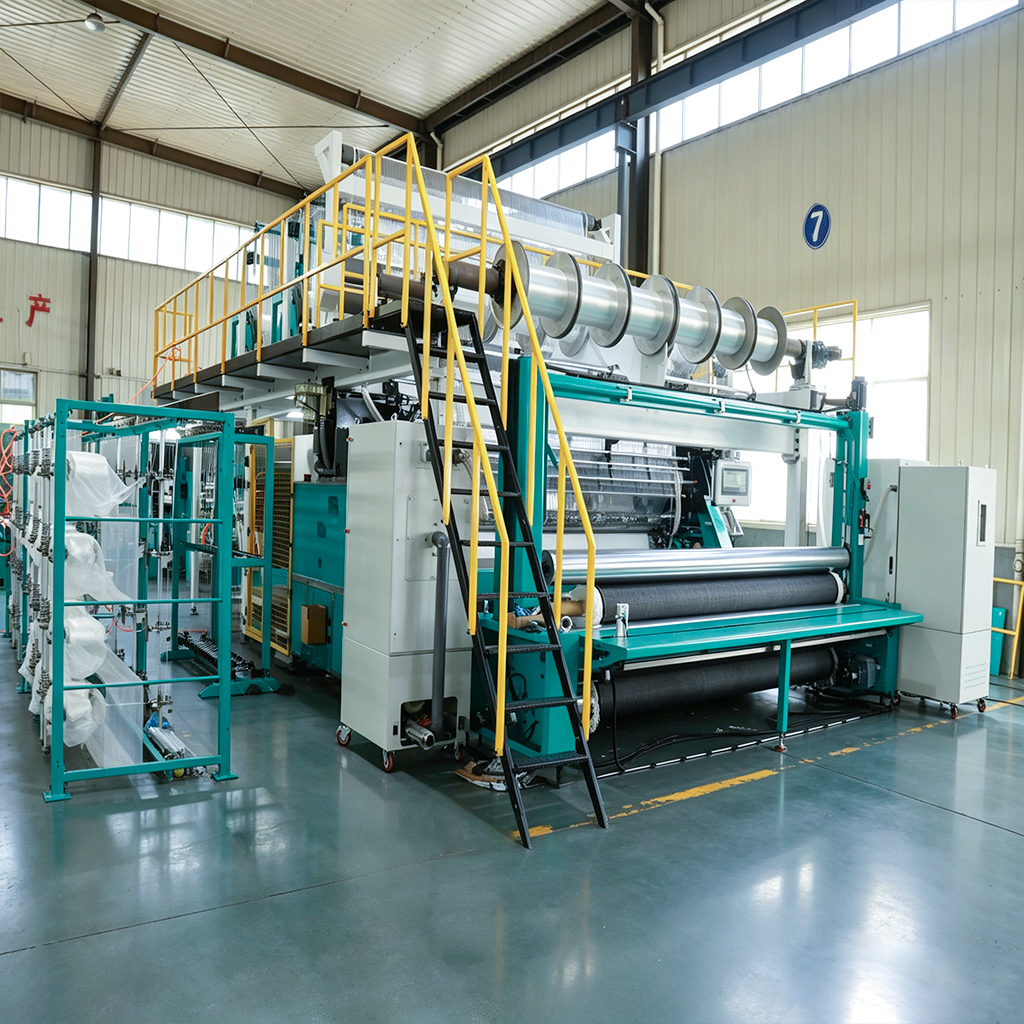
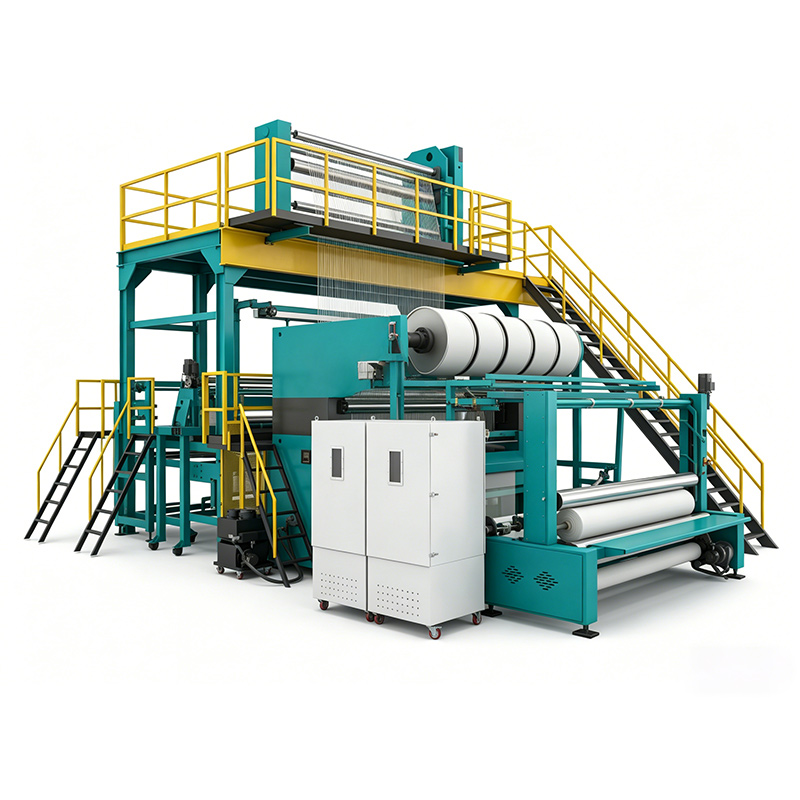
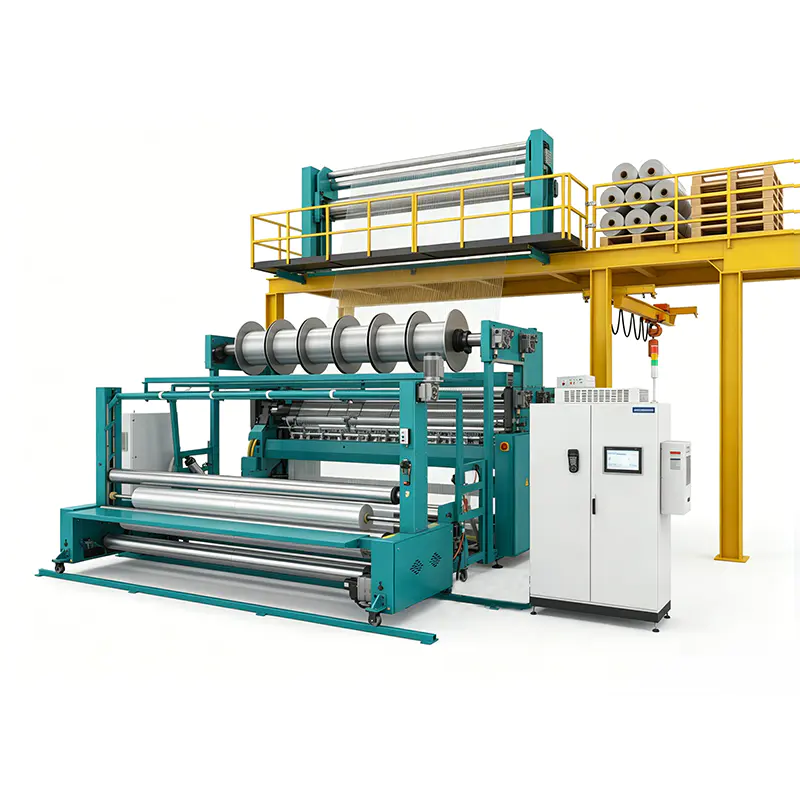
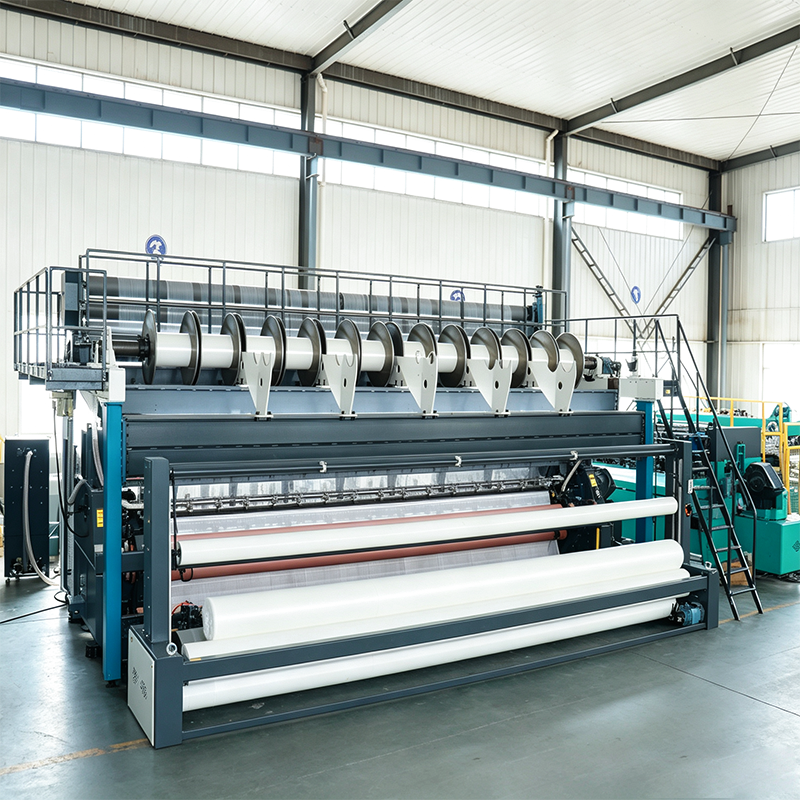
The YRS3-M-M Raschel mesh geo textile biaxial warp knitting machine is designed for manufacturers producing fiberglass wall reinforcement mesh, plaster reinforcement fabrics, crack-resistant construction mesh and related geotextile-grade scrim products. It combines biaxial yarn placement, stable stitch bonding, broad working width and adaptable production configuration in one industrial platform.
Built for glass fiber and polyester yarns, the machine produces open, dimensionally stable mesh structures in a reference 5×5 mm construction. The resulting fabric can be coated with acrylic copolymer and dried to create an alkali-resistant fiberglass mesh for wall reinforcement, plaster systems, insulation applications and crack-control solutions.
With a reference working width of 247 inches, a speed range of 20–1500 revolutions per minute and a reference daily output of approximately 19,000 square meters, the YRS3-M-M is suitable for large-scale textile operations. Actual output depends on yarn count, fabric weight, mesh geometry, coating requirements, machine settings and production conditions.
1. Product Overview
The YRS3-M-M is a Raschel mesh geo textile biaxial warp knitting machine developed for continuous production of reinforcement mesh. It lays warp and weft yarns in two directions and secures them with stitch yarns. This construction gives the fabric balanced reinforcement, regular apertures and improved resistance to tearing and tear propagation.
Unlike a simple unidirectional textile process, biaxial production places reinforcement in both the longitudinal and transverse directions. This is important for wall mesh because stress in a plastered or rendered surface may travel vertically, horizontally or diagonally. A balanced mesh helps distribute local loads and reduces the risk that a small defect will develop into a larger crack.
The machine is particularly suitable for alkali-resistant fiberglass mesh. In a typical process, glass fiber yarns are knitted into a stable open mesh, coated with acrylic copolymer and dried. The coating improves handling, stabilizes the mesh, protects the yarn structure and contributes to the performance required in wall reinforcement systems.
Polyester yarn can also be processed when the required fabric design, performance characteristics and downstream application call for a synthetic fiber alternative. The machine configuration can be reviewed according to yarn linear density, package format, stitch structure, fabric weight and final roll requirements.
2. Main Product Advantages
2.1 Biaxial Reinforcement for Improved Stability
The machine forms a mesh with yarns arranged in two principal directions. This biaxial structure provides reinforcement across the fabric width and along the production direction, creating a more balanced textile than a fabric that relies primarily on one reinforcement axis.
For wall reinforcement applications, balanced yarn placement helps the mesh maintain its geometry when embedded in plaster, render or other cement-based systems. The structure supports crack bridging and helps distribute stress over a wider area instead of allowing stress to concentrate at one point.
The biaxial construction also contributes to high tear strength. If the fabric is cut, punctured or locally damaged during handling, the surrounding stitched structure helps limit the progress of the tear. This resistance to tear propagation is a central advantage for reinforcement mesh used in demanding construction environments.
2.2 Stable and Regular Mesh Geometry
The reference 5×5 mm mesh specification provides a regular open structure suitable for wall reinforcement and crack-resistance fabrics. Consistent apertures allow plaster, render or coating materials to penetrate and mechanically key into the textile rather than remaining only on the surface.
Regular mesh geometry is also important during downstream coating, drying, slitting and packaging. Variations in aperture size can lead to uneven coating pickup, inconsistent roll appearance and difficulties when the finished fabric is cut into narrow strips. A stable knitting process helps reduce these problems across the full working width.
2.3 Broad Working Width
The reference working width is 247 inches. This broad format enables manufacturers to produce wide rolls efficiently before slitting them into narrower widths for facade systems, insulation boards, drywall jointing, plaster reinforcement and other applications.
A wide machine can reduce the number of parallel production lines required for a given output target. It can also improve production planning when customers request several finished widths from one master roll. The appropriate take-up, roll diameter and slitting arrangement should be selected together with the downstream process.
2.4 Flexible Speed Range
The stated machine speed range is 20–1500 revolutions per minute. This range gives the producer flexibility to establish a suitable operating point for different yarns and constructions. Maximum speed is not necessarily the best production speed. The correct setting must balance output, stitch quality, yarn tension, fabric regularity, machine stability and the requirements of the coating line.
Starting at a controlled speed during commissioning allows operators to verify yarn paths, stitch formation, lay-in placement and take-up behavior. Once the process is stable, the speed can be increased progressively while monitoring fabric quality and machine operating conditions.
2.5 Compatibility with Glass Fiber and Polyester
Glass fiber and polyester have different handling characteristics. Glass fiber can be more sensitive to abrasion, bending and tension fluctuations, while polyester generally offers different elongation and friction behavior. The YRS3-M-M is configured around the selected yarn type, yarn count, package format and fabric design.
Yarn guides, tension elements, creel arrangements and beam or package handling systems must be selected carefully. Correct preparation helps protect filaments, reduce breakage and maintain uniform yarn delivery into the knitting zone.
2.6 Continuous Roll Production
The machine produces continuous fabric that can be collected in rolls and transferred to coating, drying, inspection, slitting and packaging operations. Continuous production is well suited to industrial wall mesh because it supports repeatable fabric quality and efficient downstream handling.
The take-up system can be selected according to the required roll diameter, core format, fabric weight and coating-line arrangement. Correct roll formation is important because loose edges, telescoping, excessive hardness or uneven winding can create problems during coating and slitting.
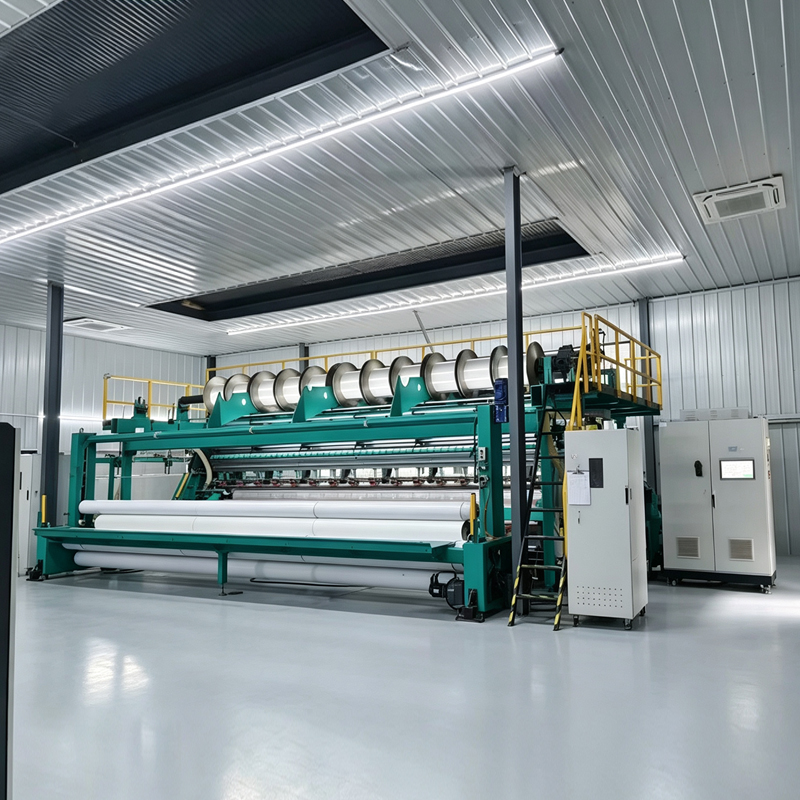
YRS3-M-M Raschel mesh - Geo Textile Biaxial Warp Knitting Machine
3. How the Machine Produces Fiberglass Wall Mesh
3.1 Yarn Preparation
Production begins with preparation of the glass fiber or polyester yarn supply. The yarn package format, package size, winding quality and storage condition all influence the reliability of the knitting process. Packages should be protected from contamination, moisture-related problems and mechanical damage before they are installed.
The production team confirms the yarn count, filament structure, twist or sizing condition and supplier specifications before setting the machine. For glass fiber, careful handling is particularly important because excessive abrasion or sharp changes in yarn direction may increase filament damage.
3.2 Yarn Delivery and Tension Control
Yarns are delivered from the creel, beam or package arrangement to the knitting area through a controlled path. Stable tension is required so that the warp and weft yarns occupy their intended positions. If tension is too low, yarns may shift or form loose areas. If tension is too high, yarn breakage, fabric distortion and excessive stress on machine components may occur.
The tension system should be adjusted according to fiber type, yarn count, package behavior and production speed. Operators need to monitor tension stability across the entire working width because a problem at one side of the machine can create a visible longitudinal defect in the finished roll.
3.3 Biaxial Lay-In
The machine lays reinforcement yarns in two directions to create the biaxial foundation of the mesh. The required lay-in pattern determines the final aperture, fabric weight, directional strength and appearance.
For a standard 5×5 mm wall mesh, the yarn placement system must maintain consistent spacing and alignment. The process should be checked during start-up and after any change in yarn package, machine speed, stitch setting or fabric take-up condition.
3.4 Stitch Bonding
Stitch yarns bind the laid-in yarns into an integrated mesh. Stitch formation affects fabric stability, flexibility, tear behavior, appearance and resistance to yarn displacement. The stitch elements must work together with the guide bars, needles and yarn delivery components to create uniform loops across the working width.
Correct stitch formation is especially important when the base mesh will be coated. A stable stitch structure helps the mesh retain its shape during coating, drying, winding and later installation. It also ensures that the final fabric has a predictable response when embedded into a wall reinforcement system.
3.5 Take-Up and Roll Formation
After knitting, the mesh is guided toward the take-up unit. The take-up speed and winding tension must be synchronized with machine speed and fabric delivery. Excessive tension may narrow or distort the mesh, while insufficient tension may lead to loose winding and poor roll stability.
The finished roll should be checked for edge alignment, hardness, telescoping, wrinkles and visible changes in mesh geometry. These checks are useful before the fabric enters the coating and drying stage.
3.6 Acrylic Coating and Drying
The knitted base mesh is commonly coated with acrylic copolymer and dried to produce the finished alkali-resistant fiberglass mesh. The coating improves dimensional stability, handling performance and resistance to the conditions encountered in wall reinforcement applications.
Coating pickup, drying temperature, line speed and chemical formulation should be adjusted to the yarn type and the required finished-fabric properties. The knitting machine and coating line should be planned as an integrated production system so that roll width, transfer height, tension, stopping signals and production speed are compatible.
4. Core Technical Specifications
The following values describe the reference configuration supplied for the YRS3-M-M. They should be confirmed during technical review because the final machine may be adjusted for a specific fabric construction, yarn package, plant layout and downstream process.
| Parameter | Reference value | Production significance |
|---|---|---|
| Machine type | Raschel mesh geo textile biaxial warp knitting machine | Produces stitched biaxial reinforcement mesh |
| Applicable fibers | Glass fiber and polyester | Determines yarn path, tension and guide selection |
| Machine speed | 20–1500 r/min | Adjusted according to yarn and fabric construction |
| Working width | 247 inches | Supports wide master rolls and downstream slitting |
| Reference mesh specification | 5×5 mm | Suitable for common wall reinforcement mesh |
| Reference daily output | Approximately 19,000 m² | Varies according to fabric and process conditions |
| Primary products | Wall mesh fabric and fiberglass mesh fabric | Used for reinforcement and crack resistance |
| Typical finishing | Acrylic copolymer coating and drying | Improves alkali resistance and handling stability |
5. Performance Benefits in Wall Reinforcement
5.1 Crack Resistance
Wall reinforcement mesh is used to reduce the risk of cracks developing or spreading through plaster, render, insulation finishes and other surface systems. The mesh does not replace correct substrate preparation or appropriate installation, but it provides a reinforcing layer that helps distribute localized stress.
The biaxial arrangement gives the textile reinforcement in two directions. When combined with a suitable coating and correct embedding depth, the mesh can help bridge minor cracks and improve the overall stability of the reinforced surface.
5.2 Tear Strength
A reinforcement fabric must remain intact during manufacturing, coating, cutting, transportation and installation. The stitched biaxial construction supports high tear strength by connecting the yarn system into a stable network.
High tear strength is also useful when the mesh is handled around corners, openings, joints or irregular surfaces. A fabric that resists tear propagation can maintain greater continuity when exposed to local damage or installation stress.
5.3 Alkali Resistance
Cement-based products can create an alkaline environment. For this reason, fiberglass reinforcement mesh used in construction is commonly manufactured with alkali-resistant glass fiber or an appropriate protective coating system. The coating process helps protect the structure and supports performance in the intended application.
The final alkali resistance depends on the glass fiber composition, sizing, coating formulation, coating weight, drying conditions and service environment. These factors should be tested according to the customer’s technical standard and regional building requirements.
5.4 Corrosion Resistance
Fiberglass does not rust in the same manner as conventional steel reinforcement. When correctly coated and embedded, fiberglass mesh can offer corrosion resistance suited to wall reinforcement environments. This is a major reason why fiberglass mesh is selected for certain facade, plaster and insulation systems.
Performance in service still depends on proper material selection, coating quality, storage, installation and compatibility with the surrounding building materials. The knitting machine contributes by producing the uniform base structure required for consistent finishing.
5.5 Dimensional Stability
Regular yarn placement and secure stitching help the mesh retain its shape during handling. Dimensional stability is important when the fabric is applied across large wall areas or cut into narrow reinforcement strips.
Stable geometry also reduces variation in coating coverage and supports consistent overlap during installation. The producer should control fabric tension from knitting through coating and winding to avoid unnecessary distortion.
6. Advantages Over Less Specialized Equipment
6.1 Compared with Basic Single-Direction Reinforcement Processes
Equipment designed mainly for one reinforcement direction may not provide the balanced structure required for wall mesh exposed to multidirectional stress. The YRS3-M-M forms a biaxial network, allowing manufacturers to produce a more balanced reinforcement textile in a continuous process.
This does not mean that every application requires biaxial construction. However, for wall reinforcement and crack-control mesh, the two-direction structure offers a practical advantage where stability, tear resistance and regular aperture are important.
6.2 Compared with Manual or Intermittent Assembly
Manual assembly or intermittent fabric preparation can introduce variation in yarn spacing, stitch security, roll length and production speed. An industrial Raschel machine provides a repeatable process with controlled yarn delivery, mechanical stitch formation and continuous take-up.
Continuous production also makes it easier to establish production records, inspect sample intervals and maintain consistent output from one roll to the next. This supports more reliable quality management for customers purchasing mesh in large volumes.
6.3 Compared with Narrow-Width Equipment
Narrow-width equipment may be appropriate for small products, but it can require multiple machines or repeated production runs when wide master rolls are needed. The 247-inch reference width of the YRS3-M-M supports large-format production and gives the producer flexibility to slit rolls into several finished widths.
A broad working width can also simplify product scheduling. Different customer orders may be produced from a single master roll, provided the fabric specification, coating plan and slitting requirements are compatible.
6.4 Compared with Fixed, Non-Configurable Platforms
Fiberglass mesh producers may use different yarn counts, package formats, fabric weights, roll dimensions and finishing lines. A machine that cannot be adapted to these conditions may force the producer to compromise on process efficiency or fabric quality.
The YRS3-M-M is treated as a configured production platform. Yarn delivery, guide selection, tension control, take-up arrangement, control functions and layout can be reviewed around the actual project requirements. This approach is more suitable for producers who need a machine integrated into an existing textile and coating operation.
7. Configuration Options
7.1 Yarn Package and Creel Arrangement
The yarn package format affects the creel design, package capacity, operator access and replenishment procedure. The machine can be reviewed according to the package supplied by the customer’s glass fiber or polyester yarn provider.
Suitable package handling reduces changeover time and helps maintain consistent yarn delivery. It also supports a cleaner production area by organizing the yarn supply and reducing the possibility of accidental contact or entanglement.
7.2 Mesh Geometry and Fabric Weight
The reference construction is 5×5 mm, but fabric geometry is confirmed according to the required product. Aperture, yarn count, stitch pattern and areal weight influence the machine settings and downstream coating process.
Any proposed variation should be evaluated through sample production. The producer should review aperture accuracy, yarn displacement, tensile behavior, tear strength, coating pickup and finished roll appearance before approving a new construction for regular production.
7.3 Drive and Control System
Speed regulation, stop functions, tension monitoring and operator controls can be matched to the plant’s operating practices. A clear control interface helps operators identify abnormal conditions and repeat approved process settings.
Control functions should support safe start-up, controlled stopping and rapid response to yarn breakage or fabric defects. Integration signals may also be considered where the knitting machine feeds a coating, drying or inspection line.
7.4 Take-Up and Batching
The take-up system should be selected according to roll diameter, core type, fabric weight and downstream equipment. A customer producing narrow finished strips may require a different batching strategy from a customer shipping wide coated rolls.
Good roll formation improves storage, transportation and coating performance. It also reduces waste caused by wrinkles, telescoping, uneven edges or damaged roll cores.
7.5 Layout and Factory Integration
The machine layout must fit the available floor space, material flow, maintenance access and safety requirements. The position of yarn preparation, knitting, take-up, inspection and coating areas should be considered before installation.
Electrical supply, compressed air where required, ventilation, lighting, ambient conditions and floor stability should be confirmed in advance. A properly prepared workshop improves commissioning efficiency and reduces avoidable production interruptions.
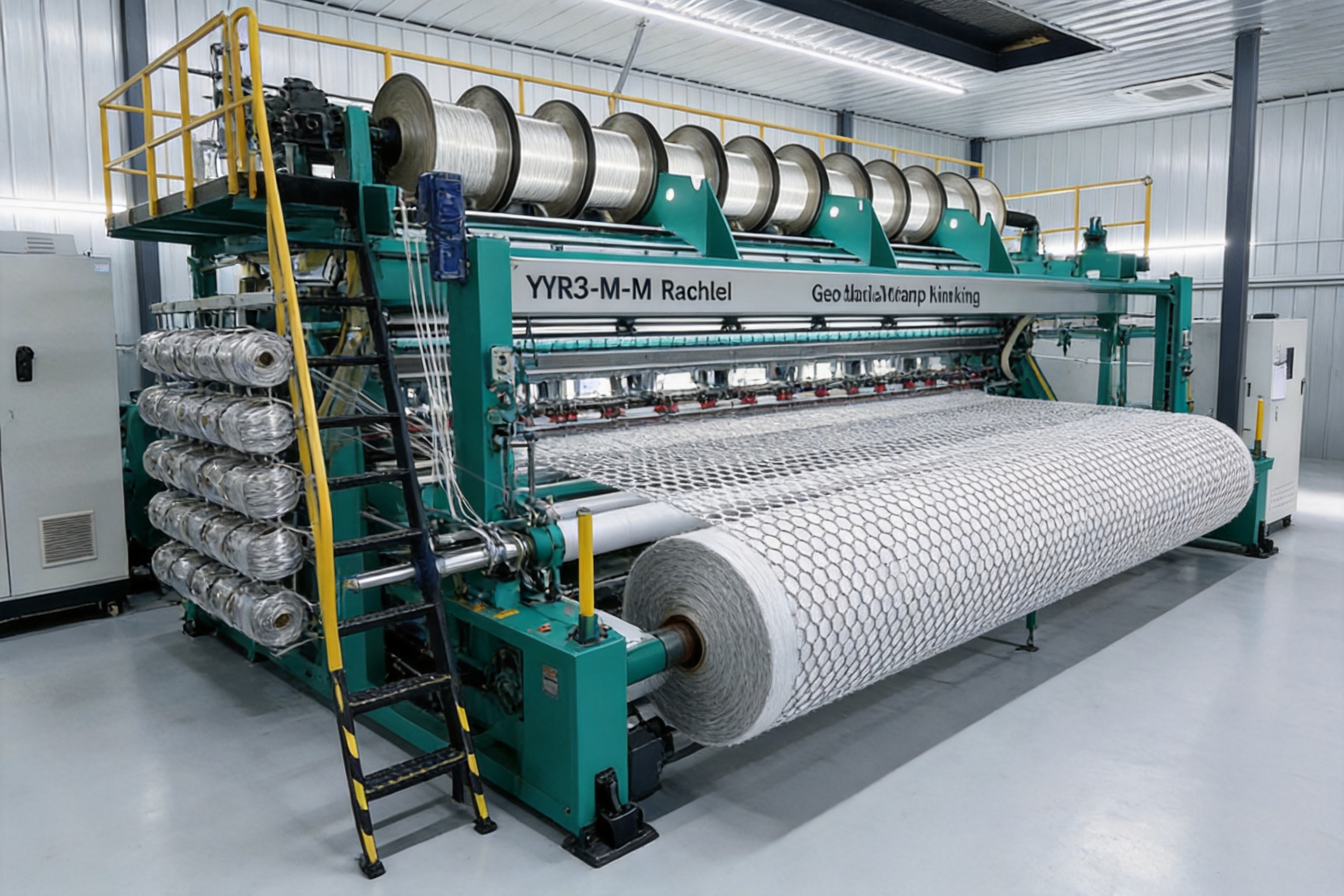
8. Manufacturing Process and Quality Control
8.1 Engineering Review
Manufacturing begins with a technical review of the intended fabric and production environment. The engineering team examines yarn type, yarn count, package format, target mesh size, fabric weight, working width, roll dimensions, expected output and downstream coating requirements.
This review helps prevent a common equipment problem: selecting a machine from a general catalogue without considering the actual yarn and process. A properly engineered configuration is more likely to achieve stable production from the beginning.
8.2 Component Procurement
Machine reliability depends on the quality and consistency of its mechanical, electrical and knitting components. Components are selected according to the machine design and checked before assembly. Critical parts require appropriate dimensional accuracy and compatibility with the intended operating conditions.
Organized component control helps reduce assembly errors and supports traceability. It also makes future maintenance and spare-parts identification more efficient.
8.3 Precision Machining and Fabrication
Structural frames, brackets, supports and other fabricated elements must be produced with suitable accuracy. Alignment is important because the working width is large and small errors can become more visible across the full fabric width.
Machined and fabricated parts are prepared for assembly according to engineering drawings and process requirements. Surface treatment, fastening, alignment and inspection contribute to the long-term stability of the equipment.
8.4 Mechanical Assembly
During assembly, the knitting elements, guide systems, drive components, yarn delivery units, tension devices and take-up sections are installed and aligned. The machine is built as a complete production system rather than as a collection of unrelated components.
Assembly technicians check clearances, movement, lubrication points, fastener security and the interaction between the main operating units. Correct assembly is essential for stitch consistency and smooth operation at production speed.
8.5 Electrical and Control Integration
Electrical wiring, drive functions, sensor connections and control interfaces are installed and checked during machine integration. The control system must provide dependable operation and clear communication between the operator and the equipment.
Before delivery, the machine should be tested for start-up, stopping, speed adjustment, alarm response and relevant safety functions. Any interface planned for coating or drying equipment should be reviewed during the technical stage and verified during testing.
8.6 Factory Testing
Each machine is assembled, debugged and tested before shipment. For the YRS3-M-M, testing focuses on stitch formation, lay-in yarn placement, tension stability across the working width, fabric delivery and take-up behavior.
Where possible, testing should use the customer’s intended yarn or a technically equivalent material. This allows the production team to identify possible adjustments before the machine reaches the customer’s factory.
8.7 Customer Inspection
Customers may attend a final inspection at the manufacturer’s production base or review inspection records and test results before shipment approval. This provides an opportunity to confirm the agreed machine configuration and clarify operating procedures.
Pre-delivery communication is valuable because it aligns the customer’s operators, maintenance staff and engineering team with the machine’s functions before installation begins.
9. Installation and Commissioning
9.1 Workshop Preparation
The installation area should provide a level, stable and appropriately isolated floor. The machine must have sufficient clearance for operation, maintenance, yarn loading, roll removal and inspection.
Power supply, grounding, compressed air where pneumatic devices are used, lighting, ventilation and ambient conditions should be prepared according to the approved technical requirements. The material route from yarn storage to the machine should be planned to reduce unnecessary handling.
9.2 Mechanical Installation
After positioning, the machine is leveled and aligned. Main sections are connected, moving parts are checked and lubrication points are prepared. The installation team verifies that the machine can operate without interference from nearby structures or equipment.
The take-up direction and roll handling arrangement should be coordinated with the next stage of production. If the mesh feeds into a coating and drying line, the transfer point must be aligned for stable movement and controlled tension.
9.3 Process Commissioning
Commissioning normally begins at a conservative speed. Operators verify yarn paths, guide positions, stitch formation, lay-in placement and take-up behavior. The machine is then adjusted progressively toward the agreed production settings.
Sample fabric should be inspected for aperture size, edge condition, yarn displacement, visible defects, width, roll formation and basic mechanical performance. Process changes should be recorded so that successful settings can be repeated.
9.4 Operator Training
On-site training covers machine start-up, shutdown, yarn loading, speed adjustment, tension checks, fabric inspection, roll changes, alarm response, cleaning and routine maintenance.
Training can also be provided at the manufacturer’s workshop for knitters, maintenance personnel and production managers. A structured program may include operating practice, process parameters, troubleshooting, maintenance routines and production planning.
10. Maintenance and Spare Parts
10.1 Daily Checks
Daily checks should include yarn path cleanliness, guide condition, needle and stitch element condition, abnormal noise, lubrication status, tension behavior and the appearance of the produced mesh. Operators should report changes before they develop into repeated fabric defects.
10.2 Routine Cleaning
Fibers, dust and sizing residues can accumulate around guides, needles, stitch combs and other operating elements. Regular cleaning helps maintain smooth yarn movement and reduces the risk of contamination or inconsistent stitch formation.
10.3 Lubrication and Wear Inspection
Lubrication should follow the machine’s maintenance schedule and use suitable materials. Wear components should be inspected for damage, deformation or loss of dimensional accuracy. Replacing a small wear part at the correct time can prevent a larger failure and reduce unplanned downtime.
10.4 Spare Parts Support
Common wear parts and knitting elements should be identified during commissioning. Keeping an appropriate spare-parts inventory helps the producer respond quickly to yarn guide damage, needle wear, tension-device problems or other routine maintenance needs.
Technical support is most effective when the customer provides machine records, fabric samples, operating settings and clear descriptions of the problem. These details allow engineers to distinguish between mechanical, yarn-related, process and downstream causes.
11. Production Efficiency and Cost Considerations
The reference output of approximately 19,000 square meters per day provides a basis for planning, but it should not be treated as a guaranteed result for every construction. Actual output depends on machine speed, working time, yarn breaks, mesh specification, roll changes, maintenance, operator experience and downstream coating capacity.
A producer should evaluate total line efficiency rather than only theoretical knitting speed. If the knitting machine operates faster than the coating or drying line can accept, fabric may accumulate in storage or require additional handling. Balanced line design generally provides better practical efficiency.
The broad working width can support efficient master-roll production and reduce the number of repeated setups. Automated or organized roll changing can also reduce non-productive time. Process recipes for approved mesh constructions help operators repeat successful settings with fewer trials.
Energy consumption, labor, yarn waste, maintenance, coating chemicals, packaging and downtime should all be included in the production-cost assessment. A stable machine that reduces defective fabric and unplanned stops may provide greater value than equipment selected only for a high nominal speed.
12. Applications
12.1 Wall Reinforcement Mesh
The primary application is the production of fiberglass wall reinforcement mesh. The finished fabric can be embedded in plaster, render or related wall systems to improve crack resistance and surface stability.
12.2 Plaster Reinforcement
Open mesh allows plaster and coating materials to pass through the apertures and form a mechanical connection around the yarn structure. The reinforcement layer can be used in areas where changes in substrate, joints, openings or thermal movement create a higher risk of cracking.
12.3 Insulation and Facade Systems
Fiberglass mesh is commonly used with insulation and facade systems. The required mesh construction, coating and finished width depend on the system design and the applicable regional standards.
12.4 Drywall and Joint Reinforcement
Narrow slit rolls can be used for jointing, corner reinforcement and localized crack-control applications. The master roll produced on a wide machine can be converted into smaller widths when the fabric quality and coating process are suitable.
12.5 Geotextile-Grade Scrim Fabrics
The biaxial structure is also relevant to selected geotextile-grade scrim products. These products may require different yarn counts, apertures, coating systems and performance criteria, so the final configuration must be reviewed for the specific civil engineering application.
13. Recommended Quality-Control Program
| Control stage | Items to review | Purpose |
|---|---|---|
| Incoming yarn inspection | Yarn count, package condition, contamination and supplier documentation | Confirms material suitability |
| Machine start-up | Yarn path, tension, stitch formation and lay-in placement | Prevents early process defects |
| In-process inspection | Aperture, width, edge condition, visible damage and yarn displacement | Maintains fabric consistency |
| Roll inspection | Winding hardness, telescoping, wrinkles and roll identification | Supports coating and storage |
| Coating inspection | Coating pickup, appearance, drying and adhesion | Confirms finished-fabric stability |
| Finished-product testing | Tensile properties, tear behavior, alkali resistance and dimensional stability | Verifies application performance |
| Documentation | Machine settings, batch data, defects and corrective actions | Improves traceability and repeatability |
Quality-control requirements should be agreed with the customer and adjusted to the relevant construction, application and market. Factory testing of the machine cannot replace finished-product testing, but it creates a reliable foundation for achieving the required fabric performance.
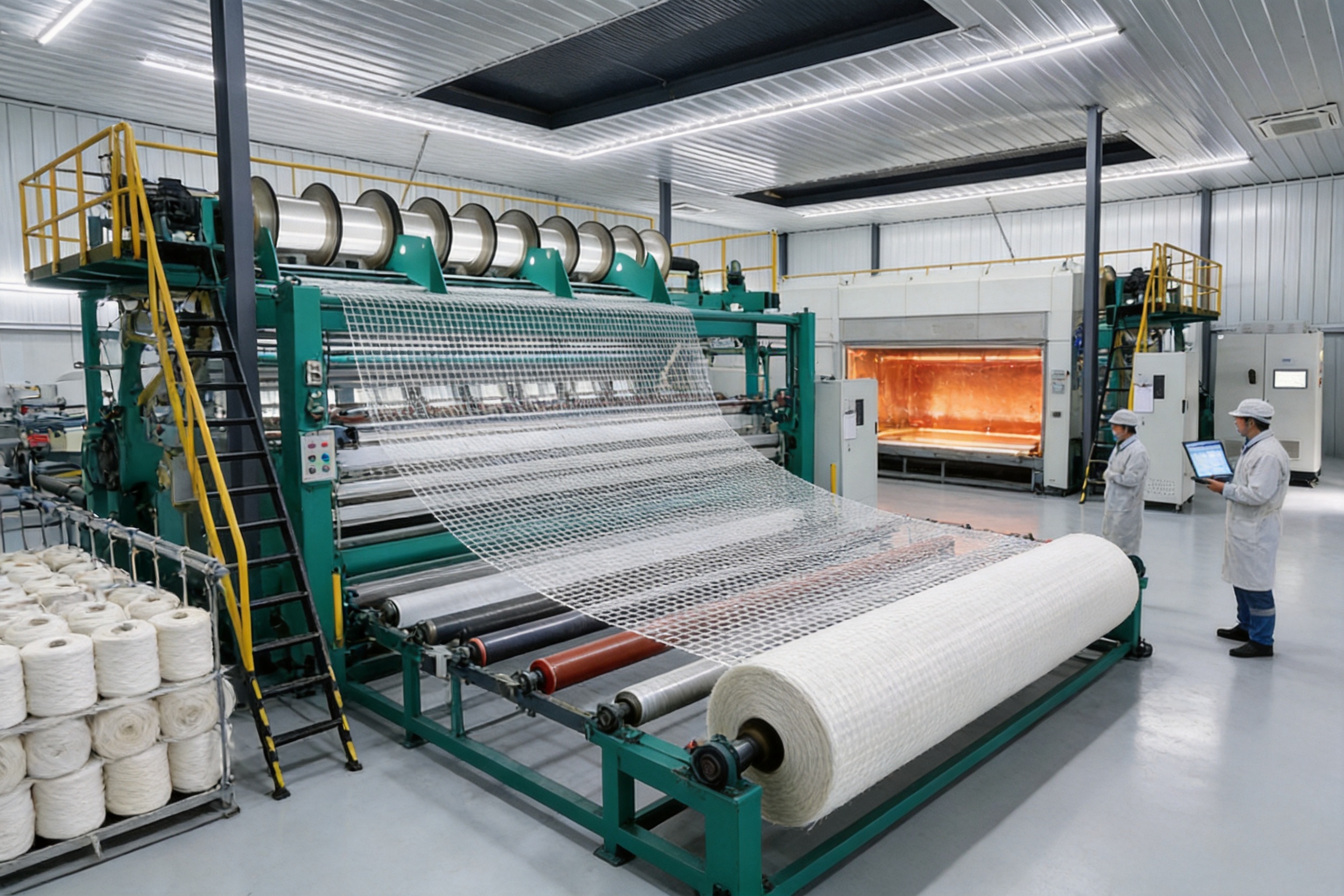
14. Why Manufacturer Capability Matters
A biaxial warp knitting machine is a complex production system. Its performance depends not only on the main frame or drive motor but also on the alignment of knitting elements, the accuracy of yarn delivery, the quality of control integration and the manufacturer’s ability to support commissioning.
A manufacturer with in-house research, engineering, fabrication, assembly, testing and service capabilities can respond more effectively to non-standard requirements. This is particularly important for customers processing difficult yarns, producing special mesh constructions or integrating the machine with an existing coating line.
Changzhou Yuanyang Electromechanical Technology Co., Ltd. focuses on warp knitting equipment and related textile machinery, including stitch-bonding machines, biaxial warp knitting machines, multiaxial warp knitting machines, carbon fiber multiaxial machines, powder scattering machines and web-laying equipment.
The company’s manufacturing approach includes engineering review, component procurement, machining, assembly, debugging and pre-delivery testing. This integrated capability supports the development of equipment for complex fabric designs, specialty fibers and production lines that require long-term operating stability.
Its technical team can work with customers on machine configuration, fabric construction, plant layout, installation, commissioning and training. This project-oriented approach is an advantage over suppliers that provide equipment without sufficient process support.
15. Technical Information Required for Quotation
Accurate technical information allows the machine to be configured more effectively. Customers should prepare the following details before requesting a proposal.
- Target mesh aperture, including whether the standard 5×5 mm construction is required.
- Warp and weft yarn type, yarn count, filament structure and supplier.
- Stitch yarn type and required stitch pattern.
- Target fabric weight, width, tensile properties and tear requirements.
- Required master-roll width, roll diameter and core specification.
- Expected production per shift and per day.
- Coating formulation, coating weight and drying-line conditions.
- Available factory space, power supply, compressed air and environmental conditions.
- Required slitting, inspection, packaging and storage arrangements.
- Operator experience and the desired training program.
- Applicable product standards, customer specifications and acceptance criteria.
Providing samples, technical drawings or existing fabric data is also helpful. The more complete the information, the more accurately the supplier can evaluate yarn paths, tension requirements, take-up design, production speed and line integration.
16. Frequently Asked Questions
What products can the YRS3-M-M produce?
The machine is primarily designed for wall reinforcement mesh, fiberglass mesh fabric, plaster reinforcement mesh and related biaxial geotextile-grade scrim products. It can process glass fiber and polyester yarns, subject to the confirmed fabric design and machine configuration.
What is the standard mesh size?
The reference mesh specification is 5×5 mm. Other constructions may be considered after reviewing the required yarn count, aperture, fabric weight, stitch pattern and application requirements.
What is the machine’s working width?
The reference working width is 247 inches. The final working width and take-up arrangement should be confirmed according to the required roll size, downstream coating equipment and factory layout.
What is the machine speed?
The stated speed range is 20–1500 revolutions per minute. The practical operating speed is selected according to yarn behavior, mesh construction, fabric quality, machine stability and downstream process capacity.
What daily output can be expected?
Reference daily output is approximately 19,000 square meters. Actual output varies with fabric design, machine speed, yarn breaks, roll changes, maintenance, operator experience, coating requirements and production schedule.
Can the machine process polyester?
Yes. The machine is designed for glass fiber and polyester yarns. Because these fibers have different handling characteristics, the yarn delivery, tension settings and guide arrangement should be confirmed for the selected material.
Why is biaxial construction useful for wall mesh?
Biaxial construction places reinforcement in two directions, helping the mesh distribute stress more evenly. It supports dimensional stability, tear strength and resistance to tear propagation in wall reinforcement and crack-control applications.
Does the machine include the coating line?
The YRS3-M-M produces the knitted base mesh. The acrylic coating and drying stages are downstream processes. However, the machine can be configured and integrated with the customer’s coating line, including roll transfer, tension, speed and stop-signal requirements.
How is the machine tested before shipment?
Pre-delivery testing covers stitch formation, lay-in yarn placement, tension stability, fabric delivery and take-up behavior. Customers may attend a final inspection or review relevant test records before shipment approval.
What kind of maintenance is required?
Routine maintenance includes cleaning stitch and guide areas, checking needles and knitting elements, monitoring yarn tension, inspecting wear parts and following lubrication requirements. Regular maintenance helps preserve fabric quality and reduce unexpected downtime.
Is operator training available?
Yes. Training can cover installation, start-up, shutdown, yarn loading, process adjustment, fabric inspection, troubleshooting, cleaning and maintenance. On-site commissioning support is available so operators can learn while the machine is brought to the agreed production condition.
Can the machine be adapted to an existing factory?
Yes. Layout, yarn package arrangement, take-up, controls and downstream interfaces can be reviewed around the available floor space and production line. The factory should provide accurate information about utilities, building access, equipment position and coating-line requirements.
17. Conclusion
The YRS3-M-M Raschel mesh geo textile biaxial warp knitting machine provides a practical platform for producing fiberglass wall mesh, plaster reinforcement fabrics and related geotextile-grade scrims. Its biaxial yarn placement, stable stitch bonding, 247-inch reference width and flexible operating range support large-scale, continuous mesh production.
Its main performance advantages include balanced reinforcement, high tear strength, resistance to tear propagation, regular 5×5 mm mesh geometry, compatibility with glass fiber and polyester, and integration with acrylic coating and drying processes. These features make the machine suitable for producers seeking consistent wall reinforcement fabric and flexible master-roll production.
The equipment’s value also depends on manufacturing quality and technical support. Engineering review, controlled component procurement, precision fabrication, careful assembly, factory testing, installation assistance and operator training all contribute to a successful production line.
For the most accurate configuration, customers should define the target fabric, yarn supply, mesh construction, production capacity, roll requirements, coating process and factory conditions before ordering. With these inputs, the YRS3-M-M can be configured as part of a complete and stable fiberglass textile manufacturing solution.
References
1. Technical product information for the YRS3-M-M Raschel mesh geo textile biaxial warp knitting machine.
2. Manufacturer-provided specifications for applicable fibers, machine speed, working width, mesh construction and reference daily output.
3. Manufacturer information concerning biaxial warp knitting machinery, fiberglass textile equipment and customized textile production lines.
4. General technical principles of warp knitting, Raschel mesh formation, yarn tension control and stitch-bonded reinforcement fabrics.
5. General industry practices for fiberglass mesh coating, drying, slitting, roll handling and construction-material quality control.
Product: YRS3-M-M Raschel mesh - Geo Textile Biaxial Warp Knitting Machine

News
-
Three quotations land on the same desk for the same polyester nonwoven line, and on paper they look interchangeable. Each is priced per metre of working width. Each quotes a similar top speed. Each c...
READ MORE -
Two buyers open the same catalogue and both ask for a warp knitting machine. One needs a 4.5 m wide glass-fibre geogrid with 0° and 90° yarns stitched together for a soil-reinforcement contract; the ...
READ MORE -
Two quotations land on the same desk. Both offer a multiaxial warp knitting line, both list the same working width, both promise high output. One buyer signs and discovers six months later that the f...
READ MORE -
What a Warp Knitting Machine Does A warp knitting machine turns hundreds or thousands of parallel yarns into a continuous fabric by looping each yarn around a needle and linking it to its neighbours a...
READ MORE
-
Contact Info.
+86-198 5534 1617
+86-134 0158 3002yuanyang@yywarpknitting.com 699#, Shengzhi West Rd, Lvcheng Town, Danyang City, Zhenjiang City, Jiangsu Province, China

-
QR Code
-
Quick Links
Home About Products Manufacturing Customization News Contact -
Product List
Machine for Chemical Fiber Textile Machine for Fiberglass Textile Machine for Carbon Fiber Textile -
About Us
Company Profile Factory Gallery Value-added Service
Copyright © 2026 Changzhou Yuanyang Electromechanical Technology Co., Ltd. All Rights Reserved.
Custom Warp Knitting Machine Manufacturers
