

 English
 中文简体
 русский
 Français
 Español
 Deutsch

High-Speed Multi-Axial Warp Knitting Machine for Advanced Glass and Basalt Fiber Fabrics
2026-11-08
Content
- 1 1. The Role of Multi-Axial Fabrics in Composite Manufacturing
- 2 2. Main Advantages of the YRS3-3M Machine
- 3 3. Technical Specifications
- 4 4. How the Machine Compares with Less Flexible Equipment
- 5 5. Applications in High-Performance Industries
- 6 6. Servo Control and Production Repeatability
- 7 7. Engineering for Brittle and Abrasive Fibers
- 8 8. Manufacturing Strengths and Advanced Production Process
- 9 9. Complete Line Integration
- 10 10. Installation, Commissioning and Acceptance
- 11 11. Operator Training and Maintenance Support
- 12 12. Selecting the Correct Configuration
- 13 13. Quality Control for Finished Multi-Axial Fabrics
- 14 14. Economic and Operational Benefits
- 15 15. Why Choose an Integrated Equipment Manufacturer
- 16 16. Frequently Asked Questions
- 16.1 What fibers can the YRS3-3M process?
- 16.2 What weft angles can the machine produce?
- 16.3 How many weft systems does the machine have?
- 16.4 What is the standard working width?
- 16.5 What fabric weight can the machine produce?
- 16.6 Can the machine add a chopped-fiber or nonwoven layer?
- 16.7 What is the machine speed?
- 16.8 What is the daily output?
- 16.9 Is the machine suitable for wind turbine blade fabrics?
- 16.10 How does servo control benefit production?
- 16.11 Does the supplier provide installation and commissioning?
- 16.12 What training is available?
- 16.13 How should a customer prepare for a quotation?
- 17 17. Conclusion
- 18 References
- 19 Product: YRS3-3M Multi-Axial Warp Knitting Machine
Modern composite manufacturers require reinforcement fabrics that combine accurate fiber orientation, stable production, high throughput and dependable quality. As aerospace structures, wind turbine blades, lightweight vehicles and other industrial products become lighter and stronger, the textile machinery used to manufacture reinforcement materials must provide much more than basic yarn feeding. It must control several fiber layers, maintain repeatable angles, handle brittle technical fibers and integrate with a complete production line.
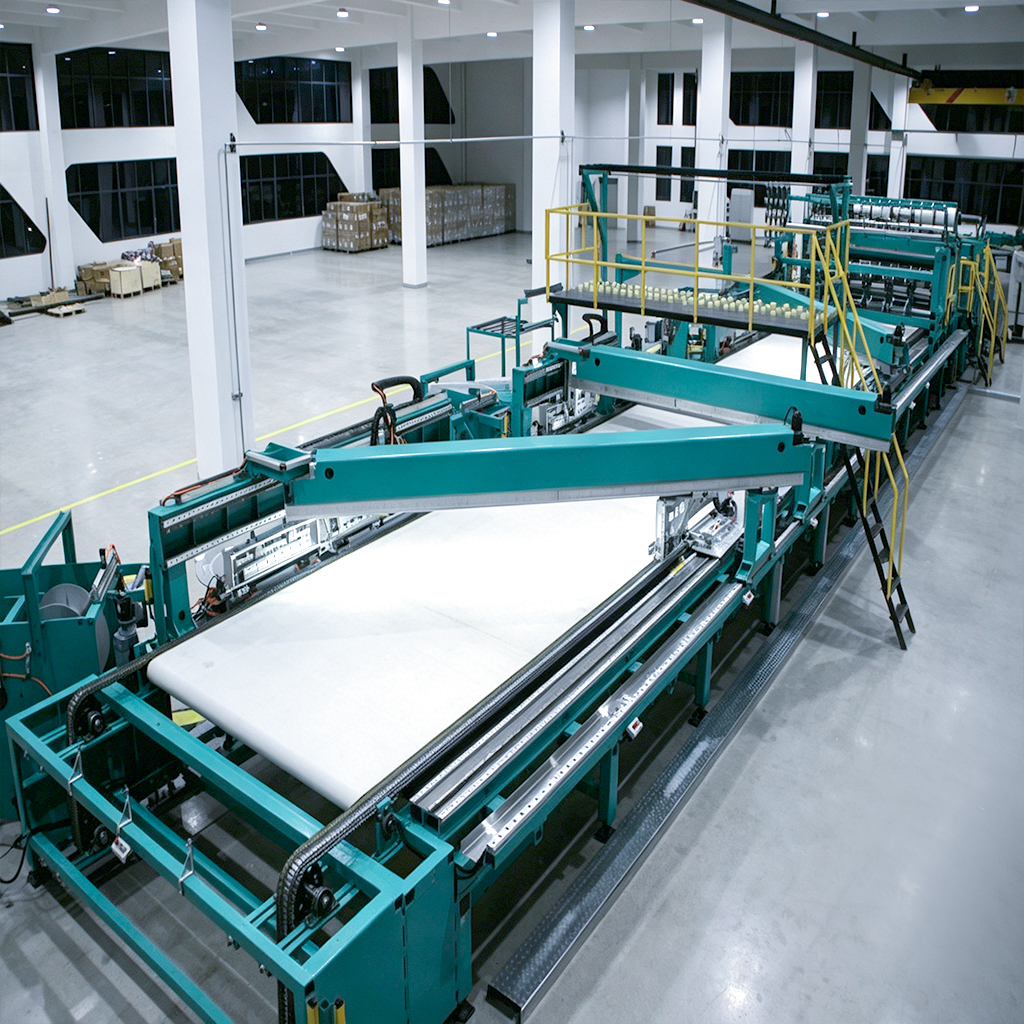
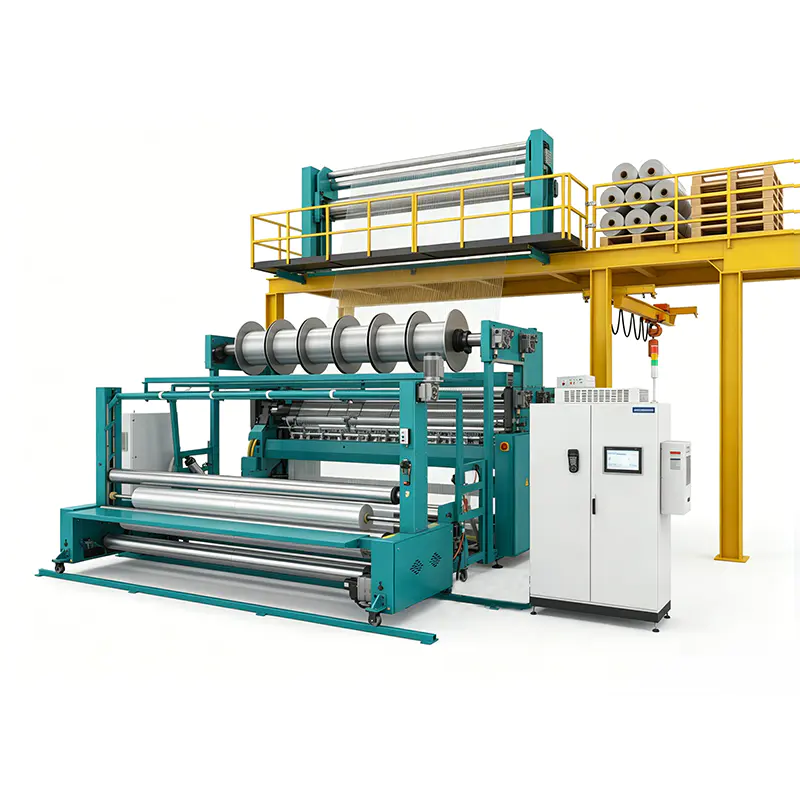
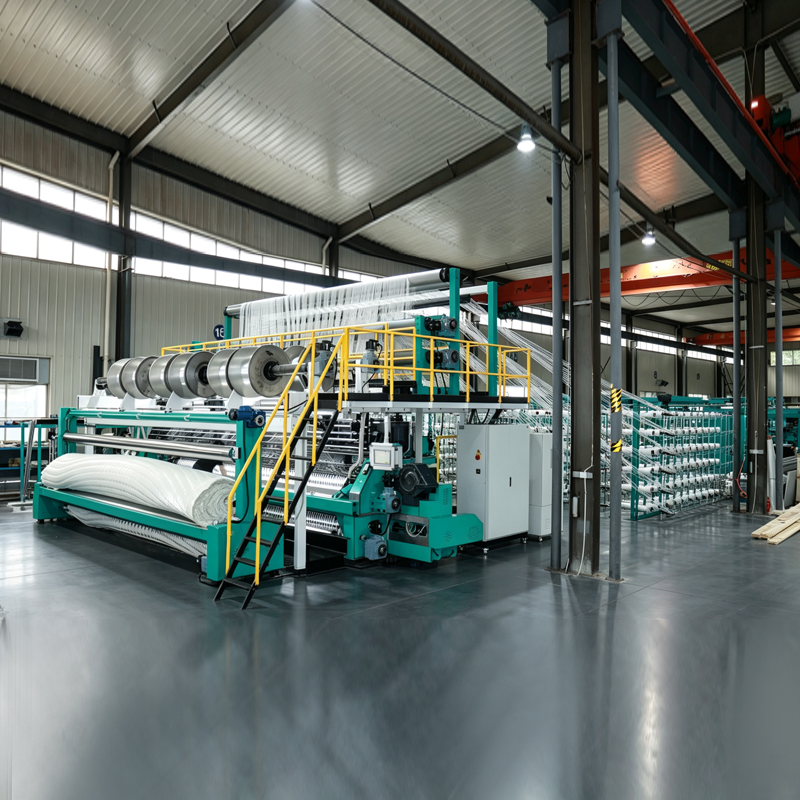
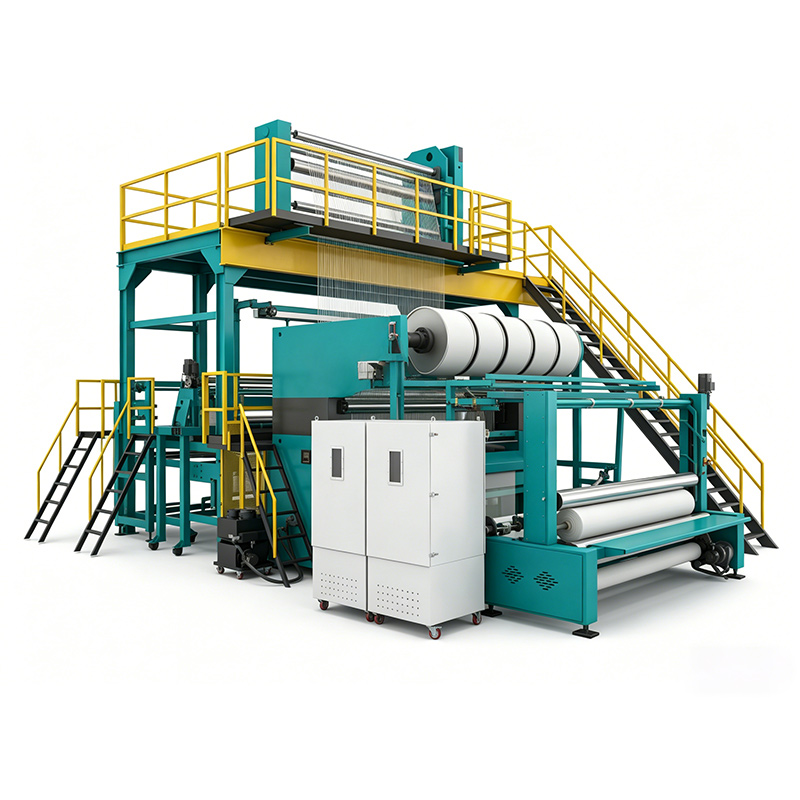
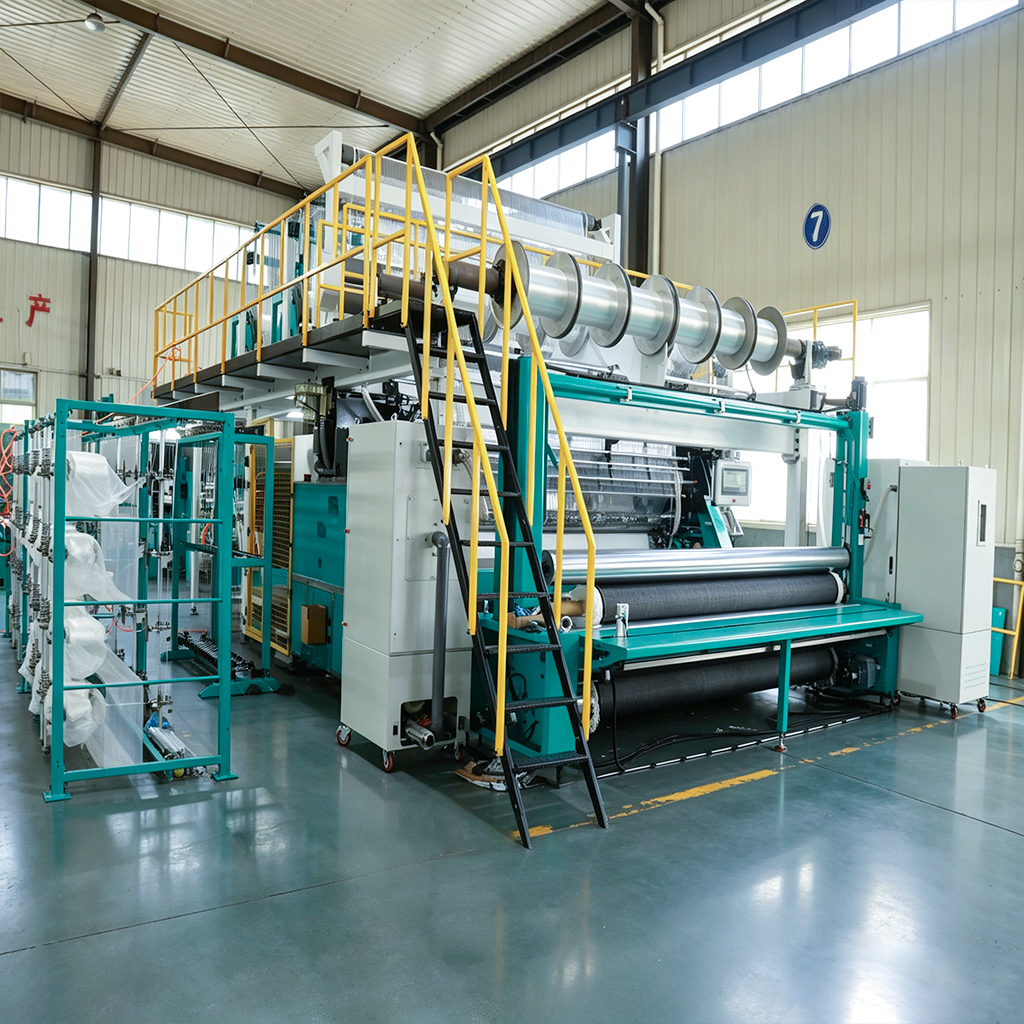
The YRS3-3M Multi-Axial Warp Knitting Machine is designed for this production environment. It is a high-speed, servo-controlled machine for manufacturing multi-axial glass fiber and basalt fiber fabrics. Its three independent weft-laying systems can place multiple layers at selected angles from -30° to +30°, while the warp knitting structure binds the layers into a stable reinforcement fabric. The result is a flexible platform for producers that need to manufacture several fabric constructions on one machine rather than operate a separate machine for every angle or product type.
Changzhou Yuanyang Electromechanical Technology Co., Ltd. develops and manufactures this equipment in Jiangsu, China. The company combines research and development, mechanical fabrication, electrical control, assembly, testing, installation and after-sales support. This integrated approach allows the machine to be configured around the customer's fiber type, fabric structure, working width, output target and line-interface requirements.
Compared with conventional fixed-angle or less flexible reinforcement fabric equipment, the YRS3-3M provides a broader production range. Its independent servo-controlled weft systems support accurate multi-layer laying, its optional chopped-fiber or nonwoven module expands product possibilities, and its construction can be adapted to demanding industrial textile applications. These features help manufacturers improve product consistency while reducing the need for repeated mechanical changes between fabric designs.
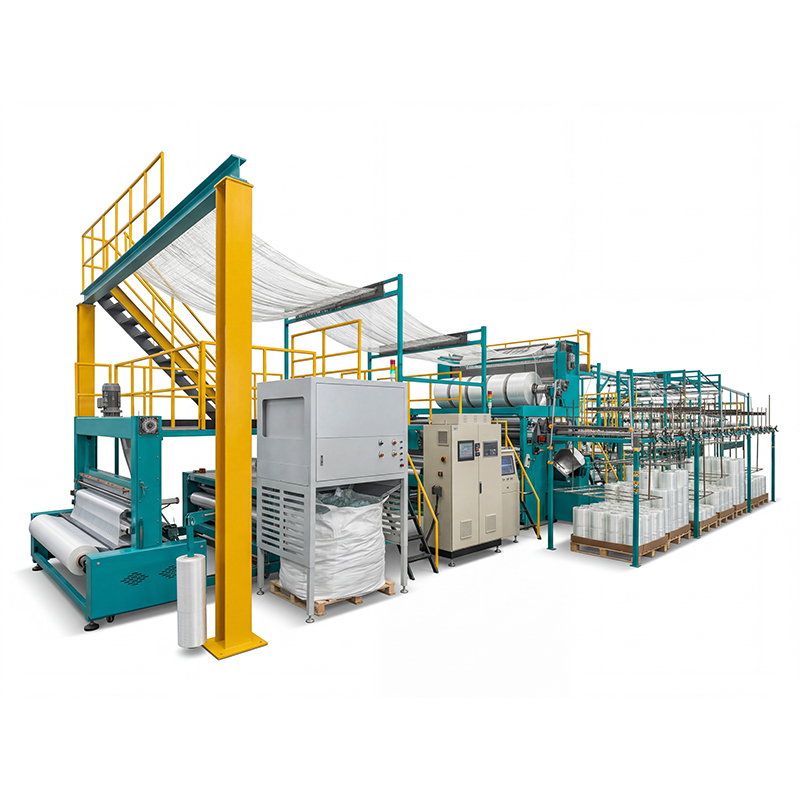
YRS3-3M Multi-Axial Warp Knitting Machine
1. The Role of Multi-Axial Fabrics in Composite Manufacturing
Multi-axial fabrics are reinforcement textiles engineered to place fibers in several directions within one layered structure. Instead of relying on traditional woven interlacing, the yarns are arranged in straight or nearly straight paths and held together by a fine knitting thread. This construction allows the reinforcement to carry loads along the directions specified by the composite designer.
A typical multi-axial fabric may contain warp yarns, one or more diagonal weft layers and, depending on the product specification, a further layer positioned at another angle. The layers can be designed to provide balanced strength, directional stiffness or targeted reinforcement in areas exposed to particular loads. In composite production, this controlled arrangement can reduce unnecessary material and support lightweight structural design.
Woven reinforcement fabrics force yarns to pass over and under one another. This interlacing may create crimp, which can affect the straightness of the fiber path. Multi-axial warp knitting reduces this effect by laying the reinforcement yarns in controlled directions before securing them with the knitting structure. The resulting fabric is suitable for resin infusion, pultrusion, compression molding and other composite processing methods, subject to the specific fabric construction and resin system.
The quality of the final reinforcement fabric depends heavily on the machinery used to place and stabilize the yarns. The equipment must control yarn tension, guide the fibers smoothly, maintain the selected angle across the working width and prevent layer displacement during knitting and winding. Any variation can affect areal weight, resin flow, laminate thickness and the mechanical behavior of the finished composite.
The YRS3-3M addresses these requirements through three independent weft-laying systems, servo control, configurable yarn paths and a structure intended for industrial production. It is suitable for manufacturers that need repeatable glass fiber or basalt fiber fabric for demanding applications.
2. Main Advantages of the YRS3-3M Machine
2.1 Three Independent Servo-Controlled Weft Systems
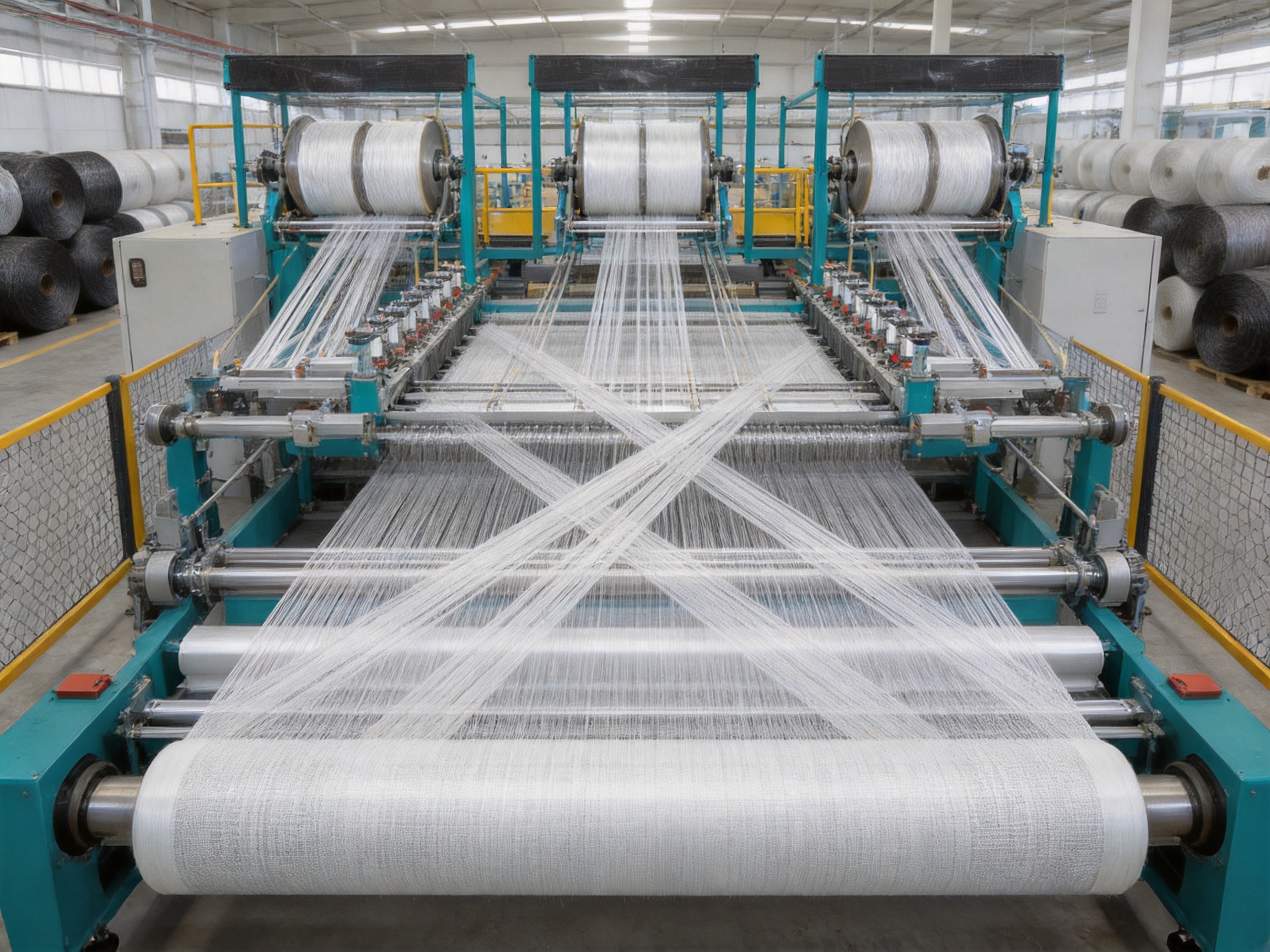
The central advantage of the YRS3-3M is its three independent weft-laying systems. Each system can be controlled as part of the overall fabric recipe, allowing the machine to produce multi-layer and multi-angle reinforcement structures in a continuous process.
Servo control provides accurate movement management and repeatable positioning. Instead of depending only on mechanically fixed settings, the system can coordinate the motion of the weft-laying components with the machine cycle and the selected fabric construction. This supports stable production when the manufacturer changes the angle, layer sequence or areal weight.
Three independent systems also provide more configuration flexibility than a basic single-weft machine. A producer can create fabric structures with several diagonal layers or combine different yarn arrangements within the same product. This makes the machine suitable for development work as well as larger-scale production.
2.2 Flexible Weft Angles from -30° to +30°
The weft can be laid at any angle between -30° and +30°, according to the product design. This range allows the manufacturer to produce diagonal reinforcement patterns that would not be possible with a fixed 90° crosswise system.
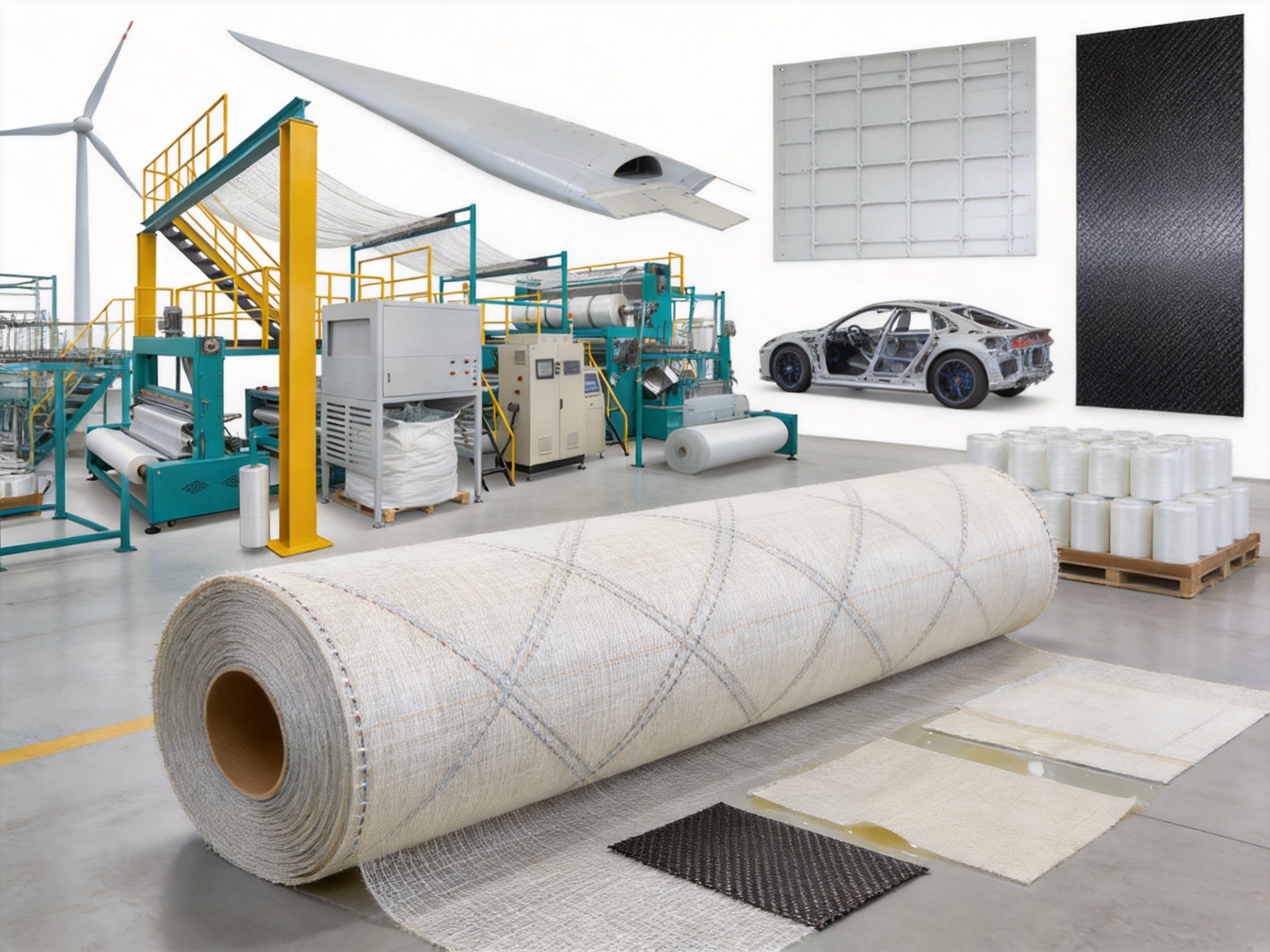
Angle flexibility is particularly useful for composite structures in which the direction of stress is known. Wind turbine blades, aerospace components, automotive panels and industrial profiles may require reinforcement that follows a specific load path. By adjusting the angle, fabric designers can create a reinforcement architecture that better matches the intended structural performance.
The angle can also be changed between different production orders. This reduces dependence on a single fabric design and gives the machine a wider commercial application. Producers can manufacture several grades, widths and reinforcement combinations while using the same basic platform.
2.3 Support for Heavy Technical Fabrics
The YRS3-3M is intended for fabric weights typically ranging from 450 to 1500 g/m². This range covers many common reinforcement fabrics used in composite manufacturing. Heavy fabrics require the machine to manage more yarn, more layers and greater material accumulation while maintaining stable fabric formation.
A heavier construction normally affects the practical running speed. More yarn per meter and a larger number of layers increase the material load on the machine. The YRS3-3M is therefore configured according to the actual product rather than operated solely according to a nominal maximum speed. This approach helps balance productivity, fiber protection, fabric quality and equipment life.
2.4 Optional Chopped-Fiber or Nonwoven Layers
An optional module can add chopped layers or nonwoven materials in the range of 20–600 g/m². This expands the machine's ability to produce composite reinforcement products with additional surface or intermediate layers.
Nonwoven layers may be used to influence resin distribution, improve surface coverage or provide a veil-like structure. Chopped-fiber layers can add reinforcement in a more dispersed format and may be combined with continuous glass or basalt yarns. The exact role of the additional layer depends on the composite process and the customer's product design.
Integrating this operation into the same production chain may reduce handling between separate machines. It can also improve layer alignment and help maintain the intended fabric construction. The optional module is selected during engineering according to the required material, feeding method, basis weight and line layout.
2.5 Adaptation for Glass and Basalt Fiber
The standard YRS3-3M configuration is designed for glass fiber and basalt fiber. Both materials are widely used in industrial composite reinforcement, but both require careful handling. They can be more brittle and abrasive than ordinary textile yarns. Sharp guide surfaces, excessive bending, unstable tension or uncontrolled contact can damage filaments and create production defects.
For this reason, the machine configuration considers the complete yarn path. Guide elements, tension components, support surfaces and feeding arrangements must be suitable for the selected fiber and yarn count. The objective is not simply to achieve high movement speed. It is to maintain consistent placement without unnecessary filament breakage or surface damage.
Carbon fiber production uses a dedicated carbon-fiber model in the product range. Separating the standard glass and basalt configuration from the carbon-fiber version allows the machine to be engineered around the different handling requirements of carbon yarns.
2.6 Industrial Working Width and High Production Capacity
The standard working width is 101 inches. This provides a broad production area for industrial reinforcement fabrics and can support efficient roll production, cutting plans and downstream composite processing.
The reference daily output is approximately 4000–6000 kg for one configuration and 3000–4500 kg for another configuration. These figures are not guaranteed production values because actual output depends on fabric weight, layer count, angle pattern, yarn type, machine speed and process settings. Nevertheless, they indicate that the machine is intended for continuous industrial production rather than small-scale laboratory work.
A production line should be evaluated using the actual fabric specification. A lighter fabric running at a higher speed may produce a different daily quantity from a heavy multi-layer fabric operating at a lower speed. Yuanyang uses the customer's production target and fabric construction to determine the practical configuration and expected operating point.
3. Technical Specifications
The following table summarizes the principal specifications of the standard YRS3-3M Multi-Axial Warp Knitting Machine. Final technical values are confirmed during project engineering because the machine can be adapted to different fibers, fabric constructions and line arrangements.
| Parameter | Standard Information | Production Significance |
|---|---|---|
| Machine type | Multi-axial warp knitting machine | Produces layered reinforcement fabrics with knitted stabilization |
| Applicable fibers | Glass fiber and basalt fiber | Suitable for multi-axial glass and basalt reinforcement fabrics |
| Weft-laying systems | Three independent systems | Supports multi-layer and multi-angle fabric construction |
| Control method | Servo-controlled weft laying | Improves angle repeatability and recipe-based production |
| Weft angle | Any angle from -30° to +30° | Allows diagonal reinforcement according to structural requirements |
| Machine speed | 50–2000 r/min or 50–1300 r/min, depending on configuration | Selected according to fiber, fabric weight and process stability |
| Working width | 101 inches | Defines the available production width |
| Typical fabric weight | 450–1500 g/m² | Covers common heavy industrial reinforcement structures |
| Optional added layer | Chopped layer or nonwoven fabric | Expands fabric design and composite process options |
| Optional layer weight | 20–600 g/m² | Supports a broad range of surface and intermediate layers |
| Reference daily output | Approximately 4000–6000 kg or 3000–4500 kg | Actual output varies with product construction and operating settings |
The two listed machine-speed ranges reflect different configurations and production conditions. Speed should never be considered separately from yarn behavior and fabric quality. A practical production speed is established through trials using the customer's actual material and target structure.
4. How the Machine Compares with Less Flexible Equipment
When comparing technical textile machinery, the most important question is not always which machine has the highest nominal speed. The more useful question is whether the equipment can produce the required product consistently, with acceptable waste and manageable changeover time.
A fixed-angle machine may be suitable for a single standardized fabric, but it can become restrictive when customers require several diagonal orientations. The YRS3-3M offers a wider angle range and programmable servo operation, giving producers more freedom to develop and manufacture different fabric designs.
A machine with only one weft system may require multiple production stages to create a multi-layer fabric. Each additional handling stage can increase labor, alignment risk and material movement. The YRS3-3M integrates three independent weft-laying systems, making it possible to produce a more complex layered structure in one coordinated process.
Some basic textile machines are designed around ordinary yarns and may not provide the handling details needed for glass or basalt fiber. Technical fibers require smooth paths, controlled tension and careful machine adjustment. The YRS3-3M is engineered specifically for reinforcement fabric production, with configuration decisions based on the properties of the selected fiber.
Another difference concerns line integration. A machine may perform its core operation effectively but still create difficulties if it cannot communicate with upstream or downstream equipment. Yuanyang defines interface points during engineering so that the machine can be connected with creels, powder-spreading equipment, nonwoven feeders, winding systems, inspection units and other production-line components.
The optional chopped-fiber or nonwoven module is also a practical advantage for manufacturers seeking process consolidation. Instead of transferring a partially completed fabric to another machine for an added layer, the producer may be able to incorporate that layer within the same coordinated line, subject to the product design and process requirements.
These advantages do not mean that every application requires the YRS3-3M. A single-direction or simple biaxial fabric may be more economically produced on a simpler machine. The YRS3-3M is most valuable when the manufacturer needs multiple angles, several layers, industrial fabric weights, flexible product development and stable repeatability.
5. Applications in High-Performance Industries
5.1 Wind Turbine Blades
Wind turbine blades contain large composite structures that must withstand repeated bending, vibration and environmental exposure. Reinforcement fabrics are used in shells, spar caps, webs and other structural areas. Different sections of a blade experience different load directions, so fiber orientation is an important part of the design.
Multi-axial glass fiber fabrics can provide reinforcement along selected directions while maintaining efficient handling during resin infusion. Basalt fiber can also be used in applications where its material characteristics are appropriate. The YRS3-3M gives fabric manufacturers the ability to adjust the angle and layer sequence for different blade components or product grades.
Its broad working width is suitable for large industrial fabric rolls, while the optional nonwoven or chopped layer may support specific resin-flow or surface requirements. Final suitability depends on the blade designer's laminate schedule, the resin system and the processing method.
5.2 Aerospace Components
Aerospace applications place demanding requirements on weight, structural performance, consistency and traceability. Reinforcement textiles used in aerospace-related components must be manufactured with accurate material placement and stable quality.
The YRS3-3M can support the production of multi-axial glass or basalt fabrics for applications where these fibers are specified. The servo-controlled systems help reproduce approved fabric recipes, while the engineering process provides an opportunity to define inspection and acceptance requirements before manufacturing begins.
For aerospace supply chains, equipment quality is only one part of the project. Documentation, process control, operator training, material traceability and repeatable acceptance tests are equally important. Yuanyang works with the customer to establish the production conditions and trial criteria for the target fabric.
5.3 Lightweight Automotive Structures
Automotive manufacturers increasingly use composite materials for body panels, battery structures, interior components, support members and other weight-sensitive parts. These applications may require reinforcement fabrics with controlled orientation and consistent thickness.
The YRS3-3M can produce multi-axial reinforcement for components in which load direction and stiffness are important. Flexible angle settings are useful when a producer supplies several component programs or needs to develop new fabric constructions for different customers.
Consistent areal weight also supports stable resin content and laminate thickness. Since actual production conditions vary, fabric manufacturers should evaluate the machine using the intended yarn, target weight and downstream molding method rather than relying only on general specifications.
5.4 Other Industrial Composite Products
Other potential applications include structural panels, transportation components, marine products, industrial profiles, reinforcement sheets and engineered composite parts. Any application requiring several controlled fiber directions may benefit from multi-axial fabric technology.
The suitability of glass fiber or basalt fiber depends on the required mechanical, thermal, chemical and cost characteristics. Yuanyang can configure the machine around the selected fiber and the customer's production objectives.
6. Servo Control and Production Repeatability
Servo control is important because multi-axial fabric production involves synchronized movement. The weft-laying systems must place yarn at the correct angle while the fabric advances through the knitting area. Small changes in movement timing or yarn tension can influence the final angle and areal weight.
With three independent servo-controlled systems, the machine can coordinate each weft layer with the selected recipe. This supports repeatable production and makes it easier to reproduce a fabric after a validated trial. Operators can work with established process parameters instead of manually recreating every setting for each roll.
Recipe storage is particularly useful for factories that produce several fabric constructions. A stored recipe may include the relevant angle arrangement, speed range and control parameters. The exact configuration depends on the control system and project requirements, but the general objective is to reduce setup variation.
Servo control also supports more systematic process development. During a trial, the producer can adjust one variable at a time, such as angle, production speed or layer arrangement, and evaluate the effect on fabric quality. This is more efficient than relying only on mechanical trial-and-error adjustments.
Repeatability does not eliminate the need for skilled operators. The machine must still be correctly threaded, aligned and maintained. Yarn quality, creel conditions, environmental conditions and downstream winding also influence the finished fabric. Servo control provides a strong technical foundation, but it must be combined with proper process management.
7. Engineering for Brittle and Abrasive Fibers
Glass and basalt fibers require a different engineering approach from conventional textile yarns. Filaments can be damaged by abrasion, sudden tension changes or sharp bends. A small amount of damage may cause broken ends, visible defects, inconsistent reinforcement or reduced composite performance.
The yarn path should therefore be as smooth and controlled as possible. Guide surfaces must avoid unnecessary sharp edges. Tension should remain within an appropriate range, and the machine should not impose sudden changes in direction or acceleration that could stress the yarn.
The YRS3-3M is configured with the selected fiber in mind. Yarn count, package type, fabric weight and layer sequence all influence the appropriate path and tension settings. During project preparation, these details are used to select suitable components and establish a practical operating range.
High speed is valuable only when it can be maintained without excessive filament damage or quality loss. For that reason, the machine's speed range should be understood as a design capability rather than a universal production setting. Heavy fabric structures, high yarn counts and sensitive fibers may require a lower speed than lightweight constructions.
Stable tension also helps maintain fabric geometry. If tension changes across the machine width, the angle may vary from one side to the other. If the tension fluctuates during a roll, the areal weight and layer alignment may change. Proper creel preparation, yarn handling and machine adjustment are therefore essential parts of the complete production system.
8. Manufacturing Strengths and Advanced Production Process
8.1 Integrated Manufacturing Capability
Changzhou Yuanyang Electromechanical Technology Co., Ltd. operates a production base of more than 12,000 square meters, including standardized workshops, an intelligent warehouse and dedicated inspection areas. The company integrates research and development, machining, fabrication, assembly, electrical control and testing within its manufacturing organization.
This integrated structure gives the engineering team greater control over the relationship between individual components and the complete machine. It also makes it easier to implement customized structures for unusual fabric widths, special materials, additional modules or complex line interfaces.
The company reports an annual production capacity of more than 200 sets and exports more than 30 sets each year. This production experience supports its ability to manage both standard models and non-standard technical projects.
8.2 Research and Development
The company's R&D team includes engineers with experience in textile machinery and specialty equipment. Their work focuses on equipment performance, structural design, material handling, control systems and customized production solutions.
R&D is especially important for technical textile machinery because customer requirements can vary considerably. Two producers may use the same type of fiber but require different widths, layer arrangements, output targets or downstream interfaces. A standard platform must therefore be adaptable without losing stability or maintainability.
Yuanyang also develops related machinery, including stitch-bonding machines, biaxial warp knitting machines, carbon-fiber multi-axial machines, powder-spreading machines and web-laying equipment. This broader product knowledge helps the company evaluate the YRS3-3M as part of a complete textile production process.
8.3 Component Procurement and Inspection
Equipment quality begins before assembly. Components must be selected according to the load, speed, accuracy and service conditions of the machine. The company controls the process from component procurement through machining, assembly and final testing.
Inspection rooms and standardized production procedures support the checking of parts and assemblies. The exact inspection plan depends on the component and customer requirements, but the general objective is to prevent errors from moving into later production stages.
For a multi-axial machine, alignment and movement accuracy are especially important. The weft systems, knitting mechanism, fabric support and winding arrangement must work together. Problems in one section can affect the entire fabric, so final testing should evaluate the complete machine rather than isolated components only.
8.4 Assembly and Final Testing
After fabrication and component preparation, the machine is assembled and adjusted as an integrated system. Mechanical alignment, electrical wiring, servo settings, safety functions and control logic are checked before shipment.
Every unit is tested before dispatch. Where possible, testing should include fabric production or a practical operating simulation. A no-load test can confirm basic movement, but a trial using the intended material provides more useful information about yarn handling, angle formation, tension stability and output behavior.
The company's acceptance approach is normally based on trial production of the agreed target fabric. Angle, fabric weight and operating speed can be verified on site during commissioning. This creates a clearer connection between the machine specification and the customer's actual production requirement.
9. Complete Line Integration
The YRS3-3M may be used as an independent machine or integrated into a broader production line. Upstream equipment may include creels, yarn preparation units or feeding systems. Downstream equipment may include winding, inspection, cutting, powder application or composite-preparation equipment.
Interface planning should begin before the machine is built. Important points may include electrical signals, communication requirements, material-transfer height, line speed, emergency-stop logic, available floor space and utility connections.
For projects that combine multi-axial fabric production with a powder layer, the YAS Auto Powder-Spreading Machine can be coordinated with the process chain. For lighter reinforcement structures, the LS Rotary Type Laid Scrim Machine may provide a suitable complementary solution. These related machines allow the supplier to consider the complete material flow rather than treating the multi-axial machine as an isolated unit.
Layout planning also affects operator access and maintenance. Space should be provided for yarn package replacement, cleaning, inspection, adjustment and component service. A compact layout may save floor space, but insufficient access can make routine maintenance more difficult. Yuanyang works with the customer to account for workshop dimensions and line-flow requirements.
10. Installation, Commissioning and Acceptance
Professional installation is essential for a large technical textile machine. Mechanical alignment, power supply, control connections and safety systems must be checked before production begins. Incorrect installation can create vibration, tension instability, inaccurate angles or premature component wear.
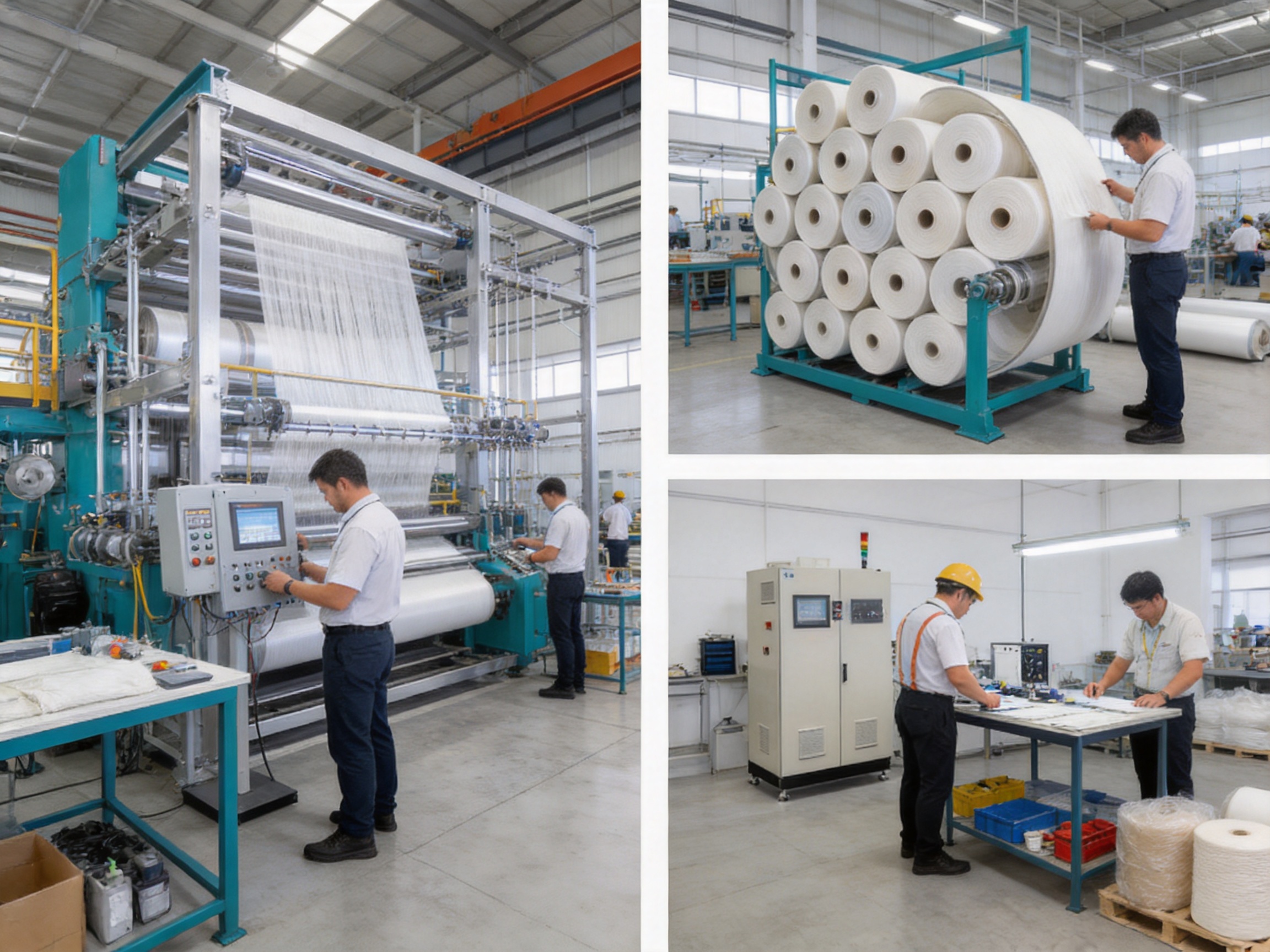
Yuanyang's engineers provide installation, commissioning and operator training at the customer's plant. The usual process includes a site and utility check, mechanical installation, electrical connection, parameter setting, safety inspection and production trials.
Acceptance is based on the agreed target fabric rather than only on an empty-machine demonstration. This means the machine can be evaluated under meaningful conditions. The trial may verify the selected angle range, areal weight, layer arrangement, production speed and fabric appearance.
A typical commissioning sequence includes the following stages:
- Review the site layout, foundation, power supply and required utilities.
- Position and align the main frame and weft-laying systems.
- Connect electrical cabinets, servo drives, sensors and safety circuits.
- Install yarn paths, guides, creel connections and optional modules.
- Set control parameters according to the agreed fabric construction.
- Thread the machine and conduct low-speed operating checks.
- Run the target fabric and verify angle, weight and layer stability.
- Train operators and maintenance personnel on the running equipment.
- Record acceptance results and define the ongoing service plan.
This practical approach helps identify issues that may not appear during factory inspection. It also gives operators direct experience with their own materials and product specifications.
11. Operator Training and Maintenance Support
Reliable production depends on trained personnel. Operators must understand yarn threading, tension adjustment, recipe selection, speed changes, fabric inspection and safe machine operation. Maintenance staff must be able to identify wear, replace components and respond to alarms.
Yuanyang provides training for knitters, maintainers and workshop management. Training can take place at the company's factory or at the customer's facility after installation. Factory-based training generally lasts one to two months and may include participation in the installation process.
Learning during installation can be particularly valuable. Operators see how the machine is aligned, how the yarn paths are assembled and how the control parameters are established. They also gain practical experience before the line enters normal production.
Maintenance planning should include regular cleaning, inspection of guides, checking of yarn-contact surfaces, review of tension components, lubrication where specified and inspection of electrical and servo systems. Wear parts should be identified in advance so that replacement does not cause unnecessary production interruption.
The company can also assist with spare-part identification and quality-system documentation. Long-term technical support is available for production issues, process adjustment and equipment service.
12. Selecting the Correct Configuration
A machine quotation should be based on production information rather than a model number alone. The following factors influence the final configuration:
- Fiber type, filament structure and yarn count.
- Fabric width and the required finished roll width.
- Layer sequence and the number of fiber directions.
- Required weft angles and angle combinations.
- Target fabric weight and acceptable tolerance.
- Daily production target and working schedule.
- Optional chopped-fiber or nonwoven layer requirements.
- Creel capacity and package dimensions.
- Downstream winding, cutting, inspection or impregnation equipment.
- Workshop dimensions, power supply and environmental conditions.
- Operator experience and required training scope.
The fiber type affects yarn tension, guide selection and handling behavior. The fabric construction determines how the three weft systems are used. The target areal weight influences material consumption and practical running speed. The working width affects the frame, fabric support and downstream roll-handling equipment.
Providing accurate information at the beginning of the project reduces later changes. It also allows the supplier to estimate output more realistically. Daily production should be calculated using the actual fabric design rather than a theoretical maximum.
13. Quality Control for Finished Multi-Axial Fabrics
Finished fabric quality should be evaluated through a combination of visual inspection, dimensional measurement and process data. Important characteristics may include areal weight, width, angle accuracy, layer alignment, stitch stability, yarn breakage, surface appearance and roll hardness.
Areal weight is influenced by yarn count, layer sequence, spacing and machine settings. It should be checked across the width and along the length of the roll. Angle accuracy can be evaluated against the approved fabric design, especially when the material is intended for load-bearing composite structures.
Layer alignment is also important. A displaced or wrinkled layer may affect resin flow and laminate performance. The knitting thread should secure the structure without creating excessive distortion. Winding tension must be controlled so that the roll remains stable without compressing or damaging the fabric.
Process records support traceability. A production record may include fiber lot, recipe number, machine speed, angle settings, roll length, fabric weight, operator and inspection results. Such records help identify trends and support consistent production across multiple orders.
The machine itself should also be included in the quality system. Maintenance records, calibration checks, alarm history and spare-part replacement information can help explain changes in fabric quality and support preventive maintenance.
14. Economic and Operational Benefits
The value of a multi-axial warp knitting machine should be measured across the entire production process. A flexible machine may reduce the need for separate equipment, shorten product changeovers and enable the manufacturer to serve a wider range of customers.
The three independent weft systems can consolidate several material-placement operations into one coordinated machine. This may reduce intermediate handling and lower the risk of layer misalignment. Servo control can reduce manual adjustment and help reproduce an established fabric recipe.
Flexible angles also support a broader product portfolio. A producer may supply fabrics for wind energy, transportation, industrial panels and other applications without investing in a separate fixed-angle machine for every product family.
The optional chopped or nonwoven layer can further expand the product range. Where the customer's product requires an additional veil or flow layer, integrating the operation into the line may simplify material handling and improve consistency.
These benefits should be balanced against the need for skilled operation, routine maintenance and suitable upstream yarn preparation. The best economic result comes when the machine is configured accurately and operated with a stable production plan.
15. Why Choose an Integrated Equipment Manufacturer
Buying from an integrated equipment manufacturer provides advantages beyond the delivery of a machine frame. A supplier that controls R&D, fabrication, assembly, testing and service can take responsibility for the complete production solution.
For the YRS3-3M, this is important because fabric quality depends on the relationship between mechanical movement, servo control, yarn handling, knitting, optional modules and winding. If these elements are supplied by unrelated parties, responsibility for integration may become unclear.
Yuanyang's product range covers several related textile technologies. The company manufactures warp knitting machinery, stitch-bonding machines, biaxial and multi-axial machines, carbon-fiber equipment, powder-spreading machines and web-laying systems. This experience supports the development of complete or partially integrated lines.
The company also focuses on non-standard equipment configurations, complex fabric designs, difficult-to-process materials and production lines requiring long-term stability. This is relevant to technical textile producers whose requirements do not fit a simple catalogue specification.
16. Frequently Asked Questions
What fibers can the YRS3-3M process?
The standard machine is designed for glass fiber and basalt fiber. It produces multi-axial glass fiber and basalt fiber reinforcement fabrics. Carbon fiber production is supported by a dedicated carbon-fiber model with configuration features suited to carbon yarn handling.
What weft angles can the machine produce?
The weft can be laid at any selected angle between -30° and +30°, according to the fabric design and machine configuration. The servo-controlled systems help maintain repeatable diagonal placement during production.
How many weft systems does the machine have?
The YRS3-3M has three independent weft-laying systems. These systems support automated multi-layer and multi-angle fabric construction within one coordinated production process.
What is the standard working width?
The standard working width is 101 inches. The final usable width and related equipment arrangement should be confirmed against the customer's fabric, cutting and winding requirements.
What fabric weight can the machine produce?
Typical fabric weight ranges from 450 to 1500 g/m². The practical range depends on yarn type, layer count, angle arrangement, machine settings and the required fabric quality.
Can the machine add a chopped-fiber or nonwoven layer?
Yes. An optional module can add a chopped layer or nonwoven material from approximately 20 to 600 g/m². The required feeder and control arrangement are selected according to the material and fabric construction.
What is the machine speed?
Listed machine-speed ranges are 50–2000 r/min and 50–1300 r/min, depending on the configuration. The practical production speed is determined through trials with the actual fiber and fabric specification.
What is the daily output?
Reference output is approximately 4000–6000 kg or 3000–4500 kg, depending on the machine configuration. Actual output varies with fabric weight, layer count, yarn type, angle pattern, speed and operating schedule.
Is the machine suitable for wind turbine blade fabrics?
Yes. The machine is designed for multi-axial glass and basalt fabrics used in high-performance industrial applications, including wind turbine blade reinforcement. Final suitability should be confirmed against the blade manufacturer's laminate design and processing requirements.
How does servo control benefit production?
Servo control allows the three weft-laying systems to operate independently and repeatably. It supports accurate angle setting, coordinated movement and recipe-based production, helping reduce variation between rolls.
Does the supplier provide installation and commissioning?
Yes. Engineers can provide site installation, mechanical and electrical commissioning, control parameter setting, trial production and operator training. Acceptance is normally connected to production of the agreed target fabric.
What training is available?
Training is available for machine operators, maintenance staff and workshop management. It can be provided at the factory or at the customer's plant. Factory training generally lasts one to two months and may include participation in installation.
How should a customer prepare for a quotation?
The customer should provide fiber type, yarn count, fabric width, layer sequence, weft angles, target areal weight, production target, optional layer requirements, workshop layout, utilities and downstream equipment information. These details allow the machine to be configured accurately.
17. Conclusion
The YRS3-3M Multi-Axial Warp Knitting Machine is designed for manufacturers that require flexible, repeatable and industrial-scale production of glass fiber and basalt fiber reinforcement fabrics. Its three independent servo-controlled weft systems, adjustable angle range, 101-inch working width and optional chopped-fiber or nonwoven module provide a broad foundation for advanced composite textile production.
Its main advantage over less flexible equipment is the combination of multi-layer capability, free-angle weft placement and configurable line integration. The machine can support several product designs, including reinforcement fabrics for aerospace, wind energy, lightweight automotive structures and other high-performance industrial applications.
The equipment is supported by Yuanyang's integrated manufacturing capabilities, including R&D, machining, assembly, inspection, final testing, installation and training. By considering the complete production process rather than only the machine body, the company can adapt the configuration to the customer's fiber, fabric architecture, output target and workshop conditions.
For producers comparing multi-axial warp knitting machinery, the most important evaluation should include actual fabric trials, angle accuracy, areal-weight stability, yarn handling, output under realistic conditions, service capability and future product flexibility. When these factors are considered together, the YRS3-3M offers a practical platform for expanding technical textile production and improving the consistency of composite reinforcement fabrics.
References
1. Changzhou Yuanyang Electromechanical Technology Co., Ltd. Product information for the YRS3-3M Multi-Axial Warp Knitting Machine.
2. Changzhou Yuanyang Electromechanical Technology Co., Ltd. Technical information on biaxial, multi-axial, carbon-fiber and stitch-bonding textile machinery.
3. Technical Textile Machinery Manufacturing and Service Information supplied for the YRS3-3M project.
4. General engineering principles for multi-axial reinforcement fabrics used in composite manufacturing.
5. General production and quality-control practices for glass fiber, basalt fiber and industrial composite textiles.
Product: YRS3-3M Multi-Axial Warp Knitting Machine

News
-
Two quotations land on the same desk. Both offer a multiaxial warp knitting line, both list the same working width, both promise high output. One buyer signs and discovers six months later that the f...
READ MORE -
Match the machine type to the fabric: choose a tricot Warp Knitting Machine for fine, smooth fabrics such as lining and sportswear, a raschel machine for open, patterned, and technical fabrics, a doub...
READ MORE -
Three quotations land on the same desk for the same polyester nonwoven line, and on paper they look interchangeable. Each is priced per metre of working width. Each quotes a similar top speed. Each c...
READ MORE -
Two buyers open the same catalogue and both ask for a warp knitting machine. One needs a 4.5 m wide glass-fibre geogrid with 0° and 90° yarns stitched together for a soil-reinforcement contract; the ...
READ MORE
-
Contact Info.
+86-198 5534 1617
+86-134 0158 3002yuanyang@yywarpknitting.com 699#, Shengzhi West Rd, Lvcheng Town, Danyang City, Zhenjiang City, Jiangsu Province, China

-
QR Code
-
Quick Links
Home About Products Manufacturing Customization News Contact -
Product List
Machine for Chemical Fiber Textile Machine for Fiberglass Textile Machine for Carbon Fiber Textile -
About Us
Company Profile Factory Gallery Value-added Service
Copyright © 2026 Changzhou Yuanyang Electromechanical Technology Co., Ltd. All Rights Reserved.
Custom Warp Knitting Machine Manufacturers
