

 English
 中文简体
 русский
 Français
 Español
 Deutsch

LM Weft Insertion Laid Scrim Machine: Integrated Production for Lightweight, High-Strength Reinforcement Mesh
2026-10-31
Content
- 1 1. The Role of Laid Scrim in Modern Composite Materials
- 2 2. Product Overview
- 3 3. How the LM Production Process Works
- 4 4. Main Advantages Compared with Conventional Alternatives
- 5 5. Application Areas
- 6 6. Engineering Configuration Based on the Target Article
- 7 7. Manufacturing Strengths and Production Discipline
- 8 8. Quality Control and Production Acceptance
- 9 9. Installation, Commissioning, and Training
- 10 10. Maintenance and Long-Term Operating Support
- 11 11. Comparison with Less Integrated Production Approaches
- 12 12. Selecting the Right LM Configuration
- 13 13. Commercial and Operational Value for Manufacturers
- 14 14. Frequently Asked Questions
- 14.1 What fibers can the LM machine process?
- 14.2 What is the standard working width?
- 14.3 What is the machine speed?
- 14.4 What is the expected daily output?
- 14.5 How are the yarn intersections stabilized?
- 14.6 Can the machine produce different scrim constructions?
- 14.7 Can the machine be integrated with an existing production line?
- 14.8 What support is provided during installation?
- 14.9 What information is needed for a quotation?
- 14.10 Is the machine suitable for a company producing several reinforcement products?
- 15 15. Conclusion
- 16 References
- 17 Product: LM Weft Insertion Type Laid Scrim Machine
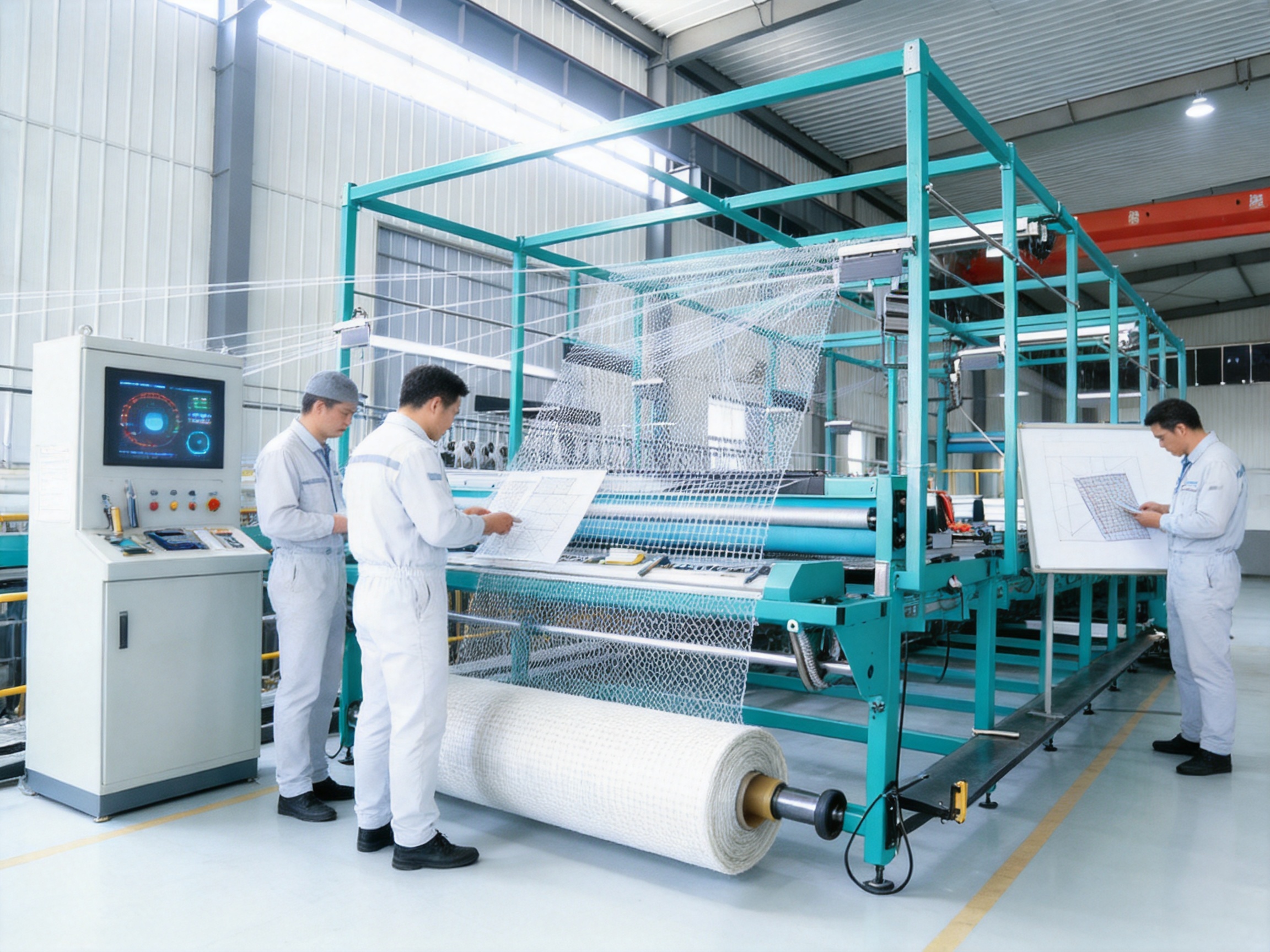
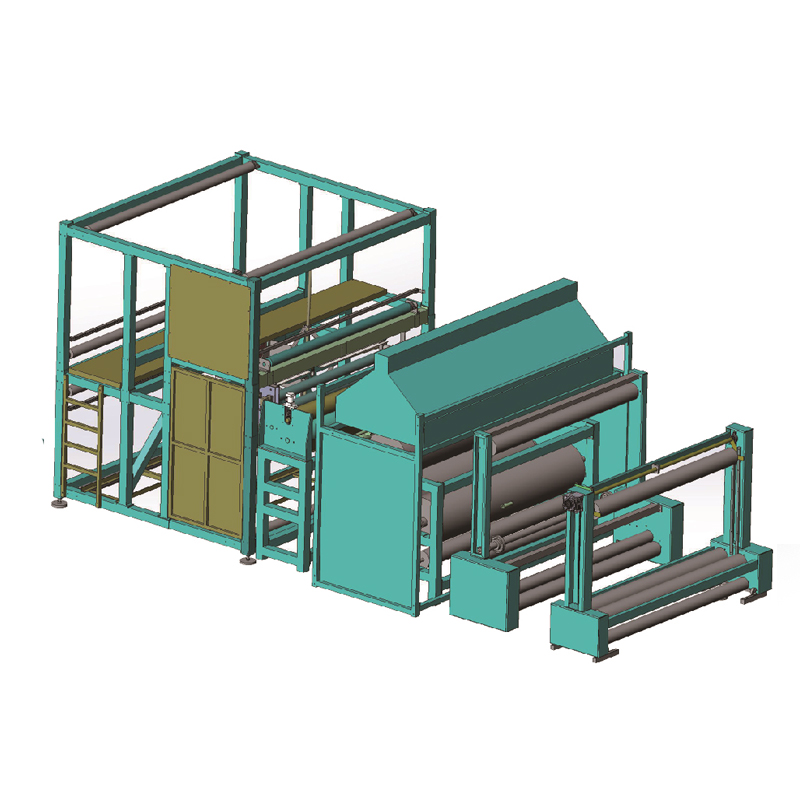
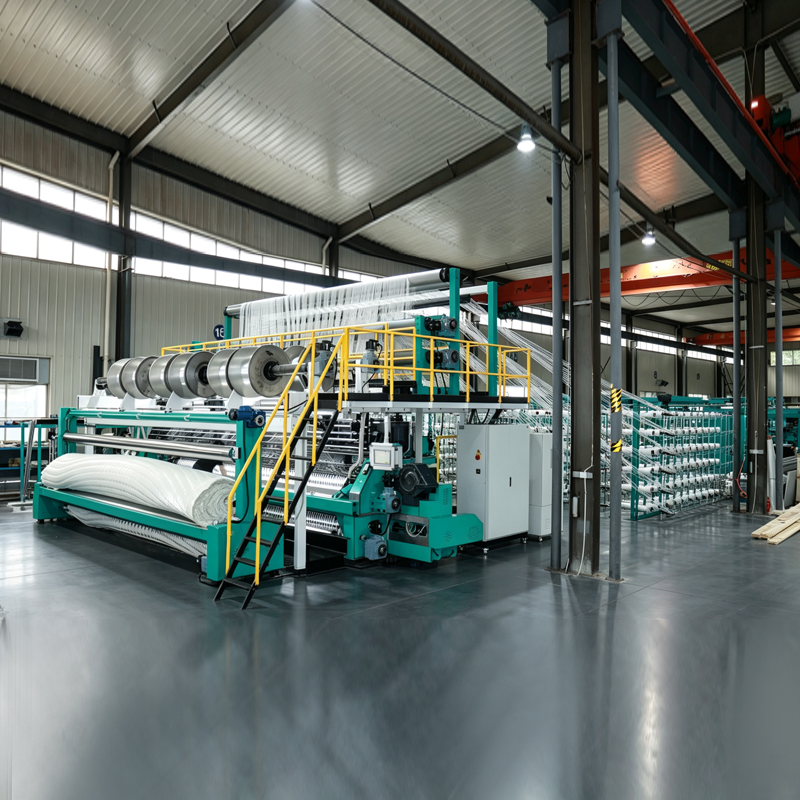
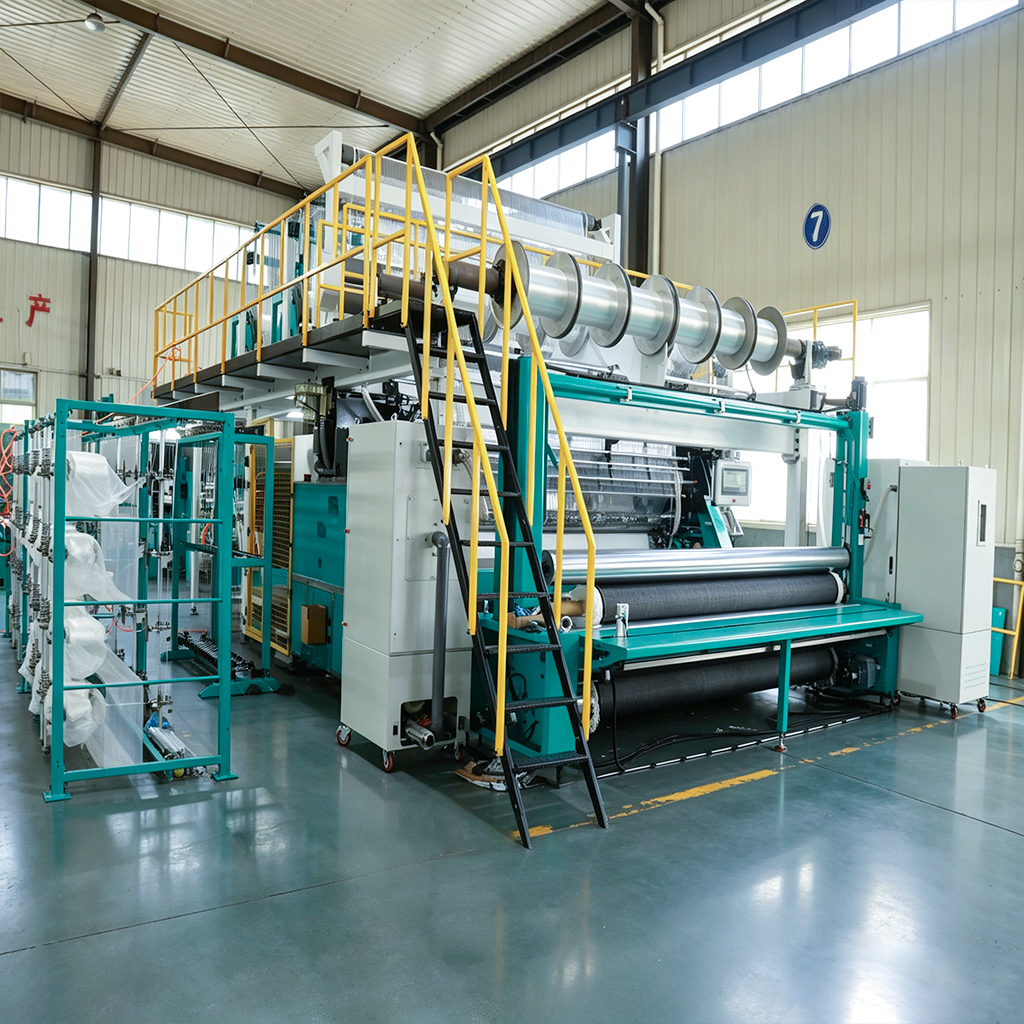
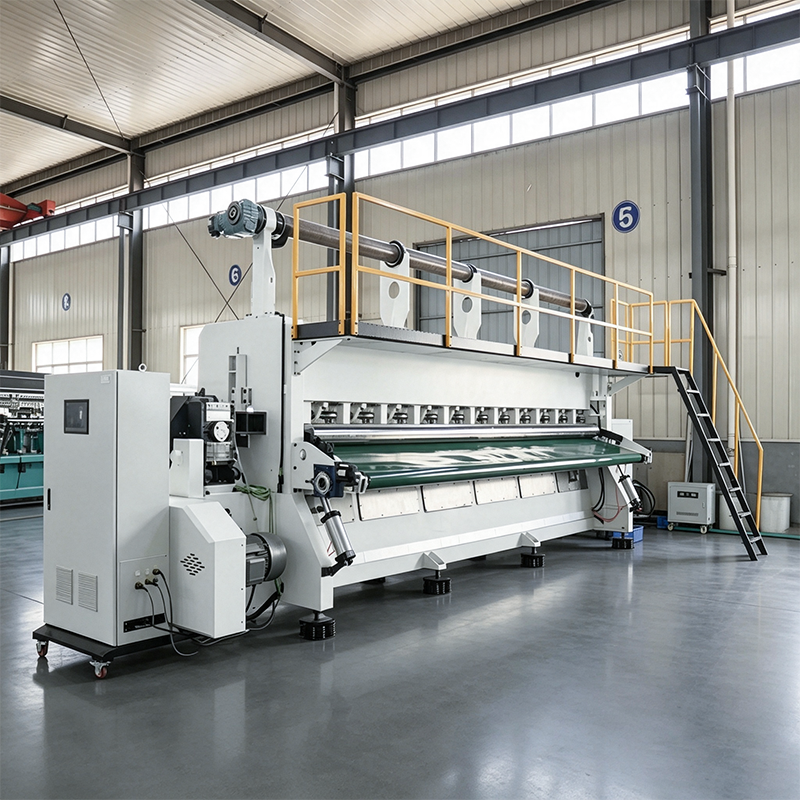
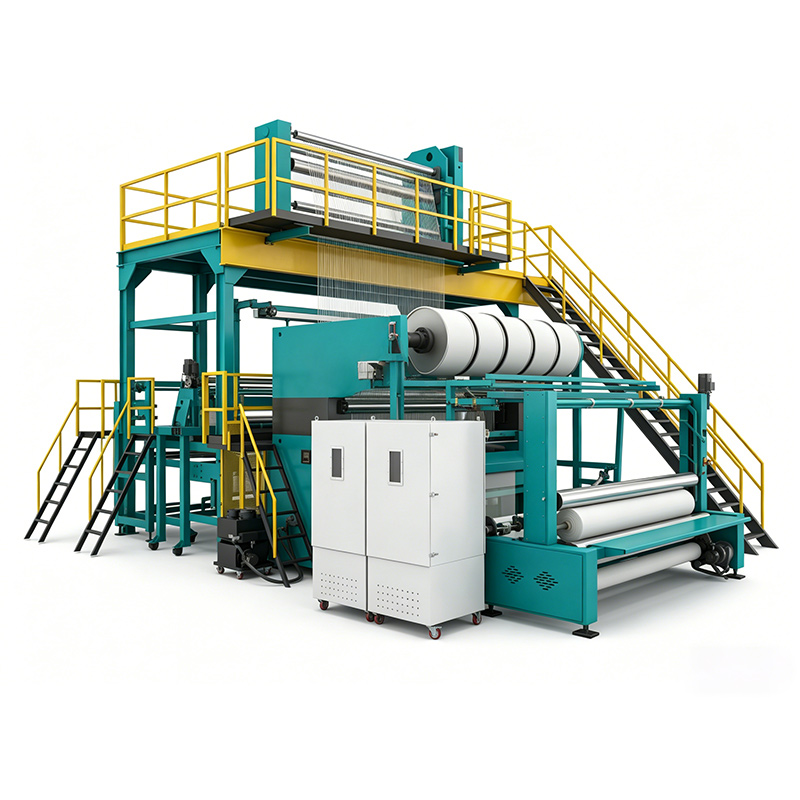
The LM Weft Insertion Type Laid Scrim Machine is designed for manufacturers that need to produce lightweight, directionally oriented glass fiber or polyester mesh with consistent geometry, reliable bonding, and efficient line integration. By combining weft insertion, mesh forming, chemical bonding, and setting into one coordinated production route, the machine provides a practical solution for producing reinforcement scrim used in insulation facings, packaging materials, release papers, reinforced aluminum foil, kraft paper, marble and mosaic backing, and fireproof boards.
Laid scrim is valued because it offers a high strength-to-weight ratio. It can reinforce a composite, facing, paper, foil, or board product without adding unnecessary bulk or thickness. However, producing a stable, uniform scrim requires accurate yarn guidance, controlled warp and weft placement, suitable tension management, dependable bonding, and careful setting. The LM platform is engineered around these requirements.
Changzhou Yuanyang Electromechanical Technology Co., Ltd. develops and manufactures the LM machine as part of a broader range of specialty textile equipment. The company combines mechanical design, electrical control, production assembly, testing, commissioning, and after-sales service to provide complete equipment solutions rather than an isolated machine frame. This approach is especially important for laid scrim production, where machine configuration must correspond to the target fabric construction and the downstream laminating, coating, drying, or winding process.
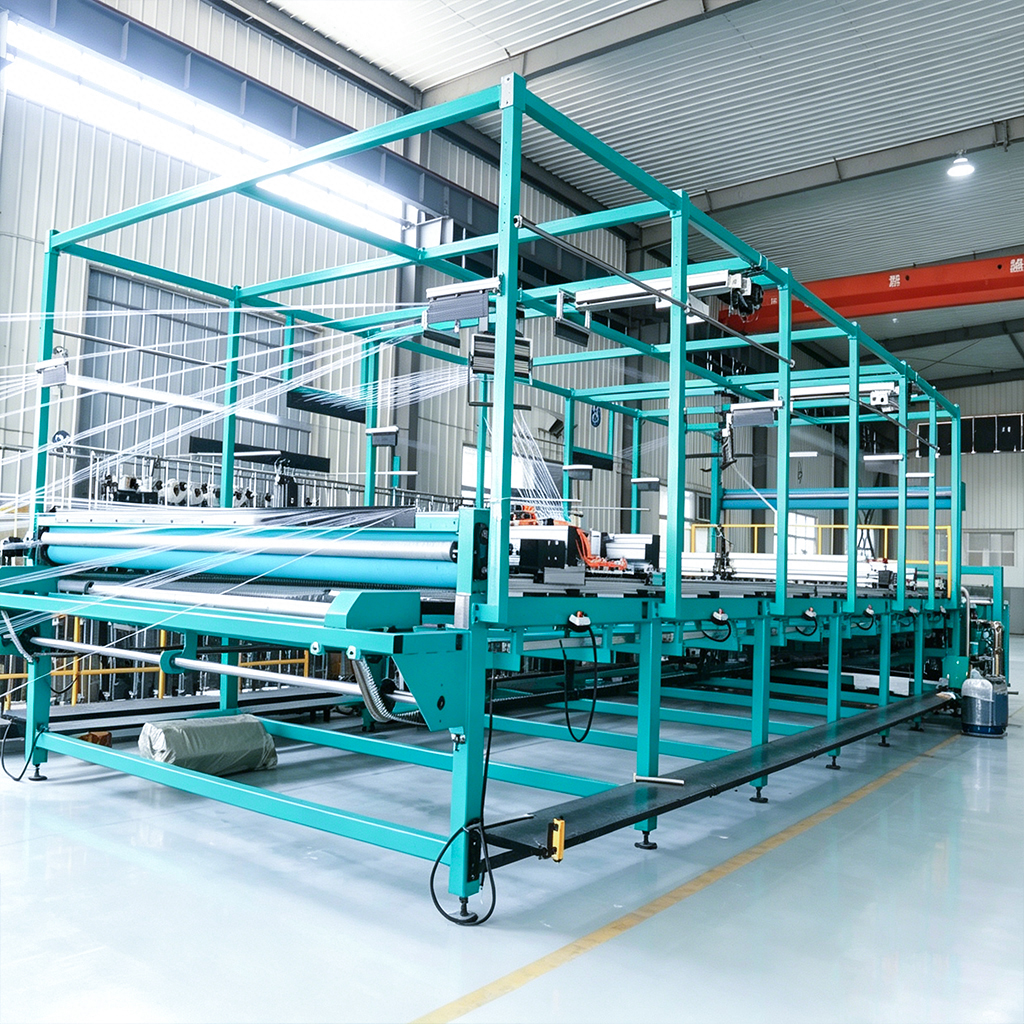
LM Weft Insertion Type Laid Scrim Machine
1. The Role of Laid Scrim in Modern Composite Materials
Laid scrim is a grid-like reinforcement material formed by arranging yarns in defined longitudinal and transverse directions. Unlike a conventional woven fabric, a laid scrim does not depend on interlacing the warp and weft yarns through a traditional weaving sequence. Instead, yarns are laid into position and bonded at their crossing points. This permits the production of open, thin, and lightweight reinforcement structures with controlled orientation.
The longitudinal yarns provide warp-direction strength, while the inserted weft yarns provide transverse reinforcement. By adjusting yarn spacing, yarn count, weft density, and bonding conditions, producers can create a scrim suited to a specific end product. The result may be a very open mesh for a laminate, a finer grid for paper reinforcement, or a dimensionally stable structure for insulation facing.
Many industries require reinforcement that is strong but not heavy. Adding a thick woven textile may increase the weight, cost, and thickness of the finished product. A light scrim can provide a more efficient solution by placing strength where it is needed while preserving flexibility and processability. This is one of the reasons glass fiber and polyester laid scrim are used in construction materials, packaging laminates, technical papers, and foil-based products.
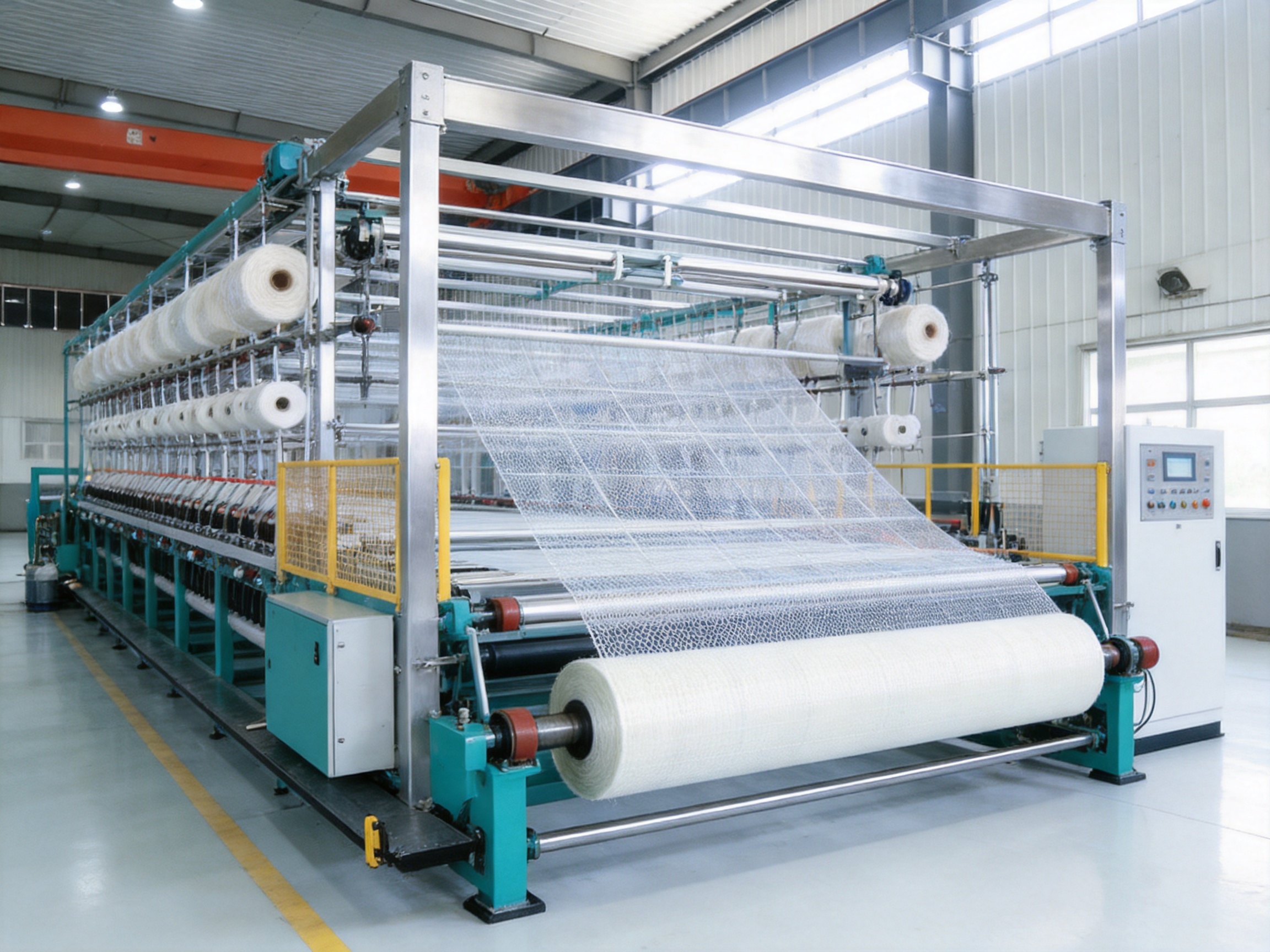
The LM machine is built specifically for this category of production. It is not simply a yarn arrangement device. It is a coordinated production platform that combines the formation of the grid with chemical bonding and setting. This integrated route helps manufacturers reduce unnecessary handling between stages and maintain better continuity from yarn supply to finished roll.
2. Product Overview
The LM Weft Insertion Type Laid Scrim Machine forms a directional grid by placing warp yarns longitudinally and inserting weft yarns across the working width. The yarn crossing points are then stabilized through chemical bonding and setting. Depending on the selected process configuration, the line can produce lightweight glass fiber mesh or polyester mesh in a one-step forming process.
The machine is intended for producers that need a thin reinforcement layer with stable geometry and high strength relative to its weight. The final scrim can be supplied as a roll for subsequent lamination, coating, paper production, foil reinforcement, board manufacture, or other converting operations.
| Item | Published LM Specification |
|---|---|
| Applicable fibers | Glass fiber and polyester |
| Machine speed | 2–12 m/min |
| Working width | 3600 mm (142 in) |
| Reference daily output | 25,000 m², depending on fabric construction and process |
| Core products | Lightweight glass fiber and polyester mesh |
| Production route | Weft insertion, mesh forming, chemical bonding, and setting |
| Primary fabric characteristic | High strength with low weight and limited thickness |
The listed output is a reference value rather than a universal guarantee. Actual production depends on the selected yarn, mesh aperture, basis weight, bonding formulation, machine settings, roll dimensions, and operating schedule. This production-based approach is important because two scrim products made on the same platform may have substantially different yarn consumption and process requirements.
3. How the LM Production Process Works
The LM process begins with the preparation and supply of warp yarns. The yarn packages or beams are arranged so that the warp yarns can travel through the guides under controlled tension. The yarn path must remain stable because variation in warp tension can influence the final aperture, alignment, and appearance of the mesh.
Weft yarns are inserted across the width according to the selected construction. The insertion pattern, spacing, and density are determined by the target product. A scrim intended for insulation facing may require a different transverse yarn arrangement from a scrim intended for reinforced aluminum foil or kraft paper.
Once the warp and weft yarns are positioned, the crossing points are treated through a chemical bonding and setting process. The binder or bonding system holds the yarn intersections in place and helps the mesh retain its geometry during handling and downstream conversion. The exact process parameters are selected according to the fiber type, yarn characteristics, mesh construction, and required stability.
After bonding and setting, the finished scrim is guided toward take-up and winding. The winding arrangement must be matched to the customer's roll diameter, core specification, downstream line speed, and handling requirements. These interface details are considered during engineering so that the machine can function as part of a complete production line.
This integrated sequence offers an important operational advantage. The manufacturer does not need to form the mesh in one disconnected stage and then move it manually to a separate bonding operation. The coordinated line reduces intermediate handling, supports continuous production, and makes it easier to associate process settings with the resulting fabric quality.
4. Main Advantages Compared with Conventional Alternatives
4.1 Integrated Forming and Bonding
A key advantage of the LM platform is the combination of mesh forming, chemical bonding, and setting within one production concept. Separate stages can create additional material handling, storage, alignment, and quality-control requirements. An integrated route helps maintain the relationship between yarn placement and bonding conditions.
For producers of lightweight scrim, this is particularly valuable because the open mesh can be delicate before bonding. Moving an unstable grid between machines may lead to distortion, yarn displacement, or inconsistent aperture. By coordinating formation and stabilization, the LM process supports a more direct route from yarn supply to finished roll.
4.2 Directional Reinforcement with Low Material Consumption
The LM machine creates a grid in which yarns are positioned according to the required reinforcement directions. This makes it possible to place strength in the warp and weft axes without producing a dense textile structure. Customers can therefore target a balance between mechanical performance, basis weight, openness, flexibility, and cost.
Compared with heavier textile reinforcements, a lightweight laid scrim can reduce the amount of reinforcement material used in a composite or laminate. It can also help preserve the thickness and handling characteristics of the final product. This is useful in applications where the scrim must reinforce paper, foil, insulation, or packaging without becoming the dominant component of the product.
4.3 Compatibility with Glass Fiber and Polyester
The standard LM application range covers glass fiber and polyester. These fibers address different technical and commercial needs. Glass fiber is frequently selected when high strength, dimensional stability, and resistance to elevated service conditions are important. Polyester offers a flexible and versatile option for reinforcement and packaging-related applications.
Processing these yarns requires attention to tension, guides, insertion behavior, bonding, and setting. Yuanyang configures the equipment around the yarn properties and target mesh rather than assuming that one fixed machine setup will suit every product. This product-oriented method supports more practical commissioning and more reliable process development.
4.4 Broad Application Coverage
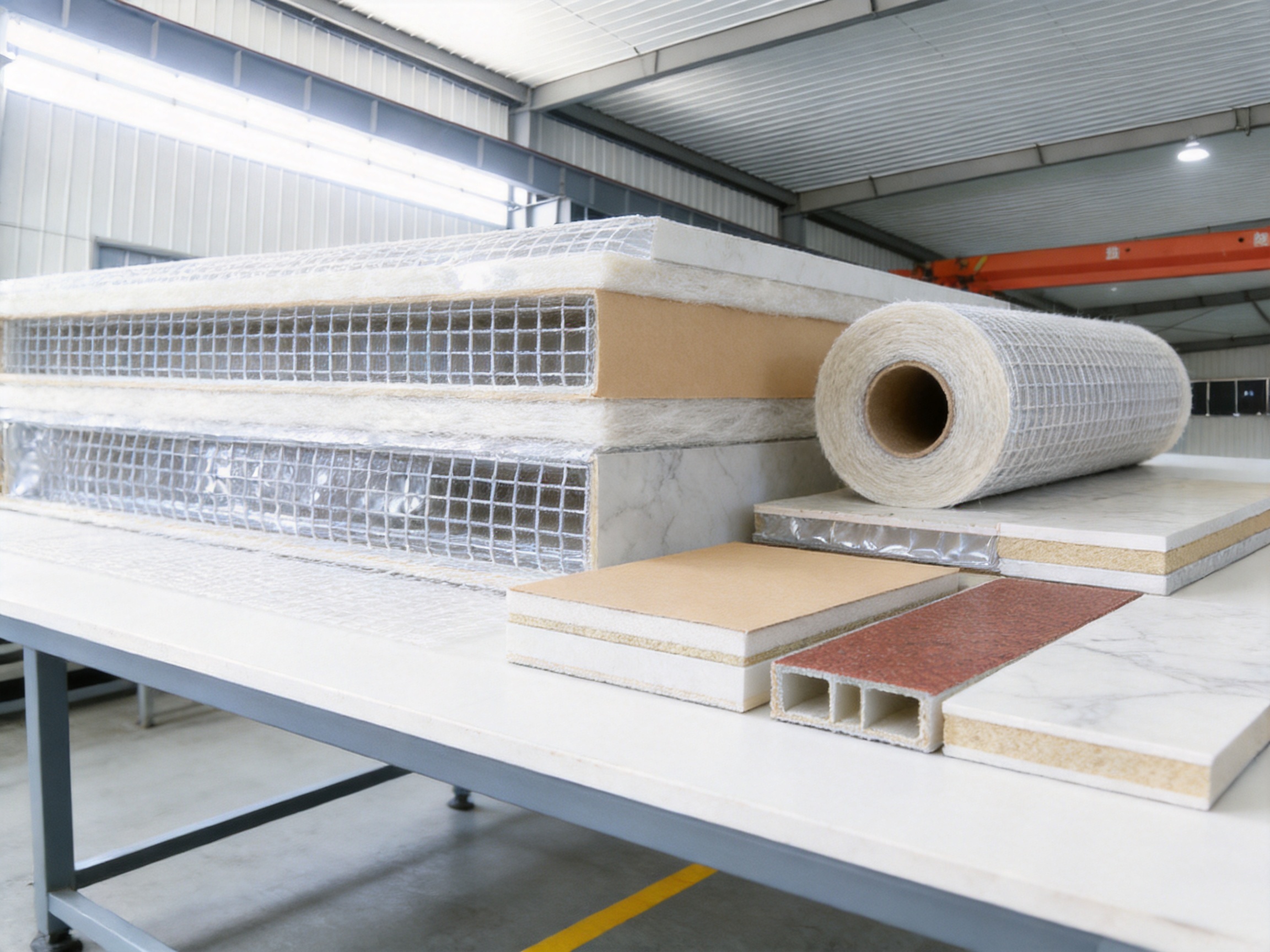
The same basic platform can support several markets because the machine produces a reinforcement structure that can be adapted through yarn arrangement, mesh density, bonding parameters, and line configuration. The application range includes insulation materials, packaging materials, release papers, marble and mosaic reinforcement, fireproof boards, reinforced aluminum foil, and kraft paper materials.
This flexibility gives a producer more opportunities to develop multiple products on one equipment platform. It also allows a factory to respond to different customer requirements without investing immediately in an entirely different type of textile production line.
4.5 Controlled Working Width and Practical Speed Range
The standard working width is 3600 mm, or approximately 142 inches. This width is suitable for broad industrial webs and can be coordinated with downstream laminating, coating, paper, foil, or winding equipment. The machine speed range of 2–12 m/min allows the producer to begin with controlled process conditions and increase speed as the target construction and bonding quality are established.
A relatively broad operating range is useful during product development. A new scrim may require a lower initial speed while yarn tension and bonding conditions are optimized. Once the construction is stable, the operating rate can be adjusted according to the required output and quality target.
5. Application Areas
5.1 Insulation Materials
Glass fiber laid scrim is used as a reinforcement layer in insulation facings and related building products. The mesh helps improve handling strength and supports the integrity of the facing during installation, cutting, transportation, and use. Because the scrim is lightweight and open, it can reinforce the facing without creating excessive additional thickness.
For insulation producers, consistent mesh geometry is important. Irregular apertures or weak bonding points can affect appearance, handling, and lamination quality. The LM machine is therefore configured around the required mesh pattern, yarn type, and bonding system.
5.2 Packaging Materials
Packaging laminates often require additional tear resistance without becoming overly heavy or rigid. A lightweight polyester or glass fiber scrim can serve as a reinforcement layer within the laminate. It supports directional strength while allowing the finished packaging material to remain relatively thin and manageable.
The LM platform helps packaging material producers create a controlled mesh that can be supplied to a subsequent laminating process. The open structure permits the scrim to be combined with paper, film, foil, adhesive, or other layers depending on the product design.
5.3 Release Papers
Release papers may require reinforcement to improve dimensional stability and handling performance. A laid scrim can be introduced as a supporting layer while maintaining the thin profile required by the paper product. The mesh construction can be selected according to the desired balance between reinforcement, flexibility, openness, and surface behavior.
5.4 Marble and Mosaic Backing
Marble and mosaic products can benefit from a reinforcing grid that helps support the backing structure. Lightweight scrim is suitable when the manufacturer needs added stability without making the backing unnecessarily heavy. The open mesh can also be integrated into a multilayer construction through adhesive or resin-based processes.
5.5 Fireproof Boards
Fireproof and technical boards may use scrim as an internal or surface reinforcement. The grid can help improve resistance to handling damage and support dimensional integrity. The exact construction depends on the board formulation and production route, so the machine configuration should be developed from the required board interface and scrim specification.
5.6 Reinforced Aluminum Foil and Kraft Paper
Aluminum foil and kraft paper are widely used in insulation, packaging, construction, and industrial applications. Reinforcement scrim can improve tear resistance and handling strength while allowing the foil or paper to retain a thin and flexible format.
The LM machine is suitable for supplying the reinforcement layer used in these laminates. Working width, winding format, mesh openness, bonding stability, and downstream line compatibility are all considered when preparing a production proposal.
6. Engineering Configuration Based on the Target Article
A laid scrim machine should not be selected only by speed and width. The actual article determines the required yarn path, insertion pattern, tension range, bonding conditions, winding method, and line interfaces. Yuanyang uses the target product as the starting point for machine configuration.
The first consideration is fiber type. Glass fiber and polyester have different handling characteristics and may require different guide settings, tension control, and bonding conditions. Yarn count and package form also affect the design of the supply system and the amount of material delivered to the forming section.
The second consideration is mesh construction. Warp spacing, weft spacing, aperture, yarn direction, and basis weight determine the required insertion arrangement. A scrim with a fine aperture may require a different setup from a very open reinforcement grid. The proposed configuration is therefore reviewed against a sample, drawing, or clearly defined technical specification.
The third consideration is the bonding system. Chemical bonding and setting must provide sufficient stability for winding, storage, transportation, and downstream conversion. The machine design must accommodate the customer's binder system and process requirements, including any heating, drying, or setting interfaces needed by the line.
The fourth consideration is the downstream process. Some customers require the scrim to feed directly into a laminating line. Others need finished rolls for shipment to a separate converting plant. The take-up arrangement, roll diameter, core size, web handling, and machine layout may differ between these cases.
| Configuration Input | Effect on the Equipment and Process |
|---|---|
| Fiber type | Influences yarn handling, tension, guides, and bonding parameters |
| Yarn count | Influences yarn consumption, aperture, strength, and supply arrangement |
| Mesh construction | Determines warp spacing, weft density, and insertion settings |
| Target basis weight | Determines material usage and supports production planning |
| Required output | Confirms whether the speed range matches the production objective |
| Binder system | Determines chemical bonding and setting requirements |
| Downstream equipment | Determines take-up, winding, and interface design |
| Workshop conditions | Influences layout, utilities, access, and installation planning |
This engineering approach is an advantage over a purely catalogue-based purchase. The customer receives a machine proposal related to a real product rather than a generic machine description that may not reflect the intended production conditions.
7. Manufacturing Strengths and Production Discipline
Changzhou Yuanyang Electromechanical Technology Co., Ltd. operates as a high-tech textile machinery enterprise integrating research and development, manufacturing, sales, and service. Its focus includes warp knitting equipment, stitch-bonding machines, biaxial and multiaxial warp knitting machines, carbon fiber textile equipment, powder scattering machines, web laying machines, and special textile machinery.
This wider equipment background is relevant to the LM machine because laid scrim production involves several related areas of expertise. Mechanical structures must provide accurate yarn paths. Electrical and control systems must coordinate speed, insertion, bonding, and winding. Production teams must assemble and test the line carefully. Service engineers must understand both the equipment and the textile process during commissioning.
The company emphasizes product development for non-standard configurations, complex fabric designs, difficult-to-process materials, and production lines requiring long-term stability. These capabilities support the customization required by laid scrim customers, whose mesh constructions and downstream interfaces can vary considerably.
7.1 Research and Development
The research and development team includes engineers with experience in textile machinery and mechanical design. Their work focuses on improving equipment performance, structural design, process compatibility, and machine stability. For the LM platform, development is connected to practical production needs such as yarn routing, insertion accuracy, bonding integration, access for threading, and adaptation to customer layouts.
7.2 Component and Assembly Control
Equipment quality depends on the complete production chain rather than on one individual component. Yuanyang applies control from component procurement through manufacturing, assembly, testing, and debugging. This provides a structured basis for checking the machine before shipment.
During assembly, attention is given to the relationship between mechanical modules, yarn guides, drive systems, control interfaces, safety guarding, and material flow. A machine that is correctly assembled but poorly integrated can still create production problems. For this reason, the assembly process is followed by testing and debugging intended to verify functional operation.
7.3 Pre-Delivery Testing
Each machine is tested before leaving the factory. Testing and debugging help identify issues related to movement, control, access, guarding, material routing, and operating sequence before installation at the customer's site. Where an approved sample or target construction is available, the test process can be related to the customer's intended product.
Pre-delivery testing does not replace on-site commissioning, because workshop conditions, utilities, yarn packages, and downstream equipment may differ from the factory environment. However, it reduces avoidable installation problems and gives the customer a more organized starting point.
7.4 Process-Oriented Customization
Customization may involve machine structure and layout, functional module development, integration with existing equipment, adaptation for special materials, and optimization for process stability. The objective is not customization for its own sake. The objective is to create a line that can produce the required article within the customer's practical operating conditions.
8. Quality Control and Production Acceptance
Quality acceptance for a laid scrim machine should be based on the agreed article rather than on a generic equipment checklist. Speed alone does not define a successful installation. The machine must produce the required mesh geometry, bonding stability, and winding quality using the agreed yarn and process conditions.
Before production, the customer and manufacturer should confirm the target construction, including fiber type, yarn count, warp and weft arrangement, aperture, basis weight, roll format, and acceptable appearance. If the customer provides a sample or drawing, it becomes an important reference during engineering and testing.
During acceptance, the following points can be reviewed:
- Mesh geometry and aperture compared with the approved sample or drawing.
- Warp and weft alignment across the working width.
- Bonding quality at the yarn crossing points.
- Mesh stability after chemical bonding and setting.
- Machine speed and tension settings used for the accepted article.
- Winding quality, roll formation, and core compatibility.
- Safety guarding and emergency stop function.
- Operator access and routine threading positions.
Recording the operating conditions for the accepted product is valuable for future production. It gives operators a reference for setup and helps maintenance personnel understand the normal operating range. When a factory produces several scrim constructions, these records can become a practical process library.
9. Installation, Commissioning, and Training
The LM machine is normally installed as part of a complete scrim production line. Upstream equipment may include creels or beams for yarn supply. Downstream equipment may include bonding, drying, setting, inspection, and winding sections. The complete layout must provide sufficient space for threading, operator movement, inspection, maintenance, and safe material handling.
Before installation, the customer should confirm the workshop floor, electrical supply, compressed air availability, ventilation, lighting, access routes, material storage, and connection points for any heating or drying equipment. A well-prepared workshop reduces installation time and helps the line reach stable operation more quickly.
Yuanyang provides engineering support for installation and commissioning. Its engineers can attend the customer's factory to install, debug, and train operators until the equipment operates correctly. On-site work is especially useful when the LM machine is integrated with existing laminating, coating, paper, foil, or winding equipment.
Training covers more than basic machine start-up. Operators need to understand yarn preparation, threading, tension observation, product inspection, bonding conditions, speed adjustment, winding, and safe shutdown. Maintenance personnel need to understand lubrication, wear parts, alignment checks, electrical and control interfaces, and fault response.
The company also provides training related to production management, quality control, production planning, and process parameters. This broader training helps the customer build an internal operating system instead of relying only on one experienced operator.
10. Maintenance and Long-Term Operating Support
Laid scrim lines are often expected to operate continuously, so maintenance access and spare-part availability are important when selecting equipment. The LM machine is designed with attention to operator access, threading positions, inspection points, and service requirements.
Routine maintenance may include cleaning yarn debris, checking guides, inspecting tension-related components, reviewing drive and transmission conditions, verifying bonding and setting interfaces, checking electrical connections, and examining winding components. The precise maintenance schedule depends on operating hours, fiber type, process conditions, and workshop environment.
Glass fiber can create particular housekeeping and wear considerations because loose fibers may accumulate around yarn paths and moving components. Polyester may require different cleaning and handling practices. Operators should follow a planned cleaning and inspection schedule rather than waiting for a quality problem or unexpected stoppage.
Yuanyang supports customers with spare parts, technical guidance, documentation, and after-sales service. The company can also provide technical assistance during production when customers introduce a new mesh construction, change yarn specifications, or adjust the downstream process.
Long-term support is an important competitive factor. A machine supplier should remain available after delivery because the most valuable process knowledge often develops during actual production. Continued communication allows operating experience to be used for improvements in settings, maintenance routines, and product development.
11. Comparison with Less Integrated Production Approaches
Customers evaluating laid scrim equipment may compare an integrated LM line with a production arrangement that separates mesh formation, bonding, and setting across several independent machines. Both approaches can be technically possible, but they present different operational consequences.
A separated arrangement may require additional transfer equipment, intermediate winding, manual handling, or temporary storage. Each transfer can introduce opportunities for distortion, contamination, tension changes, and alignment variation. It may also require separate operators and additional floor space.
The LM approach combines the principal forming and stabilization stages into one coordinated route. This can reduce the number of intermediate handling steps and help preserve the relationship between mesh formation and bonding. It also gives the machine supplier a clearer responsibility for the complete forming section.
Compared with a conventional woven reinforcement, laid scrim can offer a lower-weight and more open structure. The customer can select warp and weft arrangements according to directional reinforcement needs rather than relying on a fixed woven pattern. This may be advantageous when the finished product requires a thin, flexible, or highly open reinforcement layer.
Compared with a basic grid-forming machine without integrated setting, the LM provides a route for stabilizing the mesh before it is wound or sent to the next process. This is important because a correctly positioned but insufficiently bonded grid may change shape during handling.
The strongest competitive advantage is therefore not a single speed figure. It is the combination of directional mesh formation, chemical bonding, setting, product-focused configuration, pre-delivery testing, and installation support. These factors work together to reduce the difference between a machine that can theoretically form a grid and a production line that can repeatedly manufacture an acceptable commercial scrim.
12. Selecting the Right LM Configuration
Before requesting a quotation, a customer should prepare as much information as possible about the intended product. This enables the manufacturer to determine whether the standard platform is suitable and which supporting modules or interface arrangements are required.
The first required information is the fiber and yarn specification. The customer should identify whether the product will use glass fiber, polyester, or another material under discussion. Yarn count, package type, tensile characteristics, and expected consumption are also useful.
The second requirement is the mesh construction. A drawing or sample should show the approximate aperture, warp spacing, weft spacing, directional strength requirements, and target appearance. If the customer has several constructions, each should be listed separately.
The third requirement is the target basis weight and production output. The reference daily output of 25,000 m² should be evaluated against the actual fabric design. A heavy construction, fine yarn, complex bonding system, or lower operating speed may produce a different daily result.
The fourth requirement is downstream compatibility. Customers should explain whether the scrim will be laminated immediately, coated, dried, stored as a finished roll, or delivered to another factory. Winding, roll size, core dimensions, and web handling can then be designed appropriately.
The fifth requirement is the workshop environment. Available length and width, ceiling height, power supply, compressed air, heating, ventilation, operator access, and material movement routes should be reviewed during project planning.
13. Commercial and Operational Value for Manufacturers
The LM machine can create value in several ways. First, it provides a route to lightweight reinforcement products that serve multiple industries. This can help a textile manufacturer diversify beyond conventional fabric categories.
Second, the machine's 3600 mm working width supports production of broad webs suitable for industrial laminates and construction-related materials. Wide production can reduce the need for multiple narrow rolls in some applications, although the final benefit depends on the customer's conversion process.
Third, the integrated process can simplify material flow. A factory may be able to reduce intermediate handling and organize production around a continuous yarn-to-roll sequence. This can support more consistent process records and easier quality monitoring.
Fourth, the machine supports product customization. By changing yarn arrangement, mesh density, basis weight, bonding parameters, and winding conditions, the producer can develop products for different customers and end uses. This flexibility is important in markets where reinforcement specifications vary from one application to another.
Finally, the support structure provided by the manufacturer can reduce the risk associated with introducing a new machine. Engineering review, factory testing, on-site commissioning, operator training, and long-term technical assistance help the customer move from equipment purchase to stable production.
14. Frequently Asked Questions
What fibers can the LM machine process?
The standard LM platform is designed for glass fiber and polyester yarns. These materials cover the principal applications for the machine, including insulation reinforcement, packaging materials, release papers, foil reinforcement, kraft paper reinforcement, and technical board products. Other fibers may be discussed when their handling and bonding characteristics are compatible with the insertion and setting process.
What is the standard working width?
The standard working width is 3600 mm, equivalent to approximately 142 inches. The usable width and line arrangement should still be reviewed against the actual downstream process, edge trim requirements, roll width, and workshop layout.
What is the machine speed?
The published machine speed range is 2–12 m/min. The suitable operating speed depends on mesh construction, yarn type, bonding system, setting requirements, and quality standards. A lower speed may be appropriate during commissioning or for a demanding construction, while a higher speed may be used after the process has been stabilized.
What is the expected daily output?
The reference daily output is 25,000 m². This value is provided for reference only. Actual output varies according to fabric construction, basis weight, yarn count, operating speed, process settings, downtime, roll changes, and the requirements of the bonding and setting stages.
How are the yarn intersections stabilized?
The LM process combines mesh forming with chemical bonding and setting. The bonding system stabilizes the crossing points of the warp and weft yarns, helping the scrim retain its aperture and directional structure during winding, handling, and downstream lamination or coating.
Can the machine produce different scrim constructions?
Yes. The machine is configured around the target article. Different products may require changes to yarn supply, warp spacing, weft density, bonding parameters, speed, tension, and take-up conditions. Customers should provide samples, drawings, or detailed product specifications so that the configuration can be evaluated accurately.
Can the machine be integrated with an existing production line?
Integration can be considered during engineering. The manufacturer reviews upstream yarn supply, downstream bonding or drying equipment, winding requirements, electrical interfaces, utilities, and available workshop space. The objective is to ensure that the LM machine functions as part of the customer's material flow rather than as a disconnected unit.
What support is provided during installation?
Yuanyang provides installation, commissioning, and training support. Engineers can attend the customer's factory to help install and debug the equipment and train operators until the line runs correctly. Documentation, maintenance guidance, spare parts, and technical assistance are also available through the after-sales service system.
What information is needed for a quotation?
The most useful information includes fiber type, yarn count, mesh construction, aperture, target basis weight, required output, working width, roll format, downstream process, workshop layout, utilities, and any available sample or drawing. These inputs allow the quotation to reflect the actual production objective rather than a general catalogue configuration.
Is the machine suitable for a company producing several reinforcement products?
The LM platform can be suitable for a diversified reinforcement producer because it can be configured for different glass fiber and polyester scrim constructions. The practical range depends on the product specifications and changeover requirements. Each intended article should be reviewed before purchase to confirm that the machine configuration and process window are appropriate.
15. Conclusion
The LM Weft Insertion Type Laid Scrim Machine provides an integrated route for producing lightweight, high-strength glass fiber and polyester reinforcement mesh. Its principal strengths are the combination of directional weft insertion, controlled mesh formation, chemical bonding, and setting in one coordinated production concept.
With a standard working width of 3600 mm, a speed range of 2–12 m/min, and a reference daily output of 25,000 m², the machine is designed for industrial scrim production while allowing the final configuration to be adapted to the target article. Its application range includes insulation materials, packaging materials, release papers, marble and mosaic backing, fireproof boards, reinforced aluminum foil, and kraft paper products.
Compared with less integrated or heavier reinforcement approaches, the LM platform offers a practical combination of low weight, directional strength, controlled aperture, and process flexibility. The machine's value is further supported by Yuanyang's research and development capabilities, manufacturing and assembly controls, pre-delivery testing, customization experience, installation service, operator training, and long-term technical assistance.
For a successful project, the equipment should be selected according to the actual scrim construction rather than a speed or width specification alone. Fiber type, yarn count, mesh geometry, basis weight, bonding system, downstream process, output target, and workshop conditions should all be reviewed during engineering. With these inputs, the LM platform can be developed into a stable production solution for lightweight reinforcement materials.
References
1. Changzhou Yuanyang Electromechanical Technology Co., Ltd. Product information for the LM Weft Insertion Type Laid Scrim Machine.
2. Changzhou Yuanyang Electromechanical Technology Co., Ltd. Technical information on laid scrim, stitch-bonding, biaxial warp knitting, and specialty textile machinery.
3. Internal product specification: LM machine speed, working width, applicable fibers, bonding method, and reference output.
4. Technical principles of glass fiber and polyester reinforcement scrim production, including yarn orientation, mesh formation, chemical bonding, and setting.
5. Industrial application information for scrim-reinforced insulation, packaging laminates, release papers, aluminum foil, kraft paper, technical boards, and construction materials.
Product: LM Weft Insertion Type Laid Scrim Machine

News
-
Three quotations land on the same desk for the same polyester nonwoven line, and on paper they look interchangeable. Each is priced per metre of working width. Each quotes a similar top speed. Each c...
READ MORE -
Which Machine Category Matches Each Technical Fiber and Fabric Goal A warp knitting machine is the primary production platform for technical fiber textiles across fiberglass, chemical fiber, and carbo...
READ MORE -
What a Warp Knitting Machine Does A warp knitting machine turns hundreds or thousands of parallel yarns into a continuous fabric by looping each yarn around a needle and linking it to its neighbours a...
READ MORE -
What a Stitch Bonding Machine Does A stitch bonding machine is a warp knitting type machine that uses knitting needles and a stitching yarn to hold a web of fibers, a layer of chopped strands, or a la...
READ MORE
-
Contact Info.
+86-198 5534 1617
+86-134 0158 3002yuanyang@yywarpknitting.com 699#, Shengzhi West Rd, Lvcheng Town, Danyang City, Zhenjiang City, Jiangsu Province, China

-
QR Code
-
Quick Links
Home About Products Manufacturing Customization News Contact -
Product List
Machine for Chemical Fiber Textile Machine for Fiberglass Textile Machine for Carbon Fiber Textile -
About Us
Company Profile Factory Gallery Value-added Service
Copyright © 2026 Changzhou Yuanyang Electromechanical Technology Co., Ltd. All Rights Reserved.
Custom Warp Knitting Machine Manufacturers
