

 English
 中文简体
 русский
 Français
 Español
 Deutsch

FD Stitch Bonding Machine: High-Performance Fiber Web Consolidation for Automotive Textiles
2026-10-25
Content
- 1 1. The Role of Stitch Bonding in Modern Textile Production
- 2 2. Working Principle of the FD Stitch Bonding Machine
- 3 3. Main Technical Specifications
- 4 4. Advantages Compared with Conventional Yarn-Based Systems
- 5 5. Automotive Interior Applications
- 6 6. Manufacturing Strengths of the Equipment Supplier
- 7 7. Production Line Integration
- 8 8. Process Parameters and Quality Management
- 9 9. Installation, Commissioning, and Operator Training
- 10 10. Economic and Operational Considerations
- 11 11. Sustainability and Material Efficiency
- 12 12. Comparison with Alternative Production Approaches
- 13 13. Recommended Evaluation Procedure for Buyers
- 14 14. Why the FD Machine Is a Competitive Solution
- 15 15. Frequently Asked Questions
- 15.1 What is an FD Stitch Bonding Machine?
- 15.2 What fibers can be used?
- 15.3 Does the machine require guide needles and a warp beam?
- 15.4 What is the maximum working width?
- 15.5 What is the operating speed?
- 15.6 What is the expected daily output?
- 15.7 What are the main applications?
- 15.8 How does the machine compare with a conventional stitch-bonding machine?
- 15.9 Can the machine be customized?
- 15.10 What should be checked before purchasing?
- 15.11 Is the machine suitable for recycled chemical fibers?
- 15.12 How can product quality be controlled?
- 16 16. Conclusion
- 17 References
- 18 Product: FD Stitch Bonding Machine
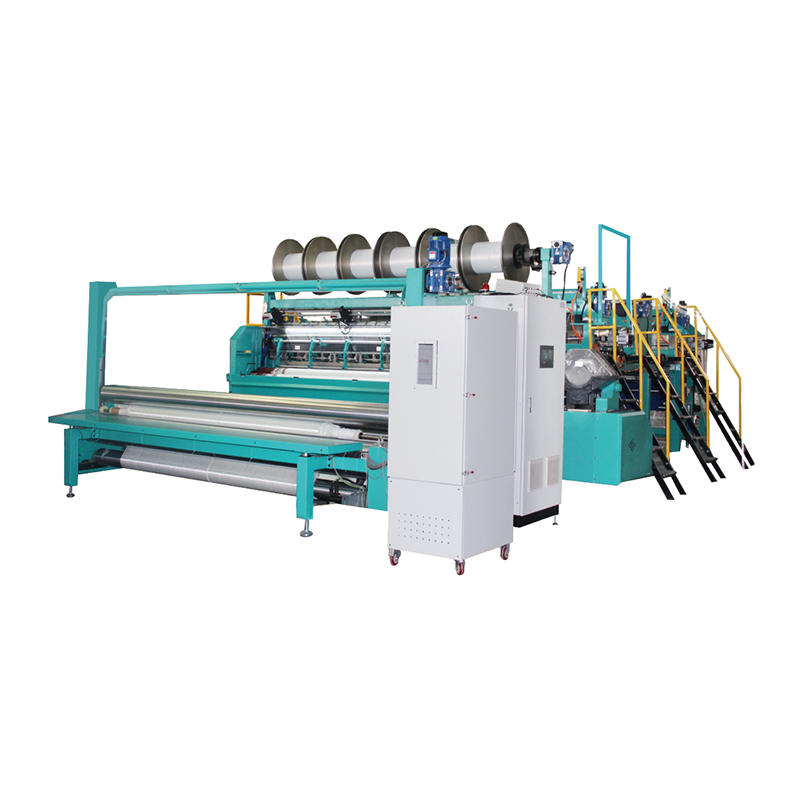
The FD Stitch Bonding Machine is a high-performance textile production system designed to consolidate fiber webs without the use of additional stitching yarn. Developed for chemical fiber applications, it combines high operating speed, flexible process adjustment, simplified yarn-free operation, and broad working width in a single production platform. Its main application is the manufacture of automotive interior materials, where stable web reinforcement, efficient production, controlled fabric formation, and reliable long-term operation are essential.
Unlike conventional stitch-bonding equipment that depends on guide needles, warp beams, and continuous stitching yarn, the FD machine uses hooked slot needles to directly pick up fiber bundles from the prepared fiber web. These bundles are drawn into loops and mechanically consolidate the web. This working principle reduces the number of auxiliary yarn-feeding components and creates a production route that is especially suitable for fiber-based nonwoven structures and automotive interior applications.
The machine is supplied by Changzhou Yuanyang Electromechanical Technology Co., Ltd., a textile machinery manufacturer based in Jiangsu Province, China. The company focuses on warp knitting equipment, stitch-bonding systems, biaxial and multiaxial warp knitting machines, carbon fiber textile machinery, powder scattering machines, web laying machines, and customized textile production equipment. Its experience in special textile machinery supports the development of equipment for complex materials, non-standard configurations, demanding fabric constructions, and production lines requiring stable operation over extended periods.
1. The Role of Stitch Bonding in Modern Textile Production
Fiber webs are widely used as intermediate or finished materials in transportation, construction, filtration, insulation, furniture, geotextiles, and industrial products. A loose web can provide excellent coverage and low weight, but it generally requires additional consolidation before it can be processed or used in a finished component. Stitch bonding is one method of stabilizing the web by mechanically forming loops through the fiber structure.
In a conventional process, stitching yarn may be inserted through the web to create a knitted or chained structure. The yarn provides reinforcement and helps hold the fibers together. However, the yarn-feeding system adds complexity to the machine and introduces additional material costs. Guide needles, warp beams, yarn tension controls, and other components must be selected, adjusted, and maintained according to the production design.
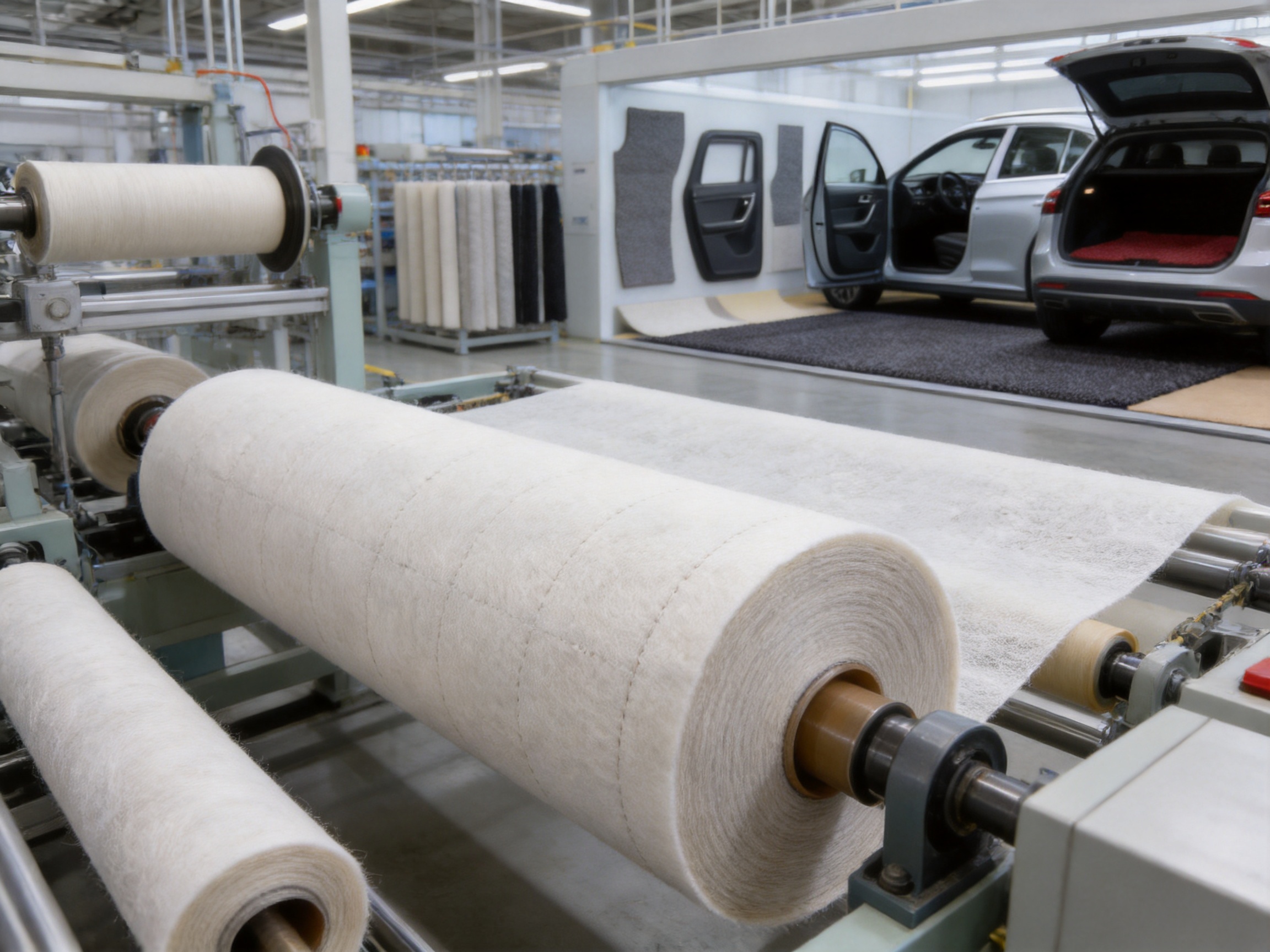
The FD Stitch Bonding Machine follows a different approach. Its hooked slot needles engage the fiber bundles within the web itself. As the needles move through the material, they draw fiber bundles into loops. The resulting loop structure consolidates the web without requiring a separate stitching yarn. This is particularly valuable when the desired product depends primarily on the characteristics of the fiber web rather than on the visual or mechanical contribution of an inserted yarn.
For automotive interior materials, the ability to process chemical fiber webs efficiently can support the production of lightweight, resilient, and adaptable textile components. Depending on the selected fiber type, web construction, and downstream treatment, the finished material may be used in interior trim, acoustic structures, backing layers, cushioning components, or other vehicle-interior applications.
2. Working Principle of the FD Stitch Bonding Machine
The operating principle begins with the preparation and delivery of a fiber web. The web may be produced from suitable chemical fibers and presented to the stitch-bonding area with a controlled width, basis weight, and fiber orientation. The machine then uses a needle bar fitted with hooked slot needles to penetrate the web and capture fiber bundles.
Each hooked slot needle is designed to enter the fiber web, engage a bundle of fibers, and withdraw that bundle in a loop-forming action. Repeated needle movements distribute the loops across the working width. The interaction between needle penetration, fiber capture, withdrawal, and fabric take-up creates a mechanically consolidated textile structure.
Because the process does not rely on a conventional stitching yarn, the machine eliminates several yarn preparation and feeding steps. There is no need to arrange a warp beam for the principal stitch-bonding action, and the production line does not need a traditional guide-needle system for inserting stitching yarn. This simplified process architecture can reduce setup work and make it easier to change between suitable fiber web constructions.
The final fabric characteristics depend on several controllable variables. These include machine speed, needle arrangement, needle density, web feed, take-up conditions, fiber type, fiber length, web uniformity, and any subsequent finishing process. A broad adjustment range enables users to balance productivity with the required appearance, strength, thickness, handle, and dimensional stability of the finished material.
The FD machine is not a universal replacement for every stitch-bonding or warp knitting system. Instead, it is optimized for a specific production concept: mechanically consolidating a fiber web by extracting fiber bundles from the web itself. This makes it especially suitable for products in which a yarn-free structure, efficient fiber utilization, and simplified equipment configuration are important.
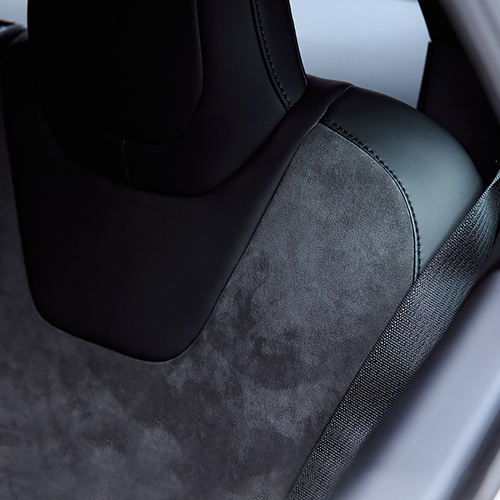
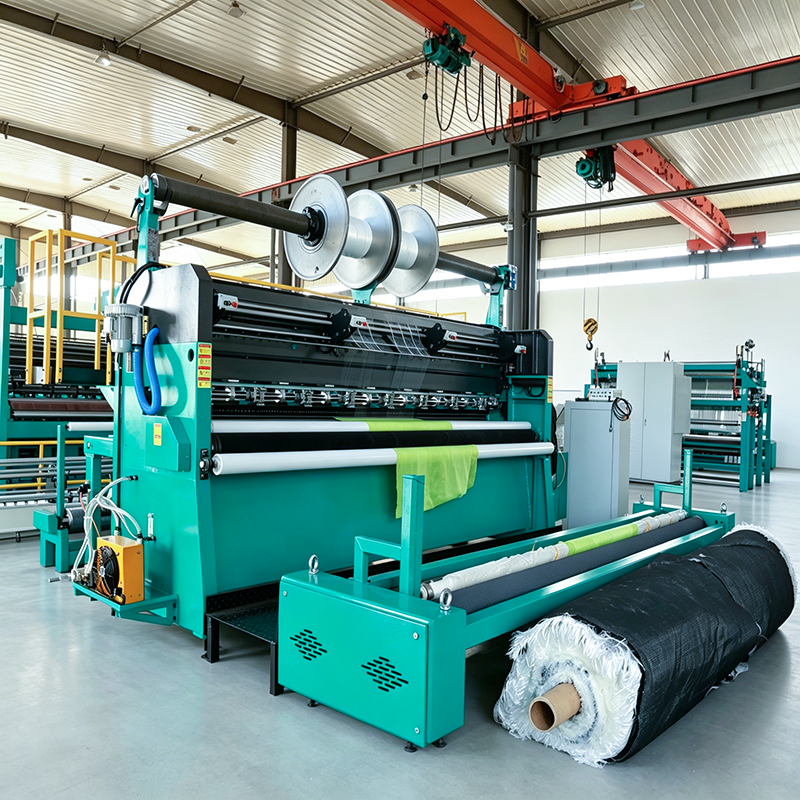
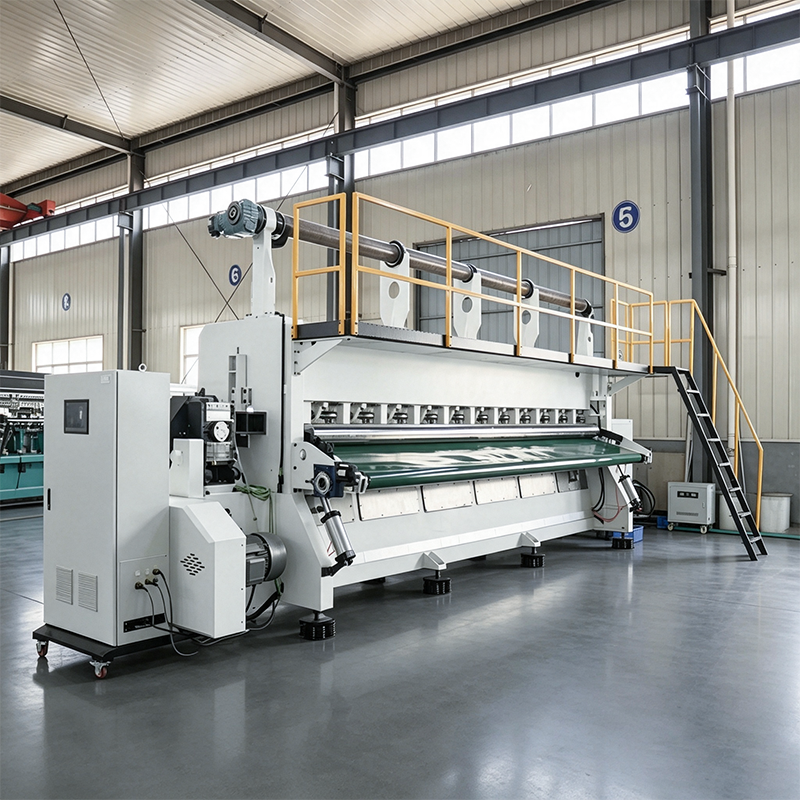
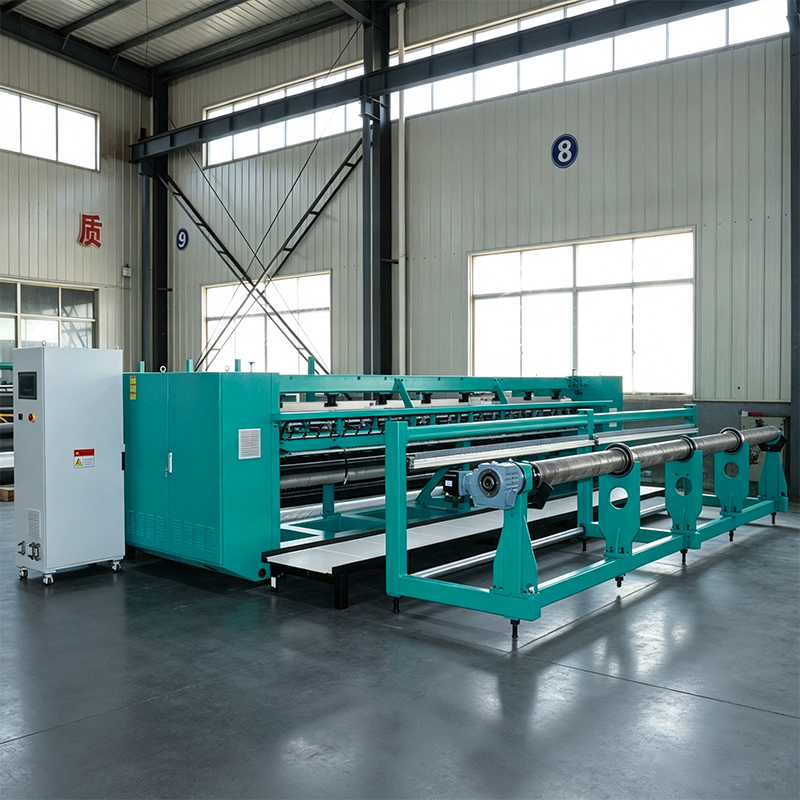
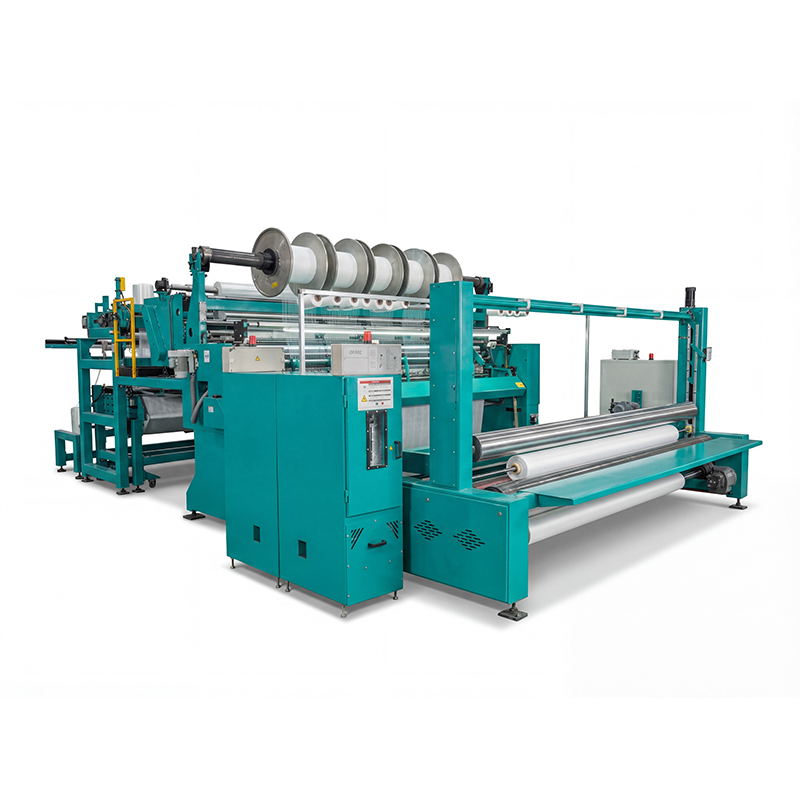
FD Stitch Bonding Machine
3. Main Technical Specifications
The machine is designed for industrial textile production and provides a maximum stated working width of 3,600 millimeters, equivalent to approximately 142 inches. This width allows manufacturers to produce broad textile webs and can support efficient material utilization in automotive interior production. The actual usable width depends on the selected configuration, edge treatment, web quality, and final product requirements.
The stated machine speed range is 50 to 1,500 revolutions per minute. This wide range allows operators to select a suitable operating point according to the fiber type, web structure, needle configuration, fabric density, and quality requirements. Lower speeds may be selected during trial production, process development, difficult-material processing, or quality optimization. Higher speeds can be used when the web and process conditions are stable and the required fabric construction permits increased productivity.
The reference daily production is approximately 6,000 square meters. This figure is provided for reference only and may vary according to fabric construction and process conditions. Production depends on the machine operating speed, working width, effective running time, web preparation, product weight, construction density, inspection requirements, start-up and shutdown frequency, and the efficiency of upstream and downstream equipment.
| Item | Stated Specification | Production Significance |
|---|---|---|
| Product type | FD Stitch Bonding Machine | Designed for fiber web consolidation without additional stitching yarn |
| Applicable fibers | Chemical fibers | Suitable for chemical fiber web applications and related textile structures |
| Core product focus | Automotive interior materials | Supports development of textile components for vehicle interiors |
| Machine speed | 50–1,500 r/min | Provides a broad operating and process-development range |
| Working width | 3,600 mm, approximately 142 inches | Supports wide-format material production and high coverage |
| Reference daily production | Approximately 6,000 square meters | Actual output varies with fabric construction and process conditions |
| Needle action | Hooked slot needles pick up fiber bundles | Forms loops directly from the fiber web |
These specifications should be evaluated together rather than considered separately. A high machine speed is valuable only when the web can be supplied consistently and the fabric quality remains within specification. Similarly, a wide working width can improve productivity and reduce the number of parallel production lines, but it requires reliable web formation, accurate alignment, and appropriate process control across the entire machine width.
4. Advantages Compared with Conventional Yarn-Based Systems
4.1 No Additional Stitching Yarn
The most significant advantage of the FD Stitch Bonding Machine is its ability to create the consolidating loops directly from the fiber web. Since separate stitching yarn is not required for the principal bonding action, manufacturers can reduce dependence on yarn purchasing, preparation, storage, and feeding. This may lower material consumption and simplify production planning.
Removing additional stitching yarn can also be beneficial when the product specification emphasizes a fiber-dominant structure. The finished material is not defined by the properties of an inserted yarn to the same extent as a conventional yarn-based stitch-bonded fabric. This can help manufacturers develop products with specific softness, weight, bulk, flexibility, or surface characteristics, subject to the fiber and web design.
4.2 Simplified Yarn-Feeding Architecture
Traditional yarn-based equipment may require guide needles, warp beams, yarn tension systems, yarn break detection, and extensive threading procedures. The FD machine eliminates the need for these components in the yarn-free bonding process. A simpler feeding architecture can make machine preparation more straightforward and may reduce the number of potential adjustment points.
Simplification does not mean that process control is unnecessary. Operators still need to manage web delivery, needle condition, machine timing, fabric take-up, and production parameters. However, the reduction in yarn-related mechanisms can make the overall production route easier to understand and maintain, especially for manufacturers transitioning from loose-web handling to mechanically consolidated textile production.
4.3 High Machine Speed and Production Output
The stated speed range extends to 1,500 revolutions per minute, supporting high-throughput production when the selected fiber web and fabric construction are compatible with fast operation. The broad working width of 3,600 millimeters further contributes to output by allowing a large material area to be processed during each machine cycle.
High output is important in automotive textile production because suppliers must often provide consistent material volumes for large-scale component manufacturing. A machine that combines wide coverage with high operating speed can help reduce production bottlenecks and improve the utilization of plant space, labor, and auxiliary equipment.
Actual productivity should always be confirmed through trials. The reference production level of approximately 6,000 square meters per day is influenced by running efficiency, product design, quality inspection, web supply, maintenance intervals, and process stability. A properly engineered production plan should include realistic allowances for setup, cleaning, needle replacement, material changes, and quality control.
4.4 Wide Parameter Adjustment Range
Different automotive interior materials may require different thicknesses, weights, loop densities, fiber compositions, and mechanical properties. The FD machine is designed with a broad parameter adjustment range so manufacturers can adapt the process to different market requirements rather than operating with a single fixed product format.
Adjustability is especially valuable during product development. Automotive suppliers may need to evaluate several material constructions before selecting a final specification. The ability to vary machine speed and related process settings allows engineers to compare samples and identify a suitable balance between production efficiency and fabric performance.
4.5 Flexible Response to Market Demand
Market requirements in the automotive sector are changing. Manufacturers are seeking lighter components, improved acoustic performance, greater comfort, reduced material consumption, and more efficient production. A flexible stitch-bonding platform can help textile producers respond to these trends by supporting different chemical fiber webs and product constructions.
The FD machine is therefore positioned not only as a production machine but also as a platform for process adaptation. Its yarn-free concept can support product development where a conventional stitch-bonding structure would create unnecessary complexity or introduce materials that are not required in the final application.
4.6 Simple Operation
The machine’s simplified yarn-free process can make operation more accessible. Without the need to thread and manage an extensive stitching-yarn system, operators can focus on web preparation, machine settings, needle condition, take-up, and quality inspection. This may reduce the time required for setup and product changeover.
Simple operation also supports more consistent training. Operators can learn the main relationships between web condition, needle action, machine speed, and finished-fabric quality. Clear standard operating procedures can then be established for start-up, normal operation, shutdown, cleaning, inspection, and troubleshooting.
5. Automotive Interior Applications
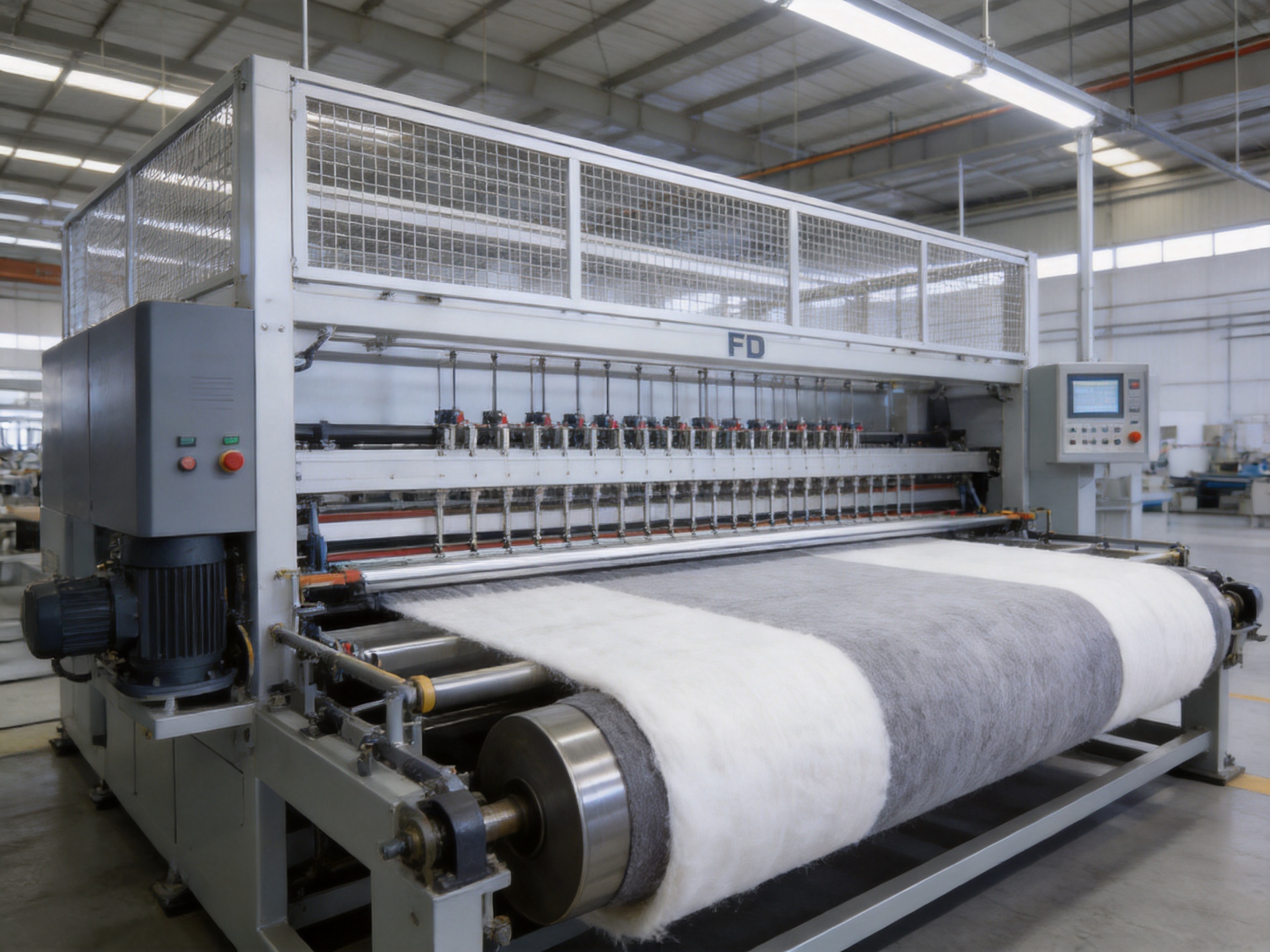
Automotive interiors require materials that combine functional performance with efficient manufacturing. Interior textiles may contribute to acoustic control, cushioning, dimensional support, surface appearance, thermal comfort, and the overall perceived quality of a vehicle cabin. In many cases, the material must also be compatible with cutting, molding, laminating, bonding, sewing, or other downstream operations.
The FD Stitch Bonding Machine is identified as a core production solution for automotive interior materials. Its intended use with chemical fiber webs makes it suitable for manufacturers that produce nonwoven or fiber-based structures for interior applications. The precise final use depends on the fiber composition, web design, bonding density, finishing treatment, and performance testing completed by the material producer.
Potential application areas may include interior backing materials, trim support layers, carpet-related structures, acoustic or insulation components, trunk and luggage-compartment materials, door-panel substrates, seat-related layers, and other fiber-based interior parts. These examples describe potential development directions rather than guaranteed uses for every machine configuration.
Automotive materials are normally evaluated against demanding requirements. These may include tensile and tear performance, thickness uniformity, dimensional stability, abrasion resistance, odor, fogging, flammability, thermal behavior, acoustic response, appearance, and compatibility with adhesives or laminating systems. The FD machine provides the consolidation platform, while the final performance depends on the complete material recipe and downstream manufacturing process.
For automotive suppliers, repeatability is as important as initial performance. A fabric that meets laboratory requirements in one trial must also be produced consistently across long production runs. Stable needle movement, controlled web input, suitable machine maintenance, and documented process settings all contribute to repeatable quality.
6. Manufacturing Strengths of the Equipment Supplier
Changzhou Yuanyang Electromechanical Technology Co., Ltd. is located in Jiangsu Province, one of China’s important textile machinery manufacturing regions. The company integrates research and development, manufacturing, sales, and service, with a primary focus on textile machinery and related equipment.
Its product portfolio includes stitch-bonding machines, biaxial warp knitting machines, multiaxial warp knitting machines, carbon fiber multiaxial warp knitting machines, powder scattering machines, and web laying machines. This range is relevant to the FD machine because modern textile production often requires more than one isolated machine. Web formation, powder application, reinforcement insertion, stitch bonding, and downstream handling may all need to work together as a coordinated line.
The company also provides customized solutions for high-precision warp knitting accessories and special equipment. This capability is important for customers whose materials, widths, reinforcement patterns, or production targets do not fit a standard configuration. Custom engineering can help adapt machine architecture to non-standard fabric designs, specialized fibers, and unusual process requirements.
6.1 Research and Development Capability
The company describes its professional research and development team as being composed of experienced industry engineers. This type of engineering background is valuable in textile machinery because machine performance depends on the interaction of mechanical design, needle technology, fabric formation, web handling, drive control, and production management.
For a stitch-bonding machine, research and development must address more than nominal machine speed. Engineers need to consider needle geometry, needle-bar movement, timing, vibration, structural stiffness, web support, take-up behavior, working-width accuracy, and the durability of wear components. Small changes in these areas can influence fabric uniformity and operating stability.
A strong development process also includes practical production testing. Laboratory concepts must be evaluated under continuous running conditions, with attention to heat generation, component wear, material variation, operator access, cleaning requirements, and maintenance intervals. The objective is to create equipment that performs reliably in an industrial environment rather than only under short demonstration conditions.
6.2 Focus on Non-Standard Equipment
Many textile producers require equipment that differs from a standard catalog model. They may need a special working width, a particular web-handling arrangement, a custom needle configuration, integration with upstream web-laying equipment, or compatibility with downstream laminating and winding systems. The company’s focus on non-standard equipment configurations allows these requirements to be considered during project development.
Customization should be based on a clear technical specification. Important factors include the fiber type, web width, web weight, target fabric construction, production speed, finished-roll format, available factory space, utilities, inspection requirements, and automation level. A detailed specification helps the manufacturer evaluate feasibility and define the correct machine configuration.
6.3 Experience with Difficult Materials and Complex Fabric Designs
The supplier states that it focuses on complex fabric designs, difficult-to-process materials, and production lines requiring long-term stability. This is directly relevant to advanced textile applications, where fibers may differ in length, friction, resilience, fineness, or surface treatment. A machine must be adjusted to the behavior of the material rather than relying on a single universal setting.
Automotive interior materials can also involve multi-layer structures or combinations of different fiber functions. One layer may provide bulk, another may support acoustic absorption, and another may improve surface stability or bonding compatibility. Equipment suppliers with experience in specialized textile structures are better positioned to help customers define a practical production route for these materials.
6.4 Quality Control and Manufacturing Process
Reliable textile machinery begins with controlled manufacturing. Structural components must be produced to accurate dimensions, moving assemblies must be aligned correctly, and precision parts must be inspected before final assembly. In high-speed equipment, manufacturing accuracy affects vibration, noise, needle movement, fabric uniformity, and service life.
A professional manufacturing process typically includes design review, component sourcing, machining, surface treatment where required, assembly, alignment, electrical and mechanical testing, trial operation, and final inspection. For a wide machine with a working width of 3,600 millimeters, consistent alignment across the full width is especially important. Uneven movement or inconsistent needle penetration can lead to transverse differences in fabric appearance and performance.
Quality control should also extend to documentation. Machine drawings, operating instructions, maintenance schedules, spare-parts information, parameter records, and acceptance-test data help customers operate the equipment correctly and maintain it over time. Clear documentation is particularly valuable when the machine is integrated into a larger automated production line.
7. Production Line Integration
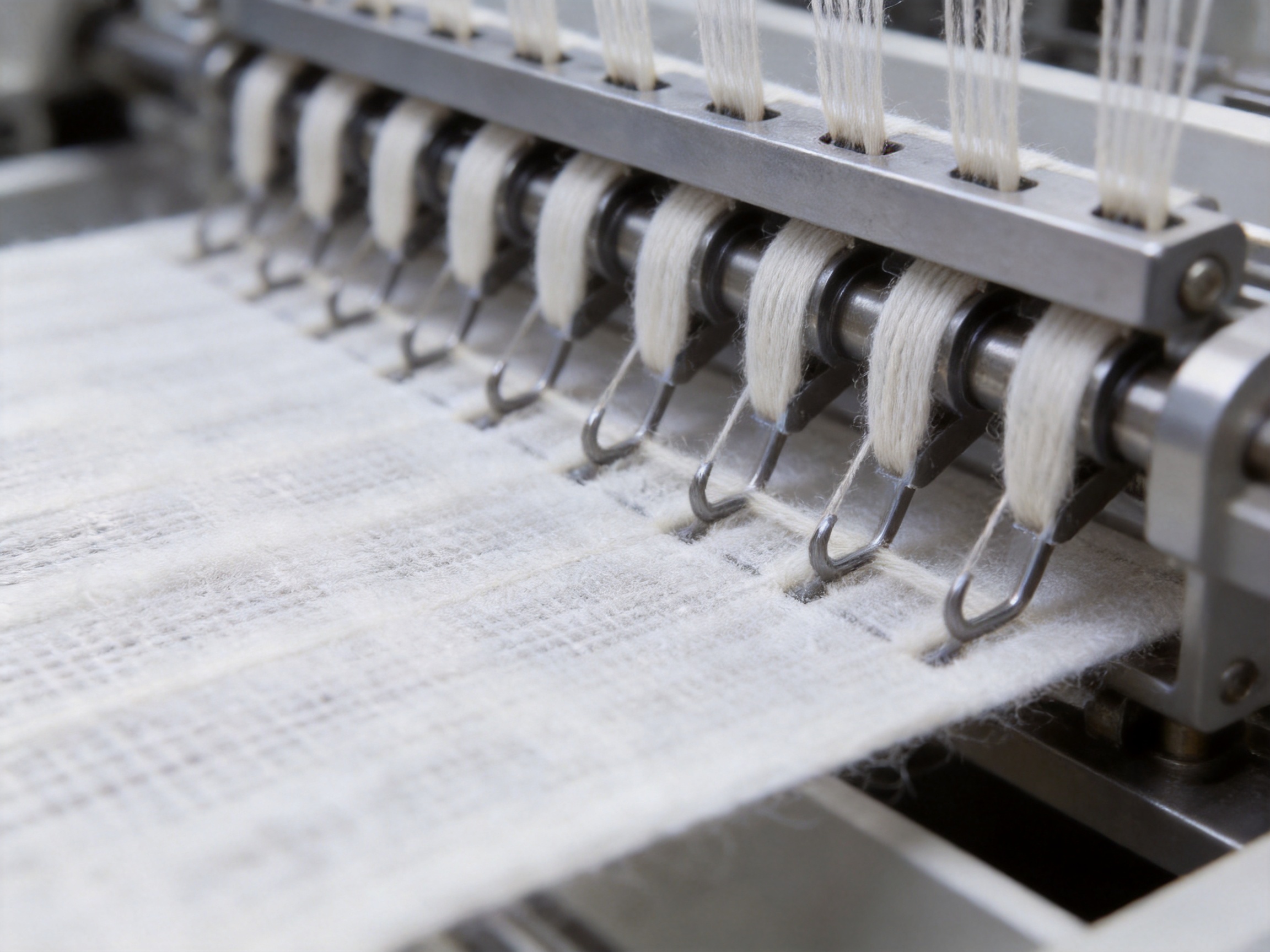
The FD Stitch Bonding Machine can be considered as part of a broader fiber-textile production system. The upstream section may include fiber opening, blending, carding, web forming, cross-lapping, web laying, or other methods of preparing a uniform material. The downstream section may include cutting, winding, laminating, coating, heat treatment, inspection, packaging, or direct feeding into a component-production line.
Successful integration requires compatibility between material flow and machine capacity. The upstream web-forming equipment must provide a stable width and consistent mass distribution. If the web contains large transverse variations, the stitch-bonding machine may consolidate those variations rather than correct them. Uniform preparation is therefore an important foundation for final-fabric quality.
The take-up system must also be matched to the production speed and fabric structure. Excessive tension can distort the web or affect fabric thickness, while insufficient tension can lead to wrinkles, poor winding, or unstable roll formation. A suitable take-up design helps preserve the structure created by the hooked slot needles.
When integrating the machine with other equipment, manufacturers should evaluate line speed, floor space, access for maintenance, electrical requirements, dust control, ventilation, safety guarding, emergency-stop arrangements, and material-handling procedures. A complete layout review before installation can reduce commissioning delays and improve operator safety.
8. Process Parameters and Quality Management
Operating the FD machine effectively requires a systematic approach to parameter management. Machine speed is one of the most visible settings, but it is only one part of the process. Needle selection, needle density, web feed, take-up speed, fabric tension, and the characteristics of the chemical fiber web all influence the result.
Operators should begin with a stable reference recipe. The reference recipe can record the fiber composition, web weight, web width, machine speed, needle arrangement, take-up conditions, inspection results, and any finishing steps. Changes should be made one at a time where possible so that their influence can be evaluated accurately.
Important quality indicators may include fabric width, mass per unit area, thickness, surface appearance, loop distribution, tensile strength, tear strength, dimensional stability, and roll hardness. The appropriate inspection program depends on the final application. Automotive suppliers may also require tests related to odor, flammability, abrasion, thermal exposure, acoustic response, or bonding performance.
Visual inspection remains useful even when laboratory tests are available. Operators can identify streaks, holes, uneven consolidation, wrinkles, edge instability, needle damage, and winding defects at an early stage. Early detection reduces the amount of nonconforming material produced and helps maintenance personnel identify mechanical or process problems.
Preventive maintenance should include regular inspection of hooked slot needles, needle bars, drive components, bearings, fabric supports, take-up parts, sensors, safety systems, and electrical connections. Fiber dust and debris should be removed according to the manufacturer’s recommendations. A clean machine environment helps protect moving parts and reduces the risk of contamination in the finished textile.
9. Installation, Commissioning, and Operator Training
Installation begins with a suitable foundation and a factory layout that allows access to all service points. The machine should be positioned on a stable surface with adequate space for web loading, roll removal, inspection, cleaning, and component replacement. Utility connections should be checked before delivery whenever possible.
Commissioning normally includes mechanical leveling, alignment, electrical connection, control-system inspection, safety verification, dry running, low-speed material trials, and gradual speed optimization. Trial production should use representative fiber webs rather than only easy-to-process materials. This provides a more realistic evaluation of machine behavior.
Operator training should cover machine start-up, web threading or loading procedures, parameter selection, normal running, emergency stops, needle inspection, roll changes, cleaning, quality inspection, and basic troubleshooting. Maintenance personnel should receive additional training on alignment, wear-part replacement, lubrication where applicable, drive inspection, and fault diagnosis.
Well-trained personnel are essential to achieving the machine’s advantages. A simplified yarn-free process reduces some preparation work, but operators still need to understand the relationship between the web and the needle action. Incorrect web quality or unsuitable speed settings can cause defects even when the machine is mechanically sound.
10. Economic and Operational Considerations
The economic value of the FD Stitch Bonding Machine should be assessed across the entire production process rather than through the purchase price alone. Relevant factors include additional yarn consumption, labor requirements, changeover time, machine speed, working width, energy use, maintenance, spare parts, floor-space utilization, product yield, and finished-material value.
Because the machine does not require additional stitching yarn for the bonding action, the producer may reduce a recurring material cost. The scale of the saving depends on the previous production method, the amount of yarn that would otherwise be used, the cost of the selected yarn, and the final product design. The yarn-free concept may also reduce storage and handling requirements.
The wide working width can contribute to higher area output and may help reduce the number of machines needed for a specific production target. However, capacity planning should use realistic operating efficiency rather than the theoretical maximum. Planned downtime, maintenance, product changes, quality checks, and upstream web availability all influence actual output.
Flexible adjustment can improve the return on investment when a manufacturer serves several customers or product segments. Instead of purchasing separate machines for every fabric construction, a flexible platform may support a wider range of suitable products. The practical benefit depends on the available parameter range and the compatibility of each target material with the machine.
11. Sustainability and Material Efficiency
Textile manufacturers are increasingly evaluating the environmental impact of materials and processes. A machine that avoids additional stitching yarn can support material-efficiency objectives by reducing the number of input materials required for web consolidation. It may also simplify material planning and reduce packaging associated with yarn supply.
Potential sustainability benefits should be evaluated through a complete life-cycle analysis. The environmental profile of the final textile depends on fiber production, web preparation, machine energy consumption, maintenance materials, finishing treatments, product lifetime, and end-of-life options. The FD machine can contribute to a more efficient production route, but sustainability performance must be verified for the specific product and process.
Chemical fibers can be selected according to performance, cost, recycled content, thermal behavior, and compatibility with automotive requirements. When recycled chemical fibers are used, their length distribution, strength, crimp, and processing behavior should be evaluated carefully. The web must remain sufficiently uniform for stable needle engagement and consistent loop formation.
12. Comparison with Alternative Production Approaches
Compared with a conventional yarn-based stitch-bonding system, the FD machine offers a more direct fiber-web consolidation method. Its key distinction is the use of fiber bundles from the web rather than a separately supplied stitch yarn. This can simplify the process and reduce yarn-related equipment.
Compared with purely adhesive bonding, mechanical stitch bonding does not depend on the application and curing of an adhesive as the primary consolidation method. This may be advantageous where manufacturers want to avoid adhesive handling, drying, curing, or changes in material handle caused by chemical binders. The best method depends on the required mechanical, thermal, acoustic, and environmental performance.
Compared with thermal bonding, stitch bonding uses mechanical loop formation to stabilize the web. Thermal bonding may require fibers with suitable melting or softening behavior and carefully controlled heat exposure. The FD process can be considered when the desired structure is better achieved through mechanical reinforcement of chemical fiber bundles.
Compared with needle punching, stitch bonding forms a characteristic loop-based consolidation structure through the movement of hooked slot needles. Needle punching and stitch bonding have different process mechanisms and produce different fabric characteristics. Selection should be based on the target thickness, strength, surface appearance, flexibility, acoustic behavior, and downstream processing requirements.
These comparisons are not intended to suggest that one process is universally superior. The FD Stitch Bonding Machine is advantageous when its yarn-free mechanism, wide width, speed range, and flexible adjustment match the product requirements. A technical trial remains the most reliable way to confirm suitability.
13. Recommended Evaluation Procedure for Buyers
Potential users should first define the target product in measurable terms. The specification should include fiber type, fiber blend, web width, basis weight, thickness, desired loop or consolidation pattern, production speed, finished-roll dimensions, and required mechanical properties.
The next step is to provide representative raw materials for a machine trial. Samples should reflect normal production conditions rather than ideal laboratory material. If the supplier evaluates only a highly uniform web, the results may not represent the behavior of the customer’s actual process.
During the trial, users should record start-up time, operating speed, fabric appearance, width stability, roll formation, defects, needle condition, and any parameter changes. Samples from different machine speeds and process settings should be retained for laboratory comparison.
The buyer should also review the proposed machine configuration, including the needle system, drive arrangement, control interface, take-up section, safety guarding, spare parts, installation scope, training plan, and after-sales service. A clear acceptance standard should be agreed before production delivery.
Finally, the buyer should calculate expected capacity using practical efficiency. The reference output of approximately 6,000 square meters per day can be used for preliminary planning, but the final business case should reflect the selected fabric construction, scheduled operating hours, product-change frequency, material availability, and actual trial results.
14. Why the FD Machine Is a Competitive Solution
The FD Stitch Bonding Machine combines several advantages that are difficult to achieve simultaneously in a conventional system. It offers a yarn-free bonding concept, a wide 3,600-millimeter working width, a speed range extending to 1,500 revolutions per minute, and process flexibility for chemical fiber webs. These features address both production efficiency and product-development requirements.
Its strongest competitive distinction is the elimination of additional stitching yarn. This reduces the need for guide needles, warp beams, and related yarn-feeding equipment. The result is a more direct route from fiber web to consolidated textile, with fewer yarn-management steps and potentially lower recurring material costs.
The machine is also designed for high output. Wide-format production allows manufacturers to process a substantial material area, while the speed range supports adjustment from trial operation to high-volume manufacturing. When combined with stable web preparation and appropriate maintenance, these capabilities can support efficient automotive textile production.
Another competitive strength is adaptability. Automotive interior material requirements differ between vehicle programs and component suppliers. A machine with a broad parameter adjustment range can support more than one product concept, helping manufacturers respond to changing orders and new material-development projects.
Finally, the equipment is backed by a company with experience in warp knitting machinery, specialty textile equipment, customized systems, difficult materials, and complex fabric designs. This broader engineering background can be valuable when the FD machine must be integrated into a complete line or adapted for a non-standard application.
15. Frequently Asked Questions
What is an FD Stitch Bonding Machine?
It is a fiber web consolidation machine that forms loops by using hooked slot needles to pick up fiber bundles directly from the web. The process does not require additional stitching yarn for the primary bonding action.
What fibers can be used?
The machine is intended for chemical fiber applications. The exact fiber type, blend, length, crimp, fineness, and web construction should be confirmed through technical evaluation and production trials.
Does the machine require guide needles and a warp beam?
The yarn-free bonding process eliminates the need for yarn-feeding systems such as conventional guide needles and warp beams used for inserting additional stitching yarn. Other machine components, including the hooked slot needle system and web-handling assemblies, remain essential.
What is the maximum working width?
The stated working width is 3,600 millimeters, or approximately 142 inches. The effective production width may depend on the selected configuration, edge conditions, web quality, and product requirements.
What is the operating speed?
The stated machine speed range is 50 to 1,500 revolutions per minute. The suitable speed depends on the fiber web, needle configuration, fabric construction, quality requirements, and production stability.
What is the expected daily output?
The reference daily production is approximately 6,000 square meters. This is not a guaranteed output figure. Actual production varies according to fabric construction, process settings, operating hours, material supply, changeovers, maintenance, and quality-control requirements.
What are the main applications?
The core application is automotive interior materials. Potential material uses may include backing layers, acoustic or insulation structures, trim substrates, carpet-related materials, luggage-compartment textiles, and other chemical-fiber-based interior components, subject to product testing.
How does the machine compare with a conventional stitch-bonding machine?
The primary difference is that the FD machine uses fiber bundles from the web to form loops rather than relying on additional stitching yarn. This can simplify the yarn-feeding system, reduce yarn consumption, and support a fiber-dominant product structure.
Can the machine be customized?
The supplier provides customized solutions for non-standard equipment configurations and special textile machinery. Customization should be based on a detailed technical specification covering material, width, speed, fabric structure, line integration, and finished-product requirements.
What should be checked before purchasing?
Buyers should evaluate representative material trials, target fabric properties, production speed, usable width, output, machine integration, maintenance requirements, training, spare parts, safety systems, and the supplier’s installation and service capabilities.
Is the machine suitable for recycled chemical fibers?
It may be suitable if the recycled fiber web has adequate uniformity and processing behavior. Recycled fibers can vary in length, strength, crimp, and friction, so trials are necessary to confirm needle engagement, consolidation quality, speed capability, and finished-fabric performance.
How can product quality be controlled?
Quality control should combine process records, visual inspection, dimensional checks, mass and thickness measurement, mechanical testing, roll inspection, and application-specific automotive tests. Maintaining stable web preparation and documented operating parameters is essential.
16. Conclusion
The FD Stitch Bonding Machine provides a practical solution for manufacturers seeking efficient consolidation of chemical fiber webs without additional stitching yarn. Its hooked slot needles directly draw fiber bundles from the web to create loops, eliminating the need for traditional yarn-feeding systems such as guide needles and warp beams.
With a stated speed range of 50 to 1,500 revolutions per minute, a working width of 3,600 millimeters, and a reference daily output of approximately 6,000 square meters, the machine is designed for high-capacity textile production. Its simple operating concept, broad parameter adjustment range, and flexible adaptation make it especially relevant to automotive interior material producers.
The equipment’s value extends beyond its basic specifications. Its yarn-free process can reduce material handling and simplify the production route, while its wide format and high-speed capability support industrial output. The machine can also serve as a flexible development platform for manufacturers responding to changing automotive material requirements.
Changzhou Yuanyang Electromechanical Technology Co., Ltd. strengthens the offering through research and development, manufacturing, customized equipment design, warp knitting expertise, specialty textile machinery, and service support. Its experience with non-standard configurations, complex fabric designs, difficult materials, and long-term production stability provides a foundation for adapting the machine to real-world industrial needs.
Before final purchase, users should conduct representative material trials and define measurable acceptance criteria. When the machine configuration, fiber web, operating parameters, and downstream process are properly matched, the FD Stitch Bonding Machine can become an efficient and adaptable platform for producing advanced automotive textile materials.
References
1. Technical product information supplied for the FD Stitch Bonding Machine, including operating speed, working width, reference production, applicable fibers, and application field.
2. Technical descriptions of stitch-bonding and mechanically consolidated nonwoven textile structures.
3. General manufacturing principles for chemical fiber webs, web laying, fiber consolidation, and industrial textile production.
4. General automotive interior material evaluation practices covering dimensional stability, mechanical properties, appearance, odor, flammability, abrasion, and acoustic performance.
5. General principles of textile machinery design, preventive maintenance, production-line integration, and industrial quality control.
Product: FD Stitch Bonding Machine

News
-
Three quotations land on the same desk for the same polyester nonwoven line, and on paper they look interchangeable. Each is priced per metre of working width. Each quotes a similar top speed. Each c...
READ MORE -
Two quotations land on the same desk. Both offer a multiaxial warp knitting line, both list the same working width, both promise high output. One buyer signs and discovers six months later that the f...
READ MORE -
Which Machine Category Matches Each Technical Fiber and Fabric Goal A warp knitting machine is the primary production platform for technical fiber textiles across fiberglass, chemical fiber, and carbo...
READ MORE -
What a Stitch Bonding Machine Does A stitch bonding machine is a warp knitting type machine that uses knitting needles and a stitching yarn to hold a web of fibers, a layer of chopped strands, or a la...
READ MORE
-
Contact Info.
+86-198 5534 1617
+86-134 0158 3002yuanyang@yywarpknitting.com 699#, Shengzhi West Rd, Lvcheng Town, Danyang City, Zhenjiang City, Jiangsu Province, China

-
QR Code
-
Quick Links
Home About Products Manufacturing Customization News Contact -
Product List
Machine for Chemical Fiber Textile Machine for Fiberglass Textile Machine for Carbon Fiber Textile -
About Us
Company Profile Factory Gallery Value-added Service
Copyright © 2026 Changzhou Yuanyang Electromechanical Technology Co., Ltd. All Rights Reserved.
Custom Warp Knitting Machine Manufacturers
