

 English
 中文简体
 русский
 Français
 Español
 Deutsch

Industrial Powder-Spreading Machines for High-Performance Fiberglass and Carbon Fiber Fabrics
2026-10-11
Content
- 1 The Role of Powder Spreading in Composite Textile Production
- 2 Product Overview
- 3 How the Machine Works
- 4 Advantages of Controlled Powder Distribution
- 5 Advantages Compared with Less Integrated Powder-Spreading Solutions
- 6 Manufacturing Strengths and Engineering Capability
- 7 Configuration and Project Planning
- 8 Applications in New Energy Vehicle Battery Shells
- 9 Applications in High-Pressure RTM Components
- 10 Installation and Commissioning
- 11 Quality Control and Acceptance Criteria
- 12 Maintenance and Production Support
- 13 Environmental, Safety, and Workplace Considerations
- 14 Why Manufacturer Experience Matters
- 15 Frequently Asked Questions
- 15.1 What materials can the YAS Auto Powder-Spreading Machine process?
- 15.2 How much resin powder is applied?
- 15.3 What working widths are available?
- 15.4 What is the operating speed?
- 15.5 What daily output can be expected?
- 15.6 Why is powder spreading used before RTM or compression molding?
- 15.7 Can the machine be integrated into an existing production line?
- 15.8 Does the machine support both glass fiber and carbon fiber?
- 15.9 How is powder distribution checked?
- 15.10 What information is needed for a quotation?
- 15.11 What installation support is provided?
- 15.12 What maintenance support is available after installation?
- 15.13 Can the machine be customized?
- 16 Conclusion
- 17 References
- 18 Product: YAS Auto Powder-Spreading machine
Powder-spreading technology has become an important part of modern composite textile production. As manufacturers move toward lighter structures, higher production efficiency, improved dimensional accuracy, and more stable molding performance, the reinforcement fabric must be prepared carefully before it enters the forming process. Greige glass fiber and carbon fiber fabrics often have excellent mechanical potential, but they can be difficult to cut, transport, stack, and form when they are too flexible or unstable. A controlled resin powder layer can provide the stiffness and handling stability required for downstream production.
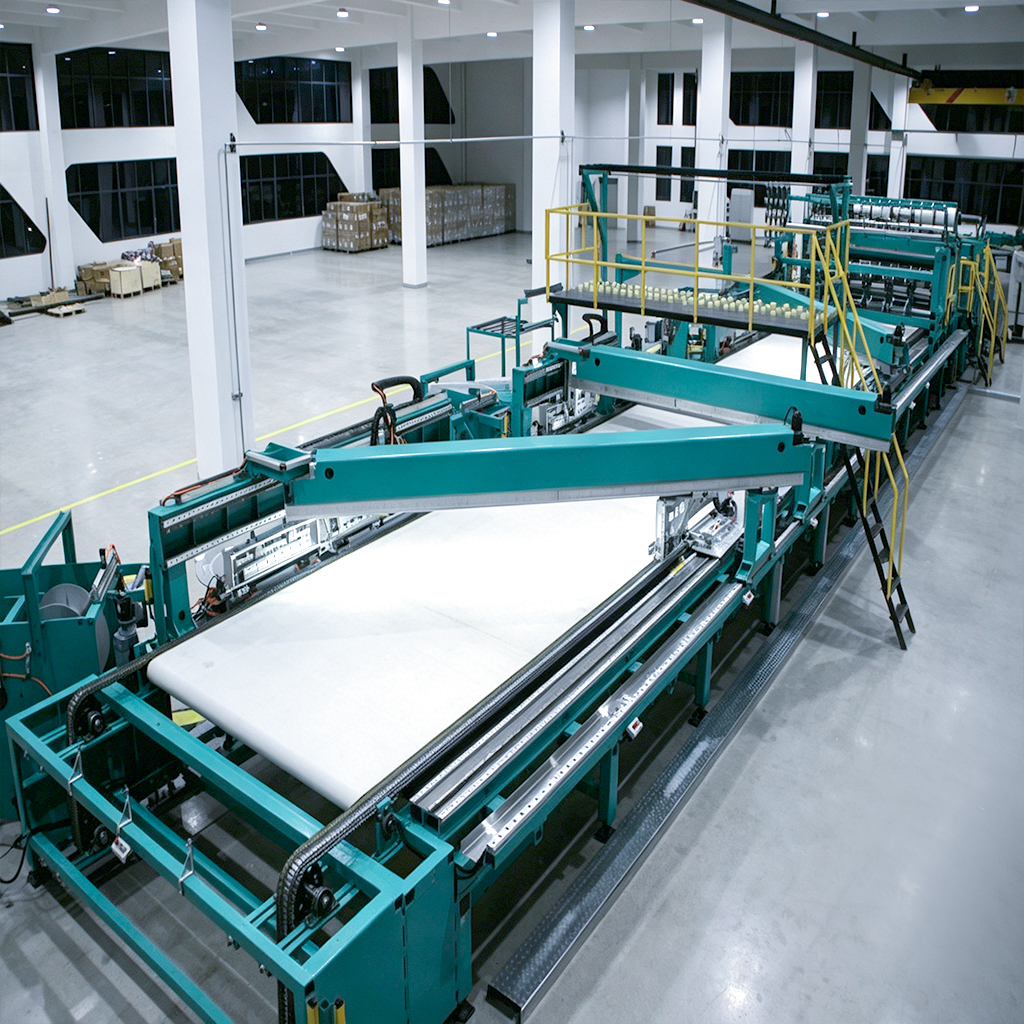
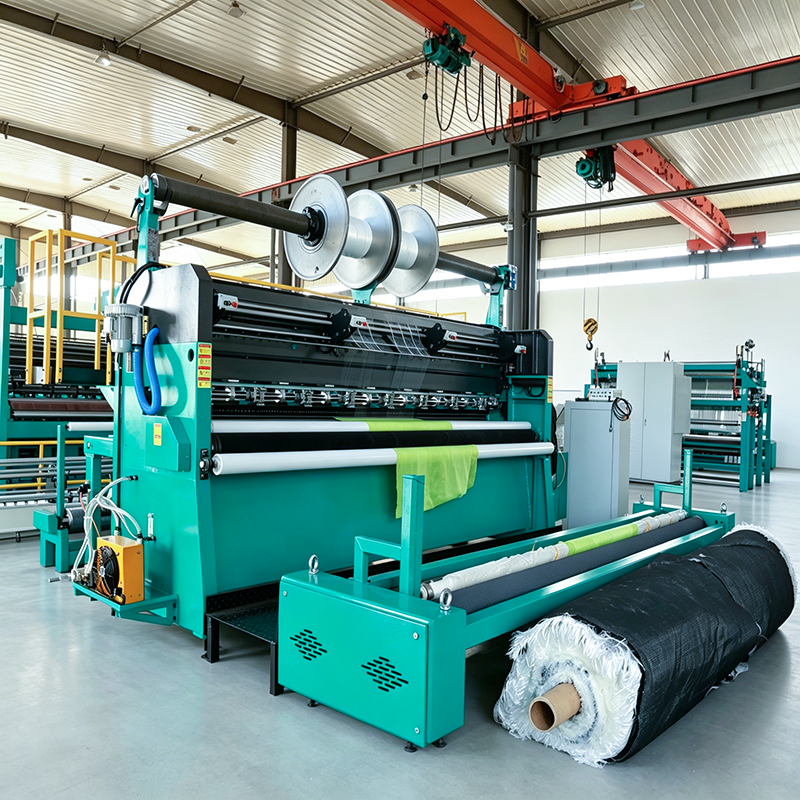
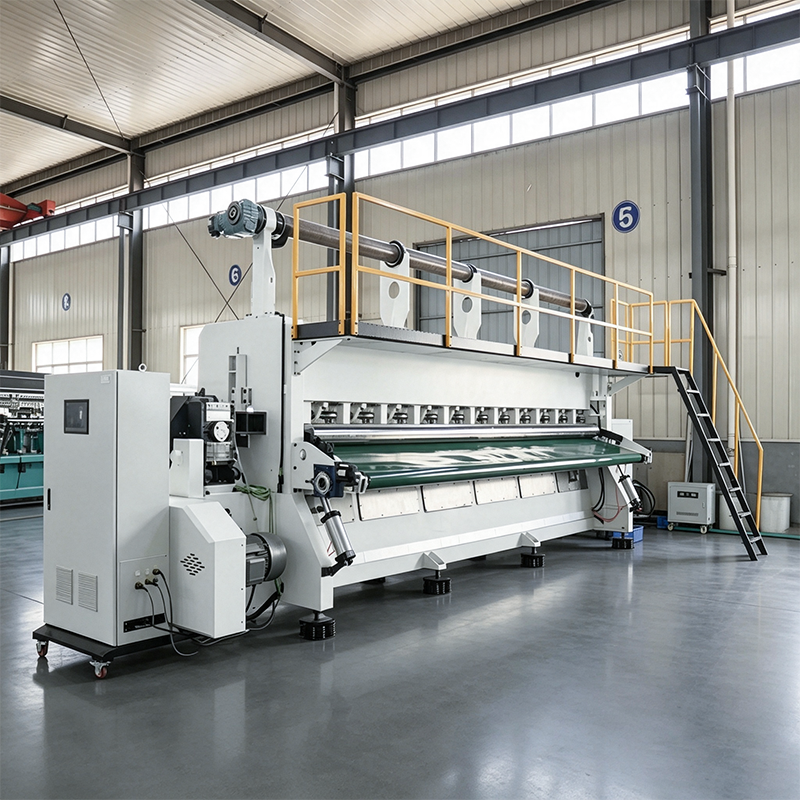
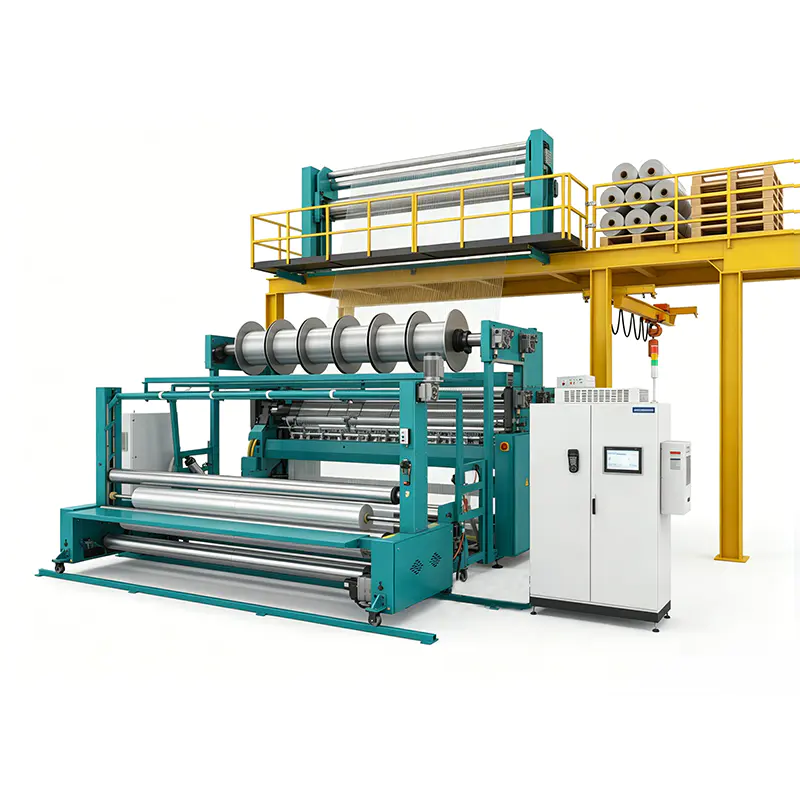
The YAS Auto Powder-Spreading Machine is designed for this purpose. It applies approximately 2% resin powder evenly across greige glass fiber or carbon fiber fabric, creating a powder-dispersed reinforcement suitable for battery shells, high-pressure resin transfer molding components, compression-molded parts, and other composite applications. With a working speed of approximately 4–6 meters per minute, working widths of 3000 or 3500 millimeters, and a reference daily output of 3250 meters, the machine is configured for industrial textile production rather than laboratory-scale processing.
More than a powder applicator, the equipment is an integrated web-handling and pre-shaping unit. It combines controlled powder distribution, fabric guidance, web tension management, line synchronization, and production support. Its value is measured not only by the amount of fabric processed, but also by the consistency of the finished reinforcement, the reduction of handling problems, and the stability of the downstream molding operation.
The Role of Powder Spreading in Composite Textile Production
Reinforcement fabrics made from glass fiber or carbon fiber are selected because of their high strength-to-weight ratio, stiffness, fatigue resistance, and suitability for composite structures. However, these fibers are normally produced in lightweight textile constructions that can move or deform during handling. A greige fabric may shift during cutting, fold during transfer, or lose its intended orientation while being placed into a mold.
These issues become more serious when the fabric is wide, heavy, multi-layered, or designed for automated processing. A fabric weighing between 400 and 800 grams per square meter may have sufficient mass for some manual operations, but it can still lack the body needed for accurate cutting and repeatable lay-up. If the reinforcement moves before resin injection, the final part may contain fiber waviness, local thickness variation, resin-rich areas, or incomplete coverage.
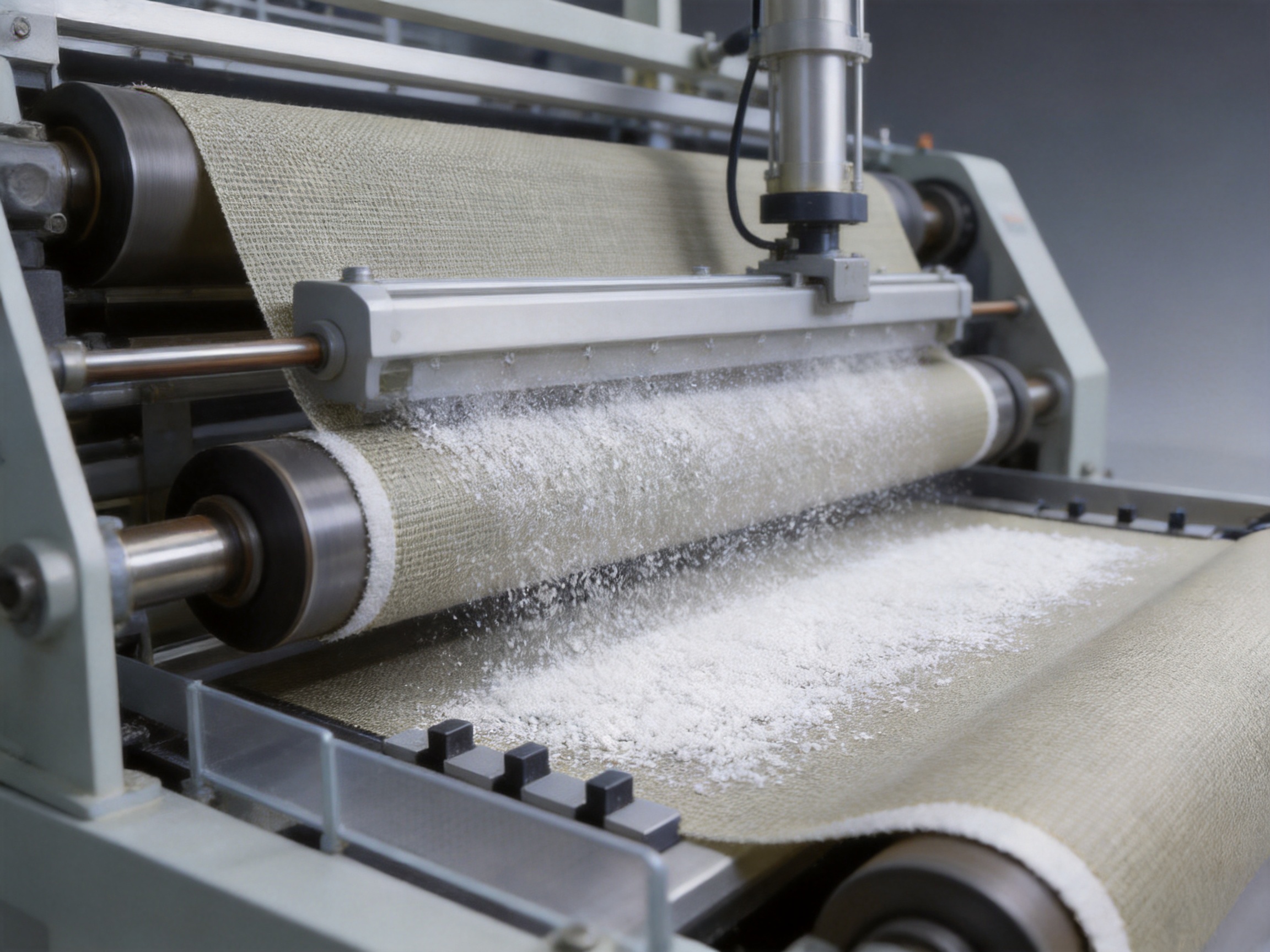
Powder spreading addresses this challenge by applying a controlled amount of resin powder to the fabric surface. The powder is distributed across the web and fixed sufficiently to give the reinforcement a certain degree of stiffness. This does not replace the final resin system used during molding. Instead, it prepares the dry reinforcement so that it can be handled, shaped, stacked, and positioned more reliably.
A uniform powder layer is essential. Excessive powder in one area can influence local resin flow or increase the resin content of the finished laminate. Insufficient powder in another area may leave the fabric too flexible for accurate forming. The objective is therefore not simply to spread powder at high speed, but to maintain a controlled and repeatable add-on across the full working width.
Product Overview
The YAS Auto Powder-Spreading Machine is developed for continuous processing of glass fiber and carbon fiber greige fabrics. It is intended to be installed within a textile or composite reinforcement production line, where the incoming fabric is guided through the powder-spreading section and then transferred to a winding, cutting, stacking, or forming preparation process.
The machine applies approximately 2% resin powder to fabric constructions typically weighing 400–800 g/m². The powder-dispersed fabric becomes more stable and easier to handle, which supports downstream cutting, lay-up, preforming, RTM, and compression-molding operations.
The machine is available with working widths of approximately 3000 millimeters or 3500 millimeters. These configurations allow users to match the equipment to common industrial fabric widths while retaining sufficient allowance for edge control and trimming. The selected width should be determined according to the actual roll width, edge condition, required finished width, and downstream process layout.
Operating speed is approximately 4–6 meters per minute. The practical working point depends on fabric construction, powder type, powder flow characteristics, target add-on, line tension, web stability, and the performance requirements of the finished reinforcement. A reference daily output of 3250 meters is provided for planning purposes, but actual output may vary according to the specific production process.
| Item | Specification | Production Significance |
|---|---|---|
| Applicable fibers | Glass fiber and carbon fiber | Suitable for composite reinforcement fabrics |
| Typical fabric weight | 400–800 g/m² | Supports medium and heavy greige fabric applications |
| Approximate powder add-on | 2% resin powder | Provides stiffness and handling stability |
| Machine speed | 4–6 m/min | Selected according to material and process conditions |
| Working width | 3000 mm or 3500 mm | Matches different fabric roll and line requirements |
| Reference daily output | 3250 m | Actual output varies with fabric construction and settings |
| Main applications | Battery shells, RTM parts, composite molded components | Supports stable preforming and downstream molding |
How the Machine Works
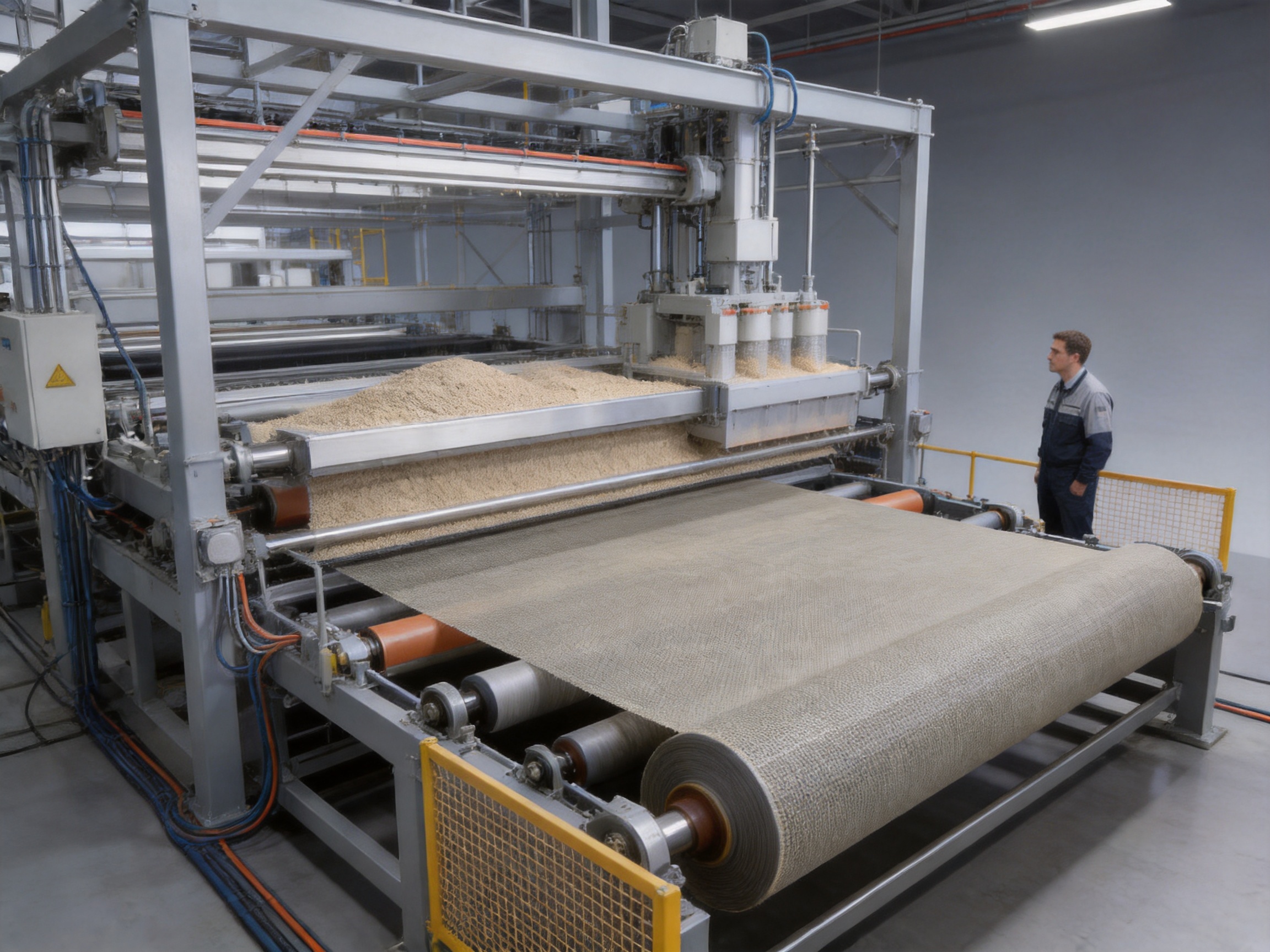
The working principle begins with controlled fabric delivery. The greige fabric is introduced into the machine from an upstream knitting, weaving, or winding process. The web-handling system guides the material along a defined path while maintaining suitable tension. Stable web movement is important because changes in width, wrinkles, lateral movement, or uneven tension can affect powder distribution.
Once the fabric enters the spreading section, the powder is metered and distributed over the moving surface. The metering system must respond to the target add-on, the powder grade, the fabric construction, and the machine speed. The powder should reach the fabric evenly without creating heavy bands, uncovered areas, excessive airborne dust, or unstable accumulation around the working components.
After the powder has been applied, the fabric continues through the handling and consolidation section. The precise configuration depends on the production line and the selected process conditions. The purpose is to help the powder remain on the fabric and to deliver a stable, powder-dispersed web to the next stage.
The final fabric can then be wound, cut, stacked, or transferred to a preforming operation. Because the fabric has greater body than untreated greige material, it is easier to control during handling. This can improve the repeatability of automated cutting, manual lay-up, mold loading, and multi-layer preform preparation.
In a complete line, the machine must operate as part of a coordinated system. The upstream equipment must deliver fabric at a suitable rate, while the downstream winder or forming preparation unit must accept the treated web without creating unnecessary tension or compression. For this reason, machine configuration is based on the whole process rather than on the powder-spreading unit alone.
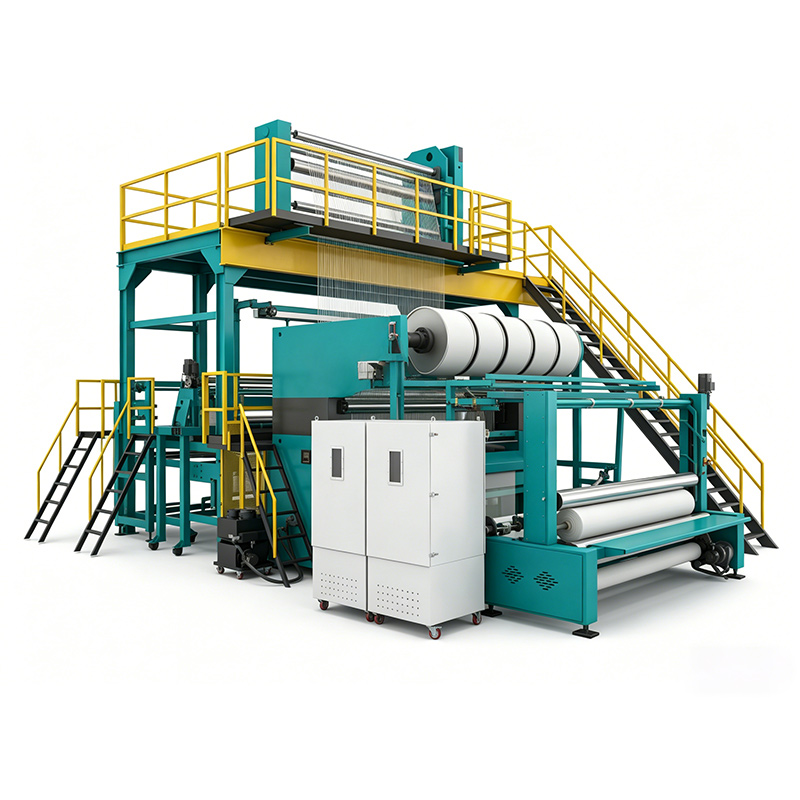
YAS Auto Powder-Spreading machine
Advantages of Controlled Powder Distribution
Improved Fabric Stiffness
The primary benefit of the powder-spreading process is the increase in fabric body. A certain amount of stiffness allows the reinforcement to retain its shape during cutting, transfer, stacking, and preforming. This is particularly useful for wide fabrics and complex reinforcement architectures that are difficult to control in untreated form.
Improved stiffness does not mean that the fabric becomes rigid or unusable for forming. The objective is to achieve a practical balance between flexibility and dimensional stability. The reinforcement should remain capable of conforming to the mold while resisting unwanted movement during preparation.
More Consistent Lay-Up
In manual or automated lay-up, unstable fabric can shift before it is secured. This may cause gaps between adjacent pieces, inaccurate overlaps, local fiber misalignment, or difficulty maintaining the designed orientation. Powder-dispersed fabric is easier to place and reposition, helping operators and automated systems achieve more repeatable layer placement.
For high-volume production, consistent lay-up can reduce the need for corrective handling. It can also improve the repeatability of part thickness and fiber volume fraction, provided that the powder add-on and the subsequent molding process are properly controlled.
Reduced Fiber Movement During Resin Injection
High-pressure RTM and related processes can expose dry reinforcement to significant resin-flow forces. If the fabric is too loose or unstable, fibers may shift during injection. Pre-shaped reinforcement with suitable powder bonding can resist this movement more effectively, helping preserve the intended architecture.
Reducing fiber movement is important for structural parts because fiber orientation directly affects stiffness, strength, fatigue performance, and dimensional stability. A reinforcement that maintains its position through injection gives the molding process a more reliable starting point.
Better Handling of Wide Fabrics
Wide composite fabrics can be difficult to transport through a factory without wrinkling or edge distortion. The 3000-millimeter and 3500-millimeter working-width options are intended for broad industrial webs. With proper guiding and tension control, the machine can support the handling of large-format reinforcement used in automotive, energy, infrastructure, and industrial applications.
Improved Process Efficiency
When fabric handling is more stable, operators spend less time correcting folds, re-aligning edges, or securing loose layers. The production line can therefore operate with fewer interruptions. Powder spreading also allows a manufacturer to prepare reinforcement in advance, creating pre-shaped rolls or cut kits for later molding operations.
The benefit is especially significant when the downstream process requires repeatable kits or preforms. Consistent fabric behavior helps reduce labor variation and simplifies the preparation of materials for multiple production shifts.
Advantages Compared with Less Integrated Powder-Spreading Solutions
Powder-spreading equipment varies considerably in design, control capability, and integration level. Some basic systems focus only on dispensing powder onto a moving web. This approach may be adequate for simple materials, but it can create limitations when processing wide, heavy, or high-value composite fabrics.
The YAS machine is designed as a complete production unit that considers powder metering, web guidance, tension control, line synchronization, and downstream handling. This integrated approach offers several practical advantages over equipment that treats powder delivery as an isolated operation.
Uniformity Rather Than Speed Alone
A machine that operates quickly but distributes powder inconsistently may create greater costs downstream. Uneven powder can affect forming behavior, surface quality, resin flow, and part consistency. The YAS configuration emphasizes a stable working point in which speed is balanced with material behavior and powder pickup.
The specified speed range of 4–6 meters per minute provides a practical operating window for the targeted fabric types. Instead of presenting a single theoretical maximum, the machine is configured according to the actual construction, width, powder, and acceptance criteria required by the customer.
Adaptation to Different Fabric Constructions
Glass fiber and carbon fiber fabrics can differ in yarn size, stitch structure, areal weight, surface texture, openness, and flexibility. A powder-spreading system that performs well on one material may require adjustment for another. The equipment configuration therefore considers the fiber type and fabric construction before finalization.
Customers can provide fabric samples, construction details, target add-on, roll width, and downstream requirements during the proposal stage. This information allows the machine to be configured around the intended product rather than forcing all materials to use the same fixed settings.
Wider Industrial Working Widths
The availability of 3000-millimeter and 3500-millimeter working widths supports large-scale reinforcement production. A narrow machine may require additional slitting, joining, or parallel processing steps, increasing labor and creating opportunities for edge mismatch. A wider machine can process the fabric closer to its final production width.
Working width must still be selected carefully. The correct choice depends on the fabric roll, edge trim, installation space, downstream equipment, and the required finished product. A wider machine is not automatically better if the factory layout or material width does not justify it.
Integration with Existing Equipment
Many composite textile manufacturers already operate knitting machines, weaving machines, winders, cutters, or preforming equipment. Replacing an entire line may not be practical. The YAS machine can be configured to work within an existing process, subject to the available interfaces, line speed, web direction, tension zones, and control requirements.
This makes it possible to improve fabric preparation without rebuilding every stage of the production system. The final integration plan is developed around the customer’s workshop layout and existing equipment.
Acceptance Based on Production Criteria
Equipment performance should be evaluated using measurable production criteria. These may include powder add-on percentage, cross-width distribution, line speed, web stability, output, and the suitability of the finished fabric for forming. Establishing these criteria before manufacture helps ensure that testing reflects the customer’s actual objectives.
The machine is assembled and tested before dispatch. Pre-delivery testing provides an opportunity to check the mechanical structure, control functions, fabric path, powder handling, and operating parameters before installation at the customer’s site.
Manufacturing Strengths and Engineering Capability
The manufacturer behind the YAS machine is a high-tech textile equipment company based in Jiangsu Province, China. Its activities cover research and development, mechanical design, manufacturing, sales, installation, commissioning, and technical service. This broad capability is important for specialty machinery because powder-spreading systems often require more than standard catalog components.
The company specializes in warp knitting equipment and related composite textile machinery. Its product scope includes stitch-bonding machines, biaxial warp knitting machines, multiaxial warp knitting machines, carbon fiber multiaxial warp knitting machines, powder-spreading machines, and web-laying machines. This product experience gives the engineering team a practical understanding of how reinforcement fabrics are created, transported, shaped, and prepared for molding.
Experience with Non-Standard Equipment
Composite textile production rarely follows one universal format. Customers may use unusual fabric widths, difficult materials, special powder grades, complex downstream equipment, or demanding quality standards. The manufacturer’s focus on non-standard configurations allows the machine structure and process modules to be adapted when standard arrangements are not sufficient.
Customization may include working width, web path, guiding arrangement, powder metering, machine layout, control interface, line synchronization, and special material handling. The objective is to provide a machine that fits the customer’s production environment rather than requiring the customer to redesign the entire process around a fixed machine.
Research and Development
The research and development team includes experienced textile machinery engineers who work on machine performance, mechanical structure, process stability, and long-term reliability. Development work is directed toward equipment that can process difficult materials while maintaining stable operation over extended production periods.
For a powder-spreading machine, development involves the interaction of mechanical design and material behavior. The powder must be handled consistently, the web must remain stable, and the production line must be easy to adjust. These objectives require practical testing rather than theoretical design alone.
Controlled Manufacturing Processes
Manufacturing quality is built through a sequence of controlled stages. Component procurement, machining, assembly, wiring, adjustment, and final debugging must be coordinated carefully. A small deviation in alignment or web-path geometry can affect tension and distribution across a wide fabric, so production discipline is essential.
The machine is assembled and tested at the manufacturer’s production base before shipment. A pre-delivery test run allows the engineering team to verify the operating condition of the equipment and identify potential problems before the machine reaches the installation site.
Stage-by-stage control also supports traceability. If an adjustment is required during commissioning, the engineering team can relate the result to the relevant mechanical, electrical, or process component. This is more effective than treating the machine as an untested collection of purchased parts.
Configuration and Project Planning
A successful powder-spreading project begins with accurate information. The machine should be selected according to the material, target product, production volume, workshop conditions, and downstream process. A model number alone cannot determine whether the equipment will produce the required result.
The first consideration is the fiber type. Glass fiber and carbon fiber fabrics may respond differently to tension, powder adhesion, guiding, and forming. The manufacturer should also review the fabric architecture, yarn arrangement, stitch pattern, surface condition, and areal weight.
The second consideration is the fabric width. The working width should provide enough coverage for the required product while allowing for edge condition and trim. A 3000-millimeter machine may be suitable for one production line, while a 3500-millimeter machine may be more appropriate for a wider fabric or a future expansion plan.
The third consideration is the target powder add-on. The approximate standard value is 2%, but the actual requirement may depend on the resin system, forming process, desired stiffness, and customer quality specification. The powder type and particle behavior should be reviewed during the engineering stage.
The fourth consideration is the line speed and daily output target. Although the reference speed is 4–6 meters per minute and the reference daily output is 3250 meters, actual production depends on fabric construction, setup time, roll changes, inspection, maintenance, and process stability. A realistic production plan should distinguish between theoretical running time and effective daily output.
The fifth consideration is the upstream and downstream equipment. The machine may receive fabric from a warp knitting or weaving line and transfer treated fabric to a winder, cutter, laminator, or preforming station. The web path, machine height, material direction, roll diameter, tension range, and control signals should be confirmed before installation.
| Project Input | Information Required | Reason for Review |
|---|---|---|
| Fiber type | Glass fiber, carbon fiber, or other reinforcement | Influences web behavior and process settings |
| Fabric construction | Stitch pattern, yarn arrangement, surface structure | Determines guiding and powder distribution requirements |
| Fabric weight | Typical range and allowable variation | Supports selection of handling and dosing conditions |
| Fabric width | Roll width and finished width | Determines the required working width |
| Powder specification | Resin type, particle characteristics, target percentage | Influences metering and adhesion behavior |
| Line speed | Required operating range | Supports motor, control, and output planning |
| Downstream process | RTM, compression molding, cutting, or preforming | Defines the handling and quality requirements |
| Workshop conditions | Floor layout, utilities, access, ventilation, and space | Ensures practical installation and operation |
Applications in New Energy Vehicle Battery Shells
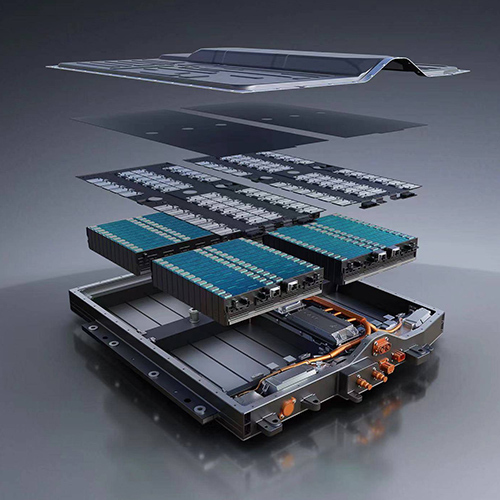
New energy vehicle battery enclosures require lightweight materials that can provide strength, dimensional stability, electrical insulation, corrosion resistance, and reliable production quality. Glass fiber reinforcement is used in many composite battery-shell applications because it combines cost efficiency with useful mechanical performance.
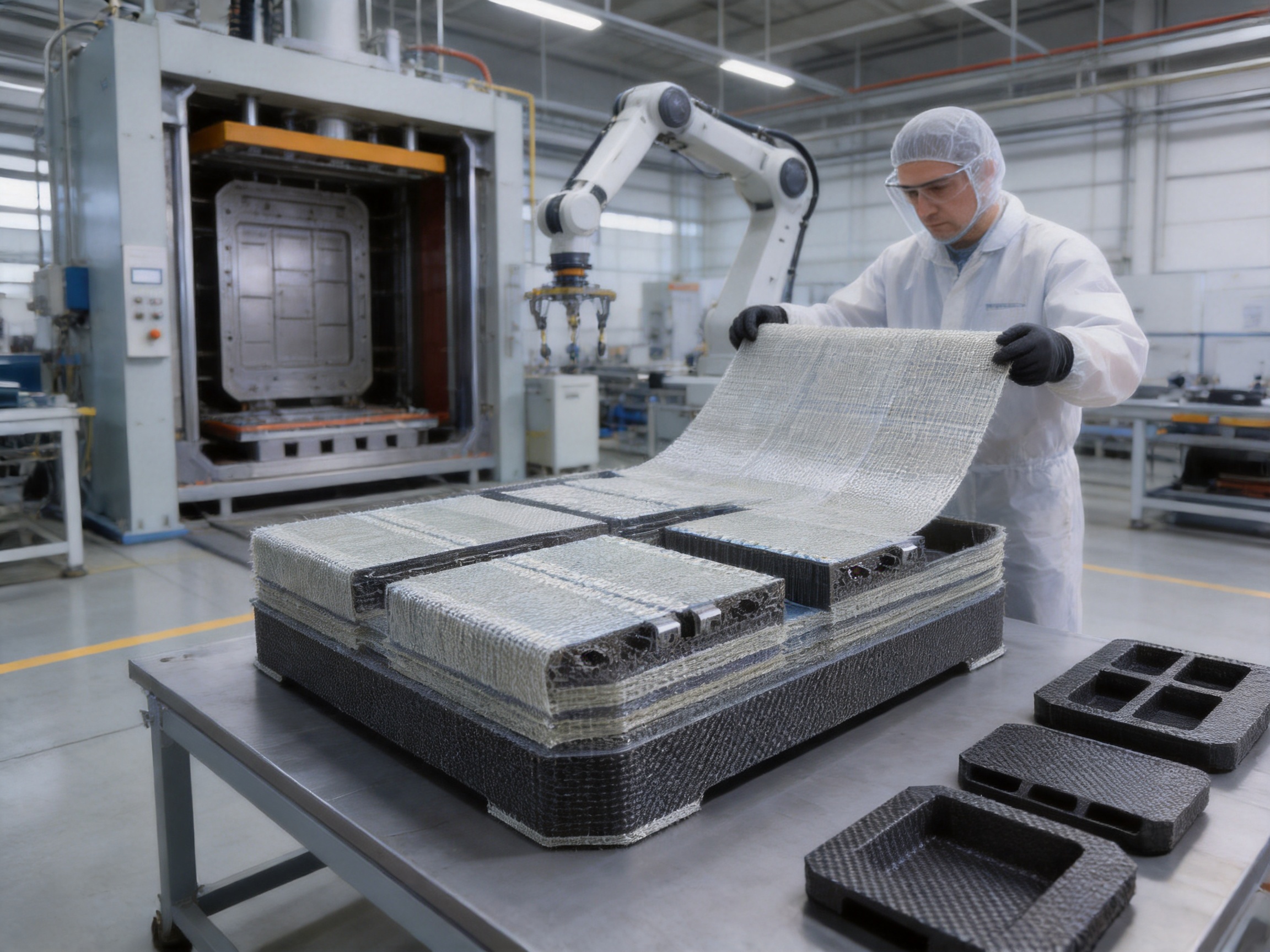
Before molding, the reinforcement must often be cut into accurate shapes and arranged in a defined sequence. If the fabric is too flexible, its edges may curl, its dimensions may change during handling, or the layers may move during mold loading. Powder spreading gives the reinforcement additional body and supports more stable preparation.
For battery shells and related enclosure components, consistency across a large surface area is particularly important. Variations in reinforcement placement can affect wall thickness, local stiffness, dimensional accuracy, and the fit of the finished enclosure. Even powder distribution helps make the dry reinforcement more predictable before the final resin process.
The machine is therefore suitable for fabric suppliers producing reinforcement rolls or preform materials for compression molding and RTM battery-shell production. The final configuration should be matched to the required fabric weight, mold design, cutting method, and production volume.
Applications in High-Pressure RTM Components
High-pressure RTM is used for structural and semi-structural composite parts that require controlled resin injection and relatively high production efficiency. The dry reinforcement must be loaded into the mold accurately and retained in the intended orientation while resin flows through the stack.
Powder-dispersed fabric can help form a more stable preform. The added stiffness makes it easier to cut and stack multiple layers, while the bonding effect helps reduce movement during transportation and mold loading. During injection, a stable reinforcement architecture can help maintain the intended fiber distribution.
Applications may include automotive structural components, industrial covers, energy-related housings, transport components, and other molded parts made from glass or carbon fiber reinforcement. The machine is not limited to one final product; its role is to prepare the reinforcement for processes in which dimensional and handling stability are important.
Installation and Commissioning
Installation begins with a review of the workshop layout. The machine position, material entry and exit direction, roll storage, operator access, maintenance space, electrical supply, compressed air, powder-handling provisions, and ventilation requirements should be confirmed before shipment.
The web path is especially important. The fabric should enter and leave the machine without unnecessary turns, abrupt height changes, or unsupported spans that could cause wrinkles. Tension zones should be considered in relation to upstream and downstream equipment so that one machine does not pull against another.
During commissioning, the machine is tested with the customer’s actual fabric whenever possible. Running only a small test swatch may not reveal problems associated with full-width behavior, roll diameter, fabric weight, edge stability, or extended operating time. Full production material provides more reliable information for setting speed, tension, guiding, and powder dosing.
Commissioning normally includes mechanical inspection, control-system verification, web-path adjustment, powder system adjustment, operating parameter setup, trial production, and operator instruction. The machine should be evaluated against the agreed criteria, including powder add-on, distribution uniformity, stable running speed, and finished fabric handling performance.
Training is provided for operators and maintenance personnel. Operators learn how to start and stop the machine, load fabric, set working parameters, monitor powder distribution, identify abnormalities, and perform routine cleaning. Maintenance personnel receive instruction on inspection points, wear parts, lubrication where applicable, web-guiding components, and troubleshooting procedures.
Quality Control and Acceptance Criteria
Quality control for a powder-spreading machine should cover both equipment performance and fabric performance. Mechanical operation alone is not enough. The finished fabric must meet the requirements of the subsequent production process.
One important criterion is powder add-on percentage. The target value is approximately 2%, but the allowable range should be agreed according to the customer’s process. Measurements may be taken from representative samples across the width and along the length of the fabric.
Another important criterion is cross-width uniformity. The powder layer should not form noticeable stripes, heavy edges, uncovered areas, or repeating patterns that could influence downstream molding. Uniformity is particularly important for wide fabrics because small differences can become significant across a large molded part.
Stable line operation is also evaluated. The machine should run at the specified working speed without excessive web movement, frequent powder blockage, abnormal vibration, or repeated operator intervention. A stable machine is easier to integrate into a continuous production schedule.
The finished fabric should be inspected for stiffness, handling behavior, surface condition, edge quality, and winding performance. The correct outcome is a reinforcement that can be cut, stacked, and formed more efficiently while remaining suitable for resin impregnation.
Acceptance criteria should be discussed before the machine is built. Establishing these criteria early helps align the manufacturer, purchaser, operators, and quality department. It also makes the pre-delivery test more meaningful because the test is based on the actual production objective.
Maintenance and Production Support
Powder-handling machinery requires regular attention because fine particles can accumulate around metering components, surfaces, guides, and protective covers. A routine cleaning schedule helps prevent buildup from affecting powder flow, web movement, or sensor performance.
Operators should inspect powder flow, material alignment, fabric tension, edge position, and the condition of contact surfaces during each production shift. Early detection of changes can prevent minor problems from becoming quality defects or extended downtime.
Maintenance personnel should periodically inspect web-guiding elements, drive components, electrical connections, control devices, bearings, and powder-delivery components. The inspection frequency should be based on operating hours, powder characteristics, factory dust levels, and the manufacturer’s recommendations.
Spare parts support is important for continuous production. Common wear items and critical components should be identified during the project stage. Keeping appropriate spare parts on site can reduce the time required to restore operation if a component needs replacement.
The manufacturer provides remote and on-site technical support. Customers can also send operators and maintenance personnel to the production facility for practical training. Extended training programs of one to two months may cover operation, maintenance, process parameters, quality control, and workshop management.
Environmental, Safety, and Workplace Considerations
Powder-spreading systems should be installed with appropriate attention to dust control and workplace safety. The exact requirements depend on the powder type, particle size, resin chemistry, local regulations, and factory ventilation system.
Powder storage and transfer areas should be kept clean and organized. Operators should use the personal protective equipment required by the powder supplier and the site safety department. Dust accumulation should be controlled through suitable housekeeping and, where required, local extraction or filtration systems.
Electrical and mechanical guarding should be inspected before operation. Moving web components, rollers, drives, and powder mechanisms must be protected according to applicable safety standards. Operators should receive clear instructions for emergency stops, maintenance isolation, and safe access to cleaning areas.
A well-designed installation reduces unnecessary exposure to powder and makes routine cleaning easier. Safety and environmental provisions should be included in the project plan rather than added only after the machine has arrived at the factory.
Why Manufacturer Experience Matters
Specialty textile equipment sits between mechanical engineering and material processing. A supplier may be able to fabricate a machine frame, but successful production also requires knowledge of fiber behavior, fabric architecture, line tension, powder handling, winding, and composite molding requirements.
The manufacturer’s experience in warp knitting, stitch bonding, multiaxial reinforcement, carbon fiber processing, powder spreading, and web laying provides a broader technical foundation. This experience allows the engineering team to view the YAS machine as part of a reinforcement-fabric process rather than as an isolated powder dispenser.
That perspective is valuable when the customer needs to integrate the equipment with upstream and downstream machinery. It is also useful when a fabric has unusual behavior, when the production line must be redesigned, or when the customer requires a special working width or control interface.
Manufacturing capability is equally important. A reliable machine depends on accurate machining, correct assembly, proper alignment, stable electrical systems, and complete pre-delivery testing. A supplier with in-house engineering and production coordination can respond more efficiently when adjustments are needed.
Frequently Asked Questions
What materials can the YAS Auto Powder-Spreading Machine process?
The machine is designed for greige glass fiber and carbon fiber fabrics. Typical fabric weights are approximately 400–800 g/m². Other material constructions can be reviewed as customized applications after the fabric, powder, and production conditions have been evaluated.
How much resin powder is applied?
The typical powder add-on is approximately 2% of the fabric weight. The final target should be confirmed according to the resin powder, fabric construction, desired stiffness, downstream forming method, and customer quality requirements.
What working widths are available?
The standard working-width options are approximately 3000 millimeters and 3500 millimeters. The correct selection depends on the fabric roll width, edge condition, trim allowance, workshop layout, and downstream equipment.
What is the operating speed?
The reference machine speed is approximately 4–6 meters per minute. Actual operating speed depends on the fabric construction, powder characteristics, web stability, target add-on, and required distribution uniformity.
What daily output can be expected?
The reference daily output is approximately 3250 meters. This figure is provided for planning only. Actual output can vary according to fabric construction, line speed, powder type, roll changes, setup time, inspection requirements, maintenance, and process conditions.
Why is powder spreading used before RTM or compression molding?
Powder spreading gives the greige fabric a certain degree of stiffness and shape stability. This makes the reinforcement easier to cut, move, stack, and form. It can also help reduce fiber movement during resin injection or mold loading.
Can the machine be integrated into an existing production line?
Yes. The equipment can be configured around existing knitting, weaving, winding, cutting, or forming equipment. The integration design should consider web direction, line speed, tension control, roll dimensions, machine height, control signals, and available workshop space.
Does the machine support both glass fiber and carbon fiber?
Yes. The machine is intended for both glass fiber and carbon fiber greige fabrics. Because these materials can differ in flexibility, surface structure, and handling behavior, the final configuration and process settings should be determined from the actual fabric requirements.
How is powder distribution checked?
Distribution can be evaluated through representative sampling across the fabric width and along the production length. The acceptance method should be agreed before manufacture and may include powder add-on percentage, cross-width uniformity, visual surface inspection, and suitability for downstream forming.
What information is needed for a quotation?
Important information includes fiber type, fabric weight, fabric construction, roll width, target working width, powder type, target add-on, line speed, daily output, upstream and downstream equipment, workshop layout, utilities, and the final molding or forming application.
What installation support is provided?
Installation, commissioning, parameter adjustment, and operator training are provided as part of the technical service process. Engineers can help confirm the web path, machine position, utility connections, operating settings, and acceptance test conditions.
What maintenance support is available after installation?
The manufacturer provides spare parts, remote technical support, and on-site support when required. Operators and maintenance personnel can also receive practical training covering machine operation, routine inspection, cleaning, troubleshooting, and process control.
Can the machine be customized?
Yes. Customization may involve working width, web handling, powder metering, machine layout, control interfaces, upstream and downstream connections, and special material requirements. Non-standard projects should be reviewed by the engineering team before the final configuration is confirmed.
Conclusion
The YAS Auto Powder-Spreading Machine is designed to solve a specific but important problem in composite textile production: how to give flexible glass fiber and carbon fiber fabrics the stability needed for reliable downstream handling and molding.
By applying approximately 2% resin powder across greige fabric weighing 400–800 g/m², the machine creates a powder-dispersed reinforcement with improved body and pre-shaping capability. Its 4–6 meter-per-minute operating range, 3000- and 3500-millimeter working-width options, and reference daily output of 3250 meters make it suitable for industrial composite reinforcement lines.
The main advantage is not simply the ability to spread powder. It is the combination of controlled distribution, web handling, line integration, customization, pre-delivery testing, commissioning, and long-term technical support. These features help manufacturers achieve a more stable reinforcement product and a more predictable downstream molding process.
Supported by experience in warp knitting, stitch bonding, multiaxial reinforcement, carbon fiber textile processing, web laying, and specialty machinery manufacturing, Changzhou Yuanyang Electromechanical Technology Co., Ltd. can configure the equipment around the customer’s actual material and production requirements. The result is a practical solution for battery-shell reinforcement, high-pressure RTM parts, compression-molded components, and other composite applications where fabric stability and processing consistency are essential.
References
1. Changzhou Yuanyang Electromechanical Technology Co., Ltd. Product information for the YAS Auto Powder-Spreading Machine.
2. Changzhou Yuanyang Electromechanical Technology Co., Ltd. Technical information on warp knitting, stitch-bonding, multiaxial textile, powder-spreading, and web-laying equipment.
3. European Committee for Standardization. Reinforcement Materials for Composite Manufacturing: General Technical Considerations.
4. International Organization for Standardization. Textile and Composite Material Testing Principles for Fabric Mass, Handling, and Dimensional Stability.
5. Automotive composite manufacturing literature covering resin transfer molding, compression molding, dry reinforcement preforming, and fiber orientation control.
6. Industrial guidelines for powder handling, dust control, machinery guarding, operator training, and production-line commissioning.
Product: YAS Auto Powder-Spreading machine

News
-
Which Machine Category Matches Each Technical Fiber and Fabric Goal A warp knitting machine is the primary production platform for technical fiber textiles across fiberglass, chemical fiber, and carbo...
READ MORE -
Two quotations land on the same desk. Both offer a multiaxial warp knitting line, both list the same working width, both promise high output. One buyer signs and discovers six months later that the f...
READ MORE -
Match the machine type to the fabric: choose a tricot Warp Knitting Machine for fine, smooth fabrics such as lining and sportswear, a raschel machine for open, patterned, and technical fabrics, a doub...
READ MORE -
China International Industrial Textiles and Nonwovens Exhibition Location: Shanghai New International Expo Centre Dates: September 1-3, 2026
READ MORE
-
Contact Info.
+86-198 5534 1617
+86-134 0158 3002yuanyang@yywarpknitting.com 699#, Shengzhi West Rd, Lvcheng Town, Danyang City, Zhenjiang City, Jiangsu Province, China

-
QR Code
-
Quick Links
Home About Products Manufacturing Customization News Contact -
Product List
Machine for Chemical Fiber Textile Machine for Fiberglass Textile Machine for Carbon Fiber Textile -
About Us
Company Profile Factory Gallery Value-added Service
Copyright © 2026 Changzhou Yuanyang Electromechanical Technology Co., Ltd. All Rights Reserved.
Custom Warp Knitting Machine Manufacturers
